1 free read left. Create a free account for unlimited reading + AI research.
Create free accountWhitepaper DiGRA
1 free read left. Create a free account for unlimited reading + AI research.
Create free accountWhitepaperDiGRA
It names a longing to recapture first-discovery emotions 'exploration nostalgia'.
This qualitative study examines how the pleasure of exploring open-world games changes as players grow familiar with them, and in particular how a longing to recapture first-discovery emotions, which the authors term "exploration nostalgia," emerges over repeated play. Drawing on semi-structured interviews with 16 experienced players who had logged at least 50 hours in open-world titles (averaging roughly 182 hours each), the research addresses a gap in existing work, which has tended to focus on momentary gameplay fluctuations rather than changes unfolding across a single game's lifespan.
The findings describe a consistent trajectory. Early exploration produces intense novelty and excitement, but as familiarity accumulates, players experience a melancholy sense of having lost those first discoveries. Exploration joy typically peaks mid-game and then declines as play becomes more efficient and goal-oriented, with narrative constraints, repetitive grinding, and technical or multiplayer problems further eroding engagement. Nostalgia is most often triggered by sensory and emotional cues such as music, visuals, community content, and real-world memories, and players respond by seeking to relive the early experience through new save files, alternative playthroughs, or varied play modes.
Beyond this arc, the study identifies two broader orientations and several deliberate strategies. Players shift from wonder toward mastery-based satisfaction, and they actively recreate discovery feelings through self-imposed constraints, mods, randomizers, and social play, while relating to their past play in both restorative and reflective ways. The authors argue these patterns extend Self-Determination Theory into temporal replay dynamics and propose exploration nostalgia as a distinct construct meriting dedicated measurement.
The study's scope is limited: its sample skews toward young adult males and RPG-centered play, and the effectiveness of the discovery-recreation strategies was not directly measured, so the conclusions point toward hypotheses for longitudinal and quantitative follow-up rather than established causal claims.
 Elden RingGame · FromSoftware · 2022 · 233 documents
 The Witcher 3Game · CD Projekt RED · 2015 · 185 documents
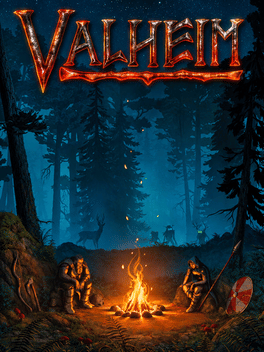 ValheimGame · Iron Gate Studios · 2026 · 23 documents
 Red Dead Redemption 2Game · Rockstar Games · 2018 · 78 documents
 SubnauticaGame · Unknown Worlds · 2018 · 61 documents
 The Legend of Zelda: Breath of the WildGame · Nintendo EPD Production Group No. 3 · 2017 · 40 documents
 FromSoftwareCompany · Japan · founded 1986 · 68 documents
 Rockstar GamesCompany · United States · founded 1998 · 147 documents
 Unknown WorldsCompany · United States · founded 2001 · 42 documents
 MojangCompany · Sweden · founded 2009 · 54 documents
 Annapurna InteractiveCompany · United States · founded 2016 · 3 documents
Each row is a game or company this document names, each column a document, oldest first. A mark means that document names it. Select a row to see those documents.
DiGRA · 2026
DiGRA · 2026