1 free read left. Create a free account for unlimited reading + AI research.
Create free accountWhitepaper DiGRA
1 free read left. Create a free account for unlimited reading + AI research.
Create free accountWhitepaperDiGRA
The paper argues that a hold-to-continue alternative and rapid button-mashing can reshape the suspense trajectory of the same in-game event. It treats accessibility options as active modulators of emotional experience.
This extended abstract proposes that the input mode of a survival horror quick-time event, specifically a rapid button-mash versus a hold-to-continue accessibility alternative, can reshape the suspense trajectory of the same in-game event. Drawing on suspense theory from literary and film studies, the author argues that digital game interactions involving kinaesthetic involvement can be modelled as dynamic rise-peak-resolution curves, and that differences in motor workload alter how that curve is structured. The work is positioned at the intersection of game accessibility and affect research, and it frames accessibility options as active modulators of emotional experience rather than neutral barriers removed.
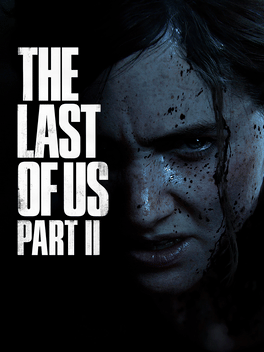
The argument rests on a single illustrative case: a ten-second QTE from The Last of Us Part II in which the protagonist, Ellie, is pinned to a window ledge by an enemy. The author constructs two conceptual suspense curves for this sequence. Mash-based input is hypothesised to produce sharper suspense spikes during the ascent, since repeated inputs multiply potential failure points and heighten the perceived likelihood of an undesirable outcome, while hold-to-continue is expected to yield a flatter, more sustained curve. These predictions are supported by reference to Carroll's account of suspense, Calleja's concept of kinaesthetic involvement, and a workload-focused study of jump-scare intensity.
The curves are explicitly theoretical and were not validated with empirical player data, a limitation the author acknowledges. The scope is therefore conceptual, centred on one game and one interaction type, and drawn from the author's analytical framing rather than measured responses. The contribution lies in offering an adaptable analytical model and a design-oriented perspective that could guide future empirical testing of how physical input patterns shape suspense across different players and games.
Each row is a game or company this document names, each column a document, oldest first. A mark means that document names it. Select a row to see those documents.

DiGRA · 2026

DiGRA · 2026



DiGRA · 2026
DiGRA · 2026