1 free read left. Create a free account for unlimited reading + AI research.
Create free accountWhitepaper Ludic Language Pedagogy
1 free read left. Create a free account for unlimited reading + AI research.
Create free accountWhitepaperLudic Language Pedagogy
Educators can shift from test-oriented grammar instruction to a game-based learning model.
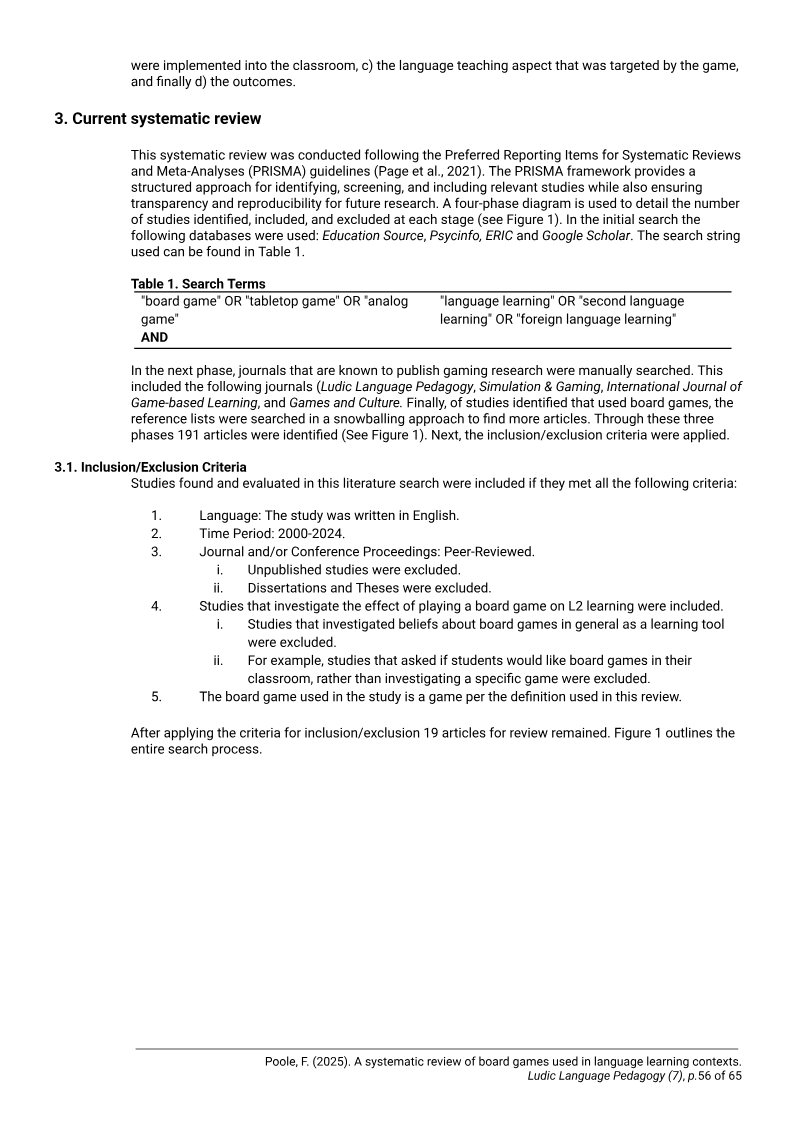
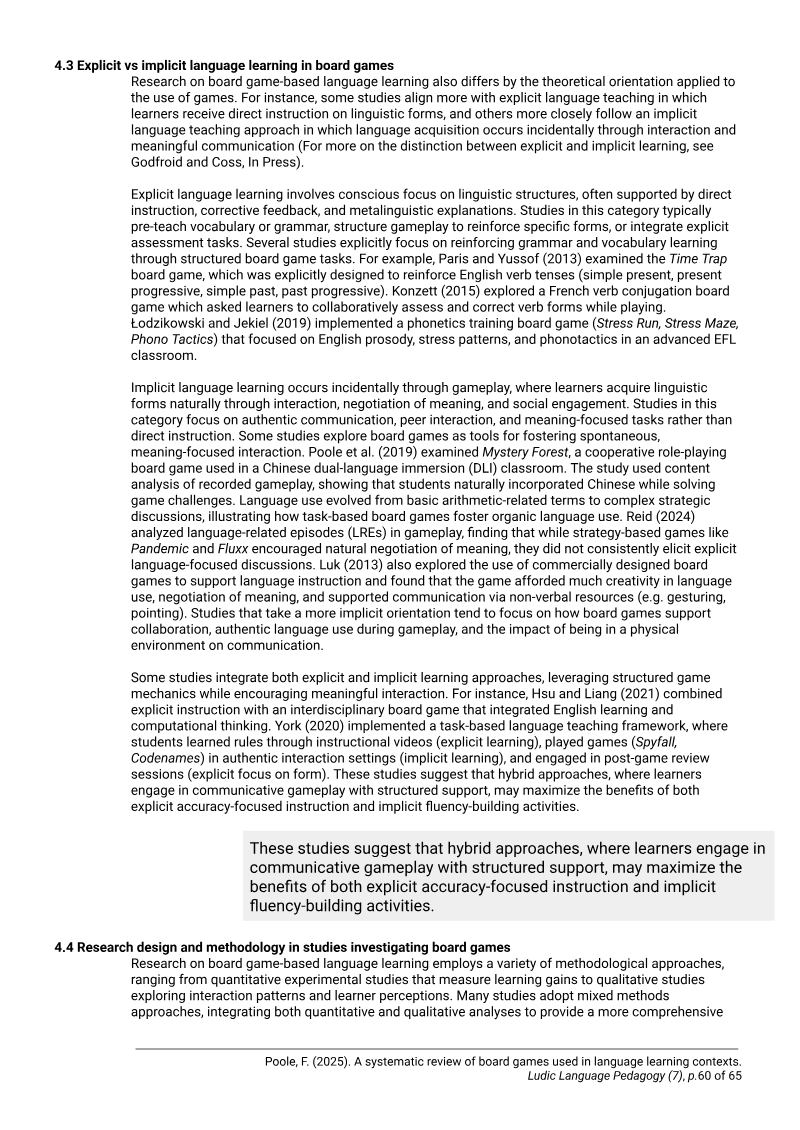
Core framework. The board game Du Ký (Dream Adventure) functions as a core pedagogical framework for teaching descriptive adjectives in EFL classrooms.
The use of the Vietnamese cooperative board game Du Ký (Dream Adventure) serves as a pedagogical framework for teaching descriptive adjectives in English as a Foreign Language (EFL) classrooms. By shifting from traditional, test-oriented grammar instruction to a game-based learning model, educators can foster authentic communication, learner agency, and intrinsic motivation. The game requires players to interpret and describe dream-themed cards using specific adjectives, necessitating collaborative negotiation and real-time language application rather than rote memorization.
The methodology centers on a structured 90-minute lesson plan designed for high school students at a C1 proficiency level. The instructional flow integrates a lead-in phase to assess prior knowledge, a pre-teaching phase to introduce target vocabulary, a gameplay session where students apply these terms in context, and a final reflection period. This approach moves beyond using games as mere classroom fillers, instead positioning the game as the core mechanism for language acquisition. By utilizing non-verbal cues and cooperative mechanics, the game encourages students to recycle vocabulary purposefully while navigating the game’s rule-based system.
Evidence from classroom application suggests that this ludic approach successfully transitions students from external motivators, such as grades, to internal motivators like curiosity and teamwork. The game’s design, which blends urban imagery with surrealist themes, provides a culturally rich environment that supports both language development and intercultural engagement. Ultimately, the findings indicate that when games are thoughtfully integrated into the curriculum, they function as powerful tools for creating inclusive, learner-centered environments that promote deeper, more meaningful language use across diverse educational settings.
Ludic Language Pedagogy · 2026
Ludic Language Pedagogy · 2026
Ludic Language Pedagogy · 2026
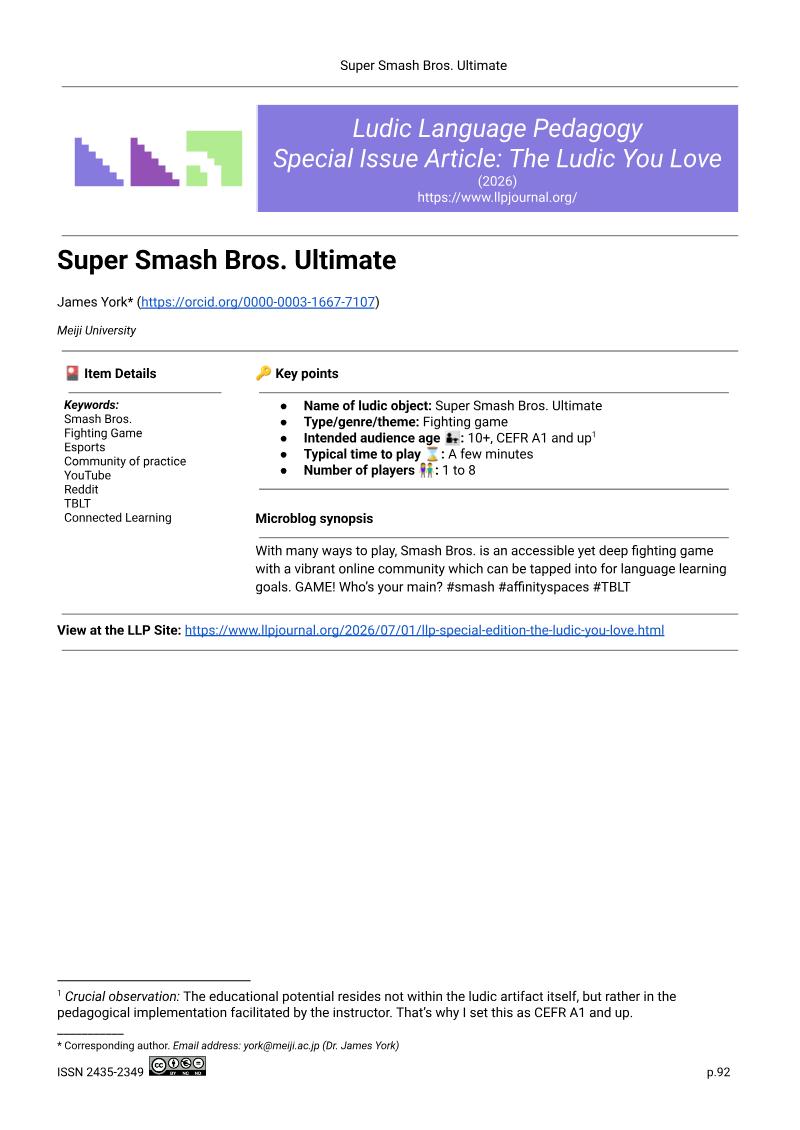
Ludic Language Pedagogy · 2026
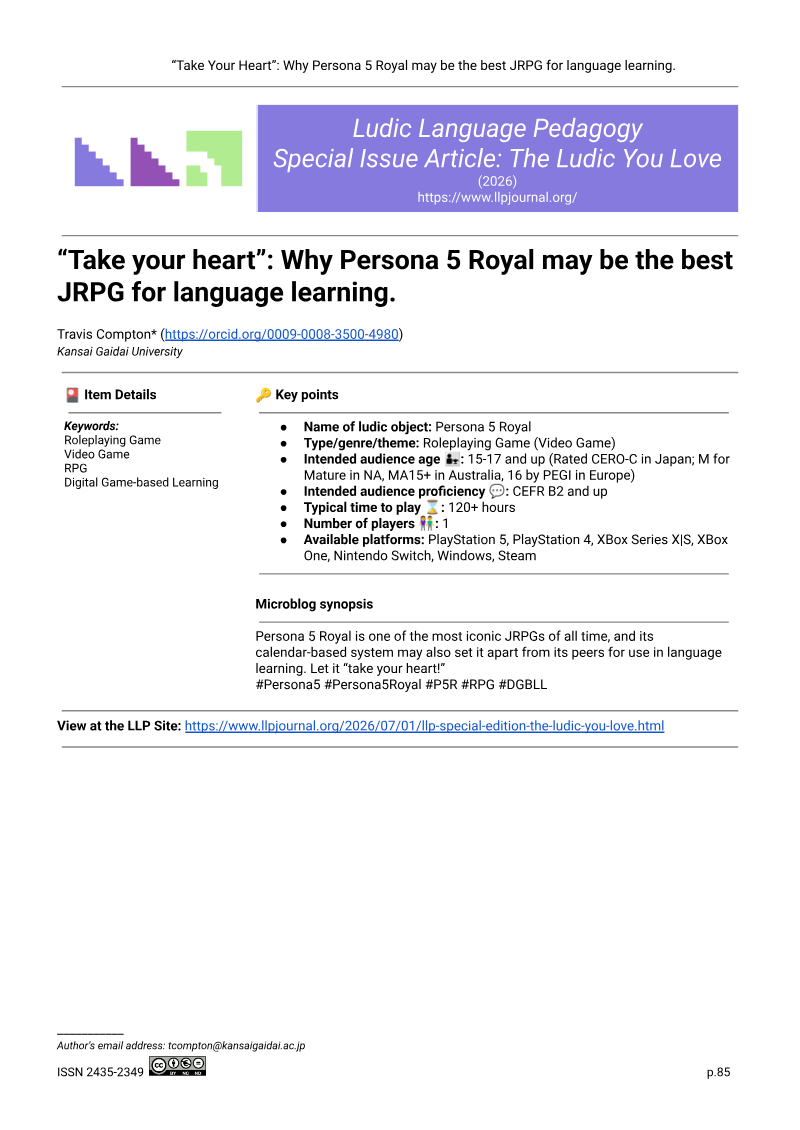
Ludic Language Pedagogy · 2026
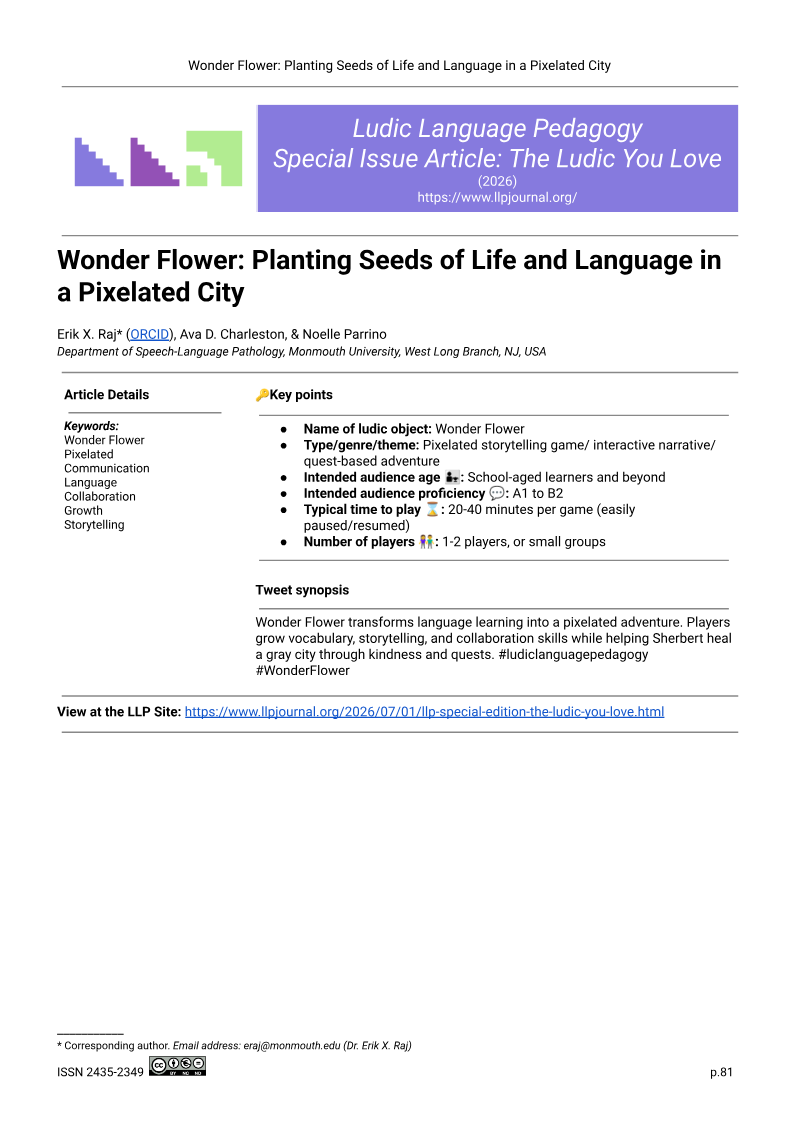
Ludic Language Pedagogy · 2026
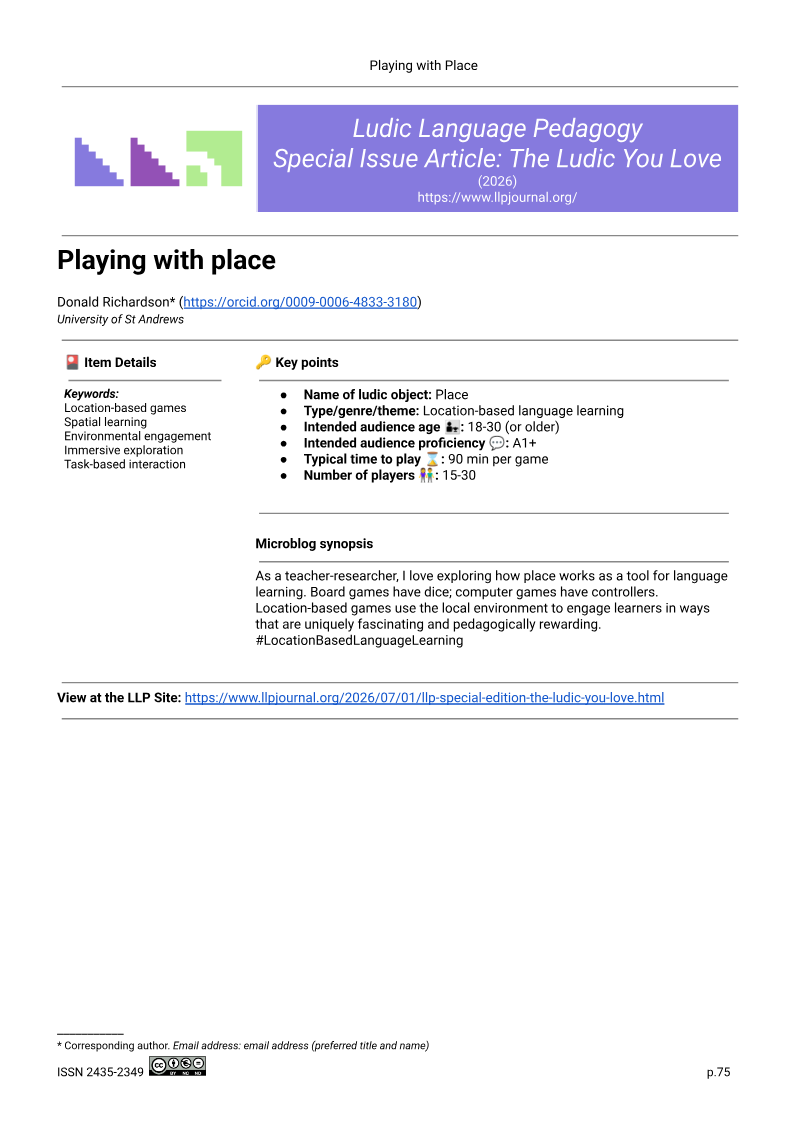
Ludic Language Pedagogy · 2026
Ludic Language Pedagogy · 2026
Ludic Language Pedagogy · 2026
Ludic Language Pedagogy · 2026
Ludic Language Pedagogy · 2026



Ludic Language Pedagogy · 2026
European Conference on Games Based Learning (ECGBL) · 2026