1 free read left. Create a free account for unlimited reading + AI research.
Create free accountWhitepaper European Conference on Games Based Learning (ECGBL)
1 free read left. Create a free account for unlimited reading + AI research.
Create free accountWhitepaperEuropean Conference on Games Based Learning (ECGBL)
Its competitive mechanics were converted into cooperative resource sharing.
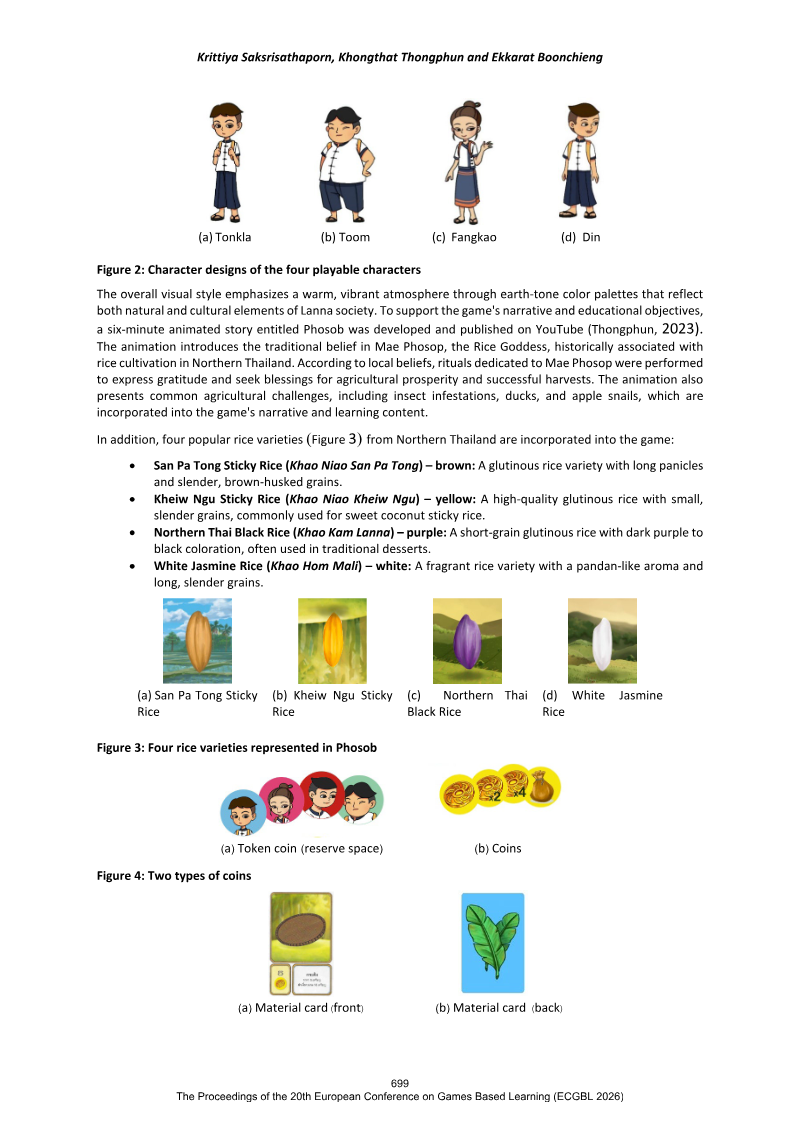
The study presents Phosob, an educational board game designed to teach players about Lanna rice culture and the Thai folklore of Mae Phosop, the Rice Goddess. Developed through a design-based research approach, the game combines cultural storytelling, four northern Thai rice varieties, resource management, and Monopoly-inspired movement, with its competitive mechanics modified into cooperative resource sharing. The prototype supports two to four players and was tested by 36 undergraduate students aged 17 to 24, organized into nine groups that each played three rounds before completing a 20-item five-point Likert questionnaire and open-ended feedback.
Players responded favorably to the core gameplay, with all Game Capability items exceeding 80% positive responses and game uniqueness rated highest at 86.49%. Perceived educational value was also strong, with 96% agreeing the game promoted awareness of Lanna rice and 100% agreeing it supported learning about rice. Design and Aesthetics received more moderate ratings, between 54% and 73% positive. Qualitative feedback pointed to difficulty distinguishing similar colors and rice types, text readability, setup complexity, gameplay balance, and heavy reliance on dice and card randomness. The "applicable in real life" item received only 8.33% positive responses, suggesting players saw the game mainly as a cultural learning tool.
The evaluation measured perceived rather than objective learning, so the study does not establish actual knowledge gain. The authors plan pre- and post-test assessments with larger, more diverse samples, along with refinements to visual clarity and gameplay balance and an exploration of a digital version to broaden accessibility.



European Conference on Games Based Learning (ECGBL) · 2026



European Conference on Games Based Learning (ECGBL) · 2026



European Conference on Games Based Learning (ECGBL) · 2026



European Conference on Games Based Learning (ECGBL) · 2026



European Conference on Games Based Learning (ECGBL) · 2026



European Conference on Games Based Learning (ECGBL) · 2026



European Conference on Games Based Learning (ECGBL) · 2026



European Conference on Games Based Learning (ECGBL) · 2026



European Conference on Games Based Learning (ECGBL) · 2026



European Conference on Games Based Learning (ECGBL) · 2026



European Conference on Games Based Learning (ECGBL) · 2026



European Conference on Games Based Learning (ECGBL) · 2026
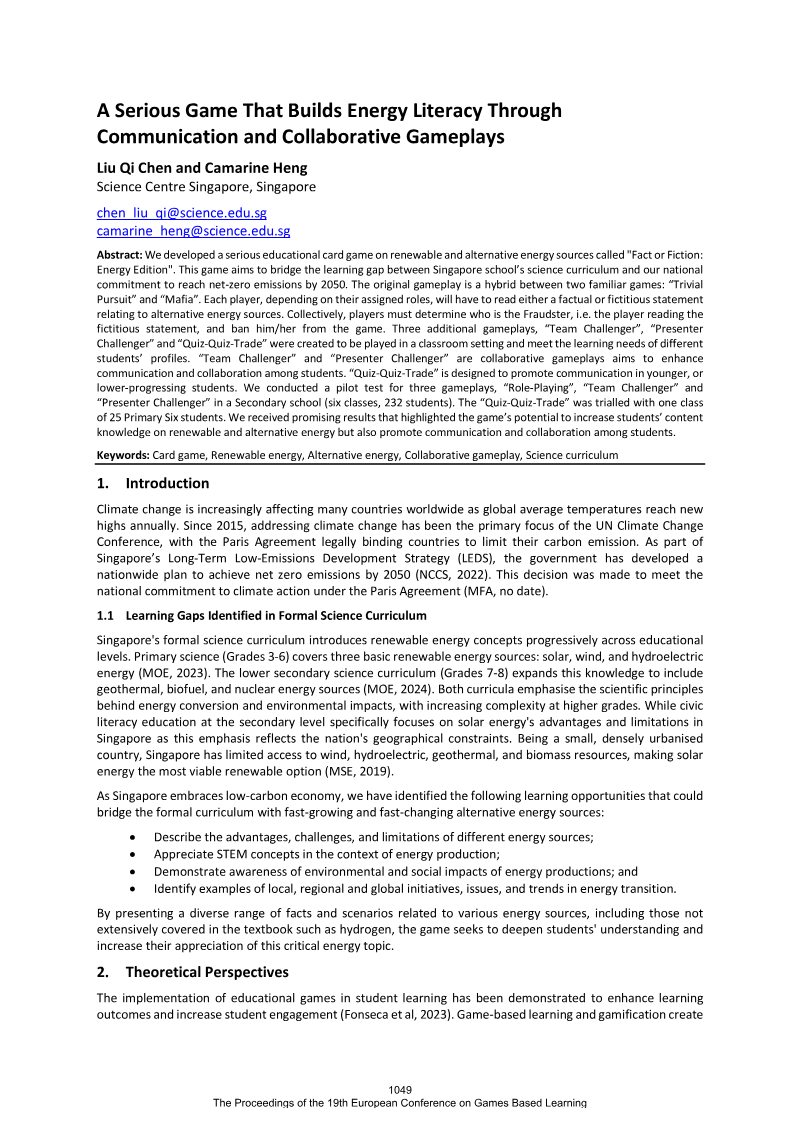
European Conference on Games Based Learning (ECGBL) · 2025
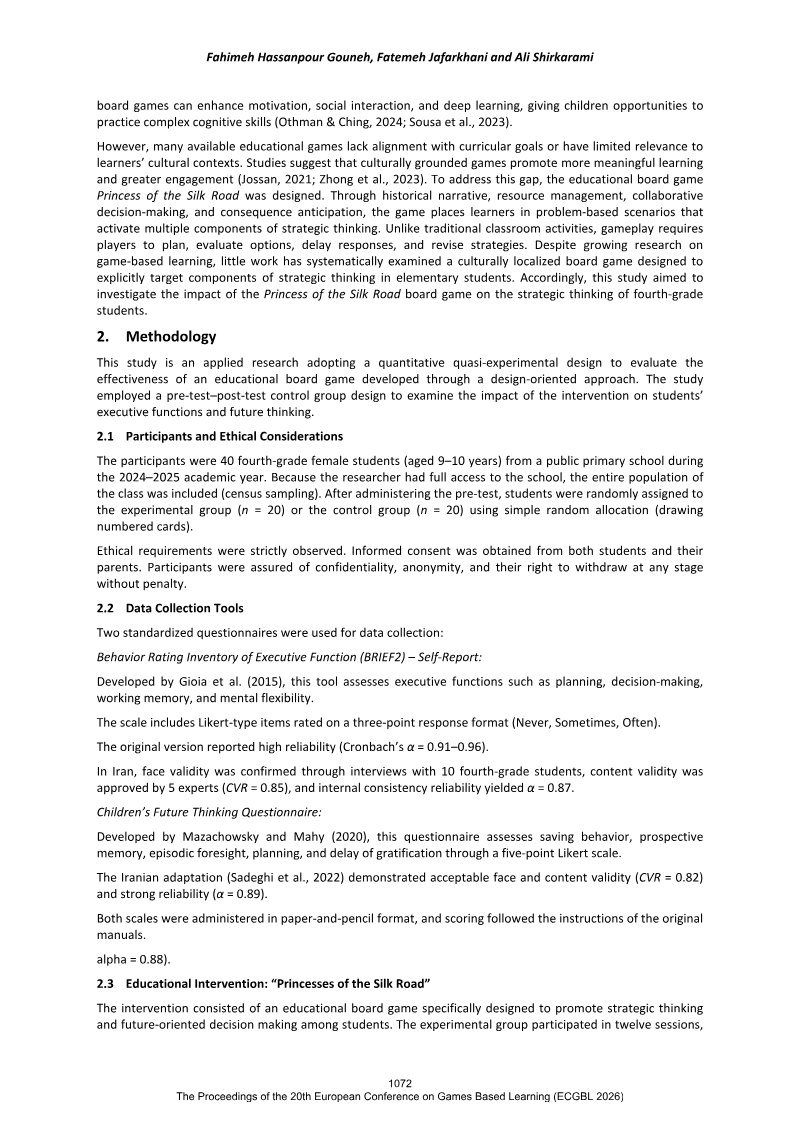
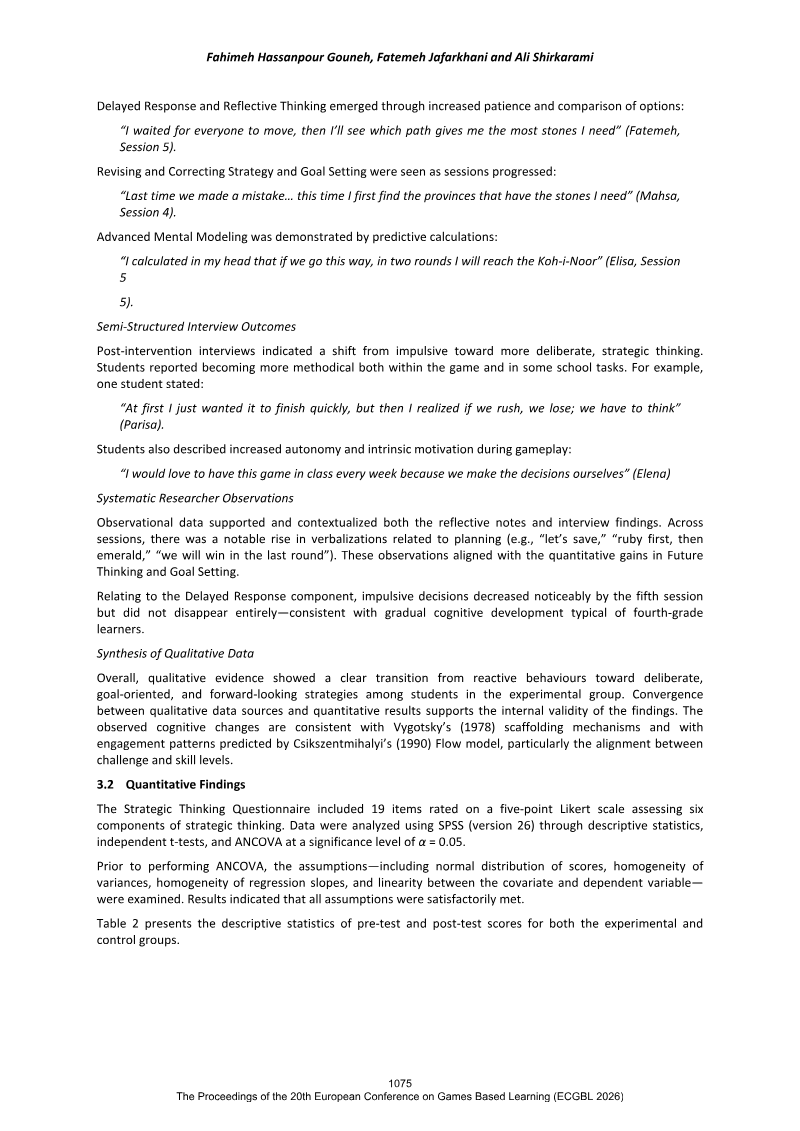
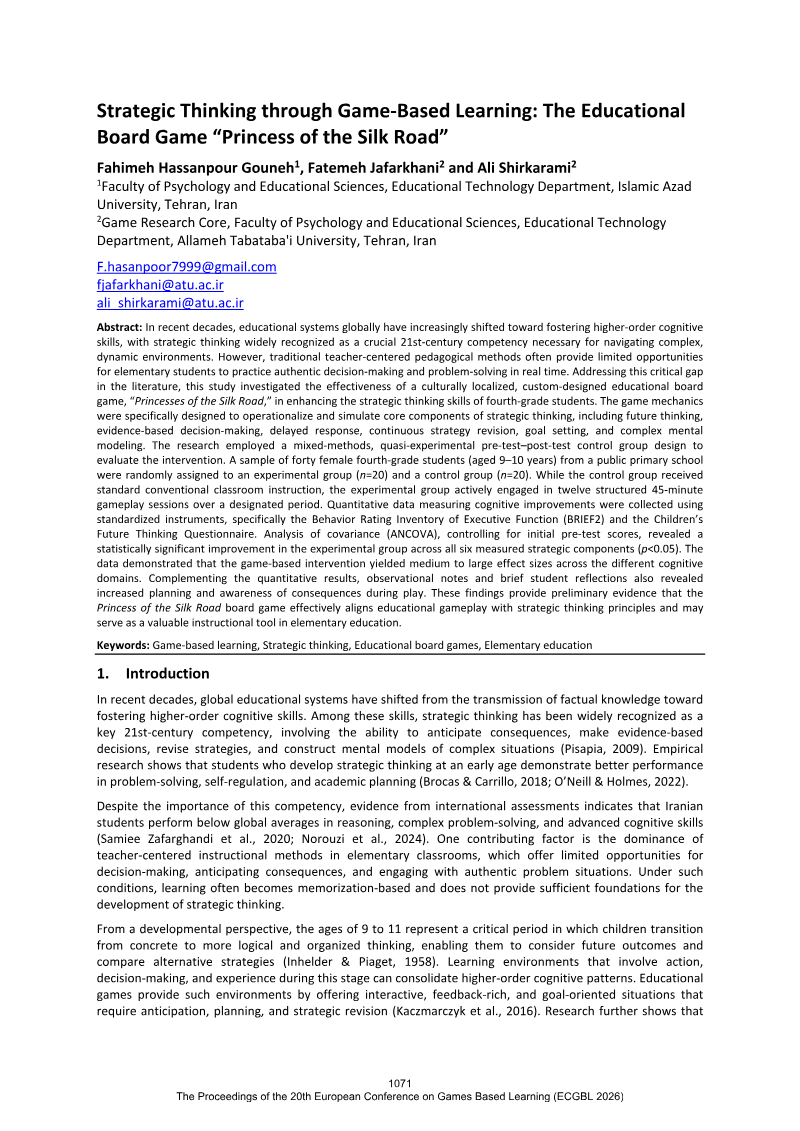
European Conference on Games Based Learning (ECGBL) · 2026
European Conference on Games Based Learning (ECGBL) · 2026