1 free read left. Create a free account for unlimited reading + AI research.
Create free accountArticle Ludic Language Pedagogy
1 free read left. Create a free account for unlimited reading + AI research.
Create free accountArticleLudic Language Pedagogy
The browser-based, pixelated adventure game Wonder Flower helps develop vocabulary, syntax, and storytelling skills. It is suitable for language learners from A1 to B2 proficiency levels.
Wonder Flower: Planting Seeds of Life and Language in a Pixelated City explores the pedagogical potential of the browser-based, pixelated adventure game Wonder Flower as a tool for speech-language pathology and language education. The authors, researchers from the Meaningful Digital Experiences Research Lab at Monmouth University, argue that the game’s low-barrier mechanics and collaborative quest structure provide an ideal environment for developing vocabulary, syntax, and storytelling skills in learners ranging from A1 to B2 proficiency levels.
The analysis highlights how the game’s design—which centers on exploration, interaction, and simple problem-solving—encourages students to engage in meaningful communication. By pairing gameplay with intentional pedagogical strategies, such as collaborative note-taking and guided reflection, educators can transform the digital experience into a structured language-learning activity. The authors demonstrate that the most significant linguistic gains occur when students use the game as a foundation for sequencing events, generating descriptive language, and negotiating instructions with peers.
The study utilizes qualitative observation and documentation of gameplay sessions involving school-aged learners. By tracking how students interact with the game’s inventory system and quest objectives, the authors illustrate that the act of documenting progress serves as a generative learning strategy that strengthens comprehension and narrative structure. The research concludes that when games are framed within broader pedagogical sequences, they function as authentic, safe spaces for social interaction and language development. By extending the experience through creative activities like drawing and direct communication with the game’s creator, learners are able to bridge the gap between digital play and real-world expression, reinforcing the game's role as a catalyst for connection and academic growth.
Each row is a game or company this document names, each column a document, oldest first. A mark means that document names it. Select a row to see those documents.
Ludic Language Pedagogy · 2026
Ludic Language Pedagogy · 2026
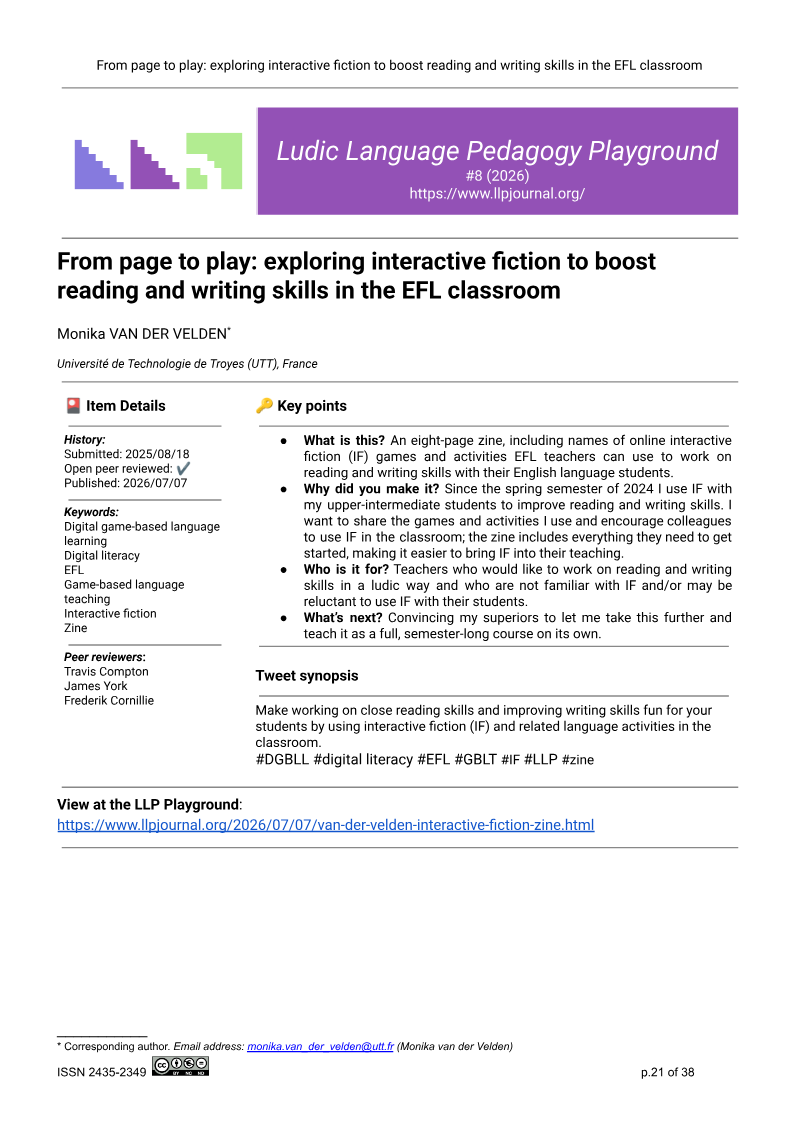
Ludic Language Pedagogy · 2026
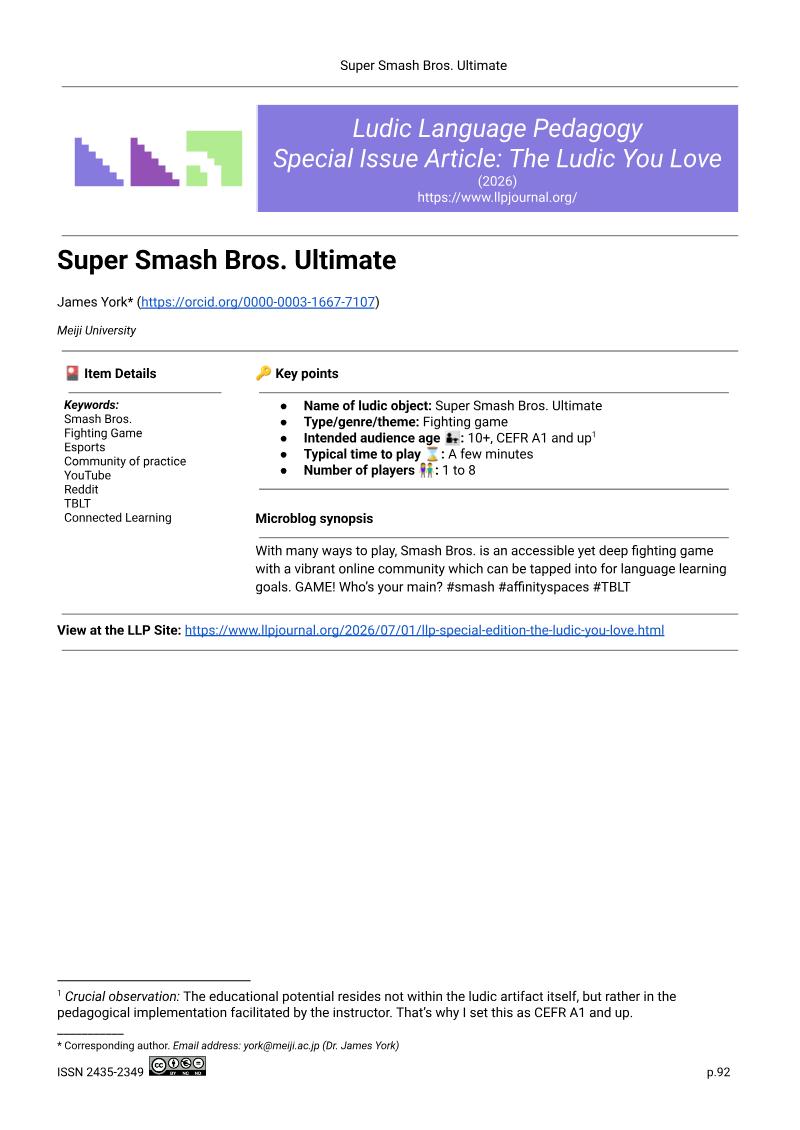
Ludic Language Pedagogy · 2026

Ludic Language Pedagogy · 2026
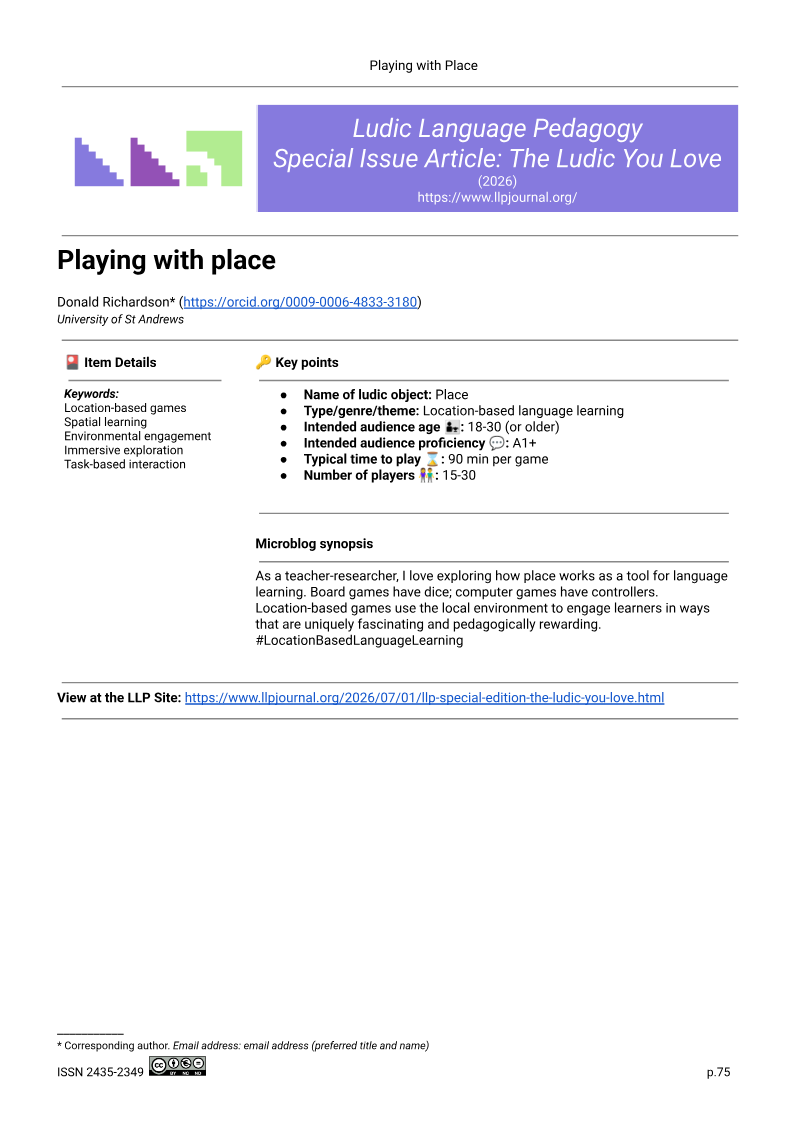
Ludic Language Pedagogy · 2026
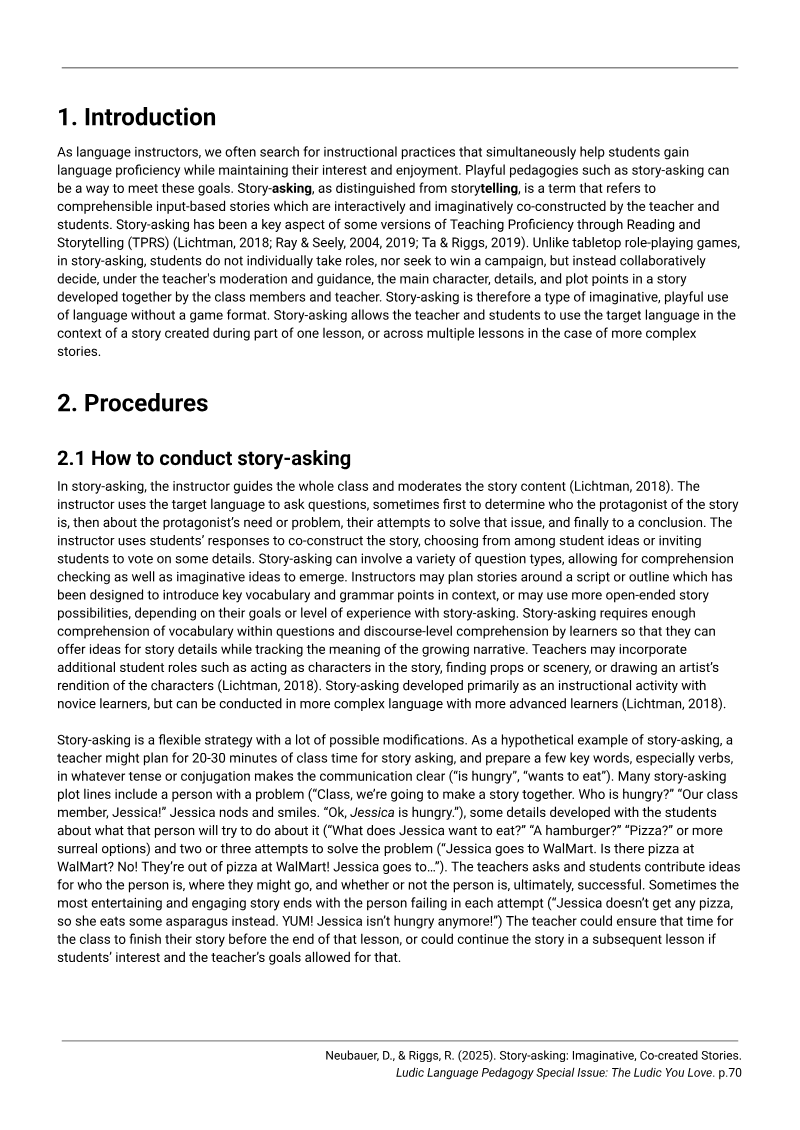

Ludic Language Pedagogy · 2026
Ludic Language Pedagogy · 2026
Ludic Language Pedagogy · 2026
Ludic Language Pedagogy · 2026



Ludic Language Pedagogy · 2026

Ludic Language Pedagogy · 2026
International Journal of Serious Games · 2015