Co-op reports and market data
38 game industry reports, presentations and talks about co-op from writers such as Game Developers Conference, Extra Credits and PocketGamer.biz, newest from 2026. Every document has a summary and key insights with the page they come from, and 28 charts and tables are extracted as data.
Key figures
Gaming is primarily used for emotional regulation in Spain, with 78% of men and 75% of women reporting that it effectively reduces stress and anxiety.
AEVI, 2024 · The Power of Play: España, p. 1
Cooperative games significantly outperform the market, accounting for 36% of all units sold on Steam in 2023 despite representing only 6% of total releases.
Video Game Insights, 2024 · Rise of the Co-Op Games, p. 3
Documents
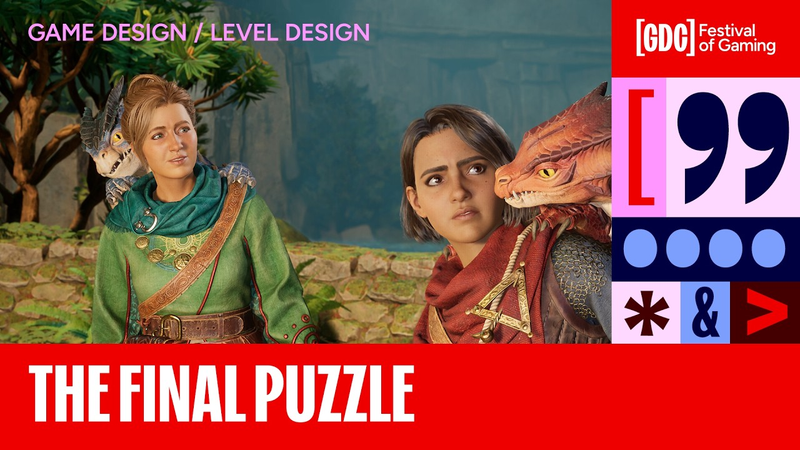
Splitting Fiction: The Hardest Level Hazelight Studios Ever Built
The final level of Split Fiction serves as a masterclass in cooperative game design, centering on a split-world mechanic that forces players to navigate synchronized sci-fi and fantasy environments simultaneously.
- Hazelight Studios refined the 'split-world' mechanic into a climactic finale rather than a game-wide feature to manage the high technical and artistic demands of maintaining two synchronized environments.
- The studio achieved visual disparity between sci-fi and fantasy worlds while maintaining performance by utilizing shared collision geometry combined with distinct aesthetic layers like color palettes and foliage.
- Designers forced constant player communication by implementing information asymmetry, where essential data is split between participants rather than allowing one player to lead.
'Advance Access' games - why should you pay more?
Publishers are increasingly monetizing early entry to highly anticipated titles through formal advance access programs, typically charging a premium of ten to fifteen dollars.
- GDC 2027 has restructured its format to a Monday–Friday schedule, moving the festival hall to Tuesday–Thursday and introducing a new Business Hall at Moscone West to centralize networking and mitigate the logistical challenges of the San Francisco venue.
- Advance Access for games like 'Mortal Shell II'—which achieved 23,000 concurrent users—is increasingly being monetized through premium editions that charge a $10–$15 surcharge for early play, effectively creating a market for artificial scarcity and FOMO.
- PlayStation has begun de-listing publishers associated with 'shovelware' or low-effort games designed primarily for easy Platinum trophy farming, though the platform's enforcement remains inconsistent and subject to reversal.
Our New Game "Didn't Meet Expectations"
The development of a new indie title, codenamed Dodo Derby, serves as a case study in the challenges of game design and the importance of adhering to established development philosophies.
- Prioritizing a strong, clear 'fantasy' or core concept at the start of development is essential for the studio's success, as projects lacking this foundation often lead to aimless prototyping and eventual cancellation.
- The studio cancelled 'Dodo Derby' after six months of development because the gameplay-first approach resulted in unintuitive rules and a high skill gap that could not be resolved without over-complicating the design.
- Development teams often fall into the trap of 'echo chamber' testing, where playing exclusively with the same small group masks usability issues and lack of accessibility for broader audiences.

The New Era of Social Gaming
The gaming industry in 2025 is defined by a significant shift toward social, co-op-focused experiences that prioritize player interaction over high-fidelity graphics.
- The gaming industry is shifting toward social, co-op-focused experiences that prioritize player interaction over high-fidelity graphics, as evidenced by the success of indie titles like Peak and Repo.
- Mobile gaming has reached extreme maturity, with revenue growth stagnating at approximately 1% and the number of games generating over $100 million annually declining by 4%.
- Market consolidation is intensifying, with growth heavily concentrated among the top 50 publishers and new title scaling hindered by market saturation and IDFA-related user acquisition challenges.
First Look: Without A Hitch | Design Club
Codename Entertainment is pivoting from its established 2D live-service roots toward 3D development with the creation of Without a Hitch, a cooperative delivery game designed for one to four players.
- Codename Entertainment is transitioning from 2D live-service games to 3D development with 'Without a Hitch,' a cooperative delivery game for one to four players.
- The game focuses on the 'friend-slop' genre, prioritizing emergent, physics-based chaos and social interaction over complex character-based mechanics.
- Core gameplay revolves around vehicle-based traversal and package management, requiring players to scavenge parts from sentient wrecks to upgrade their vehicles.
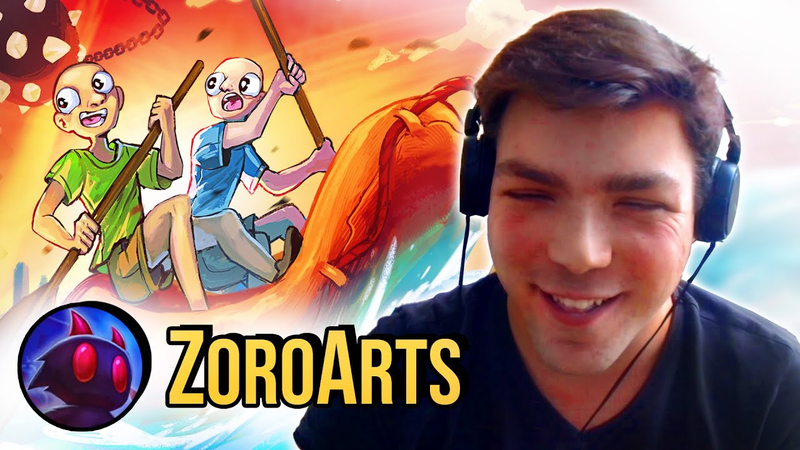
This Young Solo Dev Built a Steam Hit in 4 Months
The rapid success of the co-op title Pedal Pedal Pedal, which achieved 120,000 units sold following a condensed four-month development cycle, serves as a compelling case study for modern indie game production.
- Solo developer Zoroarts achieved a Steam hit with 'Paddle Paddle Paddle' by limiting development to four months, following a two-week demo phase, to avoid the scope creep that plagued his previous two-year project, 'Maki's Adventure'.
- To prevent feature creep, the developer strictly adhered to a pre-defined list of 30 core elements and biomes, refusing to add new features during the development cycle.
- Marketing success was driven by leveraging TikTok, where the developer used negative comments about game graphics as content to go viral, and by building a database of over 1,000 influencer and press contacts.
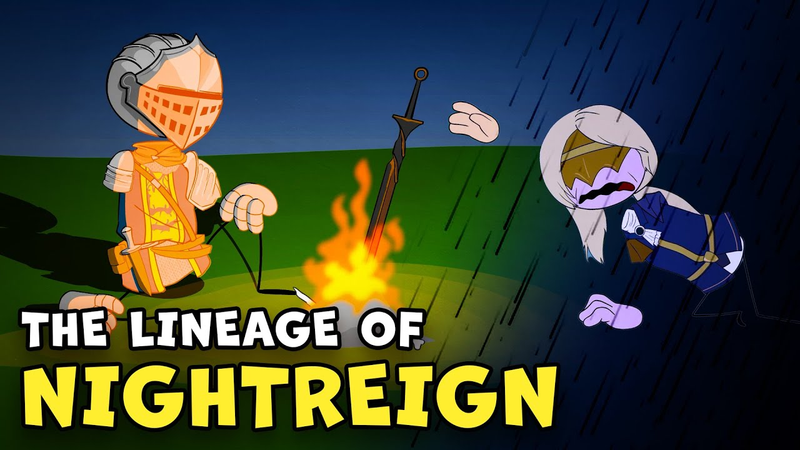
Dark Souls to Nightreign: Never Ever Alone | Extra Credits Gaming
The Soulsborne genre, traditionally characterized by its brutal difficulty and solitary, oppressive atmosphere, possesses an underlying, often overlooked emphasis on social connection and cooperative play.
- FromSoftware's Soulsborne titles, traditionally viewed as solitary and brutal experiences, are underpinned by a strong, inherent culture of community and 'jolly cooperation' that has been present since the series' inception.
- The transition to the co-op-focused roguelite Elden Ring: Nightreign represents a natural evolution of the multiplayer elements already embedded in the franchise's design, rather than a radical departure from its core identity.
- The success of Elden Ring: Nightreign in adopting a multiplayer-first model is attributed to its retention of the original game's combat mechanics, whereas other studios like Remedy Entertainment struggled with FBC: Firebreak by failing to translate the core appeal of their single-player titles into a multiplayer format.

TWIG #353 Netflix Goes Couch Co-op, PlayStation 6’s AI Ambitions, Supercell’s Open Letter
The gaming industry is currently navigating a period of significant structural and strategic transition, characterized by a push for AI-driven hardware innovation and a reevaluation of long-term business models.
- Sony is positioning the PlayStation 6 to focus on a major generational hardware leap, specifically utilizing AI-accelerated rendering and advanced lighting to sustain the console market's relevance.
- The live-service gaming sector is experiencing high volatility, with titles like Battlefield struggling to achieve the scale and monetization efficiency of market leaders like Call of Duty.
- Netflix is attempting to enter the social gaming space by launching TV-based party games, though the company faces significant skepticism regarding its ability to achieve product-market fit.

Magic is the New Fortnite, Xbox Backs Down on Prices and Nightreign gets Duos! | Games For Breakfast
The gaming industry is currently defined by a tension between aggressive intellectual property exploitation and a volatile shift toward AI-driven infrastructure.
- Wizards of the Coast is successfully leveraging 'Universes Beyond' crossovers to drive revenue, with the Final Fantasy set for Magic: The Gathering generating $200 million in a single day.
- Major gaming corporations are prioritizing AI integration and short-term profit optimization, leading to workforce instability and significant layoffs despite record profitability.
- Xbox has retracted plans for $80 price points on upcoming titles, signaling a strategic shift toward prioritizing brand ubiquity over aggressive hardware-based monetization.

The Sad Truth Behind Netflix’s Rebel Moon Game
The recent announcement of a Netflix-exclusive co-op action RPG based on the Rebel Moon franchise highlights the precarious position of Super Evil Megacorp, a studio currently trapped in a state of startup stagnation.
- Super Evil Megacorp is struggling with 'startup stagnation' despite raising over $70 million in venture capital and achieving early success with the MOBA title Vainglory.
- The studio has shifted from an independent developer to a service provider for platforms like Apple Arcade and Netflix, a transition that highlights the risks of high-valuation startups failing to scale.
- The Rebel Moon co-op action RPG is likely a legacy commitment greenlit before Netflix’s recent internal restructuring and downsizing of its gaming division.
Panel: PvE or PvP: Multiplayer Game Design Considerations
The fundamental choice between player-versus-environment and player-versus-player design should be dictated by the intended player experience rather than prevailing industry trends.
- Multiplayer game design should be driven by the intended player experience—such as teamwork, social interaction, or competition—rather than following industry trends or choosing between PvE and PvP based on technical difficulty alone.
- Competitive multiplayer games are generally more technically challenging to develop than cooperative PvE games due to the unpredictability of human opponents and the complexity of synchronizing physics-based interactions.
- Developers should prioritize core game design over adding excessive social features, as features like leaderboards and chat are only valuable if they meaningfully enhance the gameplay experience rather than acting as irrelevant additions.
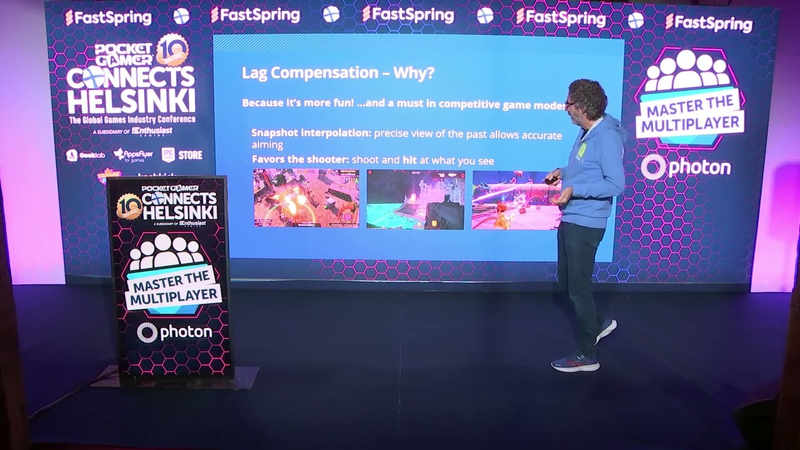
Session: Multiplayer Mastery: Key Considerations for a Successful Start - Robert Boehm, Photon.
Effective multiplayer game development requires strategic planning and a deep understanding of network architecture before production begins.
- According to the 2024 Unity Gaming Report, only 62% of game studios perform formal planning before beginning multiplayer production, a critical oversight given the technical complexity involved.
- Multiplayer game architecture requires managing latency and jitter through fundamental netcode techniques, including snapshot interpolation, client-side prediction, and lag compensation, to ensure a playable experience.
- Choosing the correct network topology is essential for project success; options include state synchronization (for general objects) or deterministic engines (for specific genres like fighting games or racing sims).