1 free read left. Create a free account for unlimited reading + AI research.
Create free account
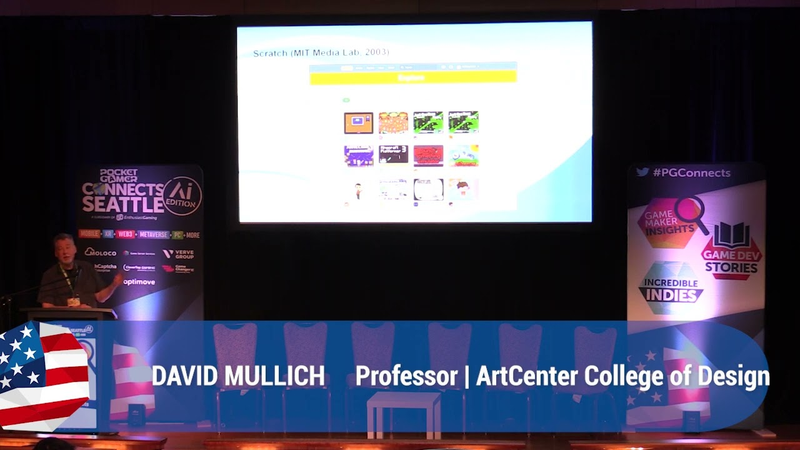
Superstar Session: Use of UGC For Teaching Game Development, David Mullich, ArtCenter College
Key insights
5 takeaways- 01Foundational tools such as Scratch and Twine are effective for teaching narrative structure and basic logic, while Roblox and Minecraft provide modular ecosystems for building complex 3D environments and logical systems.
- 02Roblox serves as a practical environment for teaching multiplayer functionality and monetization, though it requires educators to manage specific content moderation and safety considerations.
- 03No-code and low-code platforms allow students to bypass technical barriers, enabling a focus on core design principles like interactive storytelling and rapid prototyping without requiring formal programming backgrounds.
- 04Platforms like Yahaha bridge the gap between entry-level tools and professional standards by offering a Unity-like experience that provides granular control over game mechanics for advanced students.
- 05Game development curricula must integrate AI-generated content to align with evolving industry standards, while simultaneously emphasizing the importance of ethical transparency and academic integrity.
Ask AI about this video
Transcript
[Music] thank you [Music] without further Ado I'd like to get rolling with our first talk of the day um David Malik from the Art Center College of design is going to be talking to us about using user generated content for teaching game development I can't wait to hear what he has to say I hope you're excited as well good morning everyone appreciate you being here this early just be glad you're not in my 8 A.M class which is when I usually start teaching so I will be talking about the use of user generated content for teaching game development although that's a little bit of a a misconception I'm actually going
to be talking also a lot about No Code and low code game development platforms so just to give you a little bit about some context for why I'm talking about this I start off in the game Ministry in 1979 first as a game designer programmer and later on as a producer so uh games are most well known for are prisoner 2 at edgware DuckTales at Disney I have no mouth and I'm a scream with cyber dreams Heroes of my magic 3 with the 3DO company and vampire I'm not even not even Europe I'm surprised and it still still played there today um and vampire the Masquerade bloodlines at Activision but about 10 years ago I started moving the educational Arena when the Boy Scouts of America contacted me and asked me to be part of the team that developed the Boy Scouts game design merit badge and from there I I begin after that I I joined the Los Angeles Film School as a Adjunct
professor eventually wound up running the program after five years and then now I'm at uh I'm at Art Center College of design where I'm a game design professor in the entertainment track so I've uh as as a game developer and and producer for so many years I really want to teach my students how to become professional game uh designers and so my Approach is to use project-based learning I think it's important for them to immediately start developing projects not just start with Theory but actually Hands-On development of games now the problem with that is that they lack the skills the I teach game design fundamentals classes so I get them when they first enter into the program and most of them know nothing about programming many of them will not be taking their first programming class until a term or two after they have uh my first class so
solution for that is actually two solutions one is to use Game creation platforms so that they don't need to know coding and the other is user generated content because many of them have not developed the skills yet or maybe do not have the time for creating art assets for use in our projects so I'm going to today I'm going to talk about uh several different platforms that can be used that have a user generated content associated with them and before I'm going to start off with are uh our the four most commonly used platforms for the games for change student challenge I'm also a judge for that competition and uh this is not a scientific uh breakdown of what are the forest column ones these are ones that I've noticed personally among the games that I I typically judge so it's scratch
twine Roblox and Minecraft and I'm going to go over each of them so scratch it's been around a long time they're actually been uh tools for teaching game programming since the early 1980s at least and even before that where uh students are taught to use some kind of programming language or scripting language or teaching robots how to move around but one that's endurance today is scratch developed 20 years ago at the uh at mit's uh media lab and with scratches it's a it's a it's a very it creates we're creating very simple games mostly side scrollers of some type maze games and uh and also interactive stories and so here's this this is a screen from uh one of the entries we had this year and it's a side strolling game in which uh it's supposed to teach about the importance of of not polluting our environment so in it you have a manatee that you have to move
across the screen and try to pick up trash while avoiding obstacles along the way and it's a very simple game basically you just press a key to to push it up and it's naturally it it starts sliding down to the bottom of the screen so you push up every once in a while to avoid the obstacles along the way and the way stretch works you actually don't use programming instead you use blocks of code so as you see on the on the on the left edge of the screen there's a number of different blocks that you can that you can choose from and uh right here these are different motion blocks like move turn go to a particular position go to a random position and so on and in fact there are there are other categories in that there's motion looks sound events control sensing operators variables and blocks that you've created yourself and what you do is if you want to when you're coding a game is you choose an
appropriate block from the left move it over to your work area toward the middle and then you you insert other blocks and commands within within uh the gaps in those blocks and you change uh different variables and and enter in different objects that you've created throughout the game and so a base basically t Ed teach programming logic more so than than actual coding uh one of the nice things about is that when you do make a game it's freely available for other people to look at and so part of the the user generated content is at the actual game itself so uh scratch doesn't does have a website you can go to where you can look at other students games that you've made that they've made categorized in different ways so you can go they're not just games but also animations and art and stories that are told and
scratch does provide a large library of assets created by people and submitted to uh submitted to the library so that includes art code sound effects and such that you can draw upon for making your own games another way that you can acquire asset you can go to anyone's game and actually borrow the Assets in the game for example here's this is the uh the manatee from the uh from the uh the game that was submitted to games for change and what you can do is go into the uh the uh the Sprite editor for it and the Sprites here are called uh costumes you can go in you can grab one of the Sprites and you can bring it into a container that you have for yourself called a backpack and you go into different different other projects and grab different assets from them to use for yourself
some of the nice things about scratch it's completely free to use you don't have to pay anything to go up to the platform you don't have to pay for for any of the assets and it has a large library of assets that you can choose from another nice thing about scratch is you do not have to go onto the website to actually play scratch games you can export scratch games in a number of different formats including exe so you can trade to your friends and families and uh and other people it's also playable on Android um it is a fairly sizable Community there are 1 million monthly active users on Scratch and it is a great starting point for kids for learning programming to some drawbacks to it it's kind of limited to very simple type of games you're not going to be making a a role-playing game with scratch and one of its strengths is also one of its weaknesses it's for kids you're not
going to be making uh professional looking games using scratch another common game development platform is twine which was created in 2009 as an open source platform by Chris Klein and Klein is a hypertext based platform so this is a this is actually isn't one of the twine projects that was submitted for games for change actually I actually borrowed this from a uh from a summer school class that I that I taught a couple years ago this is a game that's supposed to be a real life simulator and it's all about making moral decisions so this this is a uh apart from the game pudgy man comes in takes 12 donuts comes to the cash register 12 donuts are usually six dollars but you know that she has twelve dollars in his wallet also looks like the somebody who really loves to eat donuts so you can either
say tell them that all the Dome to twelve dollars or you can be truthful and bet they are they're are six dollars so that that's one part of the game um the way it works is that the game is divided up into a series of passages and each of those passages linked to another and there may be one or more links to each passage if you have choices for the player I make then it's going to be two or more links to other passages so this is uh this is an example of the story map for the uh for the real life Simulator game and actually goes down further than what you can see here you can scroll in and out to see the number of different passages that are available in the uh in the particular game and uh within each passage it's really hypertext there's text that you can type in uh for the wording of the story and you can go on and add in bold face and and italics and other text formatting
color and such and then for the different choices choices that you that you present to a player they're they're put within within brackets so here are the two different choices for that that particular passage we just saw uh it doesn't also it doesn't have to be solely text that you put in teach passage there is hypertext code for putting in images that are stored Elsewhere on the internet as well as for playing sounds so while this does look simple you can actually use twine for making substantial games in it to uh two of the most popular substantial games that have been made for Scratch is depression Quest made by Zoe Quinn and others that is a realistic and serious uh examination into what it's like to live with depression no there's a more fanciful game uh open sorcery which is a uh is a techno Magic game about a
combination of computing technology and magic and it is a fairly deep uh adventure game some of the nice things about twine again it's free to use you can use it either on a desktop so you can export uh twine code so you don't have to go onto the internet to use it or you can use it on the web if you choose and just like with scratch you can export it out you don't export it as an exe you export it out as an HTML file it produces web pages that you can play in any browser or you can export it in twine's own source code source code called Twee real easy to understand I've gotten elementary school kids uh able to program stories and Twine and you can very very quickly create games and in fact you can also use it to teach
programming I've used it at the college level for my students I've taught them how to make decision trees using twine and also to simulate State engines and hierarchical machines for uh for uh learning about how to how to create AI routines within games it is kind of limited though to doing interactive stories you can't do any action games entwine or or any more uh complex games and there's really no official platform out there for sharing assets with other people you basically have to go in and create your own Google drive or something for sharing your assets and your games with your friends and family um tutorials also can be really hard to find and a lot of them are out of date I when I teach twine to students I have to go and write my own tutorials to use uh but uh so it does it does put some challenge if you do want to use time twine for teaching you can't if there
aren't many YouTube tutorials or or official official uh uh tutorials that you point them to so you do have to uh use your own efforts very popular now roblox actually wasn't always that popular Roblox has been around for a long time started in 2006 where it really started taking off as a game development platform was during covid where oh we have all these kids locked in their houses no one to interact with until they discovered Roblox and that they could socialize with all their friends by making games and playing with each other it is a web-based platform unlike our the previous two we looked at it is 3D base blocks are kind of uh blocky the graphics are blocky this is an example from a game that was submitted to us for games for change this is a game that taught about uh
energy conservation and it starts off as a as a platformer in which you have to jump from platform to platform following the Sparkles to get to another rooftop and then when you get to that rooftop there's a little challenge there where you have to fix the solar panel not too difficult to challenge it basically pressing the uh the E key at the right time and the solar panel gets fixed let's see among the assets that come with uh with Roblox there are actually a lot of a lot of templates you can use for creating environments so that you do not have to go and create all these 3D assets yourself for creating Virtual Worlds and also there are a lot of modules that allow you to create games of different types they're modules for racing games or or Capture the Flag games or combat
games built into it so it creates a wider variety of games than you would see in twine and and even in uh in scratch so we use it there's a uses a 3D tool for constructing environments and uh it's very simple to place objects within the tool over on the right side of the screen is a list of all the assets within the game and then on the left side you see more details about those particular assets and you know and change different textures you put on them to uh to create the world so you want to create it's a little bit blocky not nearly as blocky as uh as uh as those that you see in in uh in scratch but you it is a 3D World it comes with a number of built-in assets that you can use through the marketplace but also a lot of kids like creating some of their own assets and
these assets include not just models but they also include sound and they include code written in a in a scripting language called Lua so with with the ones that are created by uh by other that are not official Roblox assets that are created by users there is a rating for them so you can see over here invisible spawn uh location asset it is we see that it has 6764 votes to it uh so that you can see how well how well used and how well liked it was by other other uh uh Roblox users that's important to know because one of the dangers with user generated code content like that is that some of it does contain viruses and other malware so one does have to be careful and one should be choosing assets that
have been given a lot of upvotes by other users a lot of user created games to discover uh and they're they're ranked they're they're recommended based on your picture tastes they're ones that Roblox themselves have determined are the most engaging to look at uh and then there are a number of different uh user generated premium items these are items that not are available that are not available for free you actually have to pay for them Roblox does as its own virtual currency called Robux that you pay for in exchange for regular currency and uh so they range in different prices to it and that's one of the reasons why Roblox has become so popular a lot of kids hope to make money by creating assets that they can they can sell because they do get a cut of the money that they receive from selling their assets uh one of the nice things about it uh
Roblox it has a huge Community 140 million monthly active users to it so that's 140 times what you would see in scratch uh very easy to learn like the other ones it has built-in multiplayer facilities so it's very easy to create multiplayer games within it and it does have a lot of module scripts available created in Lua so that you can indeed create a wide variety of games uh Roblox is extremely popular very well regarded but in looking at some of the reviews of of uh Roblox some of the things that it does point out is that there is some sexually explicit material on on the platform this is against Roblox policy and they do take a lot of effort in trying to shut that stuff down and get it out but there are so many users it does sneak in
oh so it's it's chat has been accused of being a little bit as not being prohibitive enough against people chatting about uh inappropriate content and in fact uh there's there's some accusations of grooming taking place by pedophiles on Roblox uh there are criticisms that it's the parent parental controls it does have is uh not stringent enough but overall it is extremely popular platform uh that a lot of kids use another extremely popular platform that I'm sure everyone has heard of is Minecraft created in 2011 by Mojang Studios and it is touted as the world's most popular video game of all time crafting game and just like the title of it says that
it's all about going around and Mining resources that you use and craft and and and take those resources craft them together to create objects within a virtual world the Minecraft did come up with an educational addition to it knowing how popular it was with kids uh they saw the potential for it being a learning platform so uh this is uh this is an example of a game that was submitted to us for games for a change challenge using using the educational additions to it that allow uh that allow the developer to go and put in educational content to the game in the form of of text and uh and various uh uh various uh tasks that people can go on so this is uh this particular one is climate savior The Last Stand so this is a game to teach about the importance of climate
and in this game uh the player goes around into a series of villages where their water supply is threatened and eventually turns out that it's that the uh the reason why they're they're suffering water shortages is due to a Lumber Company evil Lumber Company that's behind it all so you discover this you go out on a series of quests so the first go out and meet uh meet us a resident of a village who talks about being separated from their sister while trying to get to safety because their town is threatened by flooding um and so uh so uh she'll give the reward of potato if you comfort her you can tell this is creative by kids so you go and you you find the sister and she goes and she gives you a potato that you can add to your inventory uh that is if you don't eat it or drop it instead
and so from here you go and you add it to your inventory so uh Minecraft is built around acquiring a lot of different inventory items that normally you would use for crafting but in this case it's used for Quest progression eventually you come to a uh to a civilian who tells you the flood made tons of water pockets in the village how are we going to fix this how can you help us and then this will eventually lead you uh after a series of other quests to the head of the lumber company who's hidden away in some uh in some office building and they're a part of getting to them involved uh pressing a button to activate a elevator that's really a teleporter brings you down to a different part of building then you can have the uh the confrontation with the Evo lumber company but you're per your skills of persuasion are are good enough that eventually you convince them that
they should be practicing conservation so that they're not uh so that there are more trees up so they can prevent flooding from happening uh but that sort of so that Minecraft can be used for creating a number of different lessons about history or about teaching about ecology or teaching them really about any subject but it actually also can be used for teaching programming thanks to one mineral that you find within the game called Redstone and what Redstone does is it acts as wiring for transferring the equivalent of an electrical current so among the tools that the components that you can find and collect or are torches we which if you go and place a move a torch place it on the Redstone it will carry the energy from the torch through interconnected Redstone like electricity going through a wire but there are also other components you can get that should
be buttons not buttons buttons that you can press that will allow the uh the energy to go through them levers they can use to connect to uh two series of redstones to each other pressure plates that when you step on creates uh creates a connection observers that can tell if you've moved another Block in front of it trip wires when you pass through it it creates a stops the connection uh trap chests these are chests when you open them up it activates the Redstone pistons when they receive energy from Redstone causes a a mechanism that goes and can push another block comparators use of compare here the uh the uh amount of energy going through two different series of wires going through it and based upon that input uh
produce uh produce energy through a third wire and then Minecraft defect uh detector rails where you have a series of rails and when a mine cart goes over the rail it produces a current coming out of that section of rail that it's over and with these you can produce actually some very complex machines in fact I came across this uh some tutorial that teaches you how to actually produce different logic gates you put output Gates and Gates or Gates exclusive or Gates nor Gates just about every every type of logic gate that you can imagine that you would find in electronic components and so in theory you could build just about everything yeah you could imagine using Roblox so it's a it can be used as a tool for teaching programming you can get kids to program game logic
by putting these different components together uh Minecraft in terms of user generated content has servers available on it where Minecraft is normally one large persistent world but you can create your own servers to create your own isolated kind of wild garden uh and there are there well for a while many servers have been paid but with a version of Minecraft called bedrocks you can go create your own free server and on it you can create your own custom maps that can go tell stories that other players can experience another thing that makes Minecraft popular is that a lot of people uh get involved in Minecraft so they can create their own mods to it with their mods that they make available to other other players it can create the uh the wide variety of type of games
that you can make with it by adding different programming functionality to it there are data packs available from both official data packs and and unofficial ones from users making user generated content providing assets that you can use in Minecraft and Minecraft does apply a lot of free texture and model assets for you to use so one of the advantages to Minecraft it is very it's not free to use uh you do have to purchase to use that so that makes it different from from some of the others we talked about it does it's very easy to use just like the others it has a very huge Community I've read some conflicting things I've read I've read that the community is the same sizes as uh Roblox I've also read that there's actually 40 million more monthly active users than in Roblox I'm not sure which one is true I'm going with the more conservative value through the mods you
can create a wide variety of games through it and through these mods you can learn logic that can be the Gateway for learning programming or including learning coding later on it does come with cooperative and competitive multiplayer modes so you can create multiplayer games with it and the content that you find on it generally a little bit better quality assets than you do find with with the user generated content they that's in Roblox in Cons with that you do have to purchase to use it all the graphics are are much blockier than you do see in Roblox and although a lot of adults like playing Minecraft it still is mostly for kids if I had to choose if I had to choose between Roblox and Minecraft I'd probably actually go with Minecraft
uh if I were teaching uh teaching programming to uh to uh older students all right but I teach college and while I have used scratch and I've used twine at different times they really don't provide the breadth of capabilities that I need to create to teach students about creating a wide variety of games so I've I've mostly had to rely on using uh using analog game components so that students can create board games to model digital games and that's not as crazy as it sounds actually in the in real game professional game development we often create analog prototypes of games before we hire on programmers and all their expense into uh into uh uh creating a game but still there's a lot of things you can't do in analog games that you
can do in digital games and fortunately I did find a solution for this last year it is a new game development platform called yahaha created by yaha Studios it's a Chinese company although the its development studios are based in Finland and here's a game that I made for this presentation uh it's it's imitation of the Roblox game we saw earlier in which you have to jump through a series of platforms led by little sparklies that will lead you to uh to another rooftop region create a connection and already can see this is a much more professional looking type of game than you would get in Roblox because the graphics are much Superior and the the game engine that you use for putting everything together is very much like Unity which is Unity programmers so it creates a
very Unity like development environment but what it has in it it has a lot of built-in modules for creating a wide variety of games in fact you can get down to a very detailed level for example here I can actually go and and for my jump mechanic figure out how high I want uh the player to be able to jump in I can also dictate how fast they can run how fast they can walk and various other I turned off attack because it's a platformer game but there's a variety of different uh attributes that and behaviors that I have a control over the level of control that I don't see in any other game development platforms um like Roblox so you have a list of assets that you can choose from they can acquire assets from an asset Library build them up but over on the right hand side of the screen the side of the screen you can
see uh how you can go and change the attributes of those assets so I can either use tools at the bottom if I had a particular asset Chosen and I want to scale it or move it or rotate it or if I'm not so good at using my mouse and doing that I want to be very precise I can go in and type in the parameters for each of those attributes for the object you also have a wide variety of control over behaviors one thing I put in was an obstacle here I I went and grabbed from the uh from the asset Library this donut shaped object scaled it up and then what I did is I added in a component to it for rotating and I have it rotating clockwise around its y-axis uh infinite number of times and so what it does is it acts as an obstacle so that it's turning and you have to jump through at the right time in order to get to the next platform lots of other different components that
you can add to just about any object within the game you can add audio components uh moving components if I want instead I could have the the uh the object move left to right or up and down instead of rotating I could have actually revolve around a point so that moves like a pendulum to create different types of dexterity obstacles I could could have put a teleporter in it I could have had it drop an item when the player passed through it uh I could have even put up a dialog box when you go through it have it triggered to trigger a different event to it a variety of different types of behaviors that can very easily put into this game I could even add enemies to it so I went and grabbed a uh an alien object from it I added a a uh a monster component to it and by making a monster I was able to add various other components to it I was
able to add a movement setting to it and set it up so that it can move around uh following a path uh and then when the player goes in contact with it and I'm actually tax the player so I wouldn't if so I I would have need to add in the the attack option into the game for it but this this is all easy to put together I did all this in about in less than an hour uh so that I could have be able to go and go and in my environment go follow the sparklies jump across a series of platform go encounter the alien deal with the alien fight with him so they could go and put and uh and uh push the solar panel to it but in addition to action games you could also create uh adventure games role-playing games here's a here's another game I quickly made uh where the player comes up and he meets a non-player character that's another module you can put in set up dialogue have you come to save our Village from
the dragon and then eventually when you get to the dragon I set up a quest where uh if you go and you you slay the dragon it will jump I will drop a uh a uh object that it created the inventory item an elixir of Mana that will go and restore Health points to you also has built-in crafting components I could have instead of I could provide the player with an alternate strategy instead of slaying the dragon go out and gather different different elements so they could create their own elixir of Mana so they can go out to the waterfall and fill up a vinyl with water two vials of water go out and collect cherry blossom branch and a pearl put the Pearl in the water and stir the branch in order to create the Elixir so this this is more of the type of tool that uh that I need at the college level it does come with a wide variety of assets and when I see wide variety I mean wide variety at this point there
are over 1 million assets available in its store and it's still in its beta version it's new acid to be created all the time a lot of the assets are free some of them are premium but quite a few are free and like Roblox in order to play other people's games you do go to a central website for it and they make recommendations about different types of games that you can play uh and then some of these are uh these uh so sorry these These are actually templates you can go for making your own game so this is some of the user generated content both official and user generated content where you can go in and instead of creating all your assets from scratch yes two minutes left oh my goodness all right so nice and the advantage is it is free to use
it but it is low code that is you can create code like uh code like behavior for it a lot of drag and drop logic components it does have Lewis grips for adding capabilities it's for all skill levels uh so good for for the school age also go to the college College are up to 30 players huge library of assets it still is in beta though I created a series of blogs a couple of months ago about how to create uh games in it and those are already out of date because they're they're at least visually uh because they're uh they're changing the interface and adding in new things to it all the time still in beta Community is is still fairly small but it's going to be growing so also this is about user generated content uh we know that for marketing user counter generate content is great for getting engagement for potential
customers but what about for students why why is uh why is it beneficial for students to create their own user generated content well beyond the fact that you can provide have some students create content that other students can use for their programming it gives them a feeling of empowerment when they create the content accomplishment when it's finished if they can go and put on a store and their names attached to it they feel a sense of ownership uh if it gets popular they feel social influence and then when their stuff they create is actually used by others in a beneficial way it adds meaning to it as far as the future goes and this is my last slide uh future of course is AI generated content that's the theme of this conference and yeah AI generated content is inevitable uh well I also a juror on the IAA game six student challenge this was the last year we're forbidding student AI generated content in games from now
on we're going to allow it because it is inevitable it's a tool just like any other skill in using that tool is being able to direct the AI and to create the type of materials you want at the educational level we think we have to be careful of is plagiarism if students are using AI generated content they need to say that they're using AI generated content so that with that we know that they are using it all right thank you so very much for listening my presentation I don't think we have time for questions [Music] [Applause] oh
Summary
The integration of no-code and low-code platforms into game design curricula serves as a vital pedagogical strategy for overcoming technical barriers in higher education. By prioritizing project-based learning, educators can enable students without formal programming or asset-creation backgrounds to focus on core design principles, such as interactive storytelling, logic flow, and rapid prototyping. These platforms function as essential entry points, allowing students to build functional, shareable projects immediately while gaining the confidence necessary to transition toward professional-grade development environments.
Platforms like Scratch and Twine provide foundational support for teaching narrative structure and basic logic, while more robust ecosystems like Roblox and Minecraft offer expansive libraries of assets and modular scripting capabilities. Roblox facilitates complex 3D environments with built-in multiplayer and monetization features, though it necessitates careful navigation of content moderation and safety concerns. Minecraft remains a staple for teaching logical systems through its Redstone mechanics, particularly within its dedicated educational edition. These tools collectively demonstrate how user-generated content ecosystems can democratize game development by providing accessible, pre-built resources.
For advanced collegiate instruction, platforms such as Yahaha offer a more granular, Unity-like experience that balances ease of use with professional-grade control over game mechanics. This approach prepares students for industry standards by supporting diverse genre creation and sophisticated prototyping. Furthermore, the future of game development education must embrace the integration of artificial intelligence. As AI-generated content becomes an industry standard, curricula should incorporate these tools while emphasizing ethical transparency and academic integrity, ensuring students remain prepared for an evolving professional landscape where technical proficiency and creative adaptability are increasingly intertwined.














Comments