Key insights
6 slides
Market Reach
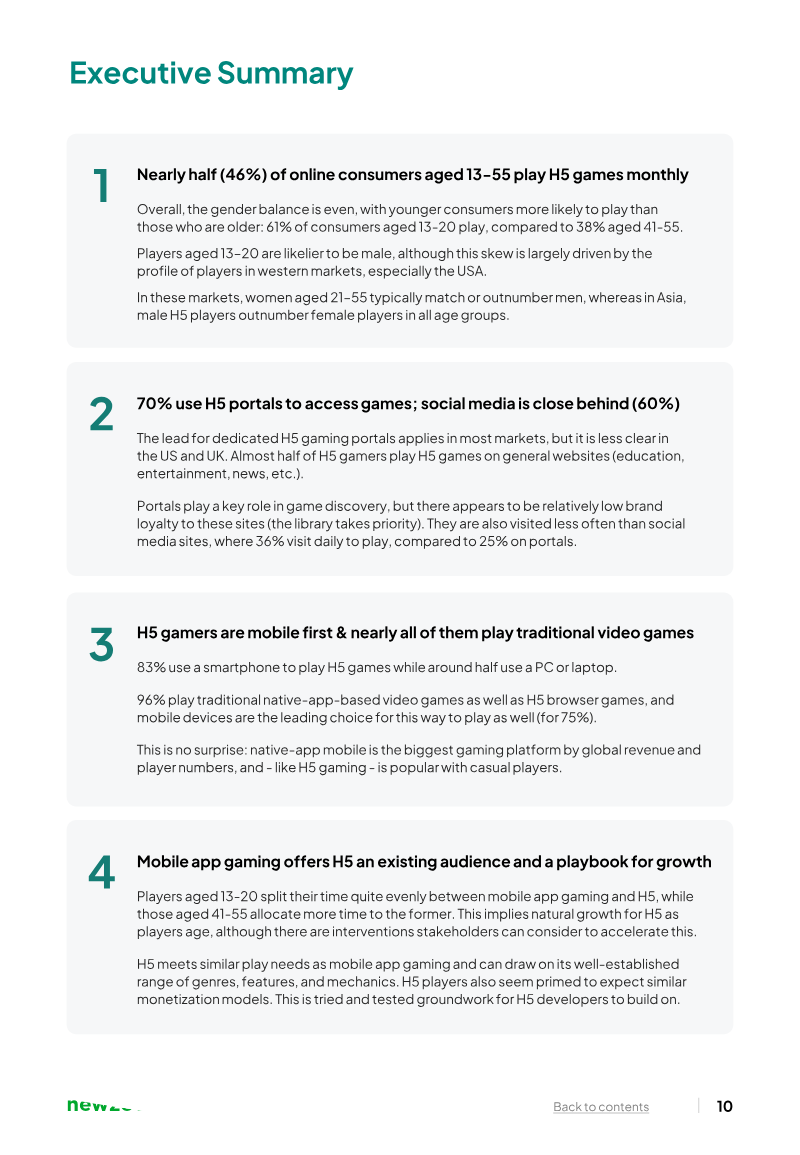
HTML5 games capture a significant portion of online consumers monthly.
The sector reaches 46 percent of online consumers aged 13 to 55 on a monthly basis. This reach is driven by a low-friction, mobile-first, free-to-play model.
Engagement Power
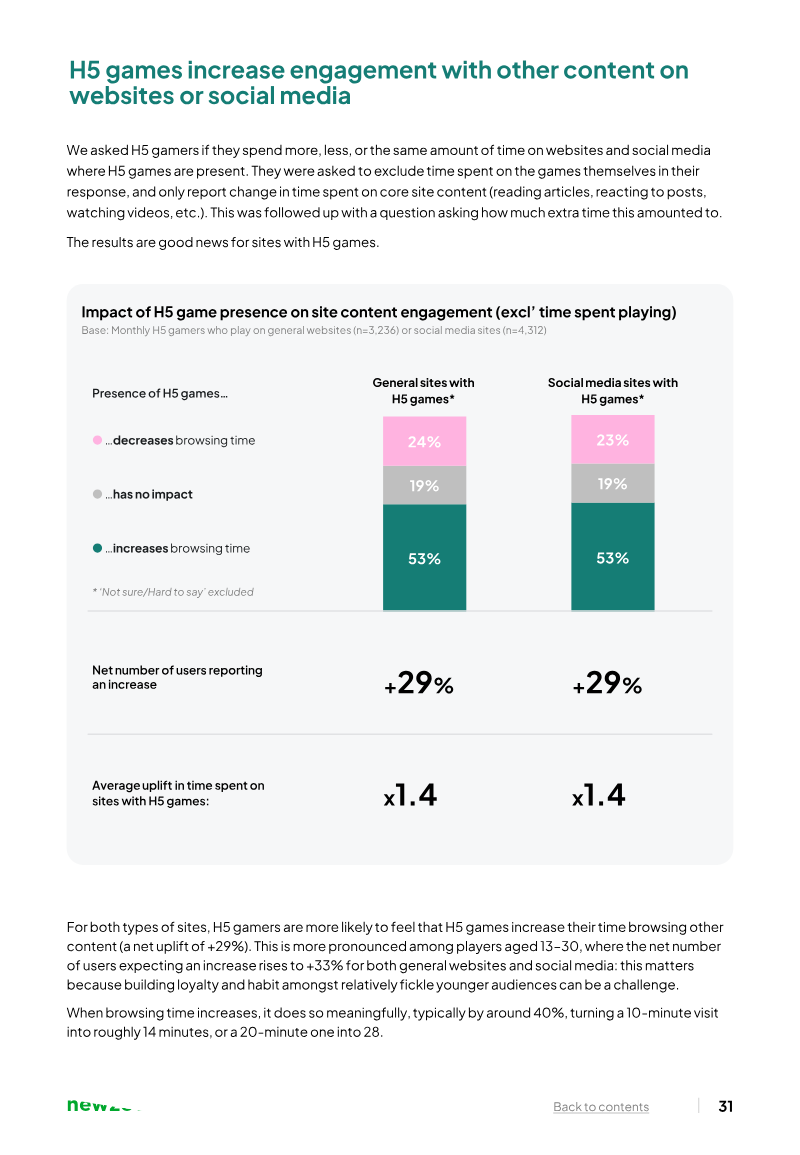
HTML5 games significantly increase user time spent on platforms.
These games serve as a highly effective retention tool. They increase user time spent on websites and social platforms by approximately 40 percent.
Like a good book, these games keep users engrossed on a platform for longer.
Demographic Split
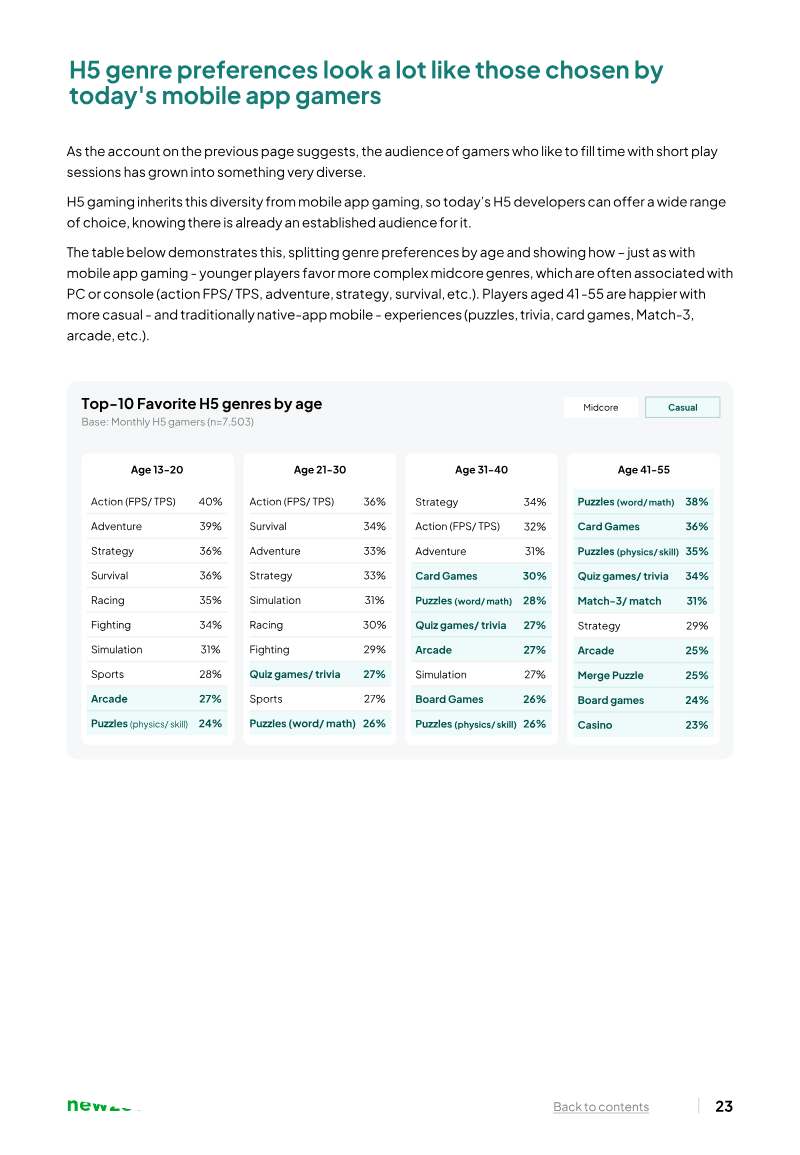
Player preferences for HTML5 games vary by age group.
Players aged 13 to 30 prefer midcore competitive genres and multi-device usage. Older players gravitate towards casual, puzzle-based experiences.
Varied Preferences. Demographic preferences are split, with younger players favoring competitive genres and older players preferring casual games.
Behavioral Impact
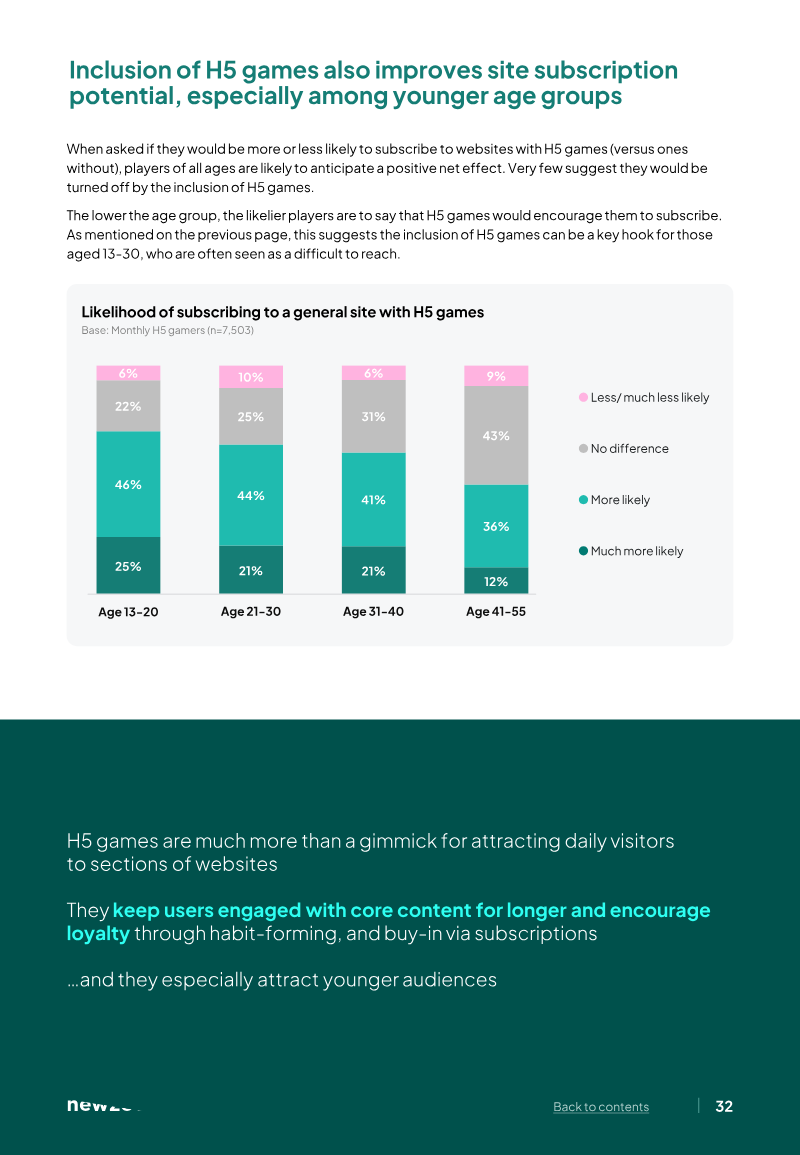
HTML5 games can foster habit-forming behavior and boost subscriptions.
Strategic integration of these games fosters habit-forming behavior. This can significantly boost subscription rates across all age groups.
Monetization Preference
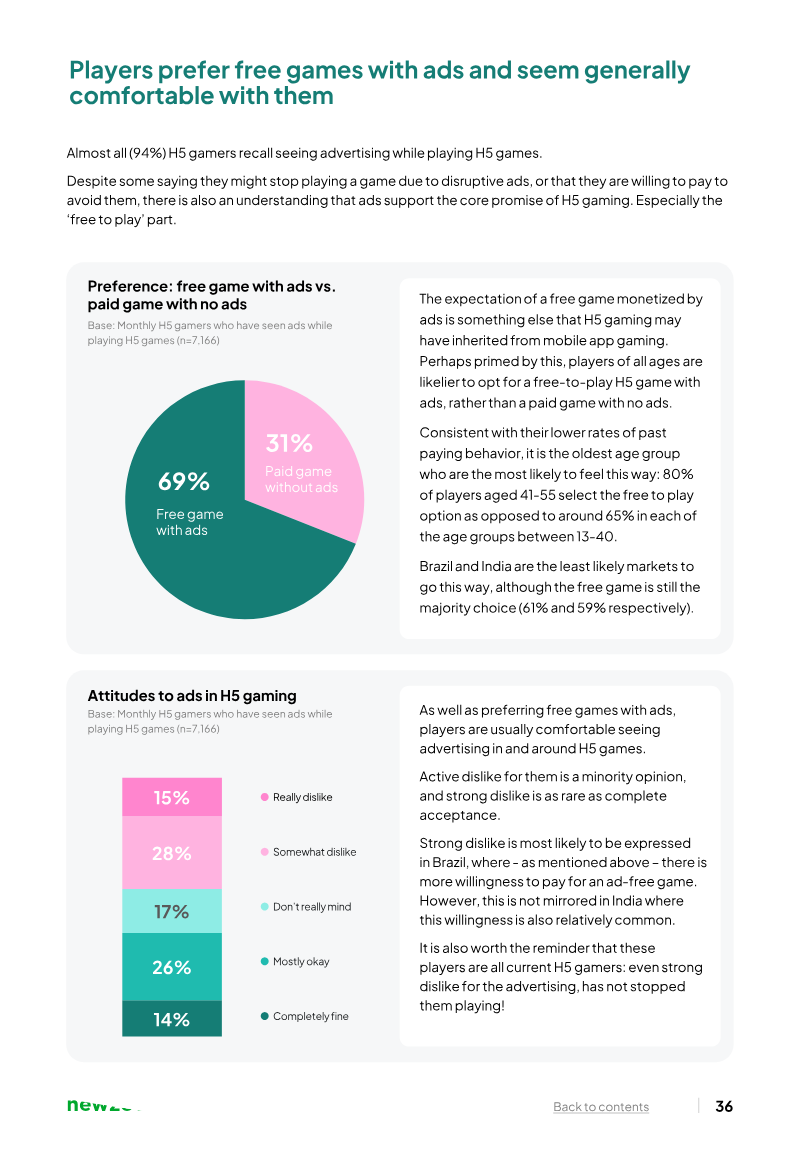
Most players prefer ad-supported HTML5 game experiences.
69 percent of players prefer ad-supported experiences over paid, ad-free alternatives. This makes non-intrusive advertising the primary monetization strategy.
Ad Effectiveness
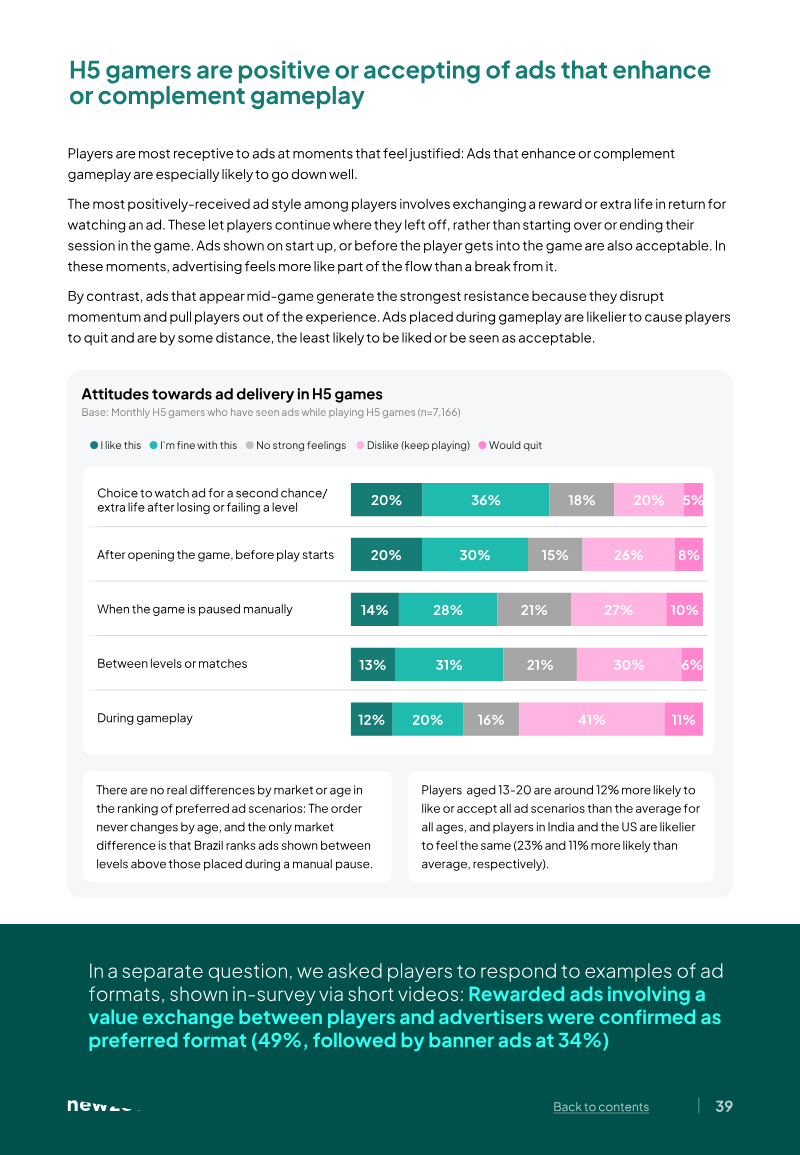
Rewarded ads are favored, while disruptive ads cause churn.
Players strongly favor rewarded ads that offer tangible in-game benefits. They show high churn sensitivity toward disruptive, mid-game ad interruptions.
Like a helpful tip versus an unwelcome interruption, players respond differently to ad types.
1 / 6
Ask AI about this report