1 free read left. Create a free account for unlimited reading + AI research.
Create free accountWhitepaper DiGRA
1 free read left. Create a free account for unlimited reading + AI research.
Create free accountWhitepaperDiGRA
The study examines what British game development means to people working in the UK sector. It treats Britishness as a negotiated, affective identity.
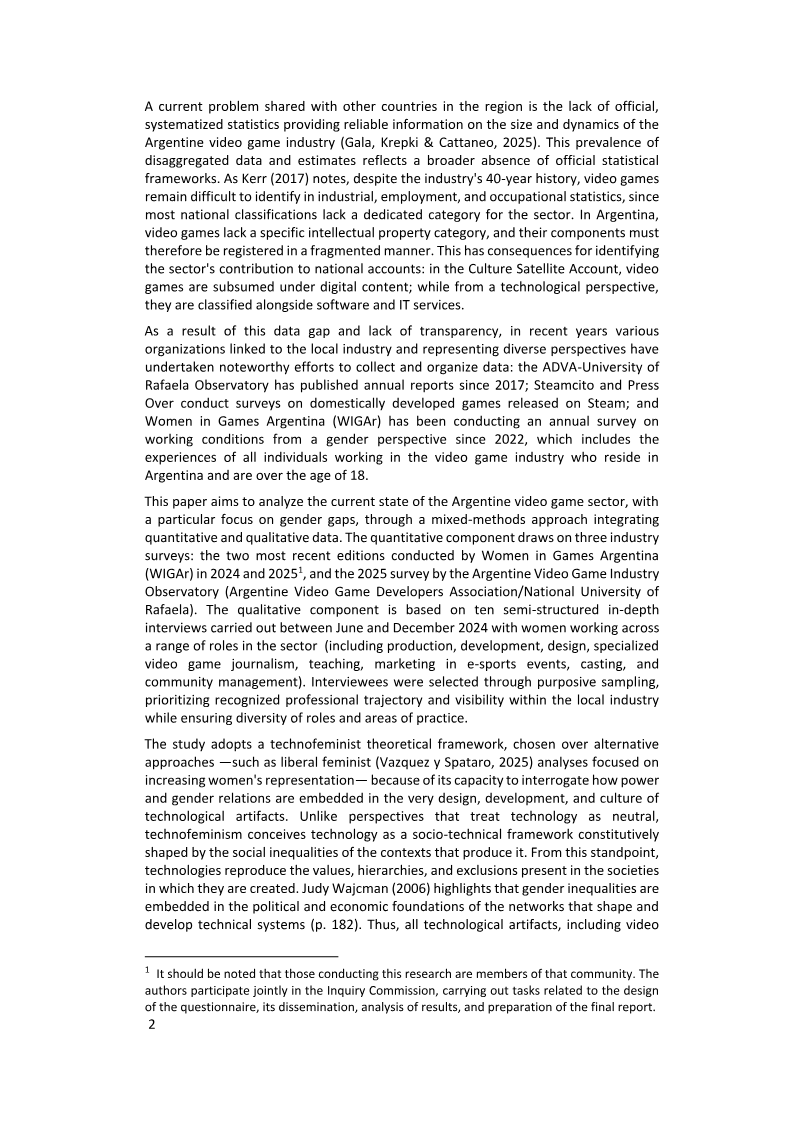
This study examines what "British game development" means to people working within the UK sector, treating Britishness not as a stable industrial category but as a negotiated, affective identity. Drawing on seventeen semi-structured interviews with students, educators, and industry developers, analysed through reflexive thematic analysis and autoethnography, the research situates British game culture against a backdrop of studio acquisitions, globalised co-development, and debates prompted by critiques of titles such as Atomfall. Its central proposition is that distinctive British traits, including humour, understatement, indirect storytelling, and regional identity, persist in creative work even as consolidation and work-for-hire arrangements leave British labour technically capable but culturally less visible.
Participants expressed a strong sense of legacy and pride, alongside a widely shared "craft over commercialism" ethos. Humour and regional identity emerged as the most stable markers of Britishness, while concerns centred on globalised production and data-driven publishing eroding that character. Structural barriers were equally prominent: underfunding, class-based inequalities in access, a graduate oversupply set against roughly 800 open industry positions, and recurring layoffs. Against these pressures, respondents voiced cautious optimism about small-scale, independent, and regionally rooted development.
The sector's broader picture reinforces these concerns. Britishness operates chiefly as an aesthetic texture of tone, setting, and humour rather than as a fixed national identity, and it is most visible in regional and small-scale work. Between 2023 and 2024, 248 UK studio closures were reported despite rising headcount and increasing foreign ownership, underscoring a tension between craft-driven values and risk-averse, data-driven industrial structures.
The study concludes that distinctive British cultural expression is most likely to endure through independent, regional, and community-based projects rather than AAA development. Its authority, however, rests on a small, purposive, researcher-centred sample, and its conclusions are best read as an analytical argument supported by policy evaluations and industry studies rather than as generalisable findings.
Each row is a game or company this document names, each column a document, oldest first. A mark means that document names it. Select a row to see those documents.

DiGRA · 2026

DiGRA · 2026



DiGRA · 2026
Jason Schreier · 2026