1 free read left. Create a free account for unlimited reading + AI research.
Create free account
Should devs change their release plans due to AI clones?
Key insights
6 takeaways- 01AI-assisted decompilation threats are primarily limited to simple, memetic projects, meaning developers should prioritize market visibility and early prototyping over delaying releases to protect complex, original intellectual property.
- 02The Meta Quest ecosystem is experiencing a demographic shift, with younger users increasingly driving demand for free-to-play, sandbox-style gaming experiences.
- 03Industry analysts are shifting performance metrics to better distinguish between raw concurrent user counts and pre-order-driven success, as niche micro-genres make traditional tracking methods less effective.
- 04Epic Games is prioritizing long-term, high-risk AI integration strategies that do not currently align with immediate market demand.
- 05The perceived disconnect between major franchises like Call of Duty and mainstream media is driven by internal production complexity rather than external industry taxes.
- 06Major studios must balance the pressure of rigorous annual release schedules with the need to maintain cultural relevance through direct consumer communication and the pursuit of industry accolades.
Ask AI about this video
Transcript
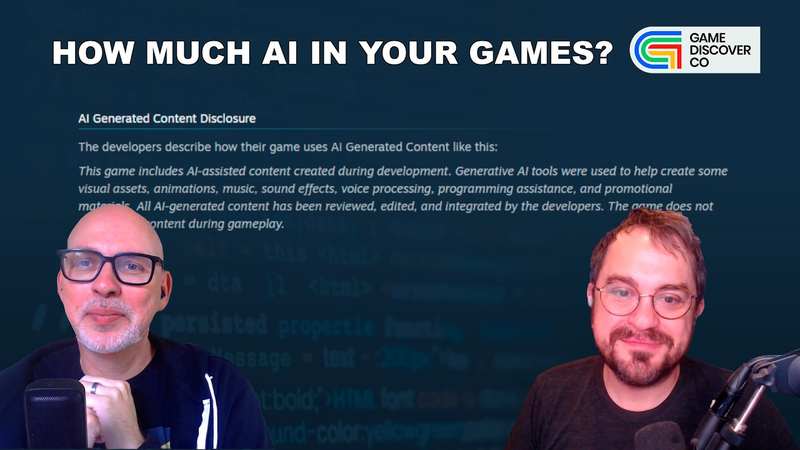
Steam Nextfest, it just went live. At that exact moment, there were 7,800 new demos. That number will get called down a little bit over the coming hours, but needless to say, there are a ton. So, it seems like this should be really good news for everybody. And yet, AI is rampaging through the industry, and I'm wondering if we could see one of gaming's most exciting trends crash into one of its worst. We are going to talk about all of that and so much more in this week's episode of Game Discovery Co-Show. Thank you so much for joining us. I am Chris Planned. I am your co-host here, and I'm joined, as always, by Simon Carless. How are you doing today, Simon?
I'm doing good, although I was really hoping we've avoided talking in a lot of detail about AI trends, and um this is the week where we have to get into it a little bit, I think. So, looking forward to that, I guess.
I feel like we should have known after last week. It felt like it was just
coming down on the industry like this, you know, uh the rain cloud that's turning into the tornado, but here we are. Let's just start right there. It's not going to be everything we talk about during the episode, but it is the very pressing thing. And we'll kind of work our way up to the demo part of it all, because this is part of a much larger trend that is, I think, really frightening a lot of people and making some people excited, but I think probably more frightened than uh less. And where we saw it, I believe we mentioned this over the last couple weeks, is in this decompilation effort for games that has also led to remixing. Can you explain for the people who are not super technical, like what the basics of a decompilation is and why we are suddenly seeing so many more than we had over the past few years?
Yeah, I mean, again, I'm not coding myself, but but my basic understanding of it is, um you know, it's getting more
more easier than it used to be to decompile a finished game into its constituent parts. And because of and that's with the help of AI because AI will then just keep recompiling and see if it's the same thing. So really what's happening is you know, it used to be I think it took a really long time and a bunch of manual effort to decompile even old Super Nintendo games. And now it's it's not quite a press a button and you can do it, but it it's getting there. Now there's an important caveat on this which is if you're sort of not an expert and you're sort of vibe decompiling stuff, it's unclear to me how much you can modify it successfully. And that's why a lot of the things we've seen to date are much more like, oh, I've mashed Tony Hawk into Call of Duty by pushing these these two buttons. And and that's kind of a really good trick shot approach that isn't going to be that serious. But I think what's starting to happen now which people are getting a little bit more worried about a lot more worried about over the next couple of the last couple of weeks is,
you know, is there a chance if you have a playable version of your game out there people will decompile it and decide to make a game based on it. That's that's something that people is now front and center in people's uh in in people's radars, I think.
Yes, that sounds exactly right. I think there's all these other technicalities that we could get into about like decompilation versus recompilation. But the long story short is games like Halo are suddenly available in web browsers in ways that they just like simply weren't. And that is causing all sorts of headaches. You mentioned the remixes. That is very interesting because so many of these seem like they almost exist exclusively as TikTok videos and not as things to be played. Um which raises like a number of questions. And we can poke at those questions by the decision that came from Xbox this week to open yet another division task force. I feel
like we're getting one of these every, you know, two or three weeks now. This one is the Xbox Labs announcement. And you would be apologized for um listening to the show and saying, "I've heard of Xbox Labs. I'm not entirely sure what it does." Because I'm not entirely sure what it does and I've read the announcement multiple times. Simon, do you have an idea of what what I guess what's the subtext? What are we supposed to be kind of be reading between the lines here?
Yeah, I mean it's it's meant to be like we should I don't know. I mean when there's new people in charge of large companies, they tend to want to sort of put some stakes in the ground. And I think the stake in the ground that's being put here is we want to be cutting edge. That's why you have a labs you know, Bell Labs and blah blah blah blah blah. So, I think they want to be cutting edge and I think one of the things that is cutting edge and the only thing they really directly mention is how AI and games interact. So, it will it will maybe and I'm certainly hoping that there's all kinds of interesting things that can be plugged into Xbox Labs. But, I do think one of
the things they're looking at is Xbox itself has a whole bunch of old code like they should have hopefully they can decompile it if they don't all the all the source code for a whole bunch of games. And so, and so the question is I'm guessing can they do anything interesting to that which isn't going to have everyone calling them evil. Which isn't an entertaining journey which we will go on together, I'm sure.
Yes. Yes. I'm I'm also just very curious what all of this will mean for the kind of weird relationship that studios and publishers have had with ROMs in general and these handheld emulators. It felt like there were maybe legal questions that were unanswered and it was mutually beneficial for them to remain unanswered that I imagine a lot of publishers are suddenly thinking, "Oh, we we need to have more clarity on all of this." And I do worry about what that will mean for specifically things like preservation like things that have
relied on on ROM culture. At the same time, I'm sure there are people who are saying, "Well, this is a boon for preservation. Suddenly, all of these games are going to be playable on PC. They're We we could get really deep with the weeds on why that is or is true. Yeah.
Yeah, it's it's really interesting. I mean, it is true that there's a whole bunch of stuff that was only I believe someone converted PT, which is obviously Hideo Kojima's famously unreleased demo only PlayStation game. There is a PC decompilation of that running, I think. And that to me, as someone who's very pro-preservation, is kind of cool because you actually do not want that game. I don't know how accurate that game is. I have not looked. Uh but, you know, you you certainly don't want that game to be unplayable forever because uh because it's locked into a console that's not really very runnable anymore. But, yeah, I mean yeah, there's just rampant discussions of this, but I think it's mainly been in the kind of area where, "Oh, maybe console stuff is playable on PC. That's fun." until recently. But, what's really starting to happen now is, you know, you're you're starting to see some people delay their demos for popular games because they're
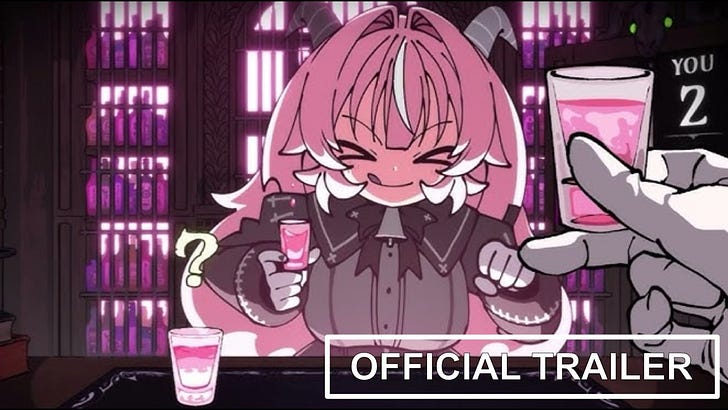
worried, as far as I I mean, they're worried about a couple of things. This is This is specifically this game um what's it called? Drunken Goddess Reflux, I think it's called. Uh and so, it's it's specifically a game that has a has a lot of wish lists. And so, they announced that they were no longer doing a big demo. Uh and they gave two reasons for that. One, which I think is true, is that that they're not really sure if everyone's like like the the the the game is about it's a drinking game. So, they're concerned, I think, about some of their um whether they'll get banned on certain YouTube but if they don't have the right flags on it and stuff. So, they want to work with their clients on that. But, the other thing was, and they said this pretty explicitly, that I think they're worried about people decompiling their game, which is not in itself that complicated, and and making a clone of it. So, they've actually decided not to do a wide demo because of that, which I find pretty interesting.
Yeah, I mean, this gets us to the big topic of the day. How realistic is this? Because clones, obviously, especially when you think of
like mobile games like this fishing and um what was it? Oh. The two forest 12? That was the
yeah, whatever the original one was.
Asher's game?
Three, three, I think.
Three, thank you. Oh my gosh, numbers. But these are these are games that were being cloned, you know, long before AI was being used to do this and at pretty quick rates, right? On mobile. Is this a real threat that showing your kind of gameplay hook in public too early and at great detail now exposes you to clones that are going to be, you know, crap, but are going to be there, you know, months maybe before your game.
I mean, it's really difficult and actually actually the newsletter that's coming out at the same time as this podcast. Well, I'll be trying to get into that a little bit more. I think one of my comments is I do think what's changed is the fear that people can simply decompile your game, change some stuff
and then recompile it is a new fear. I mean, to some extent. It was happening I think somewhat in hyper casual, but it used to be way more difficult to do. So, I'm noting, you know, there's an example as of today, one of the needle in a haystack games and I feel like we might have talked about these games before.
Yeah.
like incrementally games. One of them is explicitly accusing another one of decompiling and recompiling its code and I presume because it's decompiled the game hilariously. Because of course, if you're, you know, if you're worried about this, you can go decompile that game and sort of if if there's a demo out and sort of see see what's going on with it. And so, I think this idea of wholesale code stealing is is more of a concern than it used to be and I think it does make it a little bit easier to make clones should you wish. But I I think, you know, one of the things here and hopefully I'll get to saying this in my newsletter as well is if if you have a big, you know, like I looked at these these
needle in a haystack games. Only two of them have any traction at all and I guess it might be true that one of them uh, made based on the other one, but even that it's unclear to me sometimes. There's this big fight recently about a game games with potatoes and comments are going to potatoes in them. Well, I think there's two games coming out like that and both of them I think have plausibly claimed they independently invented the potato game because it's it's a meme it's a meme already. So, I I don't know. I think I've definitely run some people who I think are now too worried about this. Uh, you know, so I think it's a legitimate concern, but I also think like if you have momentum already, um, I don't think anyone's going to suddenly overtake you. There is maybe an argument now. I guess my final sort of advice on it is there is an argument now if you have a lot of momentum already and you have hundreds of thousands of wish lists, maybe you shouldn't do a demo because maybe that gives people the opportunity to, um, you know, clone you if it's a pretty easy game to clone, but I think
most games are not that easy to clone. So, that's the sort of my comment. I think I think Needy and Greasy are different, but I don't think most most games are that easy to clone. So, that's my sort of pushback against people who are like, "I don't want to show my game now." Because you don't show your game, no one's going to buy it.
Yes. I I I I tend to agree with you. Especially that the memetic games are the most vulnerable because they are memetic and like memes are inherently copyable no matter what form they are in and I'm not surprised to see that happen. I hope that you're right about more complicated, uh, and original games being harder to rip off. We'll see. I will say just to put a bow on the other section of just the massive decompiling efforts, um, in these mashup games. I I could be wrong, but I do wonder if we are watching what happens every time somebody gets a handheld emulator for
the first time and they download every ROM and they fill it with every ROM and then they end up playing none of it. And if like something similar is happening that yes, all this stuff is getting created, but at the end of the day when you actually have access to everything, you use nothing. Um, and I do wonder if companies still have the advantage of like the Criterion Collection, which is, you know, like most of those movies are available for free everywhere, but, you know, people end up paying for them or even something like HBO Max or Netflix or any of those services. The ease is often what people are paying for. Um, anyway, so many more questions. I'm sure we'll be talking about it more soon. I do want to talk about a thing of an original thing working and working really well. Um, this is uh Jake Birkett uh uh on shipping Forbidden Solitaire to now over 2,000 overwhelmingly positive Steam
reviews. Uh, a great post over on the Gray Alien Patreon, uh but some details I want to pull out from it. One, uh this idea of quote ideas are worth a lot. The game's core idea was 10 times easier to market than anything else we ever made. And that polish is not as valuable. And now it seemed like um Jake was working through something here in this post and with this game that that's kind of an inversion of what he had thought originally of, you know, like ideas are a dime a dozen, but like doing a job well is really hard. And that that's com- more complicated than it seems to be. Where Where did you land on reading this post?
Yeah, I was I was excited by this post cuz Jake's been a long a long time. I mean, he's been in he did a very famous GDC post, which was about how to succeed without ever having a hit. And this is sort of I know, this is not this is not a major hit, but this is certainly a minor hit. And it's certainly, you know, I know based on the fact that he lives in the UK, not in a
city, uh I'm sure that it's like a very it's like a a very good level level hit for him. He's not, you know, he's not got got crazy living expenses. And it And it was it was it was done with someone else, the the who made Home Safety Hotline, which is sort of a um sort of a low-fi horror-y kind of game. But, I think I think the main thing I've seen him say someone someone else say this as well, which is if you have an idea that is working, it's it's like you're on skis and you're going downhill. All the marketing is like heading heading downhill in a good direction. It's just building momentum all the time. I think that's what he really found with this game. And he's previously done various games, but a lot of kind of solitaire and solitaire much more vanilla-y kind of solitaire. He like one of his I think his his his previous games were like Regency-themed solitaire games. And they're very much much more like casual game portal games. And that's been his history. He said he he made money back in the day in the bigfish.com, which is like the the PC casual games portal. So, I think I think what he noticed, and I agree, is if you get the right idea,
it really is like skiing downhill. And and you can tell that from the moment you announce the game. And I think that's probably the thing I suspect that was my most surprising to him.
Yes, there's a great quote. I'll just read this quote, and then we can dig into it. Because so many games are launching now, you have to stand out somehow. A lot of indie developers are cottoning onto this testing their concepts early by releasing a prototype or a teaser trailer. If the market responds well, they run with it. If not, they change tack. While people have been talking about this approach for a while, its value became glaringly obvious to us. This is interesting cuz there's there's a tweak to this that is different than what I normally have in my head, which is the idea that in some way every game is an early access, even if it's not available for sale. That you are sharing with it and adapting the game, or even the possibility that you will finish making that game depending on
crassly to its virality, less crassly to just seeing an audience like click with it. And I'm curious on on your side as someone who's talking to a lot of developers, are there people who are quite literally getting kind of two or three projects putting it out into the world whether it's through a great gift or a teaser trailer or something and then moving forward with the one that works and and abandoning or shelving or postponing the rest.
I think it happens a little bit but it actually happens a bit less than you would think is sort of my comment. I actually wish more people would do that. The only issue with that is you need to have enough of an audience to get a signal. So that's sort of the problem, right? And if you're just looking for a signal and you don't want to do a full demo or full visualization then and you don't have a big audience or a medium size audience already you can ask then I think it gets a little bit tricky. But yeah, I think it's I think it's a good idea if you're not sure about what to
make then I think the idea of having two or three ideas and treating them equally for a little bit is a really interesting idea given what a short time it can it can take to make prototypes of certain types of games. So I I think more people should do that but I I think it goes a little against a traditional creative impulse which is authors for example do not say well I'm going to be writing my next three books at the same time. So I
Yes. Yes. Yes. And I I can imagine that some folks are listening to this and they're like well it just doesn't work for certain genres like strategy certain strategy genres or things that just don't translate well to 15 seconds of gameplay versus you know a game that you kind of live in for 30 hours. And I think that's true. I also think it's telling that Forbidden Solitaire is the example here because I think Solitaire in general is not a thing that teases well and what this really gets at is like well here's a version of what I'm doing that that
does. And I realize that comes with all sorts of design um adjustments adaptations. I love Forbidden Solitaire. It is not the most complex solitaire game. It is if anything more like a narrative game with a solitaire vibe to it. So these things can change the types of games that are getting made. How bad or good that is is kind of to the developers, I suppose. I'm very impressed and also just very excited, like you said, after that GDC talk. It is nice to see somebody get a a pretty good sized win, um, uh, not just have to live off of the like the day-to-day grind of game development. Let's keep moving. Um, we posted on LinkedIn with, uh, well, I should say you posted
[laughter]
that at Fred Games Discovery Co on LinkedIn and on on your own LinkedIn page, an update on the Meta Quest VR game charts and what's going on there, uh, in September and October. And
specifically, there is a new free-to-play sandbox superhero game called Hero Hero or Hero X Hero, depending on how you read uh, your anime titles. And it is absolutely crushing it at number one. Tell me a little bit about this game, but also tell me like, who is the VR audience these days over on Meta Quest?
Yeah, it's interesting. I mean, I would describe it as a little Roblox adjacent in many ways, because I looked at Hero X Hero and I was like, damn, that looks a lot like, uh, a lot of the popular anime Roblox games. I haven't I haven't dug into a whole bunch, but it does appear to be sort of like blocky superhero fun with your friends. And so, um, you know, most of the rest of the top 10 grossing is really continuing this trend that we've seen, where there's like Gorilla Tag, there's Animal Company, there's also, uh, I think Yeeps is in there as well. So, it's almost all the top 10 grossing, you can't see the exact revenue numbers, but you can you can
sort of see the the rankings. All these free-to-play games that are largely played, I think, by pre-teens and and early teens. And they obviously will then ask their parents for uh, credits in those games. And so, there was some other stuff in the top 10. There's sort of I think I think both Blade and Sorcery and Beat Saber were in the top 10. Beat Saber has a ton of DLC now, so I'm I'm sure Beat Saber is doing well on many less players, but lots and lots of DLC downloads. But, it is interesting to me really at this point the core remaining VR scaled VR players appear to be and you know, my son who is 10 that sometimes uses our Quest 2. So, I I I know I I hear some of these other people cuz he's talking to them. It really is a yeah, a bunch of preteens who are tooling around in these very sandboxy games, which is not what anyone expected I don't think 3 4 5 years ago.
This is purely speculative, but am I just to assume that a bunch of adults who bought uh their VR glasses their their headsets aren't using them anymore
and now they've been kind of like relinquished to the children and that is we have an entire generation of kids playing this or is there like any signal that kids are just really into VR?
No, I think you're right. I mean, certainly in the case of my Quest 2, I bought it I don't know if I was ever super into playing it. I bought it to check out, but I did definitely relinquish it to my kid and I think yeah, and they're not that expensive. So, there is some indications like definitely I know that the the core the Meta Quest app was trending on Christmas Day like at least a couple of Christmases ago because you have to install the app to install the you know, to install stuff. So, I think there was some indication actually that these are Christmas presents as well. So, I do think that kids are asking for them. Um but I do think some of them are the sort of like hand-me-downs and I think
Yeah.
I I mean, the biggest takeaway from this frankly is I I do think that socially having a giant visor on your head is rough if you're over a certain
age and that age is like is like 16. And I think I think you I think if you're under that age, you can get away with it, but just deciding within your family, you know, as like me personally like I would have you know, I think my family would would object if I had my headset on for like 2 or 3 hours a day. It would it appears I don't care about them at all.
Yeah, yeah, they they they give me some feedback. Yeah.
Do you Yeah. For for people who are listening in there always looking for like a new place to release their work or to design for a new audience that maybe isn't so crowded. Is this an opportunity space? It Are these uh shameless, you know, teens and preteens a a real audience that people should be pursuing of that it's a less crowded area or is this kind of a I don't know, the dead cat bounce effectively of the VR space and that, you know, maybe starting work on a game now is not going to be where they're going to want to be in 2 years.
I mean, my impression is mainly the people who've actually succeeded. I don't know much about the devs of Heroic Hero, but the the the people who've mainly succeeded are people who saw what happened with Gorilla Tag and realized that that was a trend they needed to hop on and that was a while ago. But but I think what it So basically there's been a bunch of games like like Yeeps and others who who who would which were done by competent teams who were like, "Well, this whole free-to-play sandbox I'm running around with my buddies thing is really working." And so I think there's been space there. I'm not sure how much I mean, most of the top 10 is games that have been out for a while except Heroic Hero. So I'm not I don't know how much space there is for new players in that space, but I think that's much more likely to work right now than oh, I think I've got a great idea for a premium $20 title cuz from what I can see those games are selling. I mean, they're selling tens of thousands of copies in some cases, but um and and by the way, if you want a basic idea like we don't really do this anymore, but I think if you multiply number of ratings on Quest by like a hundred to 150 for for non-free-to-play
games, that'll give you some indication. So games that have 300 ratings then might have sold like 20, 30,000 copies. So so and and you will see I think that we track this, but we don't we don't look at it too much, but you will see there's not that many new games that are getting much more than a couple of hundred ratings, implying there's not there's not that much that's selling more than like 20, 30, 40k right now. Pay it.
Um Okay. Well, I want to I want to hit the last main story of the week and it is one of the strangest. I'm very glad that I get to talk with you every Simon to help me make sense of things cuz uh, I really need help here. This is the news that Epic Games is hyping its new quote faster PC launcher. Uh, the beginning of the announcement blog post says we vibe coded the Epic Games launcher to be faster than the other guy. Uh, and it claims that uh, you can cold start to store 46% faster than Steam.
Uh, and then it has this really just like we jammed it out vibe. There is an absolutely bizarre line in in that blog post. Actually, maybe this is the real opening opening line is programming is hard. So, instead of doing that, we vibe coded a new Epic Games launcher. I mean, before we even get to like how well it works or doesn't work. What I just find so weird about this is Tim Sweeney is whatev- whatever your opinion of him, one of the great programming minds to ever do it, right? Somebody who I think has a I hope a real genuine appreciation of the beauty of like the craft of programming. What does it mean for this company of this scale to open a announcement with the line programming is hard?
Yeah, we just jammed this one out for you, yeah. It's I mean, here's the thing. I know a lot of expert
programmers who are very excited about AI. So, that's so Now, that Now, many of them are not very publicly excited about it for obvious reasons because you get yelled out a lot. Uh, but but I I actually think on that first point, I think what's what's gone definitely sideways here is the marketing of this. I I think uh, you know, I I think the idea like I I am enthusia- I tend to be a glass half full kind of person. And one thing I'm enthusiastic about it is the fact that it's definitely objectively true that the Epic Games store was under uh, under featured. It had many It didn't have many features. That was one of the big problems of it. So, if they're going to use this as a basis to code a shitload of features very quickly for Epic Epic Games launcher and Epic Games store, then I'm like, that's great. Um but unfortunately, what they sort of gone with as their starting point is they're like you know, they're like, well, we just coded this really quick thing. It's really fast. And of course, everyone is coming back and saying, the reason I do or don't use Epic Games store is not uh how long it takes to boot up. It's a whole bunch of other
stuff that you maybe don't have. So, I think um yeah, this is a classic example I think of maybe um you know, and obviously there is the separate discussion of are you denigrating the craft of game pro of of programmers by by saying we you know, we just we just pooped this out. And I think that's that's a that's a legitimate thing to talk about as well. But I but for me that that the fail I I think here is in is in the marketing. I think if you if I was going to do this, I'd be like, I'd probably wait until I had some more features. And I'd probably launch it with like, hey, you know, we've been you know, we we we've been using AI aided coding to really build out our features quickly. Here's all the features we built out. Like like I think people would still yell at that, but then you'd actually have the features.
Yeah, I broadly agree. I There are There are so many things I just find very strange about this and I hope that everybody learns from the big one is exactly what you said of like, I I agree. I've talked to
many many game designers and specifically people who specialize in programming and the idea of AI as a support system allowing them to do things they otherwise couldn't do is real. Which is so different than programming is hard, so I bashed this out. Like I I thing that I have seen elsewhere is like, this problem I've had for 5 years, I could not solve and now I've found a way to solve it. And like, that is programming is hard and now I can fix things. That That is really interesting. I also to the other part here and like, holy moly, I do not want to know what's going on with like the PR marketing of this. Nobody cares about your thing opening 46% faster if they don't want to use your thing to begin with. And having that be like the first big news and then having gifts going around of like the thing just not working. Um not great. Just not great. And I guess this gets like my my my
giant big question, which is I think I get the sense that Tim Sweeney really believes in all of this. Like I don't think this is like a put on like sometimes you see with tech CEOs. I I think he believes everything he says. And I'm trying to figure out what the bet is here. And if this is basically part of a larger thing of like, we just need to get our customers accustomed to the idea of vibe coded stuff being the retail product. That we are going to like just keep putting this out because that's part of like the path towards normalcy. And is like, is that a fair read?
Yeah, I mean, I don't know. I mean, Epic being led by someone who is so I'd say programming brained and also is very a very idealistic person has led to all kinds of very interesting corporate decisions. I mean, I think you can argue with hindsight that the Tim Sweeney has done an amazing
thing for the world by going after the App Stores so hardcore when everyone thought it was kind of lunatic because it really has been one of the leverage points for uh for the App Stores uh the at least the mobile App Stores having to open up uh like somewhat. They haven't done it all the way yet, but I think you would not be seeing folks like the EU going after the App Stores so much if Epic hadn't opened the door there. So, I don't know. I think I'm a little bit like on the one hand second-guess Tim Sweeney at your peril. On the other hand, um you know, like it is possible. And let's not forget, by by that a lot of I mean, you know, they might be looking at their valuation as a company. You know, companies that use AI right now are getting sky-high private and public valuations. And that's that's like separate to the you know, so I think that's a reason to talk about AI a lot. And there's been various other companies that have tried to do that like EA with sometimes limited degrees of success, I think. But yeah, so so I yeah, so I would say on the one hand second-guessing Tim Sweeney here at your your kind of peril. On the other hand,
you know, his his influence sometimes comes to ways that I think are pretty unconventional. And I think if you look at the history of Epic Game Store, I would say that's that's quite a good example of that. I don't completely I think building out features early for Epic Game Store would have made a difference to their success. Instead, they paid a lot of money for exclusives. So so so with my glass half full hat on, I'm like, oh, they're going to use AI to build out features now. Well, maybe Epic Game Store will have a whole bunch of competitive features and that will really help. But that's certainly not not how they are currently announcing it. So So maybe I'm just reading too much into this.
Yeah, I mean, I there are many things about like AI taking jobs and all those things. I'm very very very mindful of those. I get it looking at this purely from the 1,000-ft view. What I am curious to see is exactly what you said. And it's why I say when Tim Sweeney says something, I I I believe him because he is the rare person who like
he will go all in on some bets that do not make sense in the market otherwise that we would not see other CEOs doing. So I I I believe that he believes this is the one and true only path forward and he will bet everything on it. I just personally don't know if that's the bet I would make. But we will see. I want to start wrapping things up with our usual stuff. I want to hear about what's going on in video games because this might be one of our last chance to hear about new games for a while as the GTA 6 storm rolls in on the horizon. Can you tell me about what was going on on Steam last week and this week?
Yeah, last week it was super interesting. We talked about some of these games already, but but Planet Zoo 2 did launch pretty well. It launched to about 45,000 CCU and it is a heavily pre-ordered game. So, I will point out I think I've talked this about this before, but if your game is heavy heavy like I say like oh look at CCU multiply it by 20 and you might get the sales
week one. If your game is heavily pre-ordered, then everyone is jumping on like hour one. So, it really inflates your your CCU. So, I think in this case I'd say Planet Zoo maybe eight times CCU like like week one which is still great. I mean which is what like three 300,000 copies or something. So, so it's just fine, but I do want to say you you do want to make a CCU distinction between those that came out and those that have a ton of pre-orders and even preload. But yeah, so Planet Zoo 2 did great. This game Scam with Your Friends I think I've mentioned a few times in the past which is a game where you talk to AIs as if you're in a call center and try and scam them out of money launched. And the big surprise for this for me was I thought they must be using local models cuz it'd be way too expensive otherwise. It turns out they're not. They're using I think Deep Seek which is like a Chinese AI. So, someone said that they're they're running out of money because they you know, it doesn't actually make sense to them to have that many people playing the game if you have any to pay pay the AI. I mean at the
very least I don't get money from Steam for like a month and a half because that's how it works. So, I'm sure they're running out of money. current money. And then hopefully the money coming back in will will actually pay for it. But yeah, that was kind of that was that kind of blew me away. The game is clever by the way and one of the best uses of AI that I've seen although a bit racist I think as we talked about before. Um but but yeah.
Yeah, I am I just feel like a lot of developers who are not business people are going to have some hard lessons about business when they're using AI and things that they've been told maybe are cheaper are not always cheaper. For for this week.
[cough and clears throat]
Sorry. For this week, we have the usual what is popping up on mine and am I living in a bubble? There's one game where I know I'm not living in a bubble, and that is Final Fantasy Residents. I feel very certain that that is on your list. My less certain games, Stupid Never
Dies, much less certain about that one. And feeling pretty good about this one, Tape to Tape. I think that would show up on your list, but that's a game coming out of early access, which is different than what we normally do.
Yeah, and to be honest, my list in general, although it's interesting on Steam, just FYI, the reason we never have a list of games going into 1.0 is until recently people didn't put in a date for that. They actually have recently set up a date for that, so you can appear in um uh in the um in in the calendar. So, I I we we we probably need to start scraping that and then then we'd have better answers, but historically you couldn't see when stuff was going into 1.0 unless you went to the news page and they announced it on the news page. But yeah, so so the stuff I have, I mean, I have Call of Duty: Modern Warfare 4, which is a weird game. Uh yeah, I I'm not sure it'll show up though because um it's it's weirdly linked to the main Call of Duty app in terms of how it's loaded on Steam, so there's a whole bunch of there's a whole bunch of weirdnesses with it, so I'm not sure it is even
showing up on people's calendars, but it is. It That is going to be big and it's in advance access right now. Uh I have Residents, Final Fantasy Residents is next, and then interestingly uh I I we we had We Were Here Together, which is the latest in the We Were Here co-op only game series, and I think that's going to do really well. Um so cuz it's you know, that's the co-op only kind of puzzle adventure series. And then um the other one that's notable cuz it's been doing really well in demos is a game called a game called Nomad Drive, and Nomad Drive is one of those survival driving scavenging games that people really like, like you're going across a desert and you have to scavenge parts to keep going for your car. And so that one has 270,000 wishlisted, it's had really good demo CCU, so I would expect that game to be a decent sized hit. But, no, it did not get Stupid Never Dies, which is interesting.
Uh I I got to say I I boosted my uh Steam game count from my personal account to 500 to see if Call of Duty would show up. It did. Uh I will also say what popped up was a
One Piece game, One Piece Grand Gourmet, made by the people at Kairosoft, the people who made all of those Game Dev Story and those games getting into the licensing licensing business. Very very selfishly excited about this. Uh in terms of what we have uh coming up. I I I I guess that's like the game stuff. We won't need to talk too much further beyond that. What's going on at Game Discoverco? What should people be keeping their eye on?
Yeah, I mean, uh we've been working on a whole bunch of fixes after after we rolled our UI a couple of weeks ago, and we're still working on that. We we we're just starting to work on some on some new stuff. We're just starting to look into, and I don't expect this to be running completely for a few weeks, but we we're just starting to look into whether we can do a better job of predicting trends in games, uh like independently of stuff like tags, which we already cover. Because, you know, and I think I'll probably have some work in progress comments on this, but basically, uh the idea is we we know
there are certain trends and for example, for example, tidy them up is a trend, right? And it started with the librarian uh Tidy the Arcane Library, or whatever that game is called. Um and so, it's a first-person tidying games. Now, right now, I I haven't really seen anyone do a good job of documenting the lineage of those games, because you can't do it with Steam tags. Uh and so, um and so and so, what we're looking at doing is going beyond Steam tags and getting a whole bunch of other metadata, and doing a better job of sort of trend uh I won't say predicting, but like uh sort of documenting trends. And I know that I know that I know that Ichiro Ayambe, who's a really good um kind of experimenter in this space, I I've been doing some work on this a few months ago, and sort of mentioned like he found a micro genre, which was like gladiator manager simulator. Which I think is an awesome micro genre. Uh and and he said there are multiple games in that micro genre, but you cannot find, just using Steam tags, uh Gladiator Manager Simulator. So so I think I think our our our our hope is
that we're we're going to have some more interesting sort of emerging emerging micro genres via via things like this. And this is part of our, you know, we really got to try and go deeper into the data. Like our data is kind of our moat on Game Discover Co. We have a lot of really good historical data that other people don't, even people who are not um who have you know, have been scraping Steam. We we you know, we've been doing it for so long. We've licensed a whole bunch of old data. So that's sort of our our moat. So we're going to use some of that data to inform uh this.
I love it. I love it. I'm very excited to hear about more uh Gladiator Training Dinner Simulators. It is wild how much that sounds like uh the type of Kairosoft games that I was just talking about playing.
Uh sounds great. I before we wrap up, I I I have my question of the week, my like little bonus question. And I fear that I I showed my hand here and ended up giving support to the question, which is is there a Call of Duty tax? This was a story that was going around this week
from looks like Activision, who were claiming that, you know, because Call of Duty's been around for so long and it's so good, uh games critics uh and the games press and the press in general basically dismiss it. And uh even though it's like basically right up there with Grand Theft Auto, that it doesn't get coverage. I will say right here, with that Steam thing, that I didn't have it on my list. That's Steam's fault.
[laughter]
And it's it's wild that I had to move the game count to 500 to get it to trigger inside of my calendar, when plenty of other first-person shooters are there. I don't know what that is doing. I own every one of these games in my Steam library. Um but what what's your take on this? Is there an interest tax on these games?
Yeah, I just just returning to call it that that particular game. It is true like how I sort of said it already, but I will note there's some stuff about how
Activision has set up that game which means it doesn't work quite properly for in Steam. So, that's almost certainly why you didn't see it. I think they're losing some algorithm issues there. Yeah, I mean, here's my comment on Call of Duty. I think Call of Duty fans are pretty independent of the press in many cases and particularly they're going to be casual console players. And so, to some extent that they care about stuff that appears on their radar just a couple of times a year. You know, I consider the archetypal Call of Duty player to be someone who also plays sports games on on PlayStation, let's say, and will buy Call of Duty, but but not but not much else every year. And I and I think I think that's fine and and so, I can understand why um you know, Activision might be a little bit like what you know, why you guys not paying more attention to us. I would also say that for those who are not into Call of Duty, the amount of Call of Duty titles they've released and the amount of modes in these titles has meant there is I think significant blurring for people who are not paying a lot a lot of
attention. And so, I almost see the Call of Duty problem as a League of Legends problem. You know, like it's like you know, the conventional press don't cover League of Legends, but there's a there's a reason for that. It's uh you need to be super into League of Legends to understand it properly. League of Legends is is still a still a kind of a hot game. So, I'm not saying Call of Duty is all the way there, but at this point my my understanding of Call of Duty is to sort of like I don't know, two or three two or three franchise variations that they're rotating by between yearly, but I regularly get confused between uh the numbering on each of them and I'm sure a lot of the vanilla press is like that as well. So, I guess my point is I feel like they've made the franchise arcane enough that some people are not paying attention even press and that's sort of their fault, but but also lots of people still play it and so, that's fine.
Yes, I I agree. I I I think two things. One, I think Activision is not saying maybe what they mean here cuz it's a more sharp
accusation, which is that a large portion of the press just doesn't like Call of Duty having played it over and over again.
Yeah.
Um and and it being a game that requires you to be all in on it and people in the press have to play lots of other things. I think that could be part of it. But I think the like weirdly ahistorical thing about this is this was Activision's goal for a long time and pretty public goal to divorce the press from its games.
Yeah.
And that was everything from not having precedence after a certain point. As far back as Call of Duty: Modern Warfare 2 and the whole kerfuffle, to say the least, around Infinity Ward. And also like there have been a number of times where Activision has outright tried to fund its own blogs and press or doing directs. I think there's a a bit of a dog catching the mailman that we might see with more and more game
studios where they want to do the directs. They want to have that direct line to the customers. And then something that I kind of forgotten about until I just had a recent conversation with Jason Schreier about the Rockstar team is the actual people at the studio getting press means something to them.
Right.
That is like part of a morale boost. I was weirdly I shouldn't have been shocked when I was talking to Jason about like for the Rockstar team, what what they want to see is winning the game of the year award. In my head, I'm like, you're the biggest game on the planet. Like
[laughter]
that's so seemingly inconsequential to me, but it does mean something. And I do wonder if maybe Activision is feeling a little bit more of that of like we are making this thing, but it somehow feels less culturally important, even if it is, you know, absolutely dominant in terms of its financials.
Yeah, and I would say one final thing, which is that they've gone further with the yearly release schedule than almost anyone else. And I am almost surprised
that they've managed to largely keep to a to a to a yearly release schedule. Everyone else has dropped. So, I think I think there's just an inherent tension there, which is also a tension with the press, but also a tension with their consumers. So, I I I wish them luck in navigating that tension.
Yeah. Yeah. Yeah. I am very curious. I'm very curious about curious about this game, too. Um but that is it. Thank you all for listening to another episode of the Game Discover Co show. You can hear us here, whether this is on YouTube and you're watching us or listening to us on your favorite podcast app. And of course, you can always learn so much more by following Game Discover Co, both the newsletter and the entire service. I am Chris Plant. You can hear more of me over at Post Game if you like interviews with developers and people across the industry. And as always, I'm going to throw to my dear friend Simon take us out.
Yeah, it's been a blast. We promised to talk about AI slightly less next week. So, hopefully hopefully you'll hang out.
See you later, guys.
Summary
The rapid advancement of AI-assisted decompilation has introduced new security concerns regarding the cloning of unreleased game titles. While some developers have responded by delaying public demos to protect their intellectual property, the threat is largely confined to simple, memetic projects. Complex, original games remain difficult to replicate effectively, and the necessity of maintaining market visibility often outweighs the risks of code theft. Consequently, the industry continues to favor early prototyping and teaser-based testing to validate concepts before committing to full-scale production, though this strategy remains difficult for developers lacking an established audience.
Market dynamics are shifting across major platforms, with the Meta Quest ecosystem increasingly dominated by free-to-play, sandbox-style experiences favored by younger demographics. Simultaneously, industry leaders like Epic Games are aggressively pursuing AI integration, a strategy that reflects long-term, high-risk bets rather than immediate market demand. These shifts coincide with a broader evolution in how games are measured, as analysts emphasize the need to distinguish between raw concurrent user counts and pre-order-driven performance. Furthermore, the emergence of niche micro-genres complicates traditional tracking methods, while the perceived distance between major franchises like Call of Duty and mainstream media is better explained by internal production complexity than by external industry taxes.
Despite the financial dominance of major studios, maintaining cultural relevance remains a primary objective. Direct communication with consumers and the pursuit of prestigious industry accolades are vital for sustaining internal morale and brand identity. However, these studios face persistent tension as they attempt to balance rigorous annual release schedules with the evolving expectations of both the gaming press and their player bases. Ultimately, success in the current landscape requires navigating the intersection of technological disruption, shifting platform demographics, and the enduring importance of public perception.








Comments