1 free read left. Create a free account for unlimited reading + AI research.
Create free account
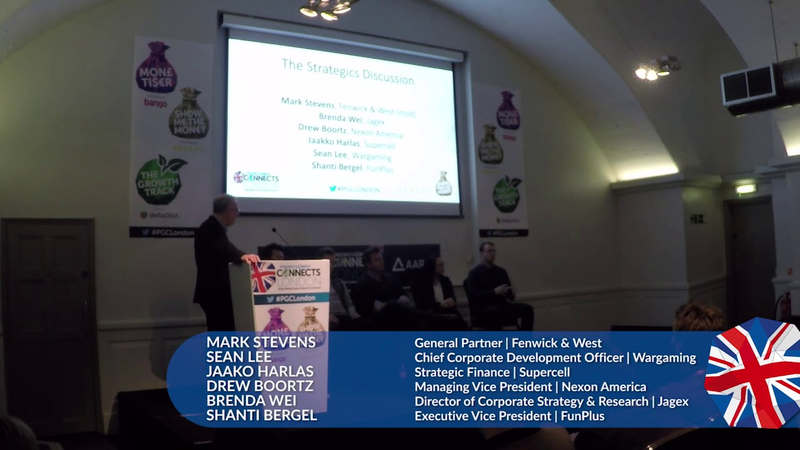
Panel: The strategics discussion
Key insights
6 takeaways- 01Investors prioritize the retention of high-caliber leadership and creative autonomy, often favoring decentralized structures over rigid oversight models.
- 02Investors are generally agnostic toward existing financial backers on a cap table, provided that deal structures lack restrictive covenants that could impede future growth or acquisition.
- 03Strategic investment models vary across firms like Supercell, Wargaming, Nexon, Jagex, and FunPlus, ranging from acquiring mature studios to forming partnerships with early-stage teams based on specific operational gaps.
- 04Equity investments are preferred over project financing because they better align long-term interests between founders and investors while avoiding the contractual friction associated with project-based funding.
- 05Geopolitical and regulatory challenges, including tensions in China and Brexit, are viewed as manageable operational hurdles rather than existential threats to the industry.
- 06Valuations for high-quality gaming assets remain robust despite a cooling in the frequency of bidding consortiums, signaling sustained confidence in the sector's long-term viability.
Ask AI about this video
Transcript
[Music] so I'm Mark Stevens I'm a partner at fennekin West which is a law firm in in the Silicon Valley and I've worked in the game space for 35 years represented may the companies up here supercell King I did the giant site at the play take a deal and and in general involved in transactions around the around the world in the game space I've got a great panel I'm gonna ask each of them to I do the name rank and serial number so name company and what is your mission in one or two sentences as Corp dev because it varies from company to company what you're supposed to be getting for the for the company and we'll jump in the
discussion so Shawn monster with Shawn Lee riflemen two five six seven although I was a sergeant at the Korean army I managed group tenth wargaming were a small indie developer we make little games like World of Tanks and world of warships whether it's nicer in Cyprus which is our headquarters it is I am your harvest from supercell doing developer relations meaning that we're investing in other studios and teams and just look into frontpoint great things out there I drew boards from necks on mission being try and duplicate the success we've had in Asia in the West I am Brenda way from Jagex we run the 18 year old MMORPG game coders game our mission is to build the home of living game hi my name is Shanti Raquel I worked there for fun plus one plus it's probably best known for its mataji games like king of babylon
kinds of glory my role is to work with external developers and partners across investments acquisitions and strategic partnerships I think it's relevant that there is not an American company up here that the we're technically an American company you ever started in Palo Alto California okay great that works then one of 105 so when you're looking to engage with a company for the first time with a potential investment talk about the stage you know are you looking for the executive who just is leaving a major company to start a brand new studio a early stage team do you want to there how much proof does there need to be for you to be interested in working with a company and when we serve roshani so in our case it's yes to all the above but for different parts of our company so for the executive who might be considering leading that's much more my world and you know like we would consider partnering with folks who have a great track record didn't want to
start a new company at the seed level or even later and so we invest in you know kind of all startups across gaming East boards and digital media but there are other aspects of our company that come into play when you start talking about being having a game in the market and wanting a publishing deal wanting to get into other territories despite being originally an American company most of our games are actually built in China and we have a strong presence there and so we have certain advantages on helping country companies get into certain Asian markets and so depending on like stage of the company you know we have different answers to that question so primarily for us it's about working with people who are passionate about their category and are hopefully you know like either best-in-class already or capable of becoming best-in-class and that's usually filters for our founding team who are all gaming entrepreneurs them they kind of look for kindred spirits
across the industry and people that they think can succeed at the level they've you know I managed to themselves and hopefully do it and how about jagex I guess it's very similar to what Shanthi just said that the correct answer is always it depends benefit I depends on the the the who's looking at it if we're looking at from a M&A point of view we tend to look at more mature companies so definitely not your founder or leaving the company just find a path on your new game studio many targets we tend to look at relatively mature team who have launched hopefully multiple titles successfully as an experienced and new a marketing and running live ops but we also at Jax we newly established a business line called Jagex partners which does third-party publishing so in that function we can look at less mature teams but who has who know who know what they're building who have figured out their games preferably in a later stage
in early access or etc so also depends on what angle we're looking at is it a deal or is an M&A deal so so dhruv how about next Anand could you comment on publishing as a as a specific you know service that you work on with with other companies with smaller developers yeah come up with something original and after those two answers I I guess the best way to think about it if I were sitting in your shoes is that M&A is for likely a later stage a minority investment or a publishing deal with funding this for an earlier stage almost regardless of who you are there are of course exceptions the talented executive leaves and we want to fund them a hundred percent from the get-go that's certainly one examiner but for younger stage companies earlier on in their lifecycle projects finance and
or publishing some combination thereof is most of what do in the West as of today so contrast that with what super-soul does because publishing is not in your remit and at super so what what relationship do you want to have with a company and who are you looking for yeah so we you're right so we don't do publishing so I think whenever the universities it's or we we look at early stage studios and also later stage teams what we've invested in space it there in London and they're sort of more mature but I think it tells them as it comes down to micro set in the previous panel it's about the people and the teams and trying to find those strong teams that kind of have a well either already have had a big game back in a market or had the potential to do that at some point in the future or give you if you can provide also an example of one that you think is a particularly good yeah the reason one we did over
here in Guildford and going back to you in answering your question it's largely driven either by need and or desire and in our particular case with the Guildford case we had both a need and a desire to work with and gain rapidly capabilities in the real space and studios or a studio that understood particular geographical direction and that's the combination of both the need of what we needed but also a certain desire or strategics desire in terms of how we want to take the company company for what kind of assets we would need or resources we would need to do that and when you came to them or do they come with their own IP or are they capacity to develop your own your your games and extend those what what is the you know what does that combination look like I think in our particular case we are still fairly young as a studio and a company and so a reflection of that is
kind of in the we're fairly confident mindset and what that means is we feel we can give largely in to creative action to a studio who has certain attributes that can really take and run with that creative idea so that's that was a case for this one for other companies they have different perspectives and mindsets on this I'd love to get their reaction of the panel in terms of giving creative direction to the investi companies do you want to invest in companies that you can give to creative direction too or are they going to respond well to that to that input no they would not or at least companies we are interested in would not respond well to that we we like to engage with companies that add something to what we do rather than duplicate what we do we are lucky enough to have a very strong power base mostly in Korea but throughout all of Asia
where we knew a lot of our own in-house development so we are looking for the peace that we lack and when we find that it's generally on the creative side and that tends to be a very poor thing for us to then dictate here's what you must do creatively how does a supercell relationship with their companies is because you're known as one of the strongest creative teams in the world i and you're talking to people who want to hear your your input is that who you want to is that the is that the investment thesis I think we want to find teams who have their own creative direction and we want to empower the team so we don't really believe that we can control what a team what team team should do in terms of what kind of games - mate so we want to empower them and give them complete operational and creative freedom and of course if there's ways we can help them then we have to do that but we're very much like hands off one day so how important is
geography to your choice does it matter where the team is you know do you have opinions about boy the UK is a great place to have a team I wouldn't invest in China you know how do you go out saying I need to find a latin-american partner you know how does how does geography affect your choice your your your filter well I can comment on or kind of criteria as we went through the recent process the short version of it is it's got to reflect how you operate US company in the case of wargaming we'd like to be a little bit more involved we liked everybody to be more in the loop to be closer both mentally and physically so from that perspective we had a strong preference for Studios that are in let's just say plus or minus three time zones from where wargaming is made our basis so for us that was very important and also we've had some recent experiences where we were working with
studios are further away and kind of post-mortem we've kind of felt those to be a bit challenging for us as a company how about jx4 Jagex we for the targets we've looked at who have been primarily in Europe and also that's because our game our player base is are in those areas we have about 50% player base based in North America so it makes sense for us to to build upon the level of experience we've gathered from all those years and to use that in our future endeavors we have where Chinese owned company we're listed in Shanghai Stock Exchange so China or Asia is also within the radar but we're not as actively looking in those regions as in the west and fun to us yeah I would say we definitely think about talent first and geography you know like probably fifth so geography for us is not a real kind of
major filter or concern that said it is as Shaun says like a function of how much control would you give that team over their destiny so it's a function of our organizational structure that we are quite decentralized um so we tend to you know kind of give a lot of creative control to each of our teams because we expect a lot out of each and every one of them and so it's not a real kind of creative risk for us to kind of have a team that is you know quote-unquote farfel in place we have teams in North America in China in in Japan and India and about to have a team in Southeast Asia we have a team in Taiwan and I'm probably forgetting someplace but you're like adding another geography for us is not any because we are much more concerned about the leadership of that group so if we think that we can collaborate with them and then they can own their own outcome that's primarily the the first thing that we look for is this a team that can come to the to the
rest of the collective group were organized more as a federation of startups than like a big company and so we look across the group can you basically get value out of your peers and less take direction from the center I think a federation startups is a really good way of looking at that that's a that certainly that is one of the models and it is not the dominant model necessarily but I you know would would you neck's on when you're looking at companies you know how much of it is fitting it into a need that you have for either a geographic need or a platform need or a product need and how much of it is just kind of enabling a new startup to be successful where you're gonna be partnering with them truthfully this is a something that we go back and forth on at any given time sometimes we will feel very strongly that there is no such thing as a portfolio strategy you go with the best idea even if you have
something similar in the pipeline sometimes referred to as the Oakland Raiders drafting strategy for American foot fans in the house other times we say well that's a really good execution but putting that game or we have another in the pipeline and it vacillates depending on where we are with both our internal development and our external partners by and large if you have a creative idea it will you will have a difficult time slotting it into but we are already doing that creativity stands on its own and that's the thing that really gets us excited so while there may be some similarities to something we're doing or some need we think we see creativity will trump and that's what we'll go with so let's talk about the role of other investors because we've had people on the panels before the super angels the venture capitalists the you know strategics I when you come into a
company let's first start as an equity investor if you want to be an equity investor in a company how tolerant are you of other existing financial investors staying on the cap table can you live alongside them do you want to move them out I use that that's an interesting dynamic if you are already having angel investors at the table I and an investor strategic comes in you know is it a replacement is it an addition yeah I think we're generally pretty agnostic about that one so if we come in as an equity investor and you already have financials there I think it's ultimately a good decision to the founders if the founder is saying that they feel still add value to have the financial is on the cap table then I think ver generally fine with that but also to add to that I think usually it makes life a bit more easier if we are there on our own just just thinking about the steps down the line when you
know the VCS need to start thinking about an exit and of course you need to think about the discussion you need to have at that point on and do you even want to get there or do you want to just clean out the cap table at the beginning I guess for a Chinese company it's easy we need to consolidate the income statements it has to be over fifty percent so it has to be majority but on a Jagex level if we're making equity investments taking a minority share we don't really mind financial investors and some funds VC funds who are very well-connected who have been in this in the industry for a long time they can actually add a lot of value as well so we do not mind them being that any allergic reaction to it to financial investors we quite like financial investors actually I mean we've worked well with financial investors across any number of situations and actually made them a lot of money and so we have no allergic reactions we are mostly kind of founder first we want to understand the founders vision and we are supportive of
other investors that can help get them there so we want to be that type of investor ourselves and so you know like we think that that's you know kind of a clean allowing of course we're not the type of strategic investor that ties a lot of things to our participation in their future and we try not to have any signaling risk associated though our presence meaning you know I think there's a boogeyman that a lot of kind of financial investors are afraid of when a strategic comes into the conversation that oh this will scare off other kind of members of the industry if XYZ company is in there then and their competitor won't instead acquiring them someday I can tell you personally I've had experienced that flies directly in the face of that when I ran in corporate have a degree we acquired a company that our direct competitor had invested in and that happens all the time and it just basically indicates the changing needs of strategics over time the changing needs of other companies that might want to step in and pick up where the other company left off and so I completely
reject the idea that having a strategic in your cap table signals something especially in the games industry where a lot of the buyers are sophisticated to under enough to understand but that's really not the case I think it depends on who that strategic is and what rights they've tied to participation in your company that's where you see it so I've looked at deals on the acquisition side where it was impossible to acquire the company because the the other parties had basically agreed to so many future rights say on future titles for example that it just basically made it impossible for anybody else to come in so long as you're not entering into those types of relationships I think it's clean and our relationship with founders is again the same as a financial would be and financial investor should have no kind of allergic reaction to us there was application of the kind of strategic said you're taking on so forget over bad I mean I think we would all like to believe we're all good and
helpful and a wonderful but I think there is a there is a range of differences in terms of the actual value or the perceived value that any strategic book brings so if we sit for example are looking at something and there's a strategic in there who it is may signal a certain kind of thing of course you would have to dive into details of what all of that means as I said but I've had a glance there there are certain signals that the kind of j'tia can't enough so I guess my summary point here is if you're considering taking strategic investment it is important to consider who you're taking it from so building on that point actually one point I want to make and emphasize this is when a strategic comes in it is a different they care more about the alignment with the founder they oftentimes will align more with a founder thing than they will with the financial investors because their my time horizon is typically longer than the financial investors time horizon so when they say they want to hear what the founder has to say this is an
opportunity for the founder to pivot away from the financial investors or to justify the financial investors at the table with a completely different voice that's not going to align completely with their financial investors so that's a that is a break in the in the ownership structure so some of the signals what is your feeling on the the phrase that I hear all the time is path to control so if you come in as a minority investor the future if you're just an equity and let's just say you're an equity investor relief will come to the operating side later give a publishing relationship but if you're an equity investor do you need a path to control to invest some companies have to have one no fun plusses no okay no no disrespect to the lawyers in the room but but I tend to optimize more for the substance of a working relationship and they like no matter what clause you have
if you don't have a foundational relationship with studio then not really gonna save it and vice versa you know even if you don't have particular clauses per se if you have a fantastic relationship whatever you're working with it's it's gonna be so easy by the way like excellent attorneys know this as well so I'm sure when you advise that's what you want that's how you guys as well absolutely it but but there is a I'm are actually very glad to hear that that is the the universal answer there are newer strategic investors who come in and see the toehold as their opportunity to get an option on the company and that is a you want to be careful with those folks so a bit of a trick question I the the express path to control if they're building a relationship and they want to be your friend long term that's a different kind of kind of relationship let's talk about operating agreements publishing agreements and project finance
relationships versus an equity relationship because there's two very very different ways of funding a business i when you're talking about you know for example I think Yucko that the supercell strategy is to only go you said earlier equity only yeah I think at least so far we being our preference has been revealed it's it's more simple it also aligns the interest of us and the founder is better and if you have a complex publishing / project financing relationship it just you tend to end up in having to go for a lot of complex complex issues that you can avoid with the equity so for us it's just an easier way of arranging the relationship juror you want to climb into that from the next on side we do a lot of project finance and publishing deals they rarely work out the way everybody thinks they're going to work out I would
sitting in this seat talking to founders I tend to tell them you actually want to do an equity deal you don't want to do a project financing deal nobody believes me but the truth is that a project finance deal really only works from the founder and employee side if you have a hit day one if you don't have a hit day one you are going to have to take more money that's more debt or you're going to have to do an equity raise at worse terms or you're gonna have to end up taking on something you don't want to do whether that is work for hire or prioritizing a different project over the current one it's rarely enough runway to get you to grow a game over views if you think you have a hit right off the bat and you want to place chips on that project finance is probably the way to go I happen to think equity is better for both sides that's not a universally shared point I
like to get each of it so how about the jagex perspective some wigs on sorry Jim makes a really good point here for Jagex jagex Partners approach because we are not your typical project financing partner we're not going to throw tons of you and money at you for you to for you to do grow it and grow exponentially at day one we tend to have this what we call white glove approach we work very closely with the developers we want to share our analytics our marketing a community manager management all the live ops experience we have so we tend to work very closely with developers and that's why ours is sort of a hybrid between men and equity and project financing deal so we want to make sure our interests are aligned and risk is fairly shared between the two parties that's that's what we look for most in our deals and do you do both equity and project
finance in the same company some of the development process so that's sort of what you see as equity investment so the deal is structured in that way we don't necessarily take a share of the of the company so it's it's like shared risks so you'll do advances you can or minimum guarantees or if it's you publishing for them or whatever how about the Sun plus perspective historically fun plus has tried some of the the project financing and publishing kind of ideas didn't really have a lot of great success with them this was a prior to my arrival I've been with company about a year and we've been focused on equity investments primarily since I joined and that will probably continue to be the case we don't have inside fun plus a real kind of appetite for that type of project and your most recent deal here was that an equity deal or was that a it was pure
acquisition it's a pure acquisition okay so super simply well just having to what everybody's saying I mean there's there's two sides to two perspectives consider from a strategic perspective it would be such a pity if you made a project financial publishing deal they tried something it failed you know Lauren I ever would have a relationship with them and the next project they do is at mega hit that will be horrendous from your perspective as a studio you don't know you you also know could have a fantastic strategic partner who's coming along trying to help you but the format is a project financed some sort of publishing thing you work on that one thing together that thing doesn't work out they don't have any incentives to further help you do this and walk away right so it's the the perspective is when you look at both perspective it makes a lot of sense but you've got a valuation problem so if you're a founding team and you have a need to raise thirty to fifty million dollars to build a game and you take it
all in at equity that's gonna be highly diluted to the existing shareholder base so I you know how do you is is project finance a bridge on valuation sometimes does it allow you to put more money at play without reducing the the founders stake down below a certain percentage we have split it in the past some percentage is allocated equity others is allocated to project finance sometimes that works but at the end of the day we are trying to align risk sharing if we're funding your project a hundred percent you have very little incentive to really make sure it works because at the end of the day your bills are paid if you need more money you come back to us and say hey we can't make the game you've already invested X millions of dollars into we need more money and then I have to make a choice do we walk away give you even more money than we should
that is a really tough situation and it's a not uncommon one unfortunately so when we have an equity stake in a company we are more inclined to give you that runway mark makes a great point about a valuation concern that's all part of the math that will go into figuring out what the right deal is but more equity for an idea we believe in is generally where what we think to be the better outcome and if you're doing project finance or publishing is it only a single title deal or do you have hooks into future titles that they do it the most I have done at Nexon we did a six-game slate deal that was a combination of equity in project finance
the that was a one-off most commonly it's for one game with options towards future games depending on a variety of criteria and it's those options for future games that oftentimes get in the way of the potential future acquire who would come in an alternate a strategic who so what what do you do if you're coming in and and there's a they they've already tied up the sequels to their game the sequel to the sequels etc how interesting is that as they protect potential investing company of yours if there's an other strategic already owning that franchise into perpetuity well I think that's where deal-making comes into place right you just go back to what some of the folks are saying like your needs and desires as a strategic changes all the time so whoever made that deal with that that studio at that point probably the situation has changed maybe all they want is us out
maybe if probably they want some form about and they need to say face by cutting some sort of a deal with them you acquire so I mean that's that simple of an answer I can give you is is it it is solvable most of the most of the time I've seen these kinds of things it's solvable because generally there's some compromise point that everybody can kind of meet in the middle so Yucko you're spending most of your time on the mobile side and that I think is one of the things driving the do you do project financier publishing because it's you know it's the developer has more power in that space these are their publishing deals being done in mobile by the other folks at on the on the panel where you're providing you know cash for for a mobile game and you know putting it under your label we are okay ours is more still PC focused although rapidly towards mobile we launched a mobile title and now we're learning everyday the mobile PC cross
play so it is moving rapidly so let's talk about geopolitics and how that impacts a rumor has it that China is not a great place to be publishing games these days I how has that impacted both your appetite for games if you have a significant Chinese operation and the behavior of other competitors in the marketplace or the behavior of your owner I you know at the supercell majority owner you know maybe if I start so I guess for us it's been really a practical problem and like a headache because of course as you might have seen we launched broad stars just before Christmas and of course we would like to get the game on in China the sooner the better but of course like when there was this game approval freeze we couldn't really do things so it's being a total uncertainty
for us like when when can we actually go up and shine on and what do we need to do to get it get it out there so it's been a very practical problem for us for us we're luckier because operationally although we're chinese-owned we are operationally very independent so the the holdup of the Chinese government giving our games license has not really impacted us more on the shareholder dancing point of view they have to realign their own financing structure there have been some restructuring happening in China so that's happening at the parent level but locally operationally we have not been affected so it's ironically had some positive effects for us so it has to do with just the quirks of our history and the way we're structured so we started life as a as a venture back startup in the u.s. most of our games are built in China we have most of our employees in China so it has this weird effect of us kind of in the West being perceived as a Chinese company and kind of we are and in China
were perceived as a Western company and we are but in the current climate what that means is that some Chinese partners see us as a bridge to the west because we have historically been that for a lot of other kind of our partners in China and so the number of inquiries on that vector has increased actually and so because we are seen as you know kind of a good company to work with in that particular format like we're actually getting a lot of inbound from other Chinese partners we have a strong because we're perceived as a Western company there we have a very broad partnership kind of footprint that spans $0.10 Nettie's in the century group which is fairly uncommon you know that is very unusual yeah and so we have we have a very strong relationship with with Tencent we sold a very large studio two-century group and the central group intends to enter both investors in a company called Shanda which our founder is also on the board of and we also have a joint venture with
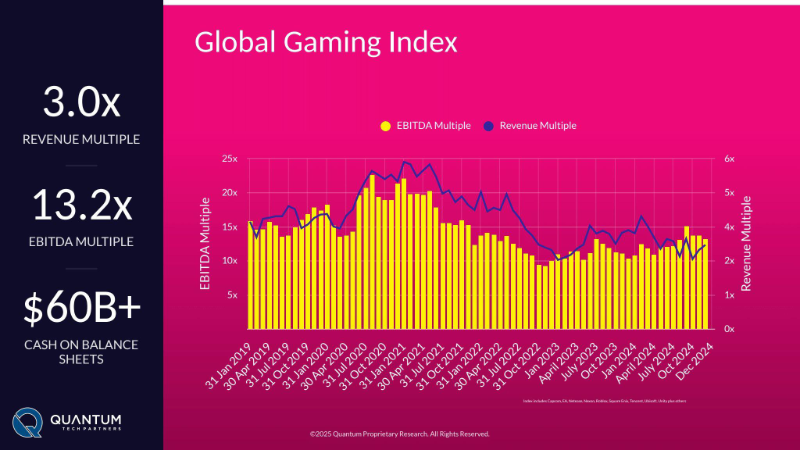
Nittis on the eSports side League operations globally for all of their eSports titles so he has resulted again again and just some quirks of the way we are have kind of made this into a positive for us have you seen valuations been have been affected by a few years ago every deal had multiple consortiums enforced consortia from shiny pennies investors coming in bidding up the prices I don't see that anymore is that creating a slightly better world for investing or is there enough enough competition from other other publishers out there it is the market has not cooled on valuations to the degree I would like it to have yeah but people are still using China money deals as comps which leads to sometimes an
awkward conversation between US and founders or founders plus advisers that were just not on that same page anymore because the the realities that led to those valuations are no longer in play to the degree they were do you want to comment on that you schmuck now I would agree even true so I don't think we've seen instead of meeting meaningful cooldown evaluations probably for the reasons that you mentioned of course we've been on some more active on the sort of early stage situations where like multiples on yeah what that green one more question then I'll open up for a couple from the from the audience one from the audience I and this might be just a you know we're in London and the political climate is a little bit chaotic I do you see the any impact from brexit on the role of the UK as the leading European
home for developers or do you even believe that the UK is the leading home for the European developers is it really Scandinavia so well I want to get comments the commenting on our Guilford studio I would say similar to China thing I would say it's more of a I would like to believe it's a short term headache I would like I would like to believe the the case will be retired out even prior to you or us before Trump or whatnot people would always be able to hire the right people through the right venues it's just a matter of how easy or difficult it is so my fundamental view on UK being a source of great talent for many different types of games I don't think that that that doesn't change at all the short-term wrinkles will be are I thinks big having spoken to a space ape and trail mix who are a london-based portfolio companies I to me it seems
that it's of course it's creating uncertainty and uncertainty is never great but still I also believe that London is definitely one of the gaming most important gaming obviously in the world and there's a lot of creative talent talent here so I don't see that going away anytime soon maybe if you have a multinational team who's wondering where to set up their next studio then of course breaks it will sort of produce the points that London will have in that sort of comparison but at least so far we believe so it's a source of uncertainty but it's not going to make diminish London's value guys gaming and jagex has is a significant employer here and yeah we don't we don't see that in fact so much and actually with brexit we it's not entirely directly linked to breakfast but we have recently in the past six months or so hire a lot of talents from the US partially because
that's where a lot of the MMO talents it so we already see an international flow of talent it and it doesn't have to be centred around Europe [Music] you
Summary
Strategic investment in the gaming industry is driven by a diverse set of corporate objectives, ranging from the acquisition of mature studios to the formation of publishing partnerships with early-stage teams. Rather than adhering to a singular model, firms like Supercell, Wargaming, Nexon, Jagex, and FunPlus tailor their involvement based on their specific strategic gaps and operational philosophies. While some organizations prioritize geographic proximity to ensure oversight, others favor decentralized structures that emphasize creative autonomy and the retention of high-caliber leadership talent. Regardless of the specific model, the primary goal remains identifying partners capable of achieving best-in-class status within their respective niches.
Equity investments are overwhelmingly preferred over project financing, as equity better aligns the long-term interests of founders and investors. Project-based funding is often viewed as a suboptimal alternative that can introduce misaligned incentives and complex contractual friction if a title fails to meet performance expectations. Investors generally remain agnostic toward the presence of existing financial backers on a cap table, provided that the deal structure does not include restrictive covenants that might impede future growth or acquisition opportunities. Ultimately, the success of these partnerships hinges more on founder-investor alignment and mutual trust than on rigid legal frameworks.
The broader industry landscape remains resilient despite significant geopolitical and regulatory headwinds. While tensions in China and regional political shifts like Brexit present operational challenges, they are largely viewed as manageable hurdles rather than existential threats to the industry’s long-term viability. Many firms have successfully navigated these complexities by positioning themselves as bridges between disparate global markets. Although the frequency of bidding consortiums has cooled, valuations for high-quality gaming assets remain robust, reflecting a sustained confidence in the sector’s ability to adapt to evolving regulatory and economic environments.

















Comments