1 free read left. Create a free account for unlimited reading + AI research.
Create free accountWhitepaper DiGRA
1 free read left. Create a free account for unlimited reading + AI research.
Create free accountWhitepaperDiGRA
The qualitative online survey covered participants aged 15 and older residing in Finland. It ran from 10 March to 10 April 2026.
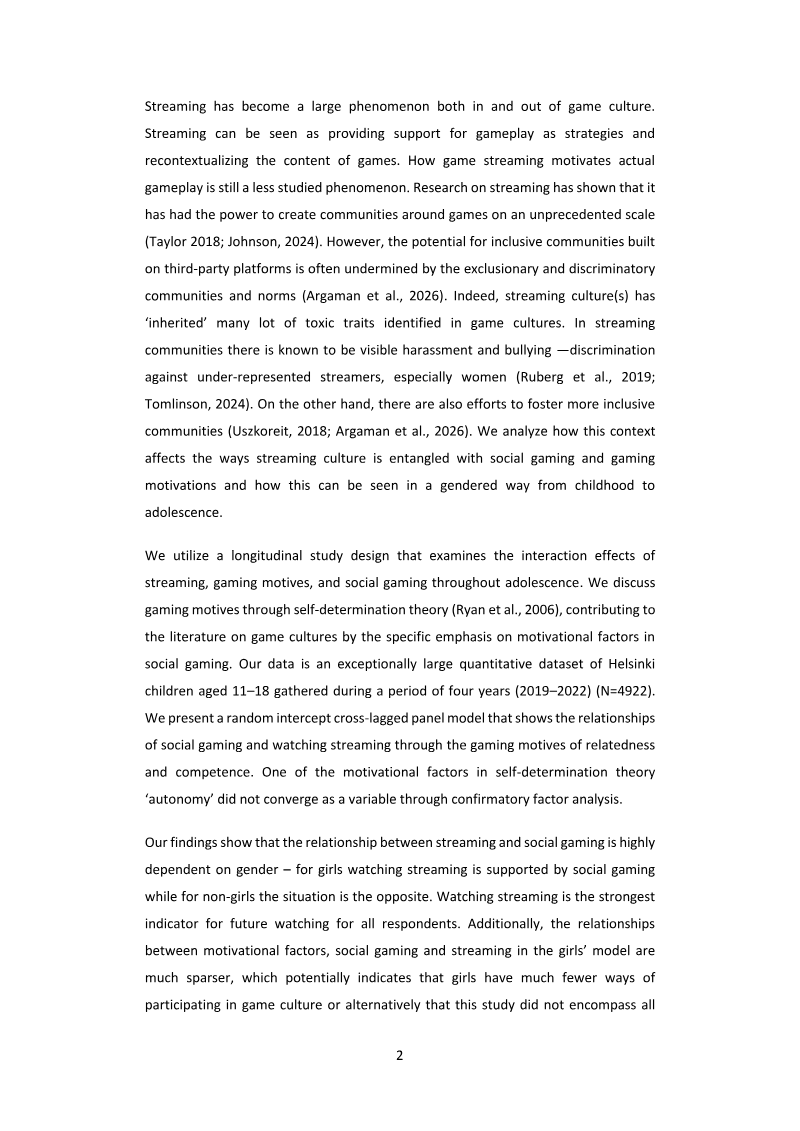
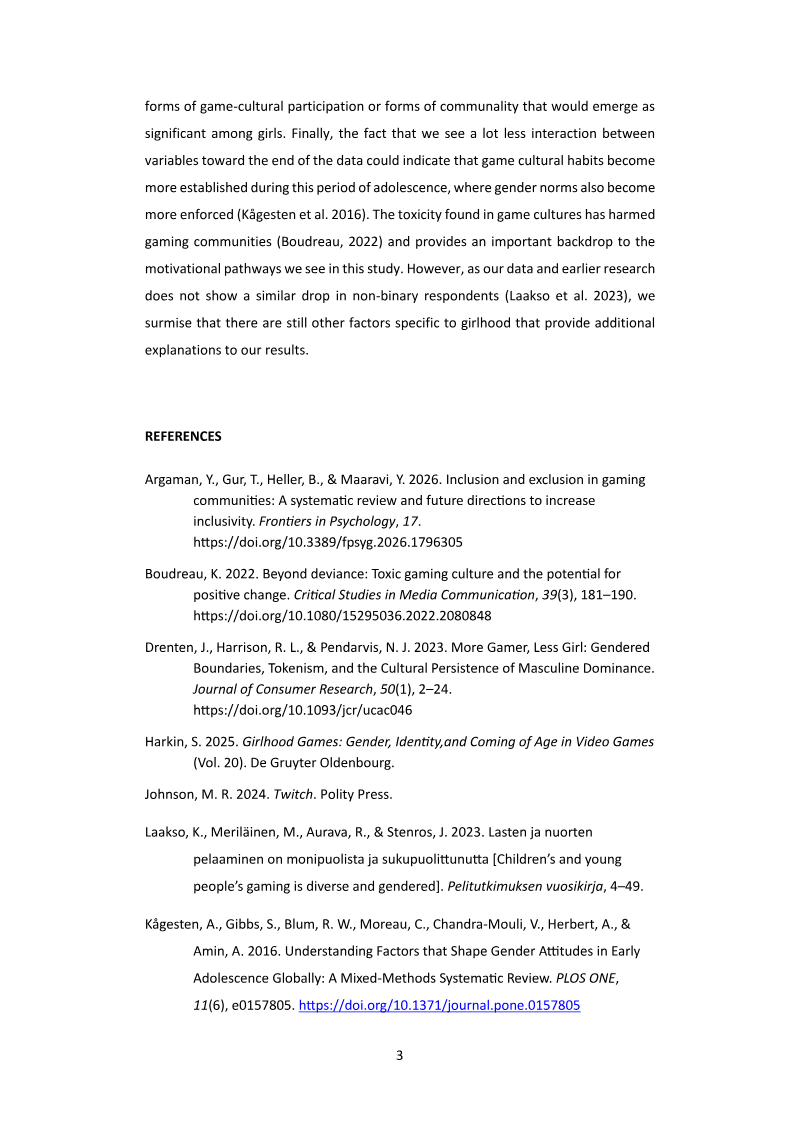
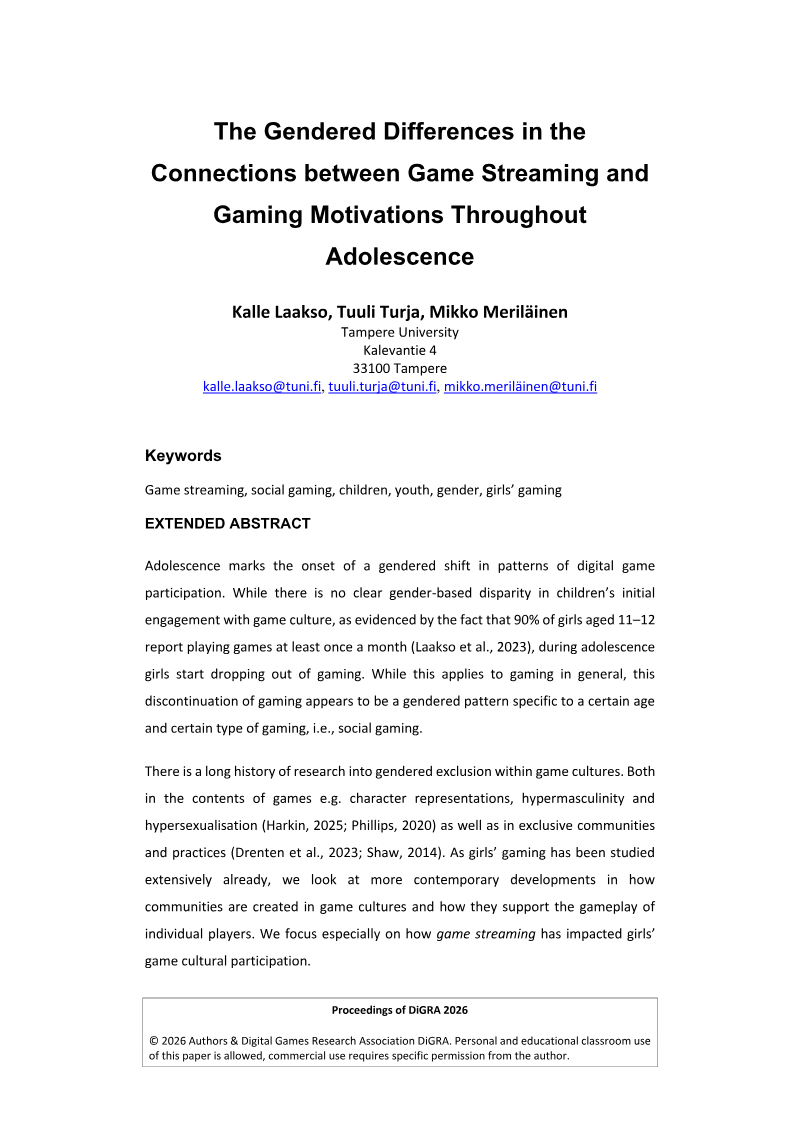
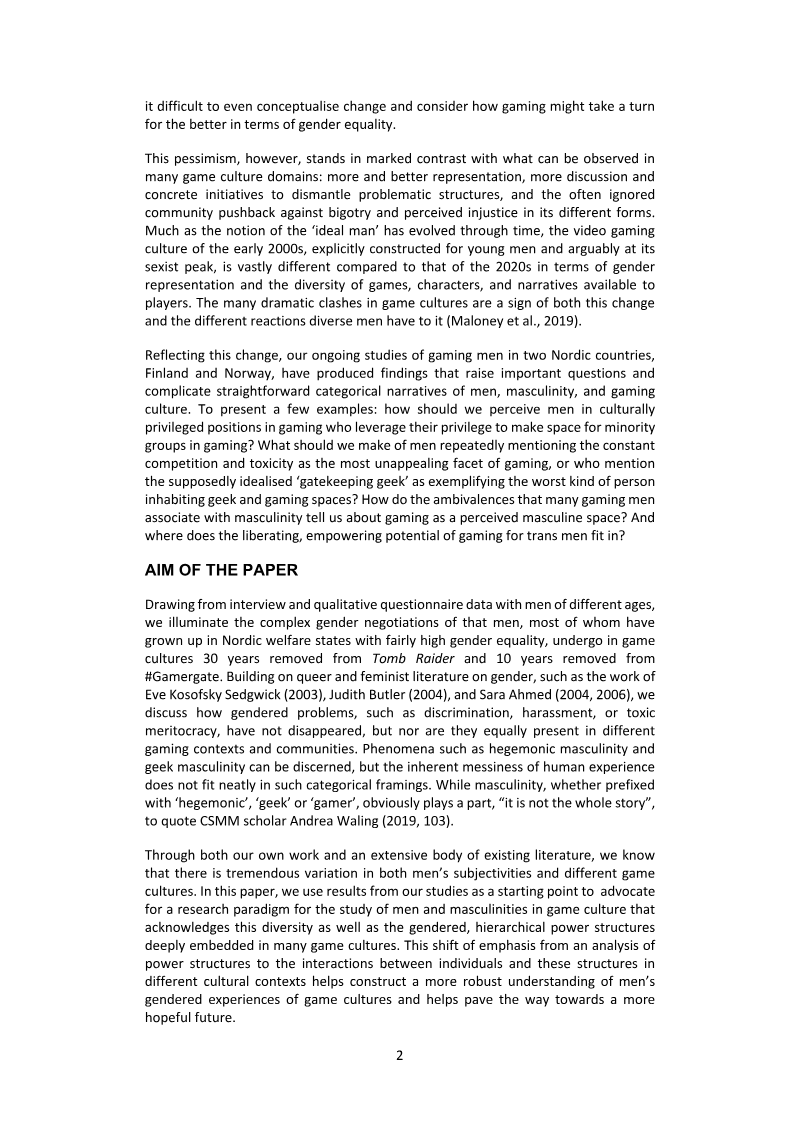
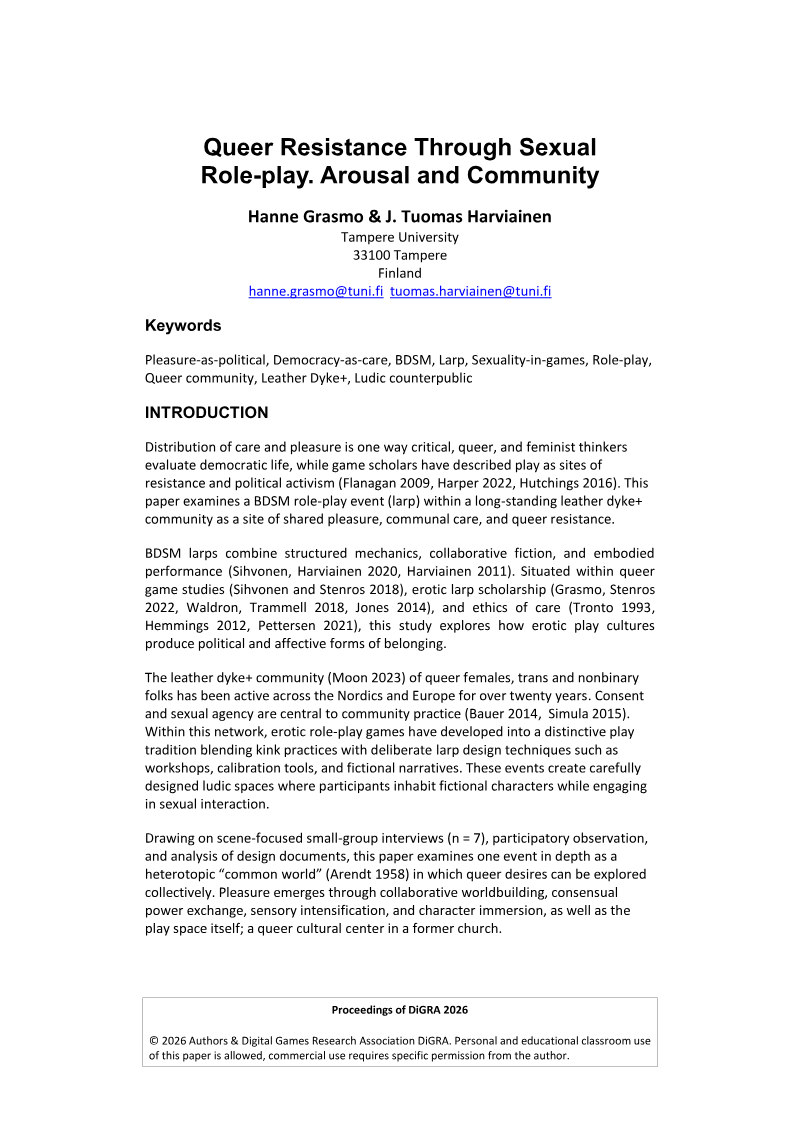
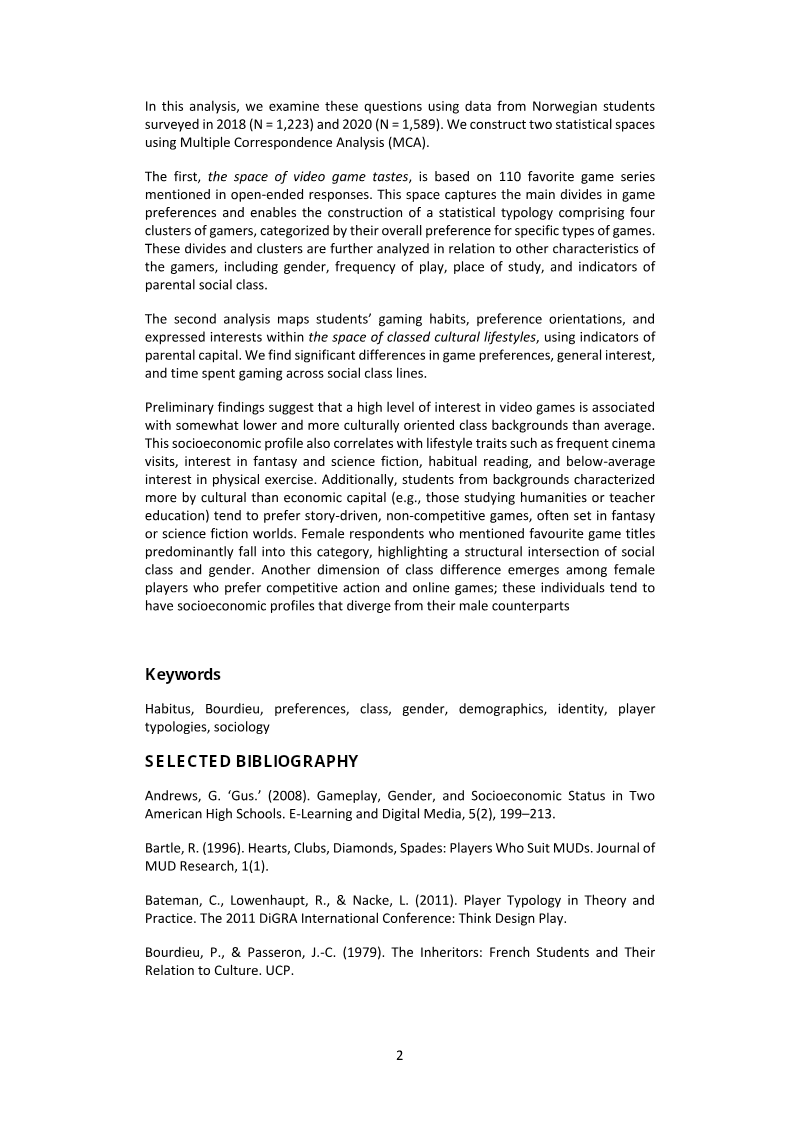
This extended abstract, presented at DiGRA 2026, examines how people in Finland participate in and feel belonging to game cultures, and how those opportunities are shaped by intersecting identity positions such as gender, sexuality, race, age, and ability. It argues that game culture offers many avenues of engagement, including playing, spectating, creating, social community activity, esports, and fan practices, each of which can generate pleasure and a sense of belonging. At the same time, these avenues are unevenly accessible, with physical, cultural, and social environments often repelling participants whose identities diverge from dominant norms, and with these boundaries taking locally specific forms.
The study draws on a qualitative online survey of 245 game culture participants aged 15 and older residing in Finland. The survey ran from 10 March to 10 April 2026 and was offered in Finnish, Swedish, and English. It asked respondents about their game cultural participation, their experiences of inclusion, exclusion, and marginalisation, and the products, events, communities, and practices they perceived as supporting inclusion. The analysis is a reflexive thematic analysis, and the results presented are preliminary.
The authors' stated findings concern the range of ways people engage with games and their cultures, the varied pleasures derived from these engagements and from cultural belonging, and the intersectional yet place-specific nature of barriers that limit participation. Rather than treating exclusion as uniform across contexts, the work emphasizes that boundaries are shaped by national, cultural, and linguistic conditions, positioning the Finnish case as a grounded lens on broader questions of inclusion in game culture.

DiGRA · 2026

DiGRA · 2026



DiGRA · 2026



DiGRA · 2026



DiGRA · 2026



DiGRA · 2026



DiGRA · 2026



DiGRA · 2026

DiGRA · 2026



DiGRA · 2026



DiGRA · 2026

DiGRA · 2026
DiGRA · 2026