1 free read left. Create a free account for unlimited reading + AI research.
Create free accountWhitepaper DiGRA
1 free read left. Create a free account for unlimited reading + AI research.
Create free accountWhitepaperDiGRA
Prior scholarship critiques 'othering' of Romania through close readings of individual titles. The cumulative pattern across unrelated games remains understudied.
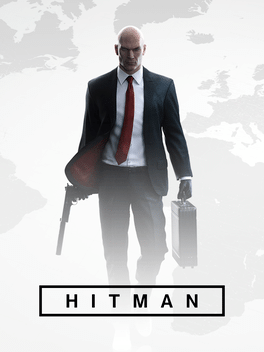
This paper proposes a corpus-based, quantitative and typological analysis of how Romania and Romanianness are represented in video games developed by foreign studios. Its central argument is that while existing scholarship has relied on close readings of individual titles to critique "othering" through tropes such as medieval Dracula mythology, communist dystopia, and folk horror, the cumulative pattern of these representations across unrelated games remains understudied. The authors frame their inquiry around "hetero-images" of Romanianness, drawing on imagology, and examine how historical situatedness, character individualization, the handling of the Romanian language, and culturally specific references are constructed and circulated. The opening example, Hitman: Contracts (2004), illustrates the phenomenon: Romania is rendered as an atmospheric space of chaos and pathology, with the language functioning as noise rather than communication.
The study's corpus is assembled from Wikipedia lists of games set in Romania and Transylvania, filtered for titles that feature Romanian settings or characters and were developed by non-Romanian studios, since no comprehensive database indexes narrative location in video games. The paper explicitly positions itself as a response to a methodological gap, moving from individual case studies toward a dataset large enough to reveal recurrent narrative and aesthetic patterns beyond anecdotal evidence. Analytical dimensions include temporal framing, the individuation of Romanian characters, the representation of language, and the legibility of cultural references to Romanian versus international audiences.
The paper is a research proposal rather than a completed study. It does not yet report corpus size, coding schemes, or empirical findings, and its conclusions remain provisional. Its contribution lies in framing Romania as a case study at the intersection of geopolitical imagination, commercial genre expectations, and local culture, and in situating the project within broader game studies debates on cultural representation, exoticization, and cultural heritage.
Each row is a game or company this document names, each column a document, oldest first. A mark means that document names it. Select a row to see those documents.

DiGRA · 2026

DiGRA · 2026



DiGRA · 2026



DiGRA · 2026



DiGRA · 2026



DiGRA · 2026



DiGRA · 2026



DiGRA · 2026



DiGRA · 2026

DiGRA · 2026



DiGRA · 2026



DiGRA · 2026
Jagiellonian University · 2026