1 free read left. Create a free account for unlimited reading + AI research.
Create free account
Monetisation revealed – stories and data behind ad revenue success
Key insights
6 takeaways- 01Utilize multiple ad networks through mediation rather than relying on a single source to ensure competitive bidding, higher fill rates, and better ad quality.
- 02Develop internal business intelligence tools to track key performance metrics including opt-out rates, fill rates, and eCPMs, rather than relying on eCPMs as a standalone benchmark.
- 03Prioritize long-term player retention over short-term revenue gains by ensuring monetization strategies are deeply integrated into the core game loop.
- 04Begin with simple, manageable ad implementations and scale the complexity of the monetization infrastructure incrementally based on gathered player data.
- 05Transition from manual waterfall management toward header bidding and advanced auction systems to optimize ad revenue infrastructure.
- 06Implement only voluntary, opt-in ad formats, such as rewarded videos, to avoid the negative impact on user experience associated with intrusive interstitials.
Ask AI about this video
Transcript
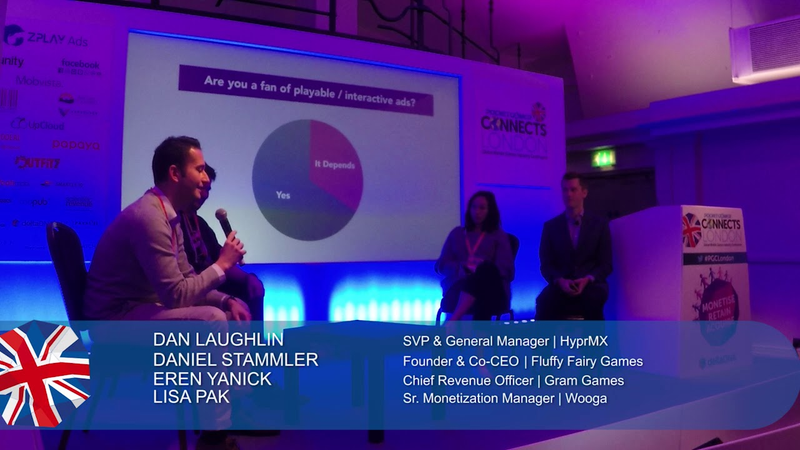
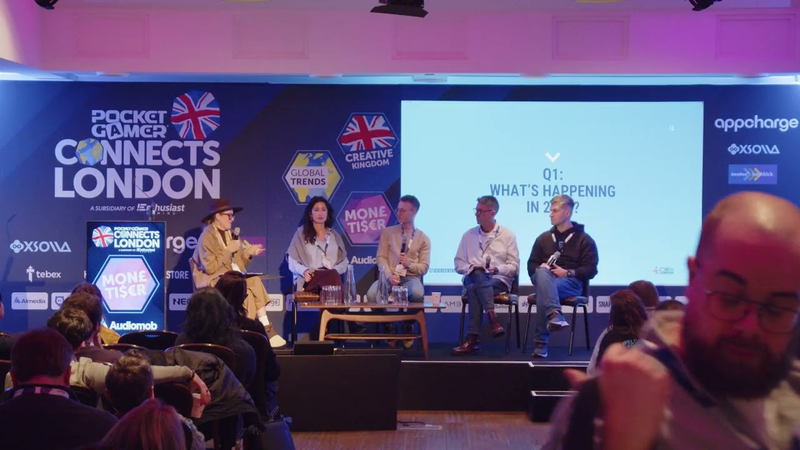
[Music] [Music] right here hello my name is Dan Laughlin i'm with hyper mx we're a new york base ad network that's focused on bringing brand ads into mobile games so we work with a lot of game developers to help them with monetization running fortune 500 brand ads so we're here to talk about monetization today so obviously in our space it's a big part of everyone's strategy so I've got representatives from three developers here who use ads as an important part of their monetization strategy so this is a quick panel 20 minutes so we're gonna rock through this and as part of that I'm not
gonna let these guys introduce themselves because people just talk about themselves for so long I'm gonna introduce themselves or them for them all right so we've got Lisa here she's from luga you've probably heard of Wooga bubble Island pearls peril lisa has been involved in ads both on the UA and the monetization side for many years previous was at fiber so she can tell you anything about mediation and ads and such that's Lisa we've got Daniel from fluffy ferry Daniel is relatively new to the games industry but is instantly successful with a game called Idol miner tycoon their studio I'm just relocating to Berlin from a smaller town that I can't pronounce in Germany and they've got a new title on the way that we're all excited to to see and then Aaron from Graham Games which I'm sure you've all heard of ten ten six merged Aaron is an American educated Turkish citizen I believe yes and actually spent
most of his career in management consulting being very serious probably kind of boring but found himself into the fun world of games so here we are all right so we'll just dive right in so I've asked these guys some questions in advance so that we can get through this kind of quickly and I won't say whose answer is who they can decide to chime in or not or they could stay anonymous first question I ask them is what is the lesson you've learned on your journey to add monetization probably some experiments that failed some ideas that you thought were gonna be innovative and amazing that didn't work out so let's start with failures and we'll build them back up into successes who wants to start I've got some interesting stories up here don't be shy did you get your microphone we have another mic there's a third microphone somewhere anyone know okay so for for us we when we design ad placements it's all about
the user experience so in one of our games bubble island we had a placement where we the initial UI seemed like it was kind of forcing the player to engage with this placement so this was something that was not necessarily a good thing so what we've learned from that is when you design a placement and you first roll it out look at the numbers and see if you want to want to change things around so we actually did quite some iterations on this specific placement where right now it's much more clear to the user that there is a way out that they don't have to engage with it and it's important that for a reward video format that it stays and opt-in informants so for us we we change a lot with the different placements that we have and try to find and optimize until we have the best possible format I think when we were starting when you start out as a company that monetizes
mainly through ads ad networks also approach you to work with them right but the thing to take into account is the more ad networks you work with the more different size of the population you expose your ad waterfall to so there are certain parts that certain ad networks can pay more and you can monetize them better so and when you talk to different networks so generally the first selling point they have is that they give out good eCPMs they have the highest CPMs which for us is always secondary what really matters is does it affect you does it affect the number of times the ad is washed especially if it's on a voluntary basis like rewarded video so we take into account more the opt outs or the average revenue per daily active use it yeah for us like when we started everybody approached us all the ad companies and they basically wanted to buy all the traffic and in the beginning
we didn't know any better and started to do deals like this and we quickly learned that like it's it's not feasible to only have like one at network because first it will run out of ads and second like maybe their first five ads or so are good and then they will just give you all the bad ads I don't really need so we really learn to like use mediation use a waterfall and work with like three four or five different ad networks at the same time yeah I mean as an ad network I can say honestly like you should never only work with one ad network because you want us to be competing with each other and if you should also be calling up your ad networks everyone smile be like hey what else can you do for me because these guys are giving X Y & Z how do you how do you want to compete because if I don't as an ad network if I don't have the information or know where I am competitively then I might kind of just get complacent or assume I'm gonna get volume from your game but you know maybe I need to be competing more and so the more you're talking to me the better you're gonna do all right next one so what's a game that's influenced your ad monetization journey other than your own
you know there's there's so many great examples out there of companies that are doing innovative things experimenting yeah succeeding failing what something that's influenced you guys so for us it was definitely adventure capitalist like we played at it a lot and the way like ads work they're like before that we were like yeah as are annoying nobody wants to see ads and after playing at venture capitalists we figured out there is a way to implement ads which actually makes the users feel good and they want to watch ads and you feel rewarded after watching an ad so it's FCAT for us not nothing to add I think it's the same both games I played a lot personally and so good source of information to look at before us I mean we sort of discovered on our own with Tenten when we first started 10th and I think that our company was probably six people at the time or five six people and the initial
plan was to even made thinking that it would be a premium game so we tried that and we implemented ads and then the as grew so we sort of discovered it on our own and every new game we added something extra on top make sense all right so what monetization metrics do you look at daily weekly how do you really assess the health here these are mostly obvious answers but is there any any insights beyond the the obvious of why you know a particular number is important to you guys we take into account opt-out and I think it's a comprehensive metric that brings in everything else along with probably the obvious retention rates and if that's low high but generally easy PM's can be misleading mostly because you might get high eCPMs but very low fail so you could track them separately and we do but the up is the first thing I look at
every morning is the opt-out is there something you do when you wake up and you see that our pile is lower than you want it to be what's the first lever you try to pull then I think you need to break it break it down like then you do break it down into is it the fill issue is at the eCPM which ad network is it mainly driven through from or is it like a premium the IEP issue and there's the obvious things you expect like the seasonal changes December to January or weekend to weekday certain regions that have higher CPM and certain time periods but if it's something unexpected generally I track the ad networks and reach out to them and I didn't ask this question in advance but do you guys have your own like data geek specialists who who does but that break down when when you're trying to figure out what is the component of our palates that's failing you right now how you know how good do you have to be at spreadsheets and pivot tables and analysis to be able
to figure this all out so so for us yet we are pretty hands-on in the monetization team we work a lot with periscope we do a lot of sequel querying ourselves I feel like that the monetization platforms often don't share all the data that you really that you really need to do your day-to-day work and figure out if anything in the arm now changed what network that was related to was the eCPM was it the fill so we use a lot of internal BI tools ourselves to figure out these things we developed our own tool involving server Graham and so it basically brings together different types of data from ad network API and they're from only one dashboard you could see where it's coming from so for us we're actually working very closely with the iron soros
dashboard so we're not we try to keep things easy and if you if you use it correctly you can get all the data I think out of the iron sirs dashboard as well so there as far as there's no need to do like more hard things all right so for monetization are you a fan of playable or interactive ads I mean I on the UA side they've obviously proven effective at least if you ask machine zone because that's the only way I'll see but you know on the monetization side is something you want your players doing and you don't mind it you do mind it and we had a little bit of a split here I think I was the one who said it depends I think it depends because play play both are out there in a lot of different quality types if you surf playable ads in a rewarded video placement it might not always be clear to the player what is expected of them not all the play balls have a clear way out so it it has to be clear to the user
I think in terms of offering variety it's definitely a great thing to have but then the user experience needs to be good and yeah they need to know what to expect so for me as a player as a consumer it's way better to have a playable Justin I can just played instead of watching the video for 30 seconds so I definitely didn't like it yeah I think the the issue there is it's always the same ad right so that's why I'm in the first couple of times it's engaging but after a while you need to really track the impact on retention on your own game so it's as long as retention is not affected I think it's it's fine because generally the CPMs are higher so from the monetization perspective it's even better right we ever had if you asked ad networks to cap the number of times you see a particular ad or ever tried to reduce that no but
sometimes I think it's some creatives are more prone to errors like they might crash the game and those are the times when we only ask them to block it but otherwise on a playable basis as long as it's skippable so as long as the that's clear because sometimes you need to click on secret locations to write up that so as long as it's not there we were okay with it yeah we're working on a lot of interactive brand ads now and I think you know that the brand space is usually playing catch-up with the game space and finally they're saying oh actually these this is a great technique to get people to immerse themselves in our brand a little bit so it's interesting to learn what works and what doesn't and what isn't annoying for users because want to make sure it's a good experience okay so can rewarded and interstitial ads coexist harmoniously in the same app I having to observe this industry for a while it seemed like you know three four or five years ago a lot
of lot of developers said no ads at all and then they're okay we'll try rewarded then rewards worked really well like okay what else can I do let's throw in interstitial and in some cases maybe that's too much maybe it works well we've seen examples of companies running both any experiences here that that you would you guys would lean on and it sends ya some some 2/3 of you said definitely maybe which is my I'm in London to a reference Oasis album name there definitely may be any thoughts there I think I'm the one who said definitely because so I think the key thing there is every different type of ad unit you you introduced to the game brings in its own diminishing marginal returns so what it means is like the second ad is always less valuable than the first but the second reward that may or may not be more valuable than your first interstitial so introducing a different type of ad unit generally has positive
returns on your game then of course you need to really track like because interstitials are capable and the world is not so you actually throw a lot of ads and you need to watch the impact like is it gonna really lower the retention is it gonna be worth it because you're gonna increasing your CPMs I'm gonna increasing your revenue but if what if your doubt goes down right what if your users actually quit again so as long as you map that out I think it can work is I think it really depends on the type of game I mean for you guys it's obviously working well I think like we're not doing interstitials because for us like it impacts we think it impacts the user experience in a negative way so for us it's okay to like let go of some additional revenue in terms of a higher retention but if you're aiming for like hyper casual games I think you should probably use theirs as well I think for booga it's it's the same cases with with Daniel
some of the games it works um it doesn't and it's it's really the user experience that it's not the greatest on this ad format so we generally focus on rewarded video yet see it's interesting watch from our perspective to in hyper casual games rewarded the completion rates tend to be quite low compared to what we see in games like yours where people are really invested in getting that that currency or whatnot whereas someone playing a hyper casual game might think yeah sure I'll watch a video to get some coins but then halfway through it they're like actually I got to go I'm getting all the you know and so it's it we see different behaviors based on the genre completely alright so advice you have for studios that are new to ad monetization so you know just some some obvious or first things to think about about these are some pretty good answers here yes sir I would say don't go all-in and do everything that you've seen at the same time immediately from the first moment on start with one placement start with the couple networks and and expand
expand from there I would say yeah if you like to focus and use the experience is also super important like it doesn't matter if you earn like 10 percent more on your ad if you're useless quit playing the game at the same time if you implement reorder video ads or interstitials at the right place in the game then people will actually like watching ads and your revenues will go way higher than only like based on a CPM optimization yeah I think I'd also say there's a trade-off between using a very simple mediation platform that's easy to use and something that's more manual that requires more interventions but brings in higher revenue per user because it enables you to have different ad units different platform different geo pricing but you should definitely start with the easy one if especially if you have a small team and then slowly build up but make sure you form the necessary infrastructure so whenever you
work with a different ad network you need to have some sort of a mechanism to bring in their API to your platform because otherwise you will never be able to work with like 10 plus ad networks it will be too much of a hassle yeah and as much as like I want our ad network to be in every game when someone tells me like yeah it's a new studio and they're working on their first game they want to put in five or six networks no no no there's just no need for that yet you know put in two or three and see what you've got and then and then you can add more all right so I think this is our last question here what's on your mind for 2018 what are you guys talking about in terms of ads in house Samantha was more at diversity they were very happy for the video ads but we also think that there might be some waste that don't aren't bad for use experience maybe implement interstitials or offer walls or maybe some newer ad format so we will definitely try to do that I'm
the one who set her bidding because the the way the current system works on mobile is is very menu so you need to manually rank networks you need to manually set floors it's not like the desktop system where you can actually bring in everyone auction at the same time right it's getting there but it's still not there so more and more the larger networks are switching to header bidding so I think for the near future that should be the thing to exist both for a fair competition and more diversification as well yeah I think the same for me as as both of them already said so we've been talking a lot about header bidding or advanced bidding not sure what we're going to call it I guess last year and we're slowly getting there I think are slowly going into the right direction and for us it's also important to improve the variety of ads and making sure that we don't serve the same at to
our players over and over again and getting yeah hopefully to a point where more and more brands will also see games as an acceptable platform to advertise in yes it'll be good for all of us cool all right so we've got two minutes any questions from the audience I always make sure to include this picture in every presentation I do so thank you for tolerating that anyone anyone one minute and 30 seconds there we go nope yeah yeah there we go as you watch user behavior with ads over time do you develop different ad strategies for different segments of users maybe increase the interstitials for one segment of user that never monetizes and so forth good question
this is something that we are at Google we're currently looking at I think the question at Volga often is do we show ads to paying users yes or no and if we do do we show ads at the same frequency as for a non paying users so this is something that we're currently juggling around with in testing and making changes and I said we have the main distinction between paying and not paying so if you're a paying user you only go you only get the opt-in ads so you don't get interstitials or banners if you're paying using but otherwise we leave it to the ad networks basically because we as a hyper casual developer don't collect a lot of information from the user I both to not be liable but also we don't deal with it right so ad networks have that information they can
bid higher and they're also our job is to have as competitive as an auction as we can so that if an ad network has some information that they want to bid higher they should be able to do that and get the impression so for us and reward videos are deeply integrated into the gameplay and into the core loop so everybody needs to get like the same kind musics perience with ads and because that like the balancing everything depends on that so for us there's no differentiation cool alright we are out of time thank you all very much [Music] [Music]
Summary
This panel discussion explores mobile game monetization strategies, focusing on the balance between ad revenue and user experience. The primary thesis is that successful monetization requires a data-driven, iterative approach that prioritizes player retention over short-term revenue gains. Experts from Wooga, Fluffy Fairy, and Gram Games emphasize that while ad revenue is a critical component of modern game development, it must be implemented through voluntary, opt-in formats to avoid alienating the player base.
Key findings highlight the necessity of using multiple ad networks via mediation to ensure competitive bidding and consistent fill rates. Panelists caution against relying on a single network, which often leads to diminishing returns and poor ad quality. Instead, developers are encouraged to build internal business intelligence tools to monitor metrics such as opt-out rates, fill rates, and eCPMs. While eCPMs are a common benchmark, the panel argues that they can be misleading; therefore, developers should prioritize the overall impact on daily active users and long-term retention.
Regarding ad formats, the discussion notes that rewarded videos are generally preferred for their positive impact on user experience, whereas interstitials are viewed as more intrusive and potentially detrimental to retention. The panel suggests that developers should start with simple, manageable ad implementations and gradually scale their infrastructure as they gain data. Looking toward the future, the industry is shifting toward header bidding and advanced auction systems to replace manual waterfall management. Ultimately, the consensus is that monetization should be deeply integrated into the core game loop, ensuring that ads feel like a natural, rewarding part of the gameplay experience rather than a forced interruption.













Comments