1 free read left. Create a free account for unlimited reading + AI research.
Create free accountWhitepaper DiGRA
1 free read left. Create a free account for unlimited reading + AI research.
Create free accountWhitepaperDiGRA
Articulated resonance is the deliberate use of culturally familiar, Western-recognizable tropes to make non-Western or ancient cultures accessible in games. The author argues it restructures orientalist inclusion and exclusion boundaries.
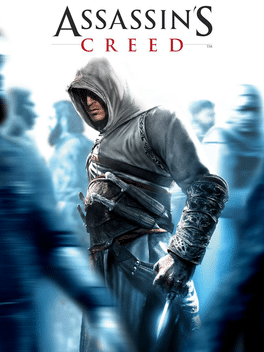
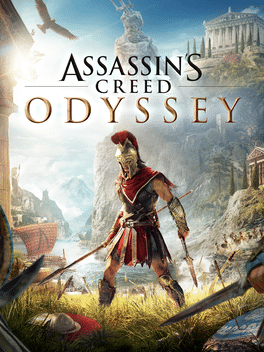
This extended abstract, presented at DiGRA 2023, examines how Ubisoft's Assassin's Creed Origins (set in Egypt) and Assassin's Creed Odyssey (set in Greece) construct what the author terms "articulated resonance": the deliberate reliance on culturally familiar, Western-recognizable tropes to make depicted non-Western or ancient cultures accessible and appealing to audiences. The core thesis is that these two installments restructure orientalist inclusion and exclusion boundaries to produce playable worlds that feel proximate to Western sensibilities, with Origins drawing on Egyptological tradition, museum logics, and mummy motifs, and Odyssey emphasizing Hellenistic excellence, democratic legacy, architectural grandeur, and Homeric heroism while masking modern problematizations of Greek antiquity.
The study adopts an interdisciplinary, mixed-methods approach combining game studies analysis with semiotics, examining the games as integrated wholes encompassing maps, activities, characters, music, architecture, and historical and player framing. This textual analysis is contextualized through attention to the industrial language and goals of Ubisoft developers, drawing on production studies and brand theory to show how game construction serves corporate branding. The author also situates both titles within a wider continuum of pop culture and legacy media references. Notably, the analysis is framed as a macro-level, franchise-spanning view rather than a single-game case study, responding to scholarship that has largely treated the series installment by installment.
The scope spans the Assassin's Creed franchise over its fifteen-year history, with particular focus on the two antiquity-set titles released in 2017 and 2018. The author acknowledges a key limitation: the several hundred hours of play underlying the analysis cannot be fully presented in a single abstract, so the work is offered as a framework for cultural and franchise studies rather than an exhaustive account of each game.
Overall, the paper argues that blockbuster game companies position such series as transmedia franchises extending well beyond the games themselves, relying on stereotyped pop-cultural constructions of real-world cultures. The proposed concept of articulated resonance is presented as a tool for games, film, and cultural scholars to analyze how commercial design choices shape representations of history and culture.
DiGRA · 2023
DiGRA · 2023