ArticleBrutally Honest
Knit Out’s Turkish Blueprint: Rollic Games Scaling Puzzle Games
11 Jul 20251 page~6 min full read
Key insights
8 slides
Core strategy
Rollic prioritizes a polished core loop before adding meta-layers.
The studio refines addictive gameplay before introducing complex features. This approach supports high return on ad spend.
Core loop first. Rollic Games scales mobile titles by prioritizing a polished, addictive core gameplay loop before introducing complex meta-layers or live events.
Prototype testing
Only prototypes meeting rigorous benchmarks receive significant marketing spend.
The studio tests hundreds of prototypes before scaling. It commits marketing spend only to titles meeting retention and monetization benchmarks.
Key number
Knit Out generates $60,000 in daily in-app purchase revenue.
The game also attracts 20,000 daily downloads. The United States accounts for 60% of total revenue.
Market focus
The United States contributes 60% of total revenue.
Customer acquisition costs exceed $10 in this market. Rollic maintains high return on ad spend despite these costs.
Ad strategy
Knit Out avoids banner ads in its monetization model.
Interstitials start after level sixteen. The game offers a rewarded ad-to-IAP upsell model.
Creative assets
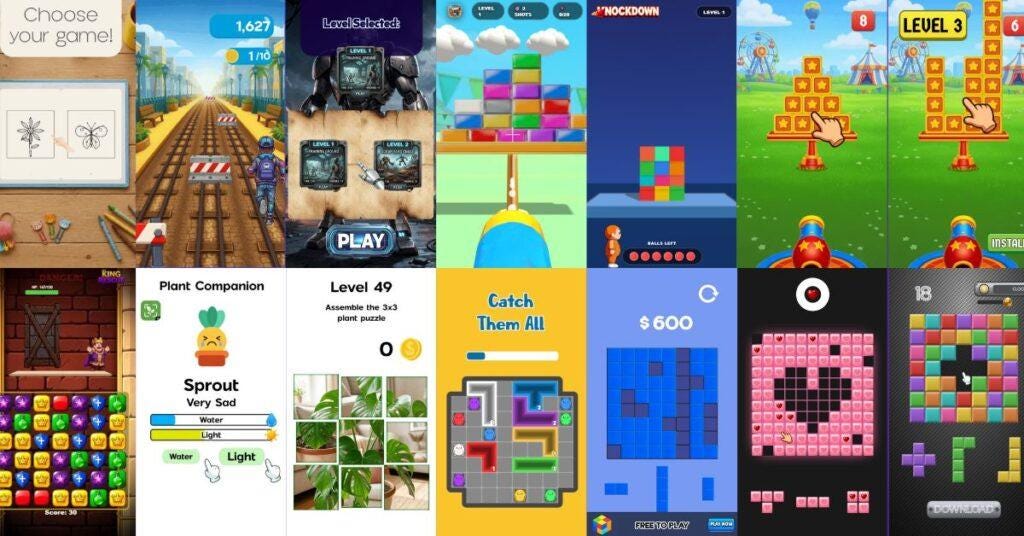
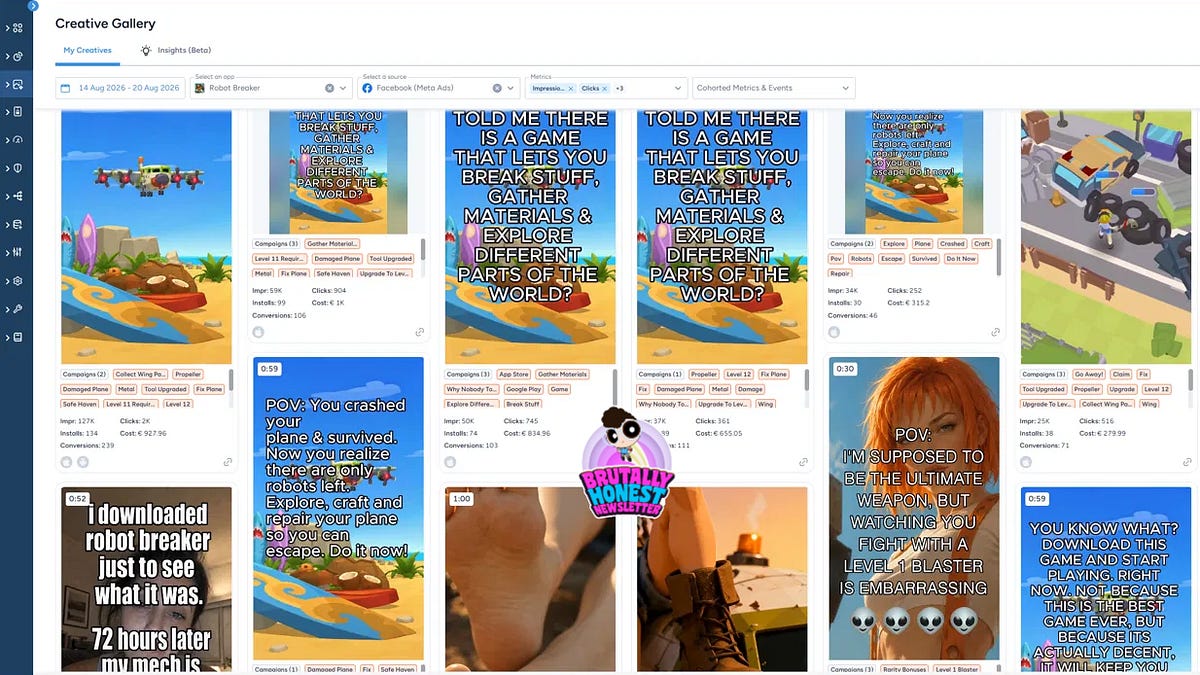
ASMR-inspired creative assets target Facebook and Instagram.
The strategy uses high-quality, thirty-second video and static assets.
ASMR creative. The creative strategy emphasizes high-quality, thirty-second video and static assets tailored for Facebook and Instagram, focusing on ASMR-inspired visuals and satisfying mechanics.
Industry shift
The industry shifts toward lean, data-backed development.
Developers refine core mechanics to perfection before committing significant marketing spend.
Lean development. As of July 2025, the mobile gaming industry is shifting toward a lean, data-backed development model that emphasizes refining core mechanics to perfection.
Repeatable model
Rollic maintains a repeatable blueprint for success.
The studio tests hundreds of prototypes and scales only those meeting benchmarks. This allows effective scaling in a competitive market.
Repeatable blueprint. By testing hundreds of prototypes and only scaling those that meet rigorous retention and monetization benchmarks, Rollic maintains a repeatable blueprint for success.
1 / 8
Ask AI about this report