1 free read left. Create a free account for unlimited reading + AI research.
Create free accountArticle Brutally Honest
1 free read left. Create a free account for unlimited reading + AI research.
Create free accountArticleBrutally Honest
The H1 2026 report synthesizes real-world campaign data with insights from 115 industry professionals. The participants represent a diverse spectrum of the market, from boutique to large-scale operations.
Survey scope. The report is based on 115 detailed survey responses.
Matej Lancaric's H1 2026 edition of his Brutally Honest newsletter series offers a data-driven look at mobile game user acquisition, combining real campaign data, responses from the 2026 UA Landscape Survey, and his own experience running UA for prominent titles. It positions itself against generic "state of the industry" commentary, promising practical takeaways that UA teams can apply to upcoming campaigns. It is a follow-up to the Q1 2025 edition, and comparisons with that earlier report are built in.
The methodology rests on 115 in-depth responses, a sample size similar to last year's. Respondents are teams with annual UA budgets ranging from $50K to over $70M, so the data spans small studios through very large publishers. The author explicitly frames the percentages as directional rather than definitive, emphasizing depth of responses over volume.
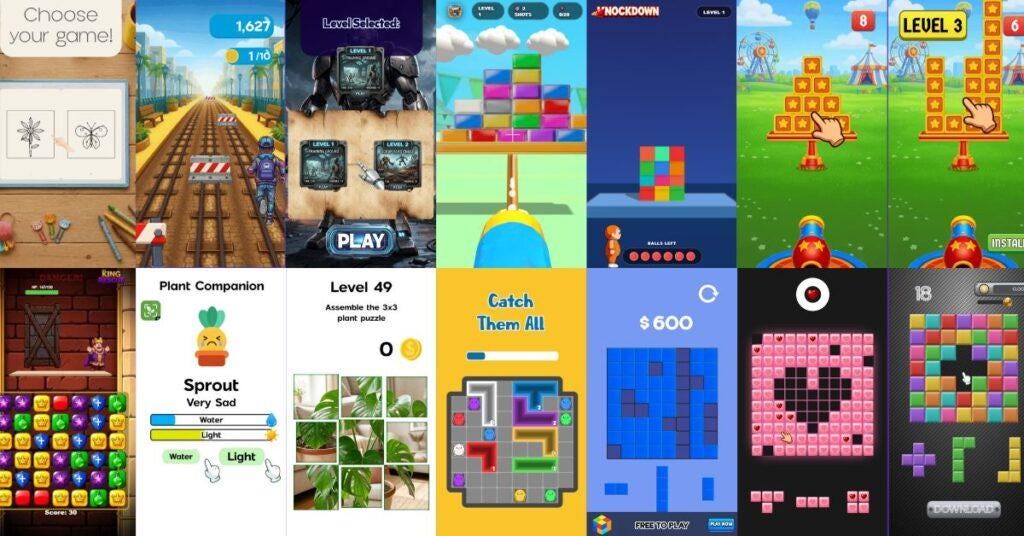
The announced coverage includes UA channel mix distribution, including one channel described as having flatlined completely; continued momentum in rewarded UA; a second round of upheaval among mobile measurement partners; creative performance, with the claim that playables absorbed significant budget; the role of AI and automation in 2026; and the main concerns troubling UA managers.
Only the introduction and table of contents are accessible, since the substantive sections, beginning with UA budget and channel mix in H1 2026, sit behind a paid subscription wall. No specific figures, channel rankings, or named MMP changes are therefore available. The visible content signals themes of rewarded growth, playable ad dominance in creative spend, MMP market shifts, and increasing AI adoption, but the supporting data and conclusions remain undisclosed.

Brutally Honest · 2026
Brutally Honest · 2026
Brutally Honest · 2026
Brutally Honest · 2026

Brutally Honest · 2026

Brutally Honest · 2026
Brutally Honest · 2026

Brutally Honest · 2026
Brutally Honest · 2026

Brutally Honest · 2026

Brutally Honest · 2026

Brutally Honest · 2026
Deconstructor of Fun · 2026