1 free read left. Create a free account for unlimited reading + AI research.
Create free accountReport Adjust
1 free read left. Create a free account for unlimited reading + AI research.
Create free accountReportAdjust
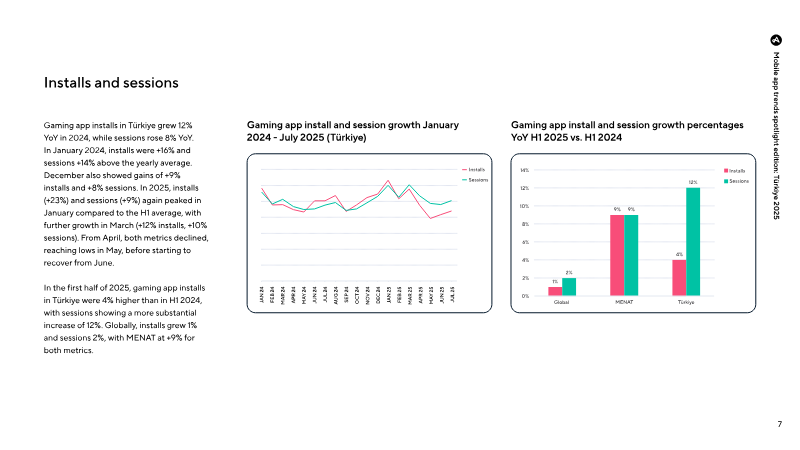
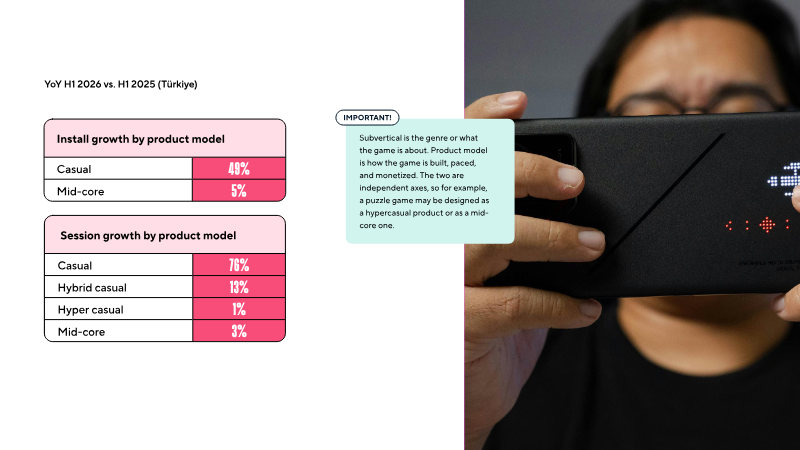
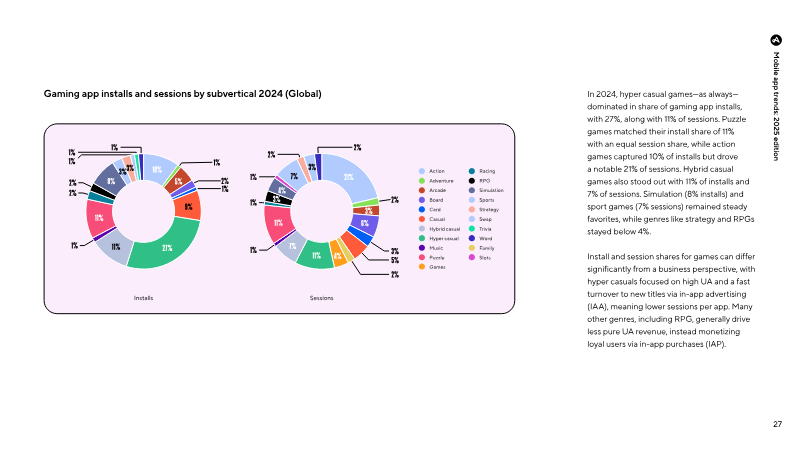
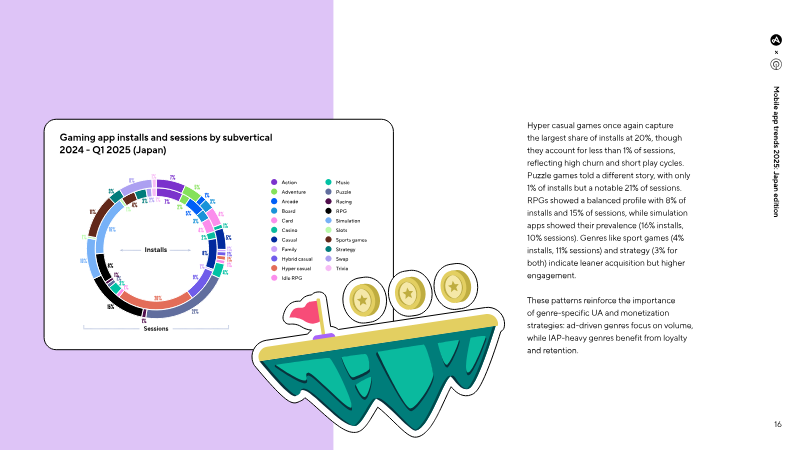
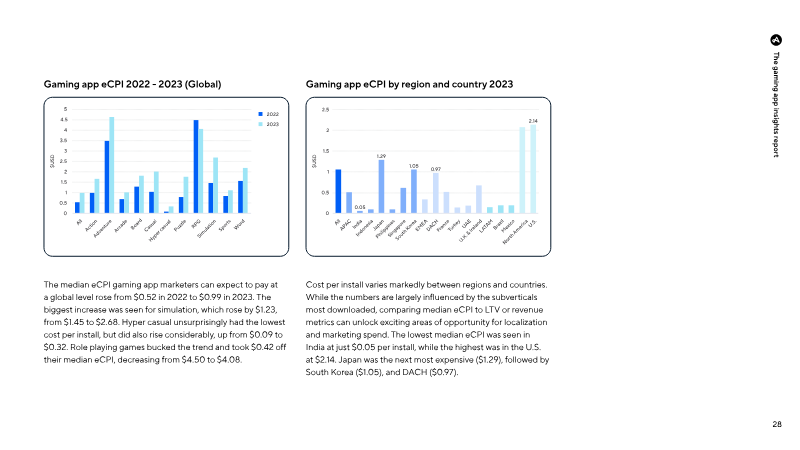
Gaming remains a primary driver of the mobile app market. Hyper-casual games dominate install shares at 28.6%.
See it on page 7The mobile application economy in Türkiye is entering a high-growth, maturing phase, with total revenue projected to reach $1.65 billion by 2029. Ranking eighth globally for both total downloads and time spent in-app, the market is driven by a young, tech-oriented population and an 87% internet penetration rate. Analysis of data from January 2023 through July 2025 reveals that while the market is scaling globally, it maintains unique local characteristics across the gaming, finance, and e-commerce verticals.
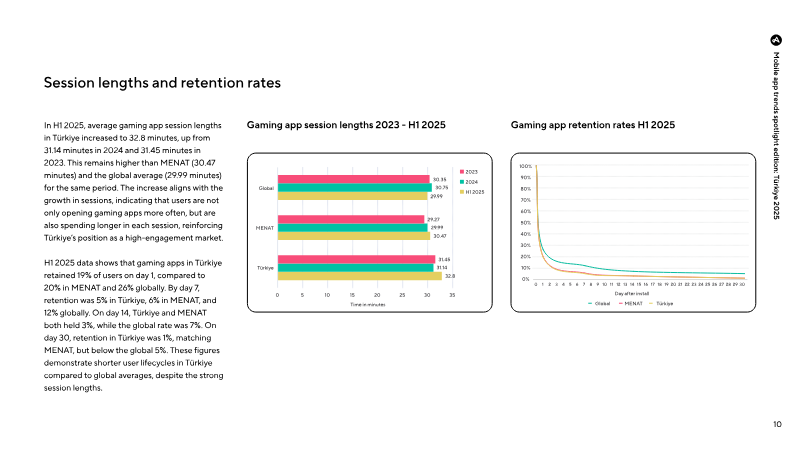
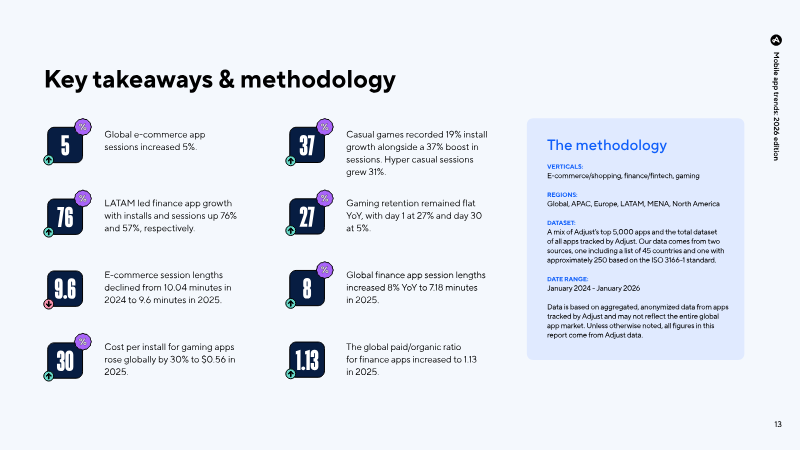
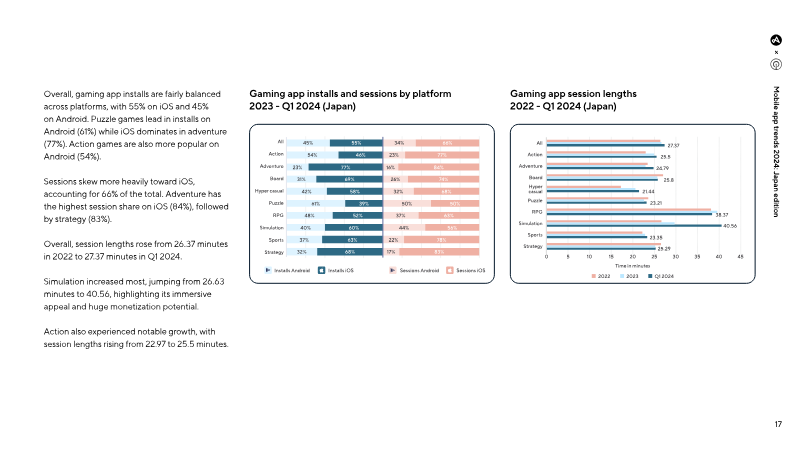
The gaming sector remains a primary driver, with installs growing 12% year-over-year in 2024. Hyper-casual games dominate install shares at 28.6%, yet music and action genres command the highest session engagement. Notably, Turkish users spend an average of 32.8 minutes per gaming session, surpassing both regional and global averages. However, retention rates in Türkiye tend to be lower than global benchmarks, with only 19% of users returning the day after installation compared to 26% globally.
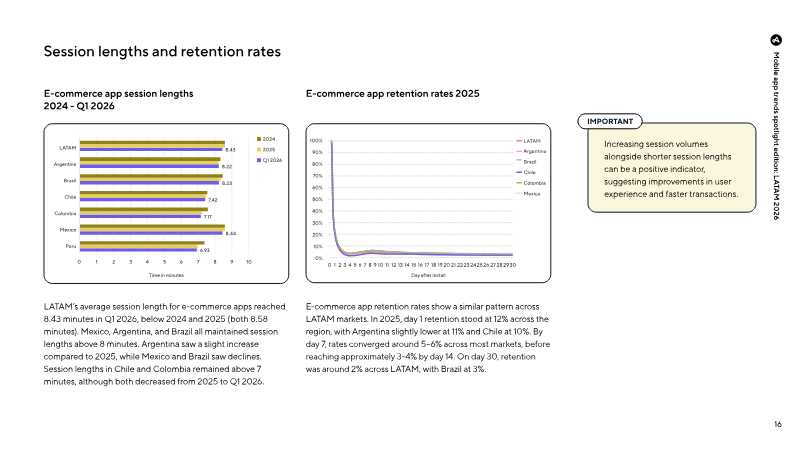
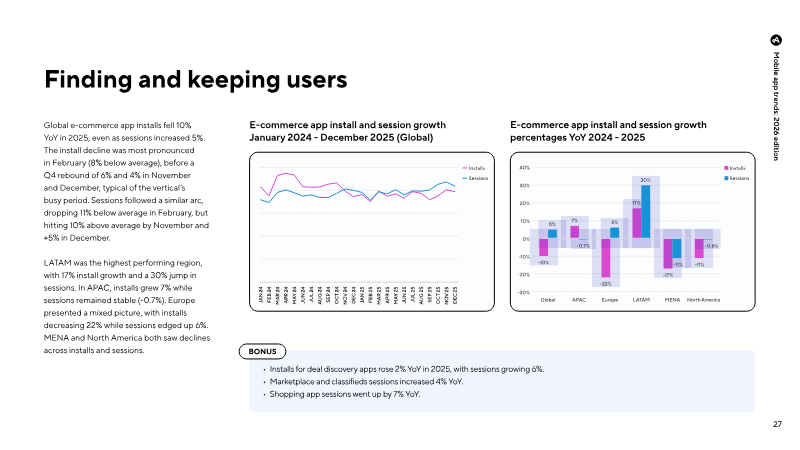
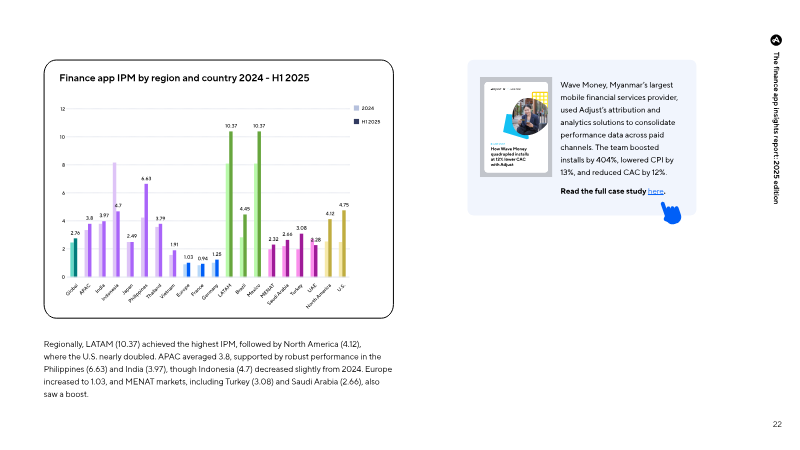
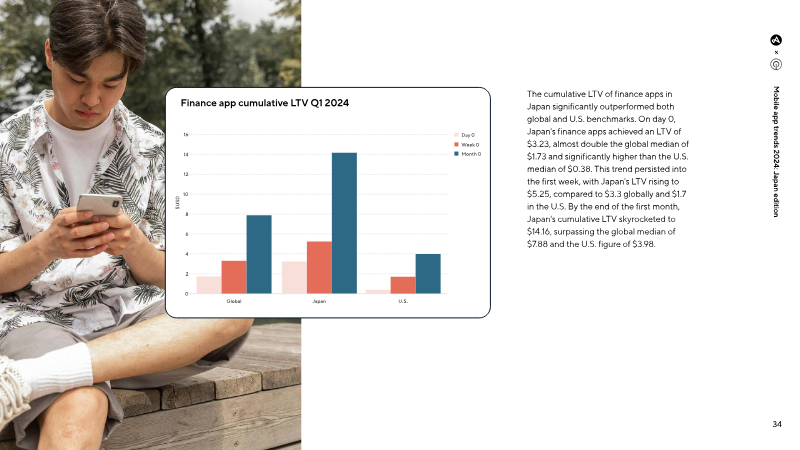
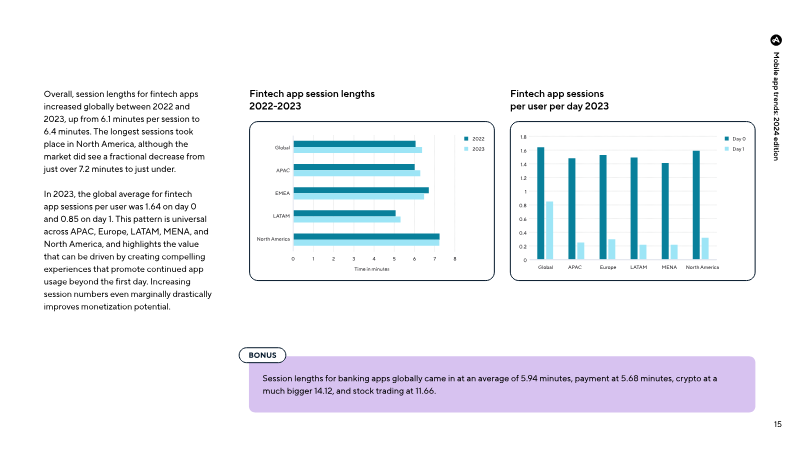
The finance and e-commerce sectors show similar trends of high engagement and rapid adoption of new technologies. Finance app installs surged 30% in the first half of 2025, supported by a high mobile banking adoption rate of 85%. In e-commerce, local developers maintain a strong foothold, creating 80% of the top shopping apps. While session lengths in these categories are gradually declining—potentially indicating more efficient user paths to purchase—retention rates for finance and shopping apps in Türkiye consistently outperform global medians.
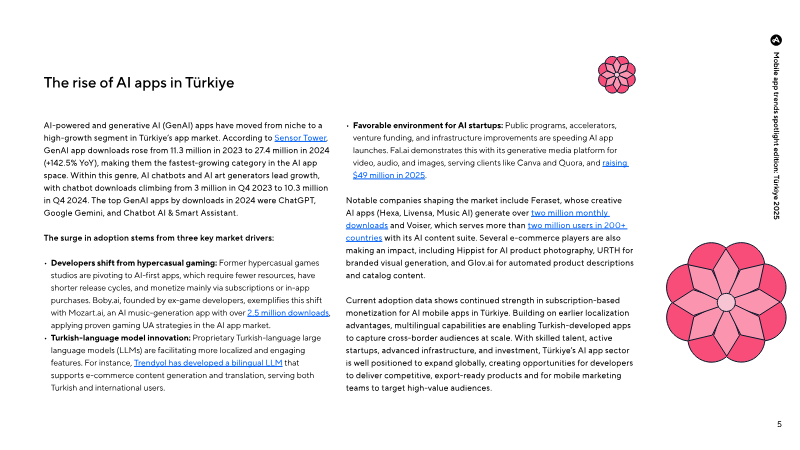
A significant emerging trend is the rapid rise of generative AI applications, which saw a 142.5% increase in downloads between 2023 and 2024. This growth is fueled by a strategic pivot of local hyper-casual game studios toward AI-first apps and the development of proprietary Turkish-language models. These findings suggest that Türkiye is transitioning from a regional player to a global powerhouse, characterized by a highly engaged user base and a robust ecosystem of domestic developers.
Adjust · 2026

Adjust · 2026


Adjust · 2026

Adjust · 2026


Adjust · 2025

Adjust · 2025

Adjust · 2025

Adjust · 2025
Adjust · 2025

Adjust · 2024

Sensor Tower · 2024

Adjust · 2024

PocketGamer.biz · 2026