Key insights
7 slides
The core shift
Testing now proves 2–3 month LTV and D7 retention first.
Successful mobile game testing prioritizes underlying economics over immediate CPI optimization. Developers validate retention and monetization before increasing spend.
The counterintuitive finding
CPI can remain stable or decrease during aggressive growth.
Data suggests CPI does not always increase when scaling spend. If underlying product economics are sound, acquisition costs can improve as volume increases.
CPI
Can remain stable or decrease during aggressive growth phases
- Must be evaluated alongside CPI
- LTV
The creative bottleneck
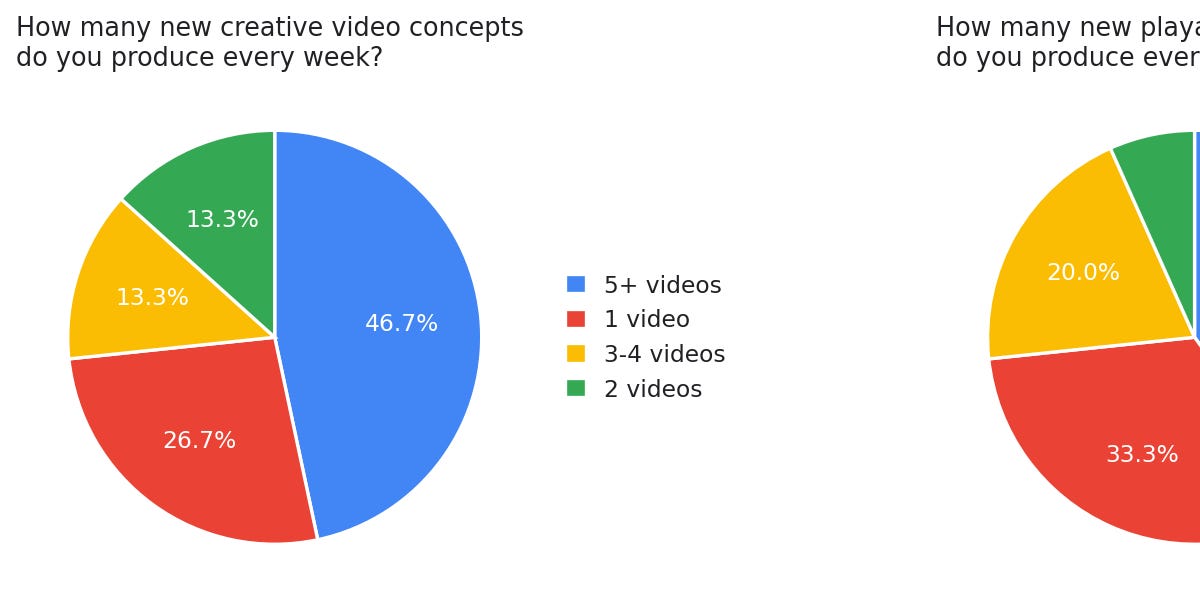
Top titles fail to scale without sufficient creative iteration.
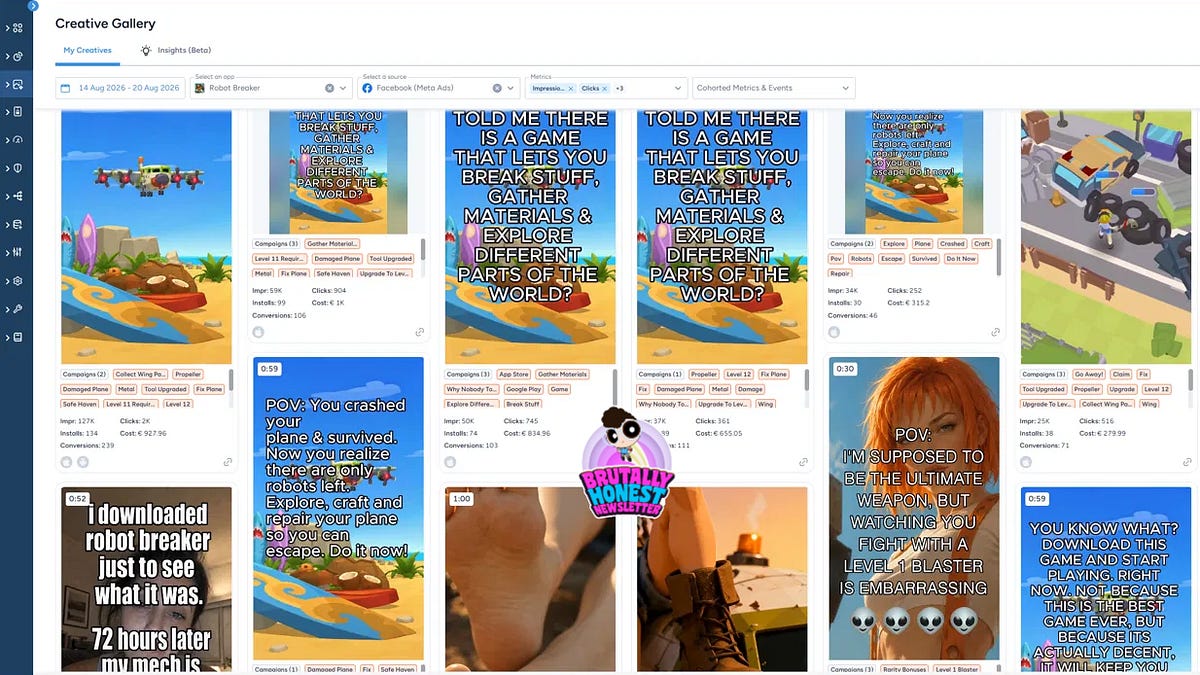
A title generating significant daily revenue may underperform long-term if it fails to maintain fresh ad concepts. High creative volume is critical to combat audience fatigue.
Creative volume. Top-performing titles often fail to scale effectively due to insufficient creative iteration.
Format evolution
Playable ads are now a primary UA backbone.
Playable ads have transitioned from a niche format to a primary UA backbone. They require integration into video-led funnels and AI-driven creative workflows.
The revenue case
Bus Traffic Fever generates an estimated $400k–$500k daily.
Approximately 75% of its revenue is derived from ad monetization, particularly through revives after failure.
The platform proof
Kinoa implementation showed a 43% increase in ARPDAU for Carry1st.
The platform also showed a 46% increase in payer conversion for Playstudios' 'Tetris Block Party'.
The growth model
The "traffic credit card" mentality protects cash during validation.
This approach is supported by robust LiveOps and creative testing.
Growth strategy. The most effective growth strategy involves protecting cash during validation and rapidly capturing profitable traffic once proven.
1 / 7
Ask AI about this report