1 free read left. Create a free account for unlimited reading + AI research.
Create free account
How to make great games without crunch / mental health problems in the games industry
Key insights
6 takeaways- 01Operational interventions should include integrating quality assurance staff directly into core development teams to streamline workflows.
- 02Leadership must foster a culture of transparency that empowers employees to disconnect during time off and respects individual professional boundaries.
- 03Studios must transition from an hours-logged culture to a goal-oriented efficiency model that prioritizes focused output over exhaustive labor.
- 04Sustained overtime beyond a two-week period leads to diminishing returns in productivity and a measurable decline in overall product quality.
- 05Preventing crunch requires rigorous project scoping and realistic planning at the management level to ensure timelines align with human capacity.
- 06Management should adopt time-for-time compensation models and provide third-party mental health resources to support employee well-being.
Ask AI about this video
Transcript
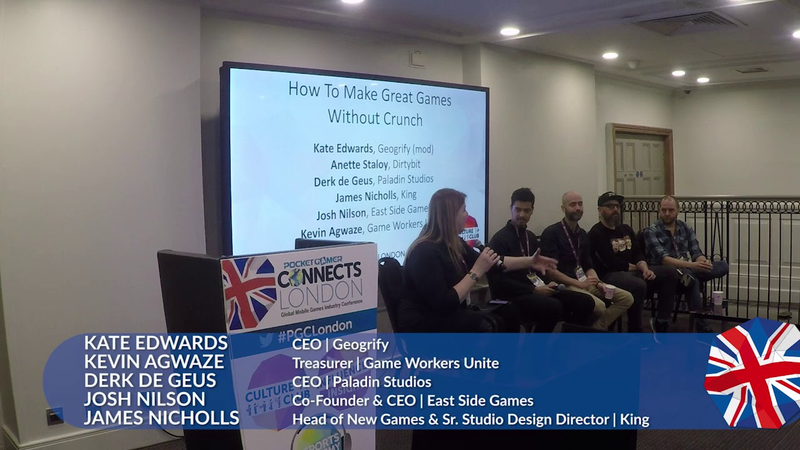
[Music] so thank you for coming to this panel this is about mental health and crunch if this is not where you expected to be then you need to say anyway so we are going to discuss this this very important topic they're both very important topics and we've got 40 minutes to discuss two massive topics and solve them and walk out the door feeling happy right no we're just going to talk about it so what we would like to do and unfortunately one of our panelists Annette she couldn't join us today she unfortunately had a family emergency she could not be here she did send some of her thoughts so I will try and interject her thoughts under the discussion as we go along but what the way I want to start is basically have each panelist introduce themselves and
and talk and just very quickly title who you're from and why this topic is meaningful to you very quickly and then we'll go from there and I'm gonna sit down because I had back surgery a month ago so I'm not gonna so go for it yeah hi I'm chemin ik batson I'm an organizer at gaymerx net UK the first Union for game developers in the UK and as union of cost crunch sort of and mental health I like some of the main topics that you want to improve in the industry my name is dr. house I'm CEO co-founder of peloton studios were game developer from the Netherlands my personal goal is to create a game studio where creative people can thrive and obviously that needs to be sustainable and healthy so for me it's a very important topic hi I'm Josh Nelson from Vancouver Canada I run a game studio called Eastside games in the game industry for about 16 years and startups for about another
seven or eight years before that and he said games we grew from six people seven years ago to twelve people than forty and then now over 100 people with two different Studios still bootstrapped and profitable so we try to do stuff a little bit different we try to keep good healthy culture but still with that entrepreneurial spirit but try to limit the amount of crunch in our studio hey James I'm the senior studio production director in that London studio for King I've been in the industry for about 15 years 16 years I used to work in console games I've done a fair if I crunch over the years lots of pretty hard projects and so I've experienced it firsthand making about three years ago and big part of my focus for this year is how we continue to build games in a sustainable way and Kings cultures really really great but how do we build on top of that and make sure that we're building live games in the way that we can keep going
and keep going without you know burning out or anything great thank you very much so the first topic we want to talk about is the issue of burnout because burnout is pretty much like an end result of what we can consider a crossroads of both mental health crises at some point for a lot of people and also the crunch issue but let's talk about burnout a bit like what exactly contributes to burnout I mean I think a lot of us would just intuitively say well of course crunch causes burnout but I mean burnout not just on two different levels one on kind of the temporary level like this person had a really tough week and they'll be back next week all fine and then more about professional burnout like I've been doing it this way for three year four year five years and I'm leaving the game industry because we hear that a lot too so I'm curious about your perspective of burnout and what contributes to that so I mean I think it's kind of is a term which has got its roots in kind of in the really bad old days of the games industry as well I think if you go back to a five to ten
years burnout what kind of reflected when people could no longer rely on their enthusiasm and love to carry them through you know incredible hours and crunch and so on but certainly the impact of it is huge right and you're talking about where someone's basically got to a point where they don't want to do this job anymore that whatever they've got for their particular craft it's outweighed by whatever is holding them back so the damage that's being done to them in terms of you know long-term hours or the impact on their family or they've just you know they've just started to realize that this this long-term impact isn't worth it I think as I say it's kind of roots in the old days where people were kind of assumed to want to love to do this so working really hard working late nights showed that you really loved and cared about games but obviously this is still something that happens today it's still still a challenge but I think that that phrase I mean basically we're skipping around the long-term impact is that people are suffering from conditions
like depression there are other mental health conditions that are fueled by people working long hours not seeing at home not seeing they like eating awful food all of this piles up on people over time and that's the effect on the individual and then there's obviously the outside of work impacts as well you know it's the it's the direct cost of any kind of long-term crunch culture [Music] yeah in addition to that it's not just like yeah back in the THQ days we would crunch but the culture was actually not so bad so being a young guy with no family I was young once I had no family once and just being working 60 hours was actually pretty exciting because we had the autonomy to do whatever we wanted and we were building some really cool stuff coming from hospitality before then you'd work 60 hours at three different jobs and it was the same thing so I think a good thing to define if you're if you're trying to change this in your studio or you're operating your own studio is to really
have those systems in your culture to you it's not just the amount of hours you work that can burn people out it can also be if you don't have effective systems like like James said like you don't have those good things you don't have healthy food you don't have a good way that people can clear their head while they're working they might just be working eight hours a day but on really intense things and you have to be able to have things within your culture that people can do that for example inside games the simplest things that we did was we didn't want to increase our workday so we do workouts in the day so we do a lot of the stuff during the day we don't expect you to come in before or after but we do team wide workouts we pre pay for that we all go out and honestly just going to the gym and doing in class with 15 of your coworkers and then coming back a lot of the problems and a lot of that stress that it relates to burnout is settled on the walk there in the walk back there like we've already solved it because there's a lot of tension in the workplace because
we're also dealing with customers and that customer tension trickles all around your organization if someone's having an issue and so you have to really think about not only the amount of hours and make sure it's healthy the amount of hours that people are there make sure people that aren't good to your culture you're moving them out you're helping them are moving them out quickly if you can't resolve it that's really cool by the way yeah so burnout I think it's such a big big topic big word and not familiar with the literature on it but if I understand or remember correctly I think burnout is indeed not just a factor of the hours or how hard you work I think the typical thing that creates burnout is if you are feeling like you your work doesn't matter right and I think that's you know if you were caught in a big machine your contributions don't matter they get thrown out the
window or nobody listens to you your manager doesn't respond or you have the feeling that you're not that you don't have autonomy and ownership over your work I think that will definitely multiply the and the chances of burnout so one of the our core values is autonomy meaning that we actively at least try to empower people in their work and work with small teams everybody adds their their contribution to the total product and another one is wholehearted everybody say hello it means go all in but also we renew our energies on a regular basis I love the workout idea and we should seriously consider that for the future so I guess that's contributing factor to Barnard is that companies don't necessarily take care of them place and income specifically about South Lake
Community Managers okay people who if you are a person it's hard to be autonomous if a job is to look at people getting shot in VR eight hours a day they're going home and coming back again and look if you shot a guy again a Texas rainbow flag physically on your eyes but also mentally and often if you're a person there's no no support for that and there's no feeling of being valuable to the guy on the team just know because QA is a very interesting one because indeed they're sort of at the bottom of the front chain and a lot of companies we have this problem with the testers that they felt you know like they were just testing so India what we did is we originally had them as a separate sort of division or group and they would serve all the project teams where with 50 people we have about five project teams right now but right now what we have is that the the testers are actually embedded within those teams so
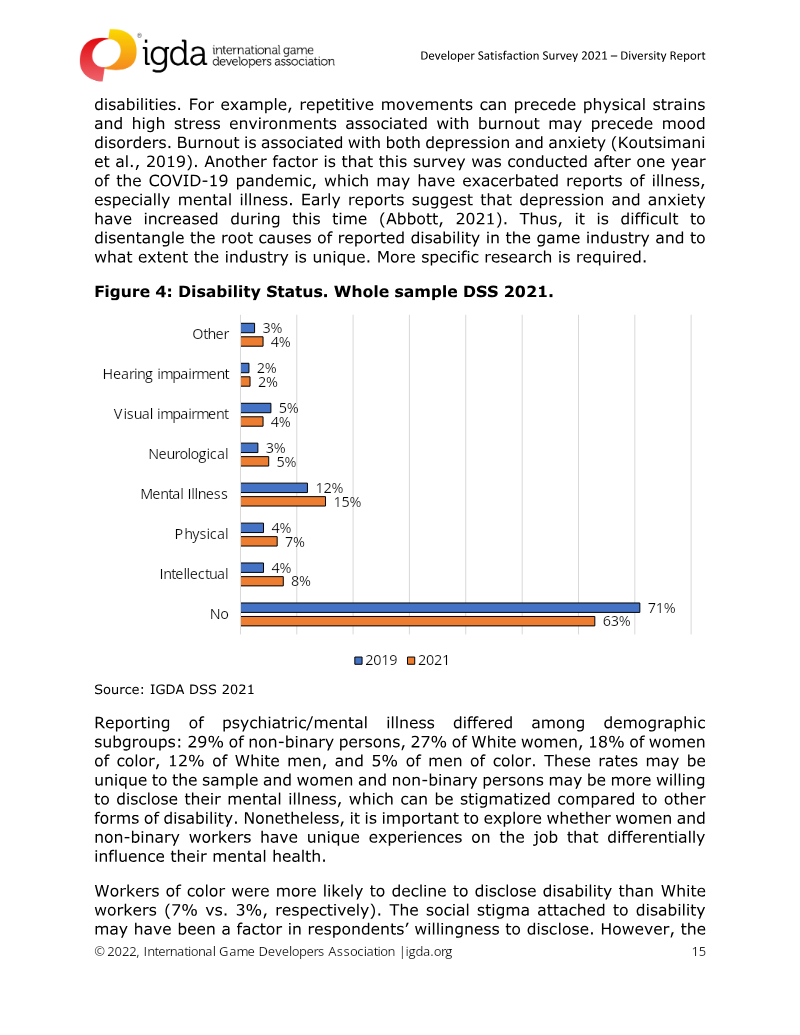
they are actively participating in the development in many different ways not just testing so it's general Quality Assurance so it's those kind of little decisions on the shobha and how it's set up but that really helped in our case that's that's great one thing a net mentioned that I wouldn't just throw in there as well that adds to this is that she also mentioned that she's been in jobs where there was a lack of prioritization given to her so it's basically just shuffling a bunch of work on her plate without telling her like work on this first than this than this and why it's exactly and so she said that for her that was one of the biggest stress point she's ever had in a job is basically just keeping work without any sense of priority whatsoever in talking about that a couple of you touched upon like depression or the mental health dimension obviously that's a huge important factor here and it's one of those things that is usually the least thing that's ever addressed at least in a lot of countries like the US where I'm
based it's like a big stigma to talk about mental health because you're showing a weakness of some form so in your experience so I'm curious what you have seen in terms of both how you identify people who are having that kind of struggle whether they self-identify and come to management say I really need help or you notice it on a team and and then secondary to that is then you can answer either-or is what you've seen companies doing in response to that you know obviously positive things like are they responding and doing providing some kind of support yes so my topic is something really close to my heart as well so I've seen it in a number of places King and and previous places and I think having a great manager or leader you know someone that you can talk to it's a huge responsibility of that person to to help that employee through right and this stigma is everywhere everybody feels that kind of resistance to want to open up you don't want to you know have that in people's mind that
maybe I'm not you know yeah I think a good manager will maybe bridge that gap a little bit maybe ask those questions maybe notice a trend overall of this person has taken a lot of sick over this last year but it's always been something you know fairly trivial is there something else we can do to help I think from Kings point of view what we try to do is we flexible working conditions I mean this is for everything not just for mental health conditions for physical health issues or you know maybe a new parent or any of these things what we try to do is make things as flexible as possible for employees so that includes things like you know working from home or adapting working hours or providing the office environment that they need and similar to the example from before you know there's lots of facilities on tap to allow you to take a break to decompress to work and environment the works for you I think that yeah the manager really has a important responsible role in that situation of having that sit down maybe asking those questions initially like it's you know is there something we can
do to help here ultimately is on the individual employee I think to you know go and help themselves so go and seek help from the people working in the games industries are certainly not you know trained medical professionals and shouldn't be trying to do that work but it's just giving people the time in the space to go and help themselves go and find the help they need the other thing that we try to do that we offer we you know we offer kind of private medical care and that puts puts a number of therapy sessions in front of people if they want to take advantage of it as well so we can give our employees that kind of access and often that can just be the thing that gets things going and helps them find a way forward the one thing I would caution with if you run a studio you're gonna set it up is you know it's great that we're talking more about this like these conditions have always exist that most people are born with these and it's just a condition that that it's something now as Games's we're maturing as businesses we're starting to deal with it what I think is great but we also got to remember we're not trained to deal with these type of
things right so you have to have some support systems in place and some clear lines where you make sure you're not counseling somebody when you're not trained to do that and I think even thinking back on other careers like HR will go above and beyond but sometimes they should definitely draw that line and say I'm not I'm not qualified to deal with this you should do that so one of the things that we did that is pretty easy and it's pretty easy on the bottom line as well if you're running a business and you're looking at I think something is third party support so you can talk to you third party support about everything on mental health it's not just on issues that you have it could be other stresses it could be there about a financial planning and they want to talk to somebody about that that could be they have personal problems they want to talk through so we have a third party service that they can go through that's not through our plan so it's not tracked I think you have to have that make sure that people can feel safe and they could do that that's the main thing here is just safety and then and
then the last thing is we're pretty generous with PTO s and so we don't do the whole I think a big challenge that you will we hire a lot of independent developers indie developers so coming in the one thing that we have to say is if you're having a bad day and you can't work you should just take a day don't check your email don't check slok go on vacation I don't want you to be emailing and that's a that dot is a bigger problem with leading to longer things about burnout and crunch it those are the those are the issues no one's talking about I'm always on them I was able to to talk about it because and then you feel like you can never be off so you can be even on your weekend if the game goes down can I call you and that means you're always on that's not good I totally agree the ideal slack curve is like you see this we can we can it's like dipping down to zero and then on Monday everybody starts talking it right that's someone we'd like to see and to
add on top of that I think what's very important is to have regular one-on-one conversations so the managers shoot and make it a point to weekly or bi-weekly talk to their direct reports about anything that's not necessarily project related or performance related but just ask how's it going that goes a long way in signaling any issues definitely as a manager you should try to identify the people to answer an email at 2 a.m. in the morning and always online it's like but even if you try to do that if you if you try to have one a month of them and try to figure out how they were it is quite possible that they were trying to hide their forms across mental health is stigmatized and so even if everything seems well just be aware that it could be an underlying problem Stan yeah one thing I've seen effective too is where the manager shows the leadership in the
space because like you said pretty much everyone has some aspect they deal with most people do and whether they recognize it or not but for those who are self-aware of it like I've seen cases where the manager in a meeting will say I deal with chronic depression just so you know and so they kind of set the tone but it's okay to mention it and I'm not going to judge you if you come to me and say you've got some similar problem or something that you're dealing with so I think that honesty is is really important to kind of set that tone for you know it's okay to speak one thing I want to touch on to related to the crunch topic and you know so you know crunch is absolutely something that can affect mental health and affect the burnout aspect but what do we do with people who want to crunch which usually it because some circles we call it like creative groove where people get into that groove and you don't you don't want them to get out of it and yet they keep doing it over and over so how do you manage you know it's and we often have that euphemism of
passion but passion is that we look for passion in the job but sometimes it's used by management as a term for passion means we're gonna pay a little and make you work a lot but what about people who they have that passion they actually want to work a lot so how do you manage people who get into groove and kind of distinguish that from crunch I mean I'm a pretty young person - is you for about a year and I do like sometimes I often I feel like they need to work longer and I should be told that it's not good that especially if it's like just me like if just one person on the team is trying to stay longer that like can leave a weird impression on the team as a whole and they like I wasn't aware of that I started but somebody told me that just be staying longer like makes other people and sure if they should be staying long as well like either doing it well is it Sunday also crunch I agree and people should be encouraged
or first one needed to take holidays and time off and stay out of slack channels and everything I've been thinking about it in terms of sort of two axes you have voluntary and involuntary crunch but then you have tucks toxic and non toxic crunch whether it's voluntary or involuntary it's fairly easy to move from non-toxic to toxic and where you draw the line actually I think it's a case-by-case basis so for example we have a lot of people who also want to do side projects and we allow that but one of the rules is that it shouldn't affect your work and as soon as people start to you know basically say like okay we're tired or I'm tired or whatever and we then also see that person working late at night or on their own projects that could be problematic even though it's in in theory a healthy or good thing so I'm
it's voluntary crunch doesn't mean that it's not toxic I would say it's kind of an impossible question to even think about because everyone's different and everyone has a different life so a lot of us work in the office we were you know long 4050 hours we go home and we try to work 30 40 hours on our family so we actually are doing huge long work weeks when you don't have a family sometimes it's okay you work 50 hours and you still have all this time you only need to sleep like 20 minutes a day and you still look healthy you're fine right so it's definitely it's definitely different and everyone's on a different path everyone works at a different level the most important thing to have in your culture is to make sure that people know what to expect out of them and they have clear goals and what they have to hit so some people it'll take four hours to hit a goal other people will take ten now
you have to ask yourself in your culture if you're gonna say no over time no working past 8 hours and then you also have to be you're also going to have a culture that non-performing you're gonna you're gonna get rid of a lot of people that aren't the performance level you out but they might meet your cultural requirements and those people might have to stay an extra hour or two to get caught up then after they could get caught up there might be good what sort of opportunities do you have in your studio if you're gonna have a studio like ours where people can move from move from engineering to design or from engineering to production or QA to community to terminal artists then they have to do a lot of work on their own and if you allow about those opportunities in your studio then those people are going to be putting in the hours but the difference in that is they're doing something for themselves they're doing something for a clear that they want doing something for a better compensation that they want you know telling them to do that so I am all for that if people want to have that entrepreneurial Drive and do that because our customers can see that work
and our customers expect us to work really hard for them to survive as an independent studio so I think that's good but unplugging it's good to work away hard but and then going back to that about unplugging last year I didn't go to GDC instead I went to other why is the best decision ever it was probably it was actually cheaper than going to GDC so I suggest everyone go to Hawaiian instead of GDC and just let your team take care of it and my team was so excited that they got to go and do like all the meetings that I normally do and go to GC get sick afterwards they got the whole experience they're so excited and I was like don't lose me in on anything you guys got it it was great and so that was good so they put in that extra work but it was actually a reward for them so on top reviewing their job they actually had to do if you go to GDC you often do 60 to 80 hour a week here we were working from 8 till 2:00 a.m. and but I don't think that's crunch I think that was they wanted to do that I didn't say I had to do that yeah I agree I
think it's for me personally I think when I think of crunch I think of something where's some kind of production shortfall for some reason it's either incentivized or it's mandated that people have to do longer hours if we're going to close a gap right that's crunch literally the time is being compressed into a smaller space and therefore we have to work longer hours I've got really engaged employees we you know they really want to work really hard on something or like we were just covering your personal development and things they want to Train they want to learn new stuff maybe when they pushed the quality up that little bit higher as long as that's within the bounds of what was agreed you know and it is sustainable then it's probably okay but I do think then managers need to keep an eye you know if this is happening all the time someone's in the office super late all the time something needs to just have a chat make sure that person is ok and look after them that's kind of the distinction I would make and then I think when we probably maybe cover on the crunch pad itself but I think you've got a look at your culture within the studio make sure you're not incentivizing people to to work beyond
what they should do and there's lots of different things that can cause that incentivization it doesn't have to be like a monetary thing although obviously sometimes as you know tell every bonuses or you know bonus targets or that kind of thing but also it can be a cultural thing that starts to become ok like it's the person that works really late gets extra praise and then other people look to that person and start to maybe think that's the the behaviors they need to mimic it's got to be really careful got to look at everybody I mean I think managers got a role to understand the people in their team and what makes them tick and what motivates them and also to make sure that maybe the people that have worked smart and in a given period of time and still delivered to a really high standard they're also getting the praise and the recognition they need it's not some kind of arms race of whoever works the hardest gets the most recognition so I think this there's a role to play there in terms of distinct distinguishing between the team that's great I remember one time Noah falstein if you know who he is he's a longtime fixture in the game industry he was at LucasArts he told me a story about how he and a group of folks who were
designing the game they got into discussion late in the afternoon and they said well let's just go have dinner together so they did and then over dinner they kept that discussion going and then they got they intended to go home so they went back to the workplace to get in their cars but then they're out in the parking lot and they're like wait that's it let's we need to go do this now so they would back went into the office and they worked all night long but he said that one day and that discussion changed the entire course this was curse of Monkey Island and so they basically it changed the course of the game in a very good way and they kind of got into that groove and they just stuck with it and of course it was one day it was one all-nighter and then they kind of paid for it later but but he said that I would never want management to tell me not to do that because that that did affect the game in such a great positive way and yeah making that distinction but just to mention briefly there's a white paper that was created by an organization called take this which I'm actually on the board for if you're gonna take this org it's called crunch hurts and the
white paper basically outlines it was done three years ago basically outlines the mental and physical cost of doing crunch and the it's it shows the physiological data and the medical data that shows what the human body can sustain and basically the agreement among practitioners is that the human body can sustain two weeks of sustained long hours and after that the ROI is like gone like virtually nothing comes out of it so it's it's interesting you know that they're not saying you know don't crunch but they're saying if you if you have to do it there's really short Sprint's one day two days something like that we can sustain that and keep our creative capability up but after that it's it's just gone and not only that but the white paper also outlines how for companies that have crunched more they actually showed that their Metacritic scores on the released team are less which usually that's the exact opposite reasoning for why they're crunching they're like we're crunching because we're going to make the game better so just a final question here about okay we've talked about crunch and
mental health but about the workplace itself so how do you make a workplace that doesn't have crunch how do you ensure that that doesn't happen and I think there might be some simple answers for this but what would your like key key answer be like how do you stop crunch from happening and workplace it's clearly defining workplace hours what you want if you're gonna work from home if you're not you're gonna be remote pick something write it down have policies put all those policies out it can really help get everyone on the same page there's some great studios in Vancouver that do it entirely different from us and I don't know how they do it but they do it very effectively so they do the all-nighters but they also have a flexible time when you can start so people can they work more effectively late into the night so they start a lot later but they don't they're not morning people but they make brilliant games so a thinking ape does it they have a lot of stuff on culture you can see that and it's entirely different in each side games we really wanted to have everyone in studio we didn't want to have remote
and we want to start early but we also want to end early so we're more based on like the Nordics like Norwegian studios where they're starting and but they're leaving sort of around the time so you could go home recharge in and do that but we're also what we've decided to is were phasing out work from home because work from home is really bad that my old boss had this indie article his name's Shane Neville and he made he left from doing crunch and he did an indie game and in indie developers they're going through - they're doing 60 to 70 hours per week working from home working from home is also really bad because your office is always there you're always working so we're trying to do more things to say when you're at home spend time with your family do whatever you do in your life because that's where you get your inspiration to come in and get those we hired somebody be like that so we want to make sure you're drawing those distinct times about when you
should be working and when you're not working but also focused work we got to make sure that when we're in the office we're doing really really focus work backflip Studios used to have it was called the silent focused environment people aren't checking Facebook people aren't doing a rock climbing wall or playing ping-pong or getting your dog groomed or your haircut at work like you're there to work and you're there to only talk about work and then when you want to go live your life but if you want a more relaxed culture we might be working 10-hour days to get the same done that you can do in a really focused culture so you got to really just figure out what you want and get on the same page try stuff out if it doesn't work try something else out but write it down in a policy and be like this what we're gonna do if you don't write it down then it's just like I think you do that and it spreads really quickly yeah yeah I think I think there's a huge role to play in terms of the planning the organization of the teams okay really quick example we worked when I was I used to work at code masters we worked
on a game called grid Autosport and no exaggeration we built the entire game in under a year from the first you know word being written down on a piece of paper to it being on on store shelves and at the time the company didn't have the finances in order to put any kind of bonuses in place anything sweet there was no way we could even incentivize people to work longer so we had no option but to and work the backlog of all the work we had planned and make cuts all the time cut and stay ahead of that have a realistic plan we can actually do it forced us out of that position where we had the luxury of all just a little bit extra let's hold on to that feature and we did shipped in a year the game got in minor italian edge magazine it was a good game and at the end we had some of those people there just took a bit of pride in their work they did for the last couple of weeks put in a few extra hours but that was it there was no no crunch and it is possible actually to build games without crunching if you're clever if you smart v stay ahead of the plan a lot of the kind of the environment that creates those you know mid mid ranging
Metacritic the huge crunch games is like it's a salvage operation is when people are throwing people at the problem to try and fix it an issue and by that stage that the damage has already been done right and for whatever reason the planning's gone awry so do you think there's a huge world place one of the things we're doing in our studio at the moment as we're trying to plan right ahead for year look at all the things we're planning on doing not just the production of our games but also all the other activities that we're planning and making sure we're subtracting that and we're only planning for the time we expect him to be production time so it's okay to go to that event that team event that thing that you're organizing to help with engagement to help with people's kind of training and development because we've actually given you the time to do that because what we're trying to do is get to a point where we can develop live games in a sustainable way so we can look after games at farm areas which are absolutely huge huge games and keep sustaining them and keep building them in a way that isn't going to burn people out and that's a really fascinating challenge that we're kind of wrestling with at the moment what we do is we compensate over
time for whatever reason at a time for time and I think it's not just about incentivizing people the right way I think also the company and the management needs to be incentivized and the right way because if the management is praised or there's benefits to people working longer hours than what you're gonna get is that the managers will attempt to a little harder and that could escalate of course we're staying on top of things always a simple rule like time for time compensated and within a month for example or within a milestone or the next milestone that is already sufficient to make people scratch our heads and say okay we're not gaining
anything from crunch other than compressing time when I think before a big milestone and decompressing it after so you pay the price in a way and I think not having money attached to that is also a conscious choice on our own to make sure that people are not so paid to longer hours so I think that's that's what we do I think time four times really good idea but a lot of conscious unpaid overtime and I get not paying people for overtime to incentivize them if it's not we're like well back to say you will not work 60 hours this week and I tell you this as manager if I don't also pay you 20% more of 50% more then so so if a person works 60 hours one week then the next week they would subtract 20 hours that they worked extra from their work time so they would basically at 20 hours back
the next week or the week after so that's the idea and so it's sort of beta paid time off well thank you very much I think we have just a couple minutes left we take a couple questions maybe three minutes okay so do we have any quick questions here at all comments questions right here thinking about what who was the question again what do you think that we as a community can do to sort of make companies more transparent like as individuals looking for a job for example how can we when we're applying
to places know what sort what they can eat what their sort of work culture is like and whether we're going to have a really hard time make sure you ask I just did a whole bunch of interviews and as founder I make sure I do the final interview with every single person that we've ever hired I think I've only missed a few and my other founders done those and no one ever asked that and I would be amazed if someone else thought because I'm always like do you have any questions for me and that's just general you should have four or five questions on the culture that you want to ask but one of them is where is your like what do you guys believe in for for Crunch or what do you believe in or like say I want to work extra less like get as specific as possible to your situation in your job because those are things we definitely want to talk about right then so it's not a surprise oh I see okay
well what you can do before then is if I assume at this point you really like the culture of the company that you're gonna work out a good way to ask some questions about that is ask them generically through Twitter or something like that even on a different account or just ask three there and if the company has the culture that you want a lot of times we answer a lot about those questions through the odd to be like yeah we totally believe in this we totally believe in this and then reference those points out your interview that's a most people don't talk about that stuff with the interview and that's the stuff I have found at level we really want to talk about because we want to make sure we're in line the interview just as much for you as it is for us [Music] let me get it there sorry so kind of for
these programs that you're looking at where you do things like go work out as a group how do you ensure that you're not negatively biasing against people who are not willing to participate in that because I love working out I love boxing I will never do that with my coworkers like there's for me a divide between that part of my life and Co like coworkers and part of that is unfortunately as a woman in the industry dressing in any way shape or form that shows off my body mainly to problems and I'd rather just sidestep that so when you look at building a great culture how do you ensure that people who don't feel comfortable and participating and those sorts of things are not then bucketed in not a team player unhealthy get him out of the org we so building a great culture I have my people that help me around the culture decide what we're gonna try that's one of the things we do we also do yoga in the studio which also I can see how can
be pretty intimidating I mean I I do it and I suck really bad at yoga so and it's like right in the front of our studio what we try to do that or in the morning there's all these other classes that people do there's a lot of classes in our culture and stuff that people do that's paid for that's not like as a team effort and then we also have a new plan that you can do whatever you want and I'm happy to pay for that as well as part of your benefits so if you just want to run or whatever you can get your running shoes and do it by yourself or if you want to go do your own a boxing class or whatever like that will pay for that as well so it's having that choice and I think because it's a select different group that we kind of have the advantage of now one of the advantages of having a hundred people is we can have a different ten people go all the time or are three people or whatever people can go or they they don't have to the one thing that we do if you're gonna roll out a program like this that's great is do it during the work day but
it's you either do the during the time or you work right so it's also another incentive to break away not to work or if you want to go for a run or do your own thing through that time that's fine but you can't just like go watch Netflix for an half a half an hour during that time you have to do something physical during that time I guess you need Netflix if you go for a run you can do both oh yeah great well thank you so much for sharing so much with us and thank you guys for attending [Music]
Summary
Burnout in the game development industry is a multifaceted crisis driven by systemic issues, including prolonged crunch, insufficient autonomy, and poor project prioritization. The prevailing culture often equates long hours with high performance, yet empirical evidence suggests that sustained overtime beyond two weeks results in diminishing returns and compromised product quality. To achieve sustainable development, studios must shift their focus from hours logged to goal-oriented efficiency, recognizing that high-quality output is a product of focused, well-rested teams rather than exhaustive labor.
Addressing these challenges requires a fundamental restructuring of studio management and workplace policies. Leaders are encouraged to implement rigorous planning and realistic scoping to prevent the necessity of crunch, while simultaneously fostering environments where employees feel empowered to disconnect during time off. Practical interventions include the integration of quality assurance staff into core development teams, the adoption of time-for-time compensation models, and the provision of third-party mental health resources. By incentivizing efficiency over overtime, management can better align project timelines with the human capacity of their workforce.
Ultimately, the responsibility for mental health rests on a combination of structural policy and supportive leadership. While managers play a critical role in identifying signs of distress and facilitating a culture of transparency, they must also recognize the boundaries of their professional expertise. By prioritizing inclusive benefits, clear communication during the hiring process, and a culture that respects individual boundaries, studios can mitigate the risks of burnout. This holistic approach ensures that the pursuit of creative excellence does not come at the expense of the well-being of those responsible for building the games.
















Comments