VideoTwo & a Half Gamers
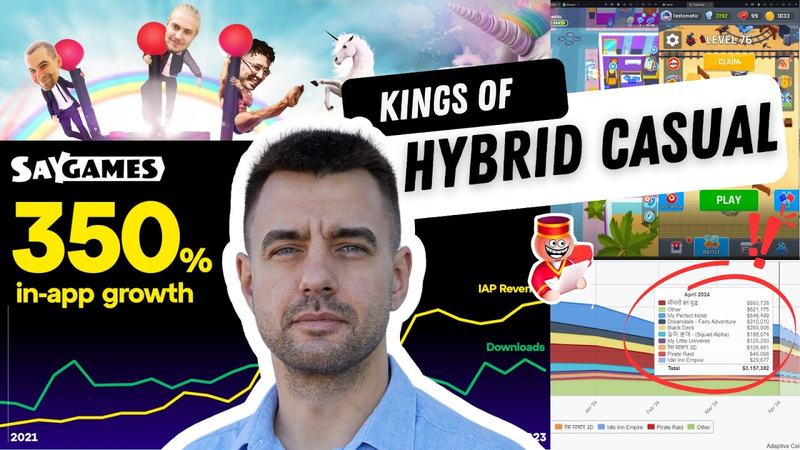
How to grow IAP revenue by 375%? SayGames Special with Anton Volnykh
27 May 202465 min video
Transcript
because we don't have a lot of head count we're only 170 people at say games uh but our advantage is that as I said we have a lot of interns of tools inter internal tools that that we use to operate these games and um a lot of the things that we have that are running uh under the hood is automated so our our general approach automate in everything so can you tell us what kind of tools [Music] this is a no gaming show where we talk about games and their revenue in great detail powered by our ad monetization game design and user acquisition Triple Threat expertise welcome to the two and a half Gamers the unfiltered truth served with a side of giggles
let's not forget this is a 400 a.m. conference discussion Vibe so let's not take it too seriously tune in now and stay two and a half steps ahead of the gaming industry making you all all disappear H all right uh welcome everyone uh welcome to two and a half Gamers um today we have uh another special episode Another special review uh and uh let's start my name is mat lerich I'm Felix Brer and I'm yier and we are your hosts and we have Anton from seames here thanks for coming Anton can you give us a little bit of introduction about yourself and an amazing company you work with sure hey guys uh I'm Anton I I run publishing Ops at St games uh my role is uh all the business activities working with the new Studios old Studios
legal PR on boarding things like that um and another part of my job is uh producing games with our Studios so I'm I'm half product half business guy so that's that's what I do I uh I'm in games for quite a while uh I I I released my first uh mobile game on a mozola black and white Java uh feature phone with buttons back in the day yeah so 64 kilobytes file size and things like that so and it's been it's been it's been quite a few years since that happened uh but yeah now I'm with with say games uh yeah nice and why are we here is actually well we covered say games a lot before and uh and you know like going from hyper casual I would say jugernaut Felix you
use this uh this term quite a lot yeah I butcher that term yeah and then then we like we saw like all of these amazing numbers also like you published on your website and and everywhere else like your iip revenues growing and and honestly heads off like good to to you and the team and like uh well around all the activities you're doing and that's actually that's why we are here because we really admire your work and uh and the the things you've done and we have some questions we definitely have some questions absolutely because yeah because we de we reviewed my perood hotel uh we reviewed what else dream so yeah dream Dale okay oh welcome back War yeah tower Tower War oh my God yeah and by the way before we we start I I was checking like all all the all the num numbers and things um recently in
Sor Tower and half of the the games in Sor Tower is just like in like translated to like Vietnamese sty or like some weird weird stuff is this is what this is what I noticed earlier today as well uh there must be some issue what's like what's happening it was kind of I saw some weird namings on Race master I think and I on Android even yeah on Android yeah yeah like in yeah okay so I was like is it on purpose or it some something I definitely need to ask okay right Yak what's uh what we are start starting with uh do you want to share some things and then like you know walk through US yeah we can talk a little bit as usual as our kind of a what's the situation happening um let me share the screen here and we can go from there so
looking at the portfolio from Sor Towers perspective like there's a pretty steady kind of flow download still Revenue wise there's a big spike which is a little bit stabilizing let's say but still kind of going majority there if I understood correctly regarding IP perspective Tower War uh that's why you see these different characters here what mat was mentioning it's currently uh at the top of the I Revenue crowd if if like these numbers are up up to style and uh yeah then we have the usual SRA as my perfect hotel Dream Dale black deck actually we I don't think so we talk that much about it but I think it's I see the the creatives all the time yeah it seems to me like a a little bit more simplified Hearthstone but still kind of doing consider bound of Ip Revenue but yeah I guess lots of lots of things to talk about um I would say the usual questions as we have other Publishers already here is what would be your take on the experience of changing from hyper casual
to hybrid casual or like how did you approach that when for instance you would go and say okay guys in my perfect hotel please Implement more IP stuff or guys at dream de or like what what is the focus of the company so uh it's it's a continuous process and it has uh many many factors that you have to consider first of all kind product product side and marketing analytics things like that so and we're working in all of these directions at the moment so um and all of them are are kind of hard uh to do because uh from the product side you have to uh build the expertise in terms of uh what our teams are doing and what kind of talent they have how what what experience they have in terms of building these kind of games second is obviously marketing part which is which is very much different from what we we had during the the hyper casual era uh
next one is uh analytics and all the internal tools that we have because we uh we're not using anything third party well except for attribution um and obviously at networks uh analytics system the ab test uh everything is in seit which is our SDK so and we have a qu quite a quite a big product team working on uh on on on all these tools and products every day that help us and developers build those games that we publish and would you say for instance your publishing goals or let's say the approach towards external developers change compared to something like I don't know like the example that we got from voodo that for instance now they internalize all the teams they don't really work with external people so like they want to get everyone in so some something things changed there this is something that I've heard about the kind their approach and every publish I think is is
different um what we believe is we have to build the expertise uh in our teams rather than having them build a prototype and then taking that game away from them so they don't actually get an experience in in scaling the team building the team you know having that experience of actually transitioning from hyper casual to hybrid casual because it's a it's a it's a very difficult and L long way to successfully transition from like from just uh you know intertial based level based game to something like I know Tower War for example um so we um our approach is we do everything to help them make the transition uh whether it's uh kind of our help from the you know producer side or analytics side or financial legal whatever help they need we help them uh and we nurture that that transition
because for us it's a it's not a it's not a game based approach where we just find a game and we launch it for us it's a for us it's a team based approach so even if we don't launch this any particular title uh to Global there's a high chance high probability that by getting enough experience a team will eventually uh be able to release a a big a big hybrid casual here mhm okay uh regarding the kpi goals I know this was like very very typical for the hyper casual era everybody had there like you don't need to hit whatever this day one this day three this whatever CPI uh have any of those change also as if you're let's say looking at stuff coming into your pipeline like what would be the nordstar kpi now um not really uh because uh there are so many more factors now that you have to take into account when uh when
testing a prototype and then going to soft launch and uh going global um we do have um metrics uh for all the key kind of genres the internal kind of benchmarks obviously and we compare all all the titles uh between each other but um it's it's never uh a decision making Point whether the game is going to is going to you know release or not because uh at the end of the day it's all about whether you know you know we can we can launch all those campaigns and whether uh it's going to be profitable uh and some of the matches can be quite different from one game to another uh and uh the important part is not to kill a hit okay in the process of kind of trying to align everything with with a simple kind of Benchmark system okay how do you find that hid and Define that H early on then um process is is is is is
is I saw this guy working strafing uh funny I have to I got to look at wrong uh we you know we we start early with simple not scaling anything simple test on on Facebook where we test initial metrics and see uh how the games performing on on a very small number of players with with some you know some base Baseline metrics and then uh we start iterating it if we see a potential like there has to be something where we see a potential for example marketability can be amazing but the product metrics can be not good so then we start iterating on a product uh and there are there are very diff you know different scenarios at this point and then when we reach a point where We Believe okay we have to test it on a
larger amount of network this is where we soft launch and and see you know how um how campaigns are performing what what's what's our think strategy on all the other networks and and it goes from there okay that sounds pretty good um moving forward uh would you say like how long the development life cycle stretch now from hyper casual hybrid that you consider like worth going I mean what would the typical hybrid game now be within your pipeline like three three months until the MVP or like the baseline or six months or something like that because I definitely know that like we we're past this kind of four week schedule that was to before done so now I guess it's a matter of like how many iterations you are willing to get this as you said like a something that is showing up yeah yeah yeah yeah sure sure
I think I think it varies a lot uh and by team or by a product for example um you can spend six months building a a game a prototype and then you launch a prototype and the metrics are not great based on whatever factors like marketability for example and then you change that prototype you just change the setting or some of the mechanics and then you spend you know three weeks building that particular a new prototype based on something else so how do you measure that um or um there are there there can be many scenarios uh but generally obviously the times when you can come up with a with a hybrid casual MVP in two uh hyper casual MVP in two weeks are gone um normally it's months now uh and but um every approach has its kind of consequences if you if you try to build uh games for kind
content scaling in the first place that means it will take you longer to plan everything all the uh all the all the technical kind of parts of of the production but then if you have a heat on your hands and you have to scale uh that then it will be much easier for you to actually do it rather than you build something quick and then you test it and you see the potential and you're like okay this this got to go live sooner than later and then you realize but uh your game is not ready for Content scaling or your team is not ready for for scaling so um there are some factors that you have to account for when when when producing games like that like minimal amount of content when going global it depends on a on a genre it depends on a game um on the on the monetization when the game was launched it had just a few days of few days of
content for but then uh you're asking about all the players or paid like people who pay because those are quite different much faster yeah so um so you have to so the the story for that game is is is a bit different from what you've been kind of describing in the past because yeah that's great if you can correct us like weate it was it wasn't um it wasn't uh when that scale happened last last August it wasn't when the game was launched it was it was it was launched exactly one year earlier and I mean exactly it's like the same day uh it was it was a very interesting coincidence um so when it was launched in August 2022 this is when uh it had just a few days of content and I didn't have uh a lot of
inup purchases and enough up monetization back then we've started with with a very very simple approach uh with just having no ads uh and then you could buy some soft currency in in the game shop but then we spent one year uh kind of building that game because it it it it showed some very very promising results in the first place uh but then it kind of scaled down and exactly a year later this is when a big uh breakthrough happened so by that time we already had uh many many days of game play uh for a paid user so we've been accounting for that so we've been very lucky when um uh when that scale happened we actually had a game in our hands that was ready for that scale uh we had enough content the enough monetization
was good enough uh for that for that time period um and we um we didn't have to uh kind of R start running and scaling scaling that team uh in not organic way but OB obviously everyone who was in that team at the time started working on that project and and and and stopped everything else that that wasn't plan but um regarding one other thing uh if you can go specific on my perfect Hotel I know there was some kind of quite a significant update somewhere there I think in during December last year where there was the permanent progression actually added into the game uh which is this thing where pretty much the quest system I don't know if I have yeah stopped giving hard currency is actually not giving this kind of permanent progression currency uh yeah this is
pretty much like a question in context of this update how do you approach now the liveops of these hybrids or like the teams and like the structure now that like when you have the hit because okay we pass this point as you describe when my perfect Hotel really scaled up so what happens afterwards and like for instance how this iteration was done if you could talk a little bit about it so the general approach is uh you start thinking about what are what are the new monetization layers can you add to an existing game so this is natural kind of process for all the hybrid hybrid games especially when they launching being a sort of a a hyper casual State when you just have a lot of ads and just a bit of kind of no ad situation maybe a shop where you can buy some currency um so you start thinking so what can we do here and obviously character progression is is the first thing you you you start thinking about and it's it's a first iteration it's we think it's not perfect um but it it works as it is
right now and we're working on an updated version for that thing um and and and much more uh things related to other other layers of monetization so process is is I think it's the same for every product you'll find ways to to add more depths to the game the character progression just one of them well well fingers crossed let's see what happens next yeah um yeah one other kind of a very I would say say game specific question if I can move here uh yeah yeah so this is this is like really like by the by the looks of it that's like we like covered a lot of hybrids on the market I think like most of the big ones actually and by looking at like a lot of themes have their own kind of secret Souls I wouldn't even say secret Souls but basically they pipeline how they release hybrids the one thing that notice within yours that really differs
compared to other Studios is that rather than building metagame templates and metagame Canon progressions as a template and then spreading different core gameplays into it you do the other way exactly which means you find a good performing core like it was done with the my little Universe which was then translated to something like dream Dale my perel king or fail and you let if I understand different teams execute on the same core with different meta game idea like the the recent one being for instance the states Builder War regions Builder which is also doing like kind of similar core to Tower War where it's this kind of tower node gameplay one is a combat PVP one the other is Idle one again the previous example where like we have a very similar core there so do I see the pattern rightly here that you can try to take advantage of like a very solid core with good T1 retention and then leave other teams to experiment with the meta and the setting um I guess the answer the short answer is
is is no uh because um it's up to every team to actually build their own kind of General game idea and um it's just for example ID arcade genre has its own rules that you have to go with uh in or in order to build uh a great uh kind of cor loop system obviously it has a character moving around obviously it has uh some resources that you have to uh that you have to find you the chop trees in dream day or you you build rooms and collect cash from those rooms in so every game is is is is very much different we think that my little univers so they very different gam cor and then so and those are buil by different teams if we if we see some similarities
uh in in the core Loop that means either it's it's was the same team behind uh these titles or something else happened uh uh but we generally don't have um like a like a blueprint for a core mechanic there is there's some knowledge that we have about the genre in every particular genre and we can share that knowledge between the teams uh and that really helps them to find what works and what doesn't before they actually start building something or test something uh but we don't have this blueprint for everyone okay you follow this set of rules and you're going to have a successful kind of core game play yeah yeah like yeah it's great that you're saying because like on the outside again we can just assume and expect so thank you for that one yeah my no no it's um generally it doesn't happen that way uh every team is independent
um they you know they do what they got do what they want to do in terms of their products we just help them uh iterate uh and and we tell them uh you know or we share some knowledge in terms of what works and what doesn't in both kind of core game play mechanics and metha systems so uh if you if you see some similarities between uh between the typ uh that just means uh you know there's something that we know about this particular genre that we and and we share that experience between the teams and um and they they just utilize that knowledge in in a in a right way um regarding the yeah thanks for like correcting that because as I said like there are some things that we see similarities with like if I compare to something like for instance habby pipeline we can clearly see that there's a template behind those games because it is a metag game template but is I said like everybody has their own kind of way
and that's that's the nice thing to kind of look around uh if we then look a little bit closer to or let's say A Little beit Closer on Tower War uh it's Curr yeah it's I would say it's this kind of a unseen success that everybody kind of everybody saw of course we covered on the episode but it's I think just slowly kind of scales up and up and up and up and up so can you talk a little bit more like how how's the progression of that game going because it's I think it's rather unique compared like to other games we' seen executing on the same like noes mechanic it's of course the mushroom woring that to be taken on the market it's it's it's just uh an example of how we uh how we approach uh our our products so we started working on the game a while ago years ago and we've seen we've saw we saw the potential and uh a lot of resources has been put into uh the production of that uh of this of
this game from from the developer side and there has been a lot of uh Focus from our side as well in terms of many many many iterations in terms of uh creatives and playables uh analytics part was was done properly and a large part of our analytics team is working on this title on a daily basis um from the product point of view we we just keep iterating iterating adding adding new challenges adding new levels content so it's just a continuous process there there's there is no kind of magic uh in here um it's it's just a game that um has been performing well um from the very beginning and we just kept iterating improving the the metrics uh improving the long-term metric as well so this is our focus at the moment
um and we are where we are at the moment but um it's it's been it's been a somewhat a success but uh it's not over yet and we are we're going to continue investing in this title and it's going to grow uh in the future yeah because my question let's say or let's say a little bit of a addition to the question is that a lot of games or let's say a lot of portfolios or companies they kind of focus on few few games primary as they are the let's say the bread winners or the main main kind of drivers of their portfolio and they usually don't either have the capacity to support that many titles like you have a lot of titles in your portfolio yes so yeah resources get switched like you said my perfect Hotel skyrockets everybody kind of leaves everything and goes help that team and so on so forth so the question would be like how how much of the like current capacity of the company dedicated to like new games development and old games live OB maintenance now that we are in hybrid era so no more hypera so it kind of works both ways um
since we our main kind of goal is to successfully publish games and we help our teams uh teams that we work with to to make games but we don't do that for them it's up to uh any particular team to continue investing in their own operations and be able to scale a particular title in terms of content and features and and that affect the the overall Kindom metrics and progression uh but uh on our side um because we don't have a lot of head count we're only 170 people at say games uh but our advantage is that as I said we have a lot of in terms of tools inter internal tools that that we use to operate these games and um a lot of the things that we have that are running uh under the hood is automated so our our gen approach automate everything so can
you tell us what kind of tools you you you mean it it's like an example for example um the the the SE DEC I mentioned earlier yeah okay so so that's that's a big part of our product Suite uh that our teams actually work with the analytics part that is included to the to the say it so we have our own analytics system that all of our teams use and it was uh we we started focusing on enough monetization and and and hybrid games around three years ago and we started just our our main goal was to continuously work and iterate on our internal products to be able to build those uh bigger games better um in terms of UA we have a lot of
Automation in place um so we don't have a very large UA organization uh but uh the the tools that we have in place that are internal internal tools that the the UA team uses is is is a very important part of our success you build those tools in house yes yes all of them um this this has been how long does it take to build a tool like that months years so um many many years we we started from the from the beginning of of of say games um so uh we um say games this it's a public story I can I can I can give you some on that so St game started as as a game developer so the founding team uh started working on a game and um they wanted to publish that game with another publisher and the publisher said no so they said okay we're going to build our own set
of that's usually how the story perfect we're going to build our own publishing publishing organization we're going to build our own set of tools needed to uh launch these games and this is how it started and um the thing is that at this point we're you're talking about like how many how many months or or days or whatever it takes to do it uh for example if you start a publishing company now um say games is light years away from anyone who is starting in terms of the those products that we've been building for for all these years because at least half of the say games organization is working just on things like analytics SDK and things like that monetization well now it's uh super effective I guess right so it's definitely that invest that investment made sense yeah if we shift gears a bit
and talk a bit about ad Revenue right because you guys have been in a quite interesting Journey where you went from probably 98 to 100% of AD Revenue based uh now to getting a lot of IAP Revenue as well so I estimated in my perfect hotel that ad revenue is probably anywhere between 60 to 7 70% is that about right or is it higher or lower it depends on uh on a platform it depends on uh the um the you the the UA Channel depends on the The Campaign optimization if you look at the bigger picture my per hotel is somewhere between um 20 to 30% in up uh enough up Revenue at this point nice and but it started with 7% 8% okay that's very this is the progress that that we made um but uh it wasn't
just the product it also the the the kind of the campaigns run this this part changed a lot everything has changed since then so yeah uh when we had uh Alvaro from voodoo on uh we had a little bit of a chat about skiet and how they Implement skippit they went the ticket route which is basically you buy the tickets and seg games does his own thing where basically users can use the premium currency to skip rewarded ads uh yes can you talk a bit about the implementation and kind of uh the results you saw again we don't have a we don't have a general approach here um we just test everything and every team has it has its kind of right to do whatever they want uh in in some of the games for example dream Dale uh you can see that there's a hard currency there's soft currency and there are tickets so this game uh uses everything um um we've launched my perfect hotel with just tickets but then when we've
been adding more features such as character progressions and battle pass things like that we realize that uh tickets is uh is very difficult uh to to use to scale uh your game economy for example a ticket is a ticket you cannot use two tickets to skip an ad or uh an an ingame item is is is not necessarily a one ad worth one add okay so um you have to introduce some some some some type of a hard uh hard currency in order to to build your game economy so we get granularity I would guess yes um so you can you can spend uh one Crystal you can spend 10 crystals for for any particular in-game transaction um and also hard currency is is is a large part of uh user spans so people just keep buying uh crystals uh in order to you
know in decrease the time spent on different kind of game aspects and things like that um so for for for my hotel it was uh it was a decision based on just that factor um and we've tested it and it was performing better and we decided we're going to keep it um and also um we've I've looked at this data recently even if you have uh some hard currency on your uh on your game account and you have an option to watch an ad or uh skip this ad with hard currency there is a there is a cohort of there is a some part of paying user that Ste watch ads so and by removing that option from them you're actually removing an option for further monetization of a paid user so um so there are many uh kind of different examples from uh different
titles um that you can that you can use uh uh to do something differently in in in in your game but um for for for hotel game the decision was based on just uh kind of economy scalability but we're now going to test a version where we're going to return the keep it back to the game and see how um the audience is going to react to those so how they're going to use both ticket and hard currency in M Hotel rather than just hard currency yeah uh giving the option to skip the ads though if I if you had to say a number if you say it's like a single digigit percentage or a double digit percentage like what roughly is the impact on actually having this as a vector uh inside of the games or allowing users to skip it like on the bottom line it depends on how many pay users you have so um if if you have a large uh large percentage of of your audience is
is is is is the paying audience that means a large percentage of them are going to skip ads but you know that the majority of audiences is is an ad uh ad consuming audience um and obviously a very very large percentage of people are just going to watch ads rather than use skiers um so if if find underst St your question correctly um but um rewarded ads is a is a very big part of of in game economy um so our our general approach is to increase rewarded ads and enough enough revenue and decrease the intertial kind part of the of the total revenue um so that's that that's the way we we can do it in what's your opinion on intertial ads right it's it's the John or it's kind of the ad unit that everyone loves to hate right but how do you balance fre can see with
retention um the interesting part is that we've tested uh intertial in many many ways with five billion downloads We I don't know how many how many billions of intertial uh ads with sured over time I think maybe a trillion or whatever um but um we just keep testing it every day on all the games um the the general approach is that uh if you will remove the um uh the interstitials completely this may affect your uh product monetization in a big way so and we don't think it's something necessarily very bad we just try to make it more uh uh more friendly to uh to an end user and uh again it's it's VAR from a product uh perspective it VAR from the platform perspective for example the ad Behavior IOS and Android is different uh from from from from the user based point
of view um and you just have to test it at some point you find a golden ratio between rewarded ads and interstitial ads by uh by testing all the different settings uh and finding finding a setting where uh it doesn't affect your U uh it doesn't affect your retention rates anymore uh or it doesn't improve your retention rate anymore after after you um you've you''ve you've reached a certain kind of threshold in terms of the the interstitial ads um but also it doesn't hurt your monetization in the in the in the short term for us non ad moneti ad monetization people how that ratio could look like like five interstitials or 10 or like how is that kind of ratio could potentially look like or can you explain that a little bit more what what you are looking for just at least like high level it's kind
of interesting again uh there is no answer because we have so many games and on on we have 150 games at this point launch so there's just no uh if we if we if we can talk about one particular game and there kind and its monetization approach we can talk for days about one game and how we for example if we'll take me Jale or we we take hotel we we have had hundreds and thousands of tests based on you know how exactly we're going to monetize the user base uh with uh with intertial versus world and that approach changes over time from uh things like um you just said different timers in terms of you know how soon you're going to launch an interstial what's uh um was the uh the kind of the countdown time between the interstitials and whether the rewarded add uh
impression affects your interstitial timer in whatever way so there are so many things that you can account for but also um we also automate things and now uh our approach is we are uh leaning towards uh an approach where we don't have to test anything you know some something else somewhere else is going to test everything for us so um it's it's it progresses every day with started with a very simple setting we have a timeout between two interstitials that said this is how we started many years ago now we have uh a variety of timers that you can use um and different logic of interstitial kind of mechanic and and how intertial and rewarded uh work together um and uh so you know that you can have um dozens of different type of setups for every particular game or genre uh
that will work best for this particular game or genre in terms of the actual ad monetization but the the you just there are two things that affect uh ad monetization first uh obviously your uh play time and retention so the bigger play time you have the more Ines you're going to serve um and then the way you build your game economy so the better the game economy is the more reward rewarded ads you're going to be seeing on on uh on average uh in every particular country so uh the the in terms of rewarded ads obviously the more the better in terms of interstitials sometimes we Face an issue that there are too many of them so uh because that affects your cpns and things like that so we uh sometimes we have too many and we decrease that amount by uh by kind of relaxing the the timers okay other settings that that
brings me to my last and uh question i' been wanted to ask the most is do you segment users ad experience based on any factors like do all users have the same ad experience or can they have different ones well as I said a platform can can affect that experience um now we uh we Factor many things uh such as uh and whether we know if that user is is is has you know high probability of of paying and things like that but we're still in the process uh yes but we are still early days uh in in in this particular uh kind of set up and and and and set of tools um we we we didn't we we didn't used to u to segment uh kind of ad monetization at all in the early days now we every day every day we we're trying to add more things into the
picture and be smarter about how we actually serve ads to any particular user does UA campaign play a part in how you segment users at experience as well uh depends on a depends on a game um yeah but we um we do have some titles that have this Factor because for example a bigger game has a higher chance of having in J like a deeper monetization like anation has a higher chance of having uh an in up based uh optimization so therefore you have to be very careful with with how you treat those users with with with intertial ads in particular yeah I wanted to answer that like as soon as you have more iips and more like 5050 split that's like more like uh when you segment by campaign and UA absolutely rather than just hyper casual is
yes nice yes well um like in that case you mentioned a lot of uh times the automation like you don't have like a big team in terms of the UA and crazy like can you yeah tell us a little bit more about like the structure like how that looks like who is in the team that's interesting I think it's it's I think it's very much similar to every other folks in the industry uh obviously if if if you if you take into account just the just the marketing team so it's very simple it's nothing different from any other company there are people that work with a particular ad networks there are people who you know work on just compation analytics and things like that um if we talk about cretive production this is something we've been investing in for
many years um so we have one of the best teams I think in the industry in terms of playable ads no doubt yeah we we've uh we we've made some huge progress uh before that we've made huge progress with with video creatives where we've been we've been launching games with hundreds of millions of downloads uh and every game that we launch has hundreds of creatives created and iterated with with taking account different things like the visual style and uh like the external research that we obviously do when thinking about you know kind of what works what doesn't and what what are the latest kind of social network Trends out there and and and where the market is going in general so and like how how big is the team because like you said like it's hundreds of millions of of downloads and hundreds of
creatives yes yes well uh the the creative team itself is dozens of people obviously so it's a large organization uh L and it and it's led by some very very very very good folks that we have in the company so we're very proud of the team 100% I mean uh we saw a lot of different games actually taking inspiration from your creatives you like now we showed uh coin Master creative which well let's call it he got heavily inspired by one of your your not even created by your game my perfect Hotel so OB obviously this happens all the time this is how industry works and we we don't have any problem with that um so someone has to find an idea and then another someone else will iterate on that idea make this idea better or or
not but then your next goal is to find another idea uh and this is how this is how it works here at say games we are constantly in search of new ideas in terms of games and uh monetization types and uh obviously creatives and playables what's that process all about because it's it's not easy right and it's like it's it's quite hard not even like find new idea in terms of the creatives and now you're talking about the games as well and monetization like methods in terms of the product side uh we're we're H very happy to to be working with a lot of uh very talented people in as as our developer partners and obviously this is our source of uh of inspiration and this is how those games are created because we never uh go to a team and say like do this game for us or we have we have an
idea how about you build this this prototype for us so it only works the other way around we we only uh you know talk to our teams and and listen to their ideas and then we help them kind of Select those ideas on early stage or we we um but our general approach is we just test everything and see what kind of works and what doesn't it's all it's all data driven um and and I think large part of our uh kind of creativity is is is based on uh the analytic side of business uh everything we do with test uh all the product decisions all the kind of creative decisions the marketing part everything is data driven so uh it's it's it's very easy not to miss a good idea um uh so this is I think is is something that we we should be proud of and this is this is what we've been focusing on
for all for the entire kind of company existence everyone everyone here um has as much as as much kind of capability and freedom to to come up with different great ideas but all those ideas get tested uh and this is how we find great ideas and we and we don't we don't we don't go forward with something that doesn't work simply okay and regarding the IDE like if and I guess like this was an idea of some some of your colleagues like I have an idea to scale my perfect Hotel how does that how does that like decision is uh is made because you said uh it was a different game before you made the different um iterations and added few things and then like scaled rapidly it scaled a little bit down so like what what are the boundaries like to when when to scale and when to scale back how do you evaluate those it just doesn't work that way uh for us
um so if we have a game that is scaling it's not because we've made a decision to do so it's just we we did something in the first place that that uh allowed this scale to happen obviously our goal always to um to make our games bigger but within our uh profitability goals m um but it's it's it's it's never like okay I think it's time to scale this game so we push a magic button and it just happens uh so heard there's no say games button to press no there's no big green say games button that that magically create hundreds of millions yeah users yeah that would be nice uh and you mentioned profitability is like what like M mainly looking for like day 90 payback period or 60 or longer but if you can okay
let's call 90 you say more or less again what game are we talking about uh what platform and what optimization type uh generally I can tell you one thing in yeah in general like how we try not to work uh with genres or games that have uh one year recoupment Rec window so that's very good that's a good start yeah that's in in most cases uh we recoup faster than that uh it's just this is our kind of threshold that we have kind internally uh because everything that is over a year kind recuitment period is very difficult to uh uh to to kind of account for yeah and to predict nice okay so in that case anything between 3 months to one year
and I would SK I would think more it's more closer to like three months Max six months but that's just my like thinking out loud you don't need to comment on any any of that but I would say iOS my perfect Hotel three months six months okay blink twice maybe more maybe less yes okay okay no good no worry yeah it's all good it's all good now it's uh it's what I wanted to hear because you know like we have hear all these like different stories from different gaming companies ah you know we target two years pay yeah of course uh if it's a match free game or casual or whatever else then maybe if it's something else it's definitely shorter again uh we are in in the business where we have a shorter kind of recoupment period compared to genres
like casinos or classic casual titles with just enough monetization it's just a very different uh business very different products very different monetization and everything related to operating these games yeah and also if you're going going from like hyper casual games and also the the payback period is quite short rather than just yeah two years and if you are not used to that and even in this kind of marketing conditions and everything so yeah and obviously this this uh rapid change from having a hyper casual game with what you know seven days recuitment period to a business where you you acquiring users for like three years recoupment period or um it cannot happen over time yeah we may eventually get there but we are not there yet for reasons that
we we can't control because you cannot uh just build things that fast you cannot build games like that that fast um so we had our first wave of uh big hybrid casual games uh like a couple of years ago and now we're at the point where okay now we have uh some titles in the in the U kind of pre-launch phase that has been have been in development for quite a while so this is the time where we uh were able to use all that knowledge come that we that we uh were able to get over the last couple of years so um we're not there yet we are not anywhere close to a point where we're happy with our kind of results in terms of hybrid monetization but we are getting there we're working on that and uh it's just uh as I said we haven't reached the point where
we're say okay you know now we're we are very successful in this particular kind of monetization and uh we've done all we could and there is nowhere to grow but by your internal metrics what would you say is the title where you're the closest to Perfection for hybrid casual right now I think um internally we believe that uh dream Dale uh Tower War uh black deck um Squad Alpha uh are the strongest uh games that we have in terms of up monetization but again they're they're all early stage um dream Dale is still being kind of developed in in a rapid Pace all these game that I that I mentioned are are still the big big development uh teams are allocated where we we're still iterating and uh trying to push the kind of the boundaries here in terms of how we can scale those games
and what Revenue kind of numbers we can achieve with them do you think you need to hire uh people with let's call let's say more midcore iip monetization skills or you are kind of betting on your own team that you are kind of going to grow learning along the way yeah learning along the way oh we've we've been doing this for for quite a while now we have straightened our uh producers team analytics team UA team with with people who had this experience uh in the past um so we've been working on that for years now and obviously the founding team everyone here at say games has their own experience in operating casual in mcore games so it's it's um for us uh a hybrid casual kind of genre wasn't where we started it's just hyper casual was a breakthrough success for us as as uh
kind of individual people and the organization in general but we've been doing various different things in the past including midcore and Casual okay nice and what do you think you are kind of you said like you are on the way it's still the beginning what do you think that you're missing at the moment like in terms of let's say monetization in dream Dale there's nothing that we're missing is just you cannot uh be build things faster that they can be built um it's it's we're not uh in a in a kind of aluminium cans production business where you just stamp them uh so it's a creative um it's a creative process um and uh products have to be scaled in terms of content uh teams have to be scaled you have to hire proper uh people to every individual team um and then you have to realign the structure so this transition from hyper casual where you
had a couple of people just one artist and one programmer creating those games um it's just we we're not in that situation anymore so these products are much more complex uh and they take years to to develop and to to get to the point where we say okay we're now happy with this product um so there's what's the end game for you because we are talking about like hybrid casual being like a stepping s like what's the end game casual midcore hardcore or just I mean I'm just reading from the from the hip you keep you keep asking questions yeah so I I I I I I I I can answer as much as broader can give you as broader answers as I can uh there's no end game okay because every every company has kind of path um and we're still growing and we are learning
and we are building our tools we are working with our teams to make those games better and bigger who knows where this is going to lead us okay so I mean that's that's fair enough because some some companies say oh we you know like this is something we are working on now but we we want to move to Pro like a casual gaming studio and like in the future so that's that's that yeah like a Target goal for for instance for company Revenue being driven by IP ratio to 50% blah blah blah for us it's it's it's it's it's not very easy uh to predict because we have a large portfolio of games and obviously not all the games that that we have in our portfolio are hybrid casual so even if you build a game like dream Dale and even if you reach 50% in up revenue for this particular game there's still going to be a lot of titles that are add driven
in terms of their monetization for every particular title we have our internal goal so okay so this is where this game is going this is what we're going to do this is the plan so this is the team that is being allocated uh this is what we're focusing on in terms of kind of what producers are doing with this particular game you know what what how do we research market for you know features meta and things like that what the uaam is doing so it's all very much uh product based our goal is to create those very big products that are they they they can stand out in the market and when you say okay so my perfect hotel is is something to talk about but are we there for this particular game in terms of enough monetization no uh we are still working on it and it's it has a very very long f Way for forward before we can say okay we're now happy uh obviously we'll be very happy when this game will reach like 50% in up Revenue but so many things have to
happen before we'll get there uh such as um you know maybe we'll have to change our uh optimization in terms of marketing maybe the entire marketing uh approach will change for that game maybe the one feature out of many features that we be building right now will affect the monetization so much and uh uh this jump from whatever 25 30% to 50% is going to happen unexpectedly so um obviously we want uh to build uh bigger games with more Revenue coming from inaps and coming from more more Revenue in in general not not just in us because we keep investing our ad monetization as well uh and it's still a very large uh part of our uh kind of business and it's going to be like that um but yeah uh we are in the process of
building something great if it's going to be a game that is uh going to be another breakthrough hit if it's going to be up Revenue great if it's going to be add Revenue also great you never know what what you're going to have sure money is or revenue is still Revenue if it's at revenue or I Revenue I don't care yeah revenue is still Revenue ads are beautiful though don't forget absolutely yeah should we uh end there I think yeah I think this was uh this was great good yeah you guys it's been very interesting thank you for your question you it's been very interesting even for us because you can correct some of our also thank you for sharing some of the benchmarks and numbers yeah exactly very very insightful yeah because we always talk about things from the like external point of view and yeah from the outside and numbers that we can we can get and they're not always correct so so you
corrected us few times which is great uh anything you want to share with the with the audience uh just uh the end they want to approach you where they can uh meet you and uh send an email or just add you on LinkedIn yeah just uh we're happy to uh to talk to teams that have experience in uh in uh in up monetization um we want to learn from them also we have a lot of experience that we can share if you guys want to work with us please uh get in touch via LinkedIn uh and I'll be happy to uh to answer and we can talk further and say two and a half Gamers sent you yes yes I was rest shorted by mate yeah you know how about we yeah the annoying guy who asks all lot of different questions and and annoying questions that's that's meon
thanks really appreciate you pleasure thank you for having me all right right thank you guys for listening thank you guys for listening uh please Anon don't leave yet don't leave us yet uh so thanks guys I'm not sure like when this is going to be live but we're definitely going to be in in Cypress at the end of the month which is GDC so if you want to meet us there please come it's going to be swag uh t-shirts or whatever else definitely getting a t-shirt so yeah yeah definitely a t-shirt for sure and uh yeah thanks again please share subscribe and then uh see you see you next time cheers byebye bye bye [Music] w [Music]
Auto-generated captions from YouTube — names and numbers may be misheard.
Key insights
Distilling the key insights…
Ask AI about this video
Cite this video
Citation
Generating citation…















Comments