1 free read left. Create a free account for unlimited reading + AI research.
Create free accountWhitepaper European Conference on Games Based Learning (ECGBL)
1 free read left. Create a free account for unlimited reading + AI research.
Create free accountWhitepaperEuropean Conference on Games Based Learning (ECGBL)
Third-year Bachelor of Education history students viewed trailers of six video games and rated them. The study frames self-direction as a critical 21st-century skill that games might cultivate.
This study examines how third-year Bachelor of Education history students perceive six video games as tools for game-based learning (GBL) and self-directed learning (SDL), framing self-direction as a critical 21st-century skill that games might cultivate. Using a phenomenological design, the authors invited 80 students to view trailers of the selected titles, but only 24 completed the survey, a 30% completion rate. The findings therefore rest on a small, self-selected sample from a single North-West University cohort, and the scope is limited accordingly to South African pre-service history education.
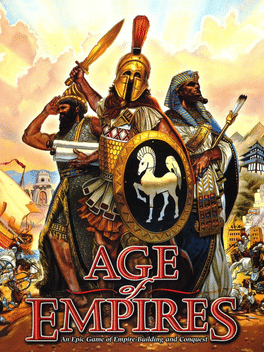
Participants responded most favourably to Age of Empires III (mean satisfaction of 4.235 out of 5) and Assassin's Creed (mean 4.111), while Total War: Rome II (mean 3.412) and Valiant Hearts: The Great War (mean 3.292) drew more mixed reactions, with the latter scoring lowest overall. Qualitative responses suggest that these initial impressions were shaped by nostalgia, genre preferences, historical setting, storytelling approach, emotional response, and familiarity with the depicted content. The authors caution that positive first reactions do not by themselves demonstrate a game's suitability as educational media.
From these responses, the authors derive four categories of factors that participants associated with GBL selection: presentation, motivation, challenge, and appropriateness. Presentation encompasses framing, emotional response, aesthetics, narrative, and familiarity; motivation includes immersion, accuracy, clarity, relevance, and perceived learning potential; challenge covers critical thinking, difficulty, unpredictability, interface, and skill requirements; and appropriateness considers relatability, authenticity, curriculum fit, and arousal. The study proposes these factors as the basis for a selection checklist and a conceptual framework for GBL in education, though its empirical grounding is modest. Testing the framework across other game formats and populations is identified as future work.
Each row is a game or company this document names, each column a document, oldest first. A mark means that document names it. Select a row to see those documents.

European Conference on Games Based Learning (ECGBL) · 2026
AppMagic · 2025