1 free read left. Create a free account for unlimited reading + AI research.
Create free accountWhitepaper European Conference on Games Based Learning (ECGBL)
1 free read left. Create a free account for unlimited reading + AI research.
Create free accountWhitepaperEuropean Conference on Games Based Learning (ECGBL)
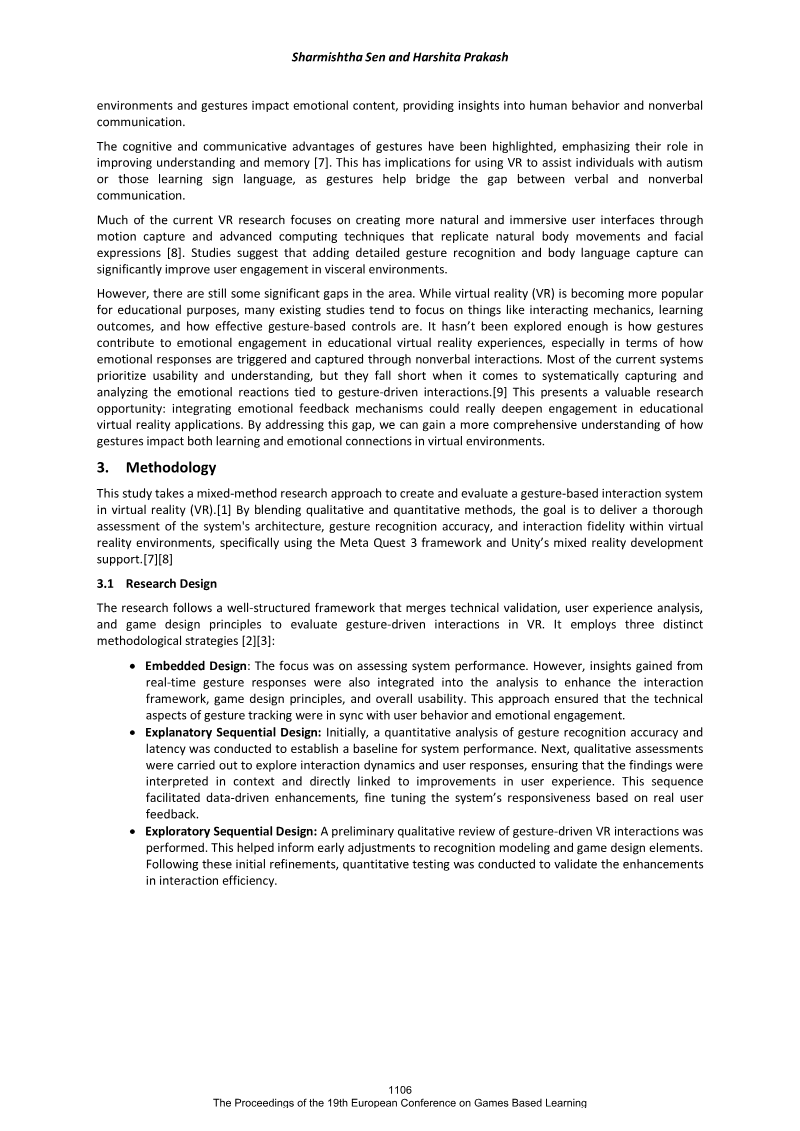
VR and games both show promise for social and emotional learning, but the paper notes little guidance on integrating emotional intelligence objectives into core gameplay.
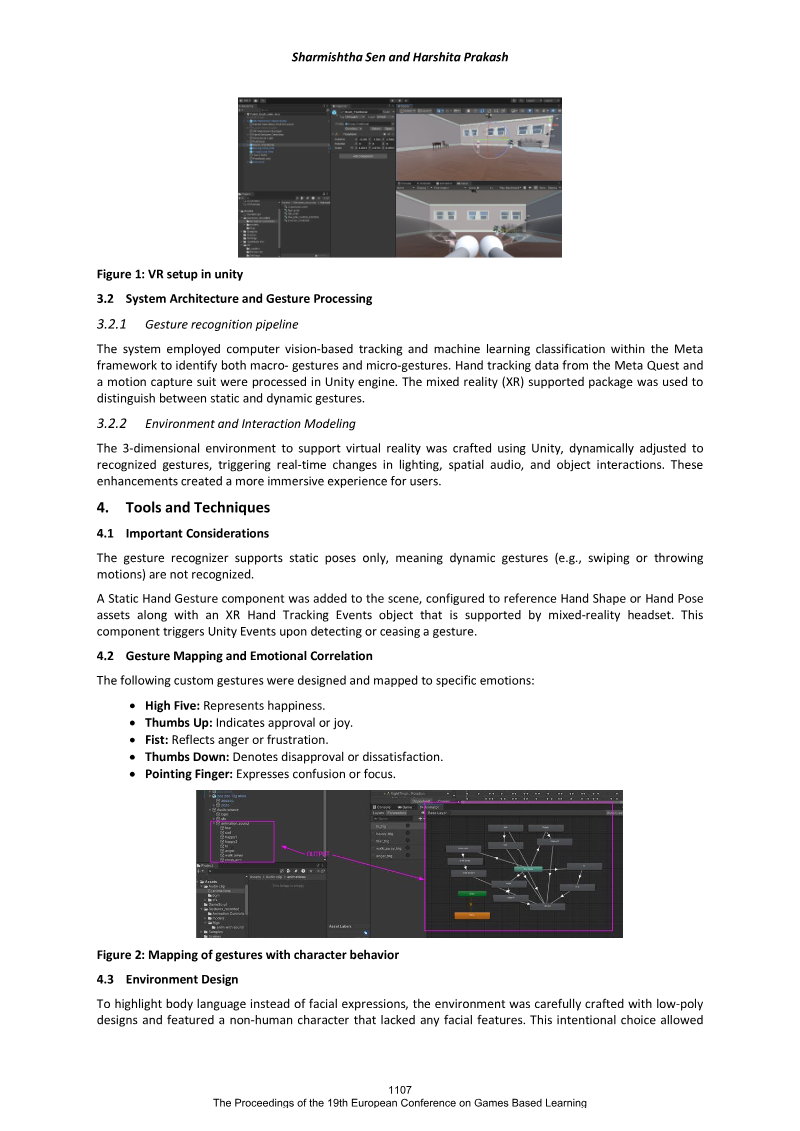
This paper investigates how the Integrated Design Framework for Playful Learning (IDFPL) can guide the design of virtual reality games that build children's emotional intelligence, a set of skills covering the recognition, interpretation, and regulation of emotions in oneself and others. The authors address a gap in the literature: while VR and games both show promise for social and emotional learning, little research explains how to integrate EI objectives into core gameplay without sacrificing engagement. The study uses participatory design, in which 20 children aged 7 to 14 worked in seven teams, with adult facilitators, to design a VR game teaching an alien character about human emotions. Participants were recruited through an intergenerational design team at the University of Maryland, a Girl Scouts troop in Indiana, and convenience sampling. Sessions lasted about 90 minutes and included warm-up activities, collaborative design using methods such as Bags of Stuff and Big Paper, and team presentations. Transcripts were coded deductively by two researchers per transcript and analyzed against the four IDFPL dimensions.
The children's designs drew on all four dimensions of the framework. Affectively, they relied on multimodal emotional cues such as facial expressions, body language, voice, and situational context, and they embedded emotions in gameplay mechanics. Behaviorally, they favored quizzes, quests, level-based progression, and effort-based, noncompetitive rewards, with encouragement such as partial credit for trying. Cognitively, they situated learning in relatable scenarios such as classrooms and everyday conflicts, adapted cue complexity to emotional complexity, and sequenced emotions one at a time. Socio-culturally, they relied on non-player characters for guidance and feedback rather than multiplayer interaction, and emphasized inclusive, customizable avatars. The authors acknowledge that findings reflect children's design conceptions rather than tested VR systems, and that the U.S.-based sample limits generalizability across cultures.
European Conference on Games Based Learning (ECGBL) · 2026



European Conference on Games Based Learning (ECGBL) · 2026
European Conference on Games Based Learning (ECGBL) · 2026



European Conference on Games Based Learning (ECGBL) · 2026



European Conference on Games Based Learning (ECGBL) · 2026



European Conference on Games Based Learning (ECGBL) · 2026



European Conference on Games Based Learning (ECGBL) · 2026
European Conference on Games Based Learning (ECGBL) · 2026
European Conference on Games Based Learning (ECGBL) · 2026



European Conference on Games Based Learning (ECGBL) · 2026
European Conference on Games Based Learning (ECGBL) · 2026



European Conference on Games Based Learning (ECGBL) · 2026
European Conference on Games Based Learning (ECGBL) · 2026