1 free read left. Create a free account for unlimited reading + AI research.
Create free accountWhitepaper European Conference on Games Based Learning (ECGBL)
1 free read left. Create a free account for unlimited reading + AI research.
Create free accountWhitepaperEuropean Conference on Games Based Learning (ECGBL)
The study argues that interdependent, negotiated urban expansion dynamics are poorly served by lecture-based instruction. It proposes experiential game-based learning as a better fit for systems thinking.
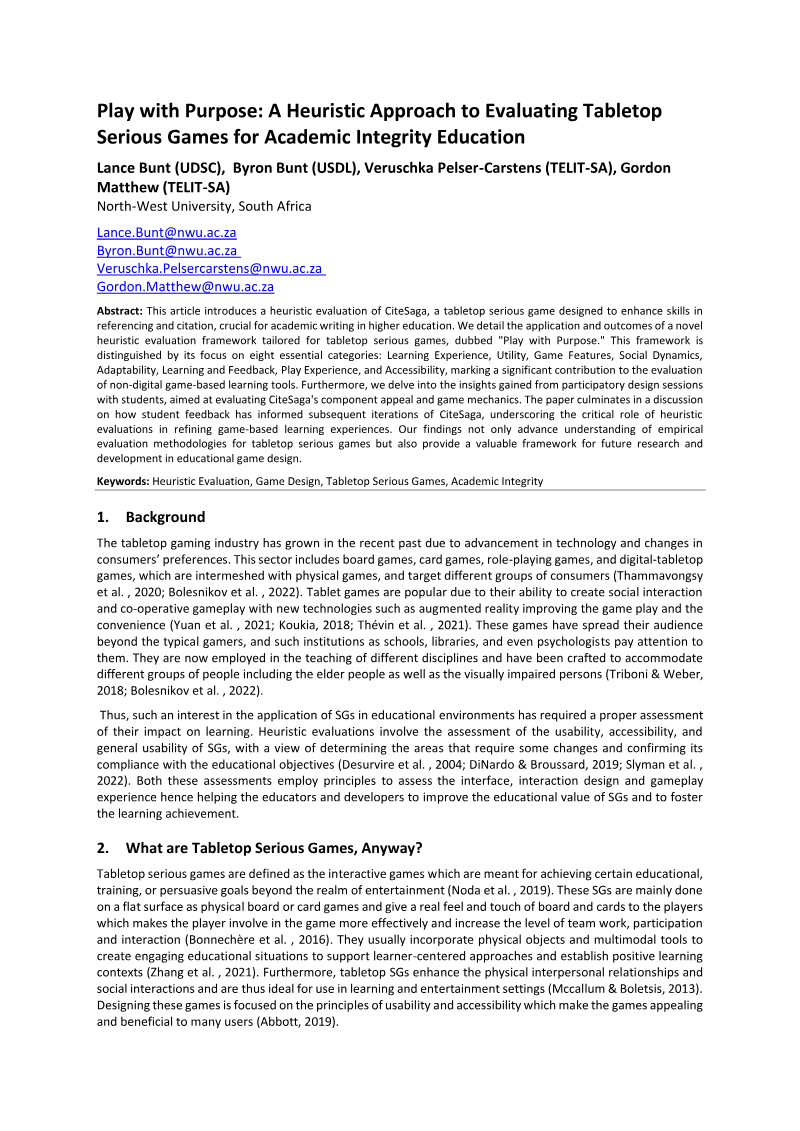
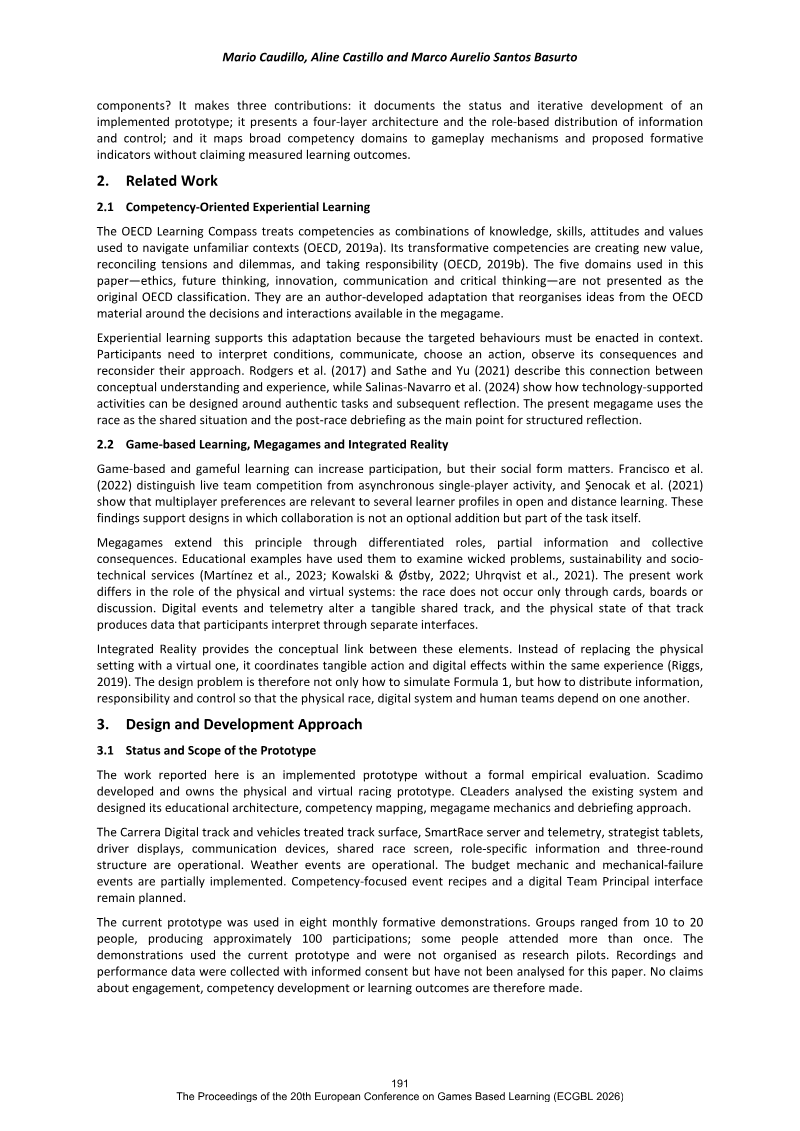
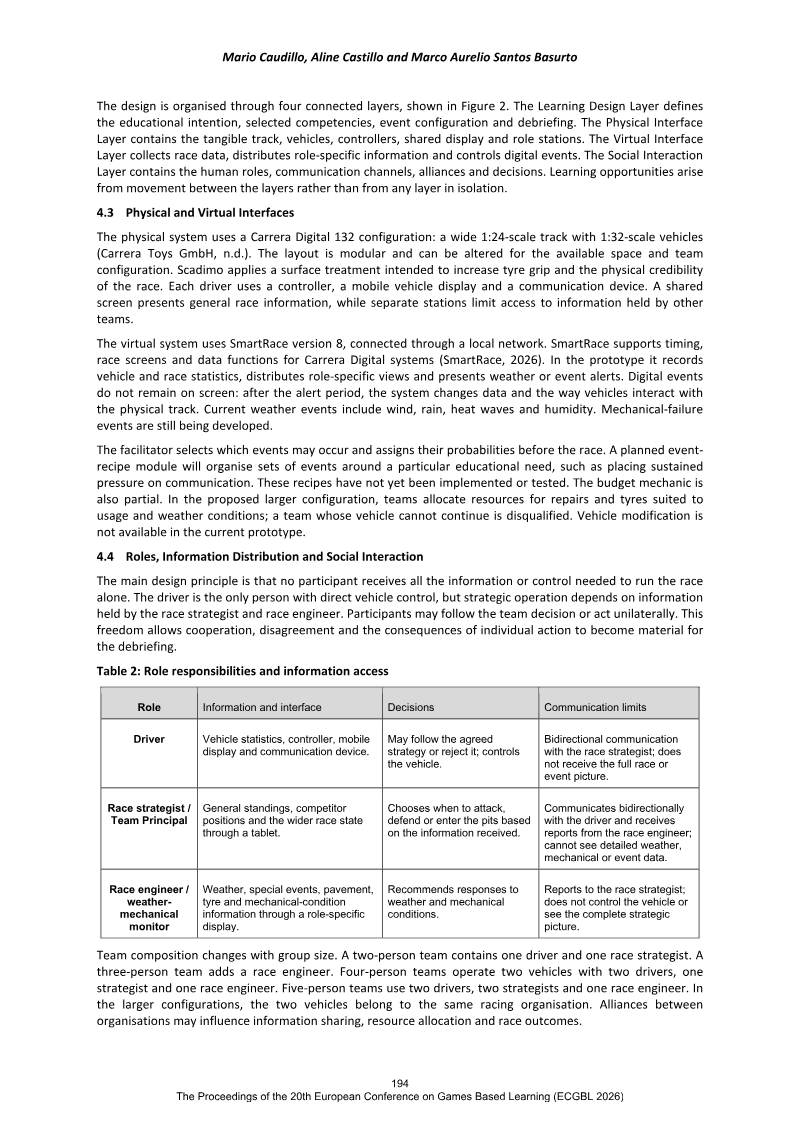
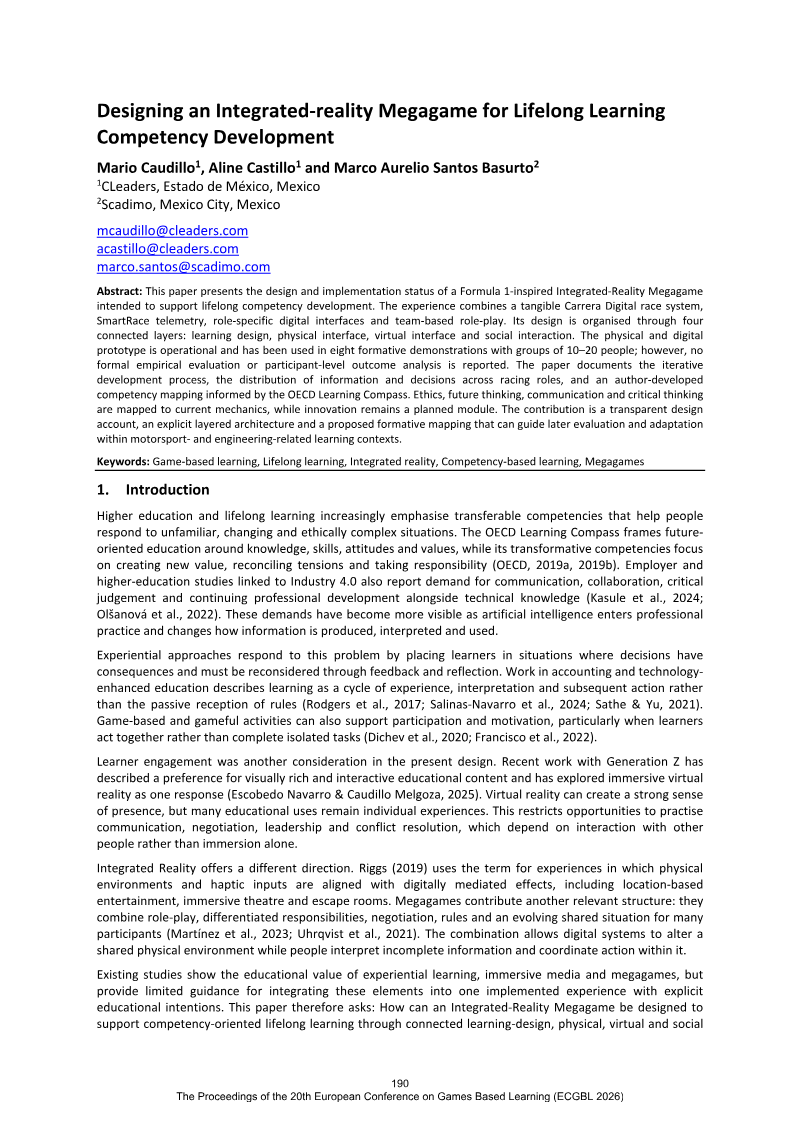
Masterpolis is a low-cost physical board game designed to simulate urban planning decisions, developed through a Design-Based Research approach at a Colombian university. Its central argument is that urban expansion, with its interdependent and negotiated dynamics, is poorly served by lecture-based instruction, and that experiential, game-based learning can better support systems thinking. The work positions itself as a Global South contribution to this field, offering an accessible alternative where digital simulation tools may be limited or costly.
The game was refined and validated across eight sessions involving 35 undergraduate students from architecture and engineering programmes, along with two urban planning experts. Sessions lasted between 40 and 90 minutes, and data were gathered through observation sheets, validation logs, and post-session surveys. Across iterations, observers reported active negotiation, collaborative decision-making, and improving rule comprehension as the rules were simplified. Early sessions revealed difficulties with rule complexity and required facilitator support, which shaped subsequent design revisions.
The findings should be read as exploratory. They reflect participant interaction and perception rather than measured learning outcomes, as no pre-session baseline or validated systems-thinking instrument was employed. Within these limits, the study concludes that analogue board games offer meaningful experiential learning for urban planning education, particularly in resource-constrained settings. The authors suggest the insights may transfer to comparable educational contexts beyond Colombia, and recommend longitudinal assessment, larger and more diverse samples, and hybrid physical-digital simulation environments in future research.

European Conference on Games Based Learning (ECGBL) · 2026



European Conference on Games Based Learning (ECGBL) · 2026

European Conference on Games Based Learning (ECGBL) · 2026



European Conference on Games Based Learning (ECGBL) · 2026



European Conference on Games Based Learning (ECGBL) · 2026



European Conference on Games Based Learning (ECGBL) · 2026



European Conference on Games Based Learning (ECGBL) · 2026



European Conference on Games Based Learning (ECGBL) · 2026



European Conference on Games Based Learning (ECGBL) · 2026



European Conference on Games Based Learning (ECGBL) · 2026



European Conference on Games Based Learning (ECGBL) · 2026
European Conference on Games Based Learning (ECGBL) · 2026
European Conference on Games Based Learning (ECGBL) · 2025