1 free read left. Create a free account for unlimited reading + AI research.
Create free accountWhitepaper DiGRA
1 free read left. Create a free account for unlimited reading + AI research.
Create free accountWhitepaperDiGRA
The paper proposes three phases: comprehending the aporia, developing a strategy, and executing intentional action. Flawed approaches require a return to earlier stages.
"Problem Solving: The Essence of Player Action in Computer Games" argues that player agency in computer games consists of intentional actions that advance play by solving problems. Building on Espen Aarseth's concepts of aporia (an obstacle the player must overcome) and epiphany (the solution that resolves it), the paper proposes a three-phase model: comprehending the aporia, developing a strategy, and executing intentional action, with flawed approaches requiring a return to earlier stages. The author applies this model to two contrasting titles, using them to distinguish between games of progression and games of emergence.
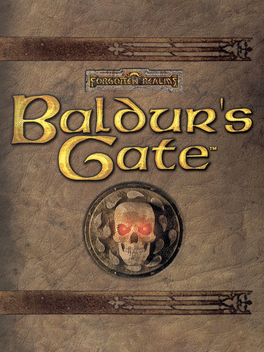
The central comparison pits Baldur's Gate II against Heroes of Might & Magic IV. Baldur's Gate II conceals its overarching goal and presents the player with a linked chain of aporia-epiphany pairs, arranged in a fixed, staircase-like sequence with a role-play emphasis. Heroes of Might & Magic IV, by contrast, states its objective openly, enabling long-term planning and nested problems whose epiphanies can be complex and layered. The analysis concludes that these genres realize step-by-step problem solving in fundamentally different ways, and that in both cases the principal difficulty for players lies either in recognizing the epiphany or in determining how to carry it out.
The scope of the work is primarily analytical and theoretical, focusing on two specific titles rather than a broad survey of the industry, and it draws on prior scholarship in game studies. Its contribution is a conceptual vocabulary for describing how problem-solving structures shape the experience of play across different genres.
Extra Credits · 2013