1 free read left. Create a free account for unlimited reading + AI research.
Create free accountWhitepaper DiGRA
1 free read left. Create a free account for unlimited reading + AI research.
Create free accountWhitepaperDiGRA
Participants use laughter to frame competitive moves as clever or lighthearted. They also use it to acknowledge miscalculations without damaging collegial relations.
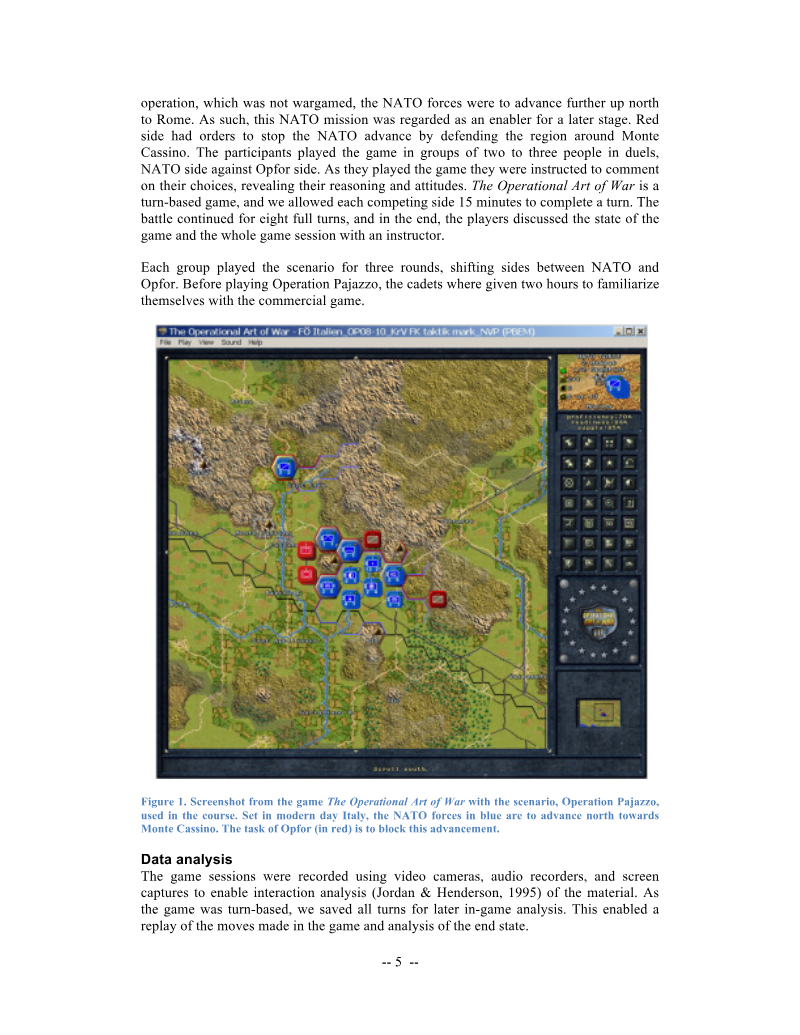
This paper examines laughter as a sequential, multimodal practice in collaborative, digital, map-based military wargames conducted within the Swedish Defence University's officer program. Its central argument is that pleasure in professional wargaming is not an internal psychological state that can be captured by standard engagement instruments, but a publicly organized accomplishment achieved through interaction. The authors draw on roughly 80 hours of audiovisual recordings from naval wargaming practice, focusing on laughter episodes during both gameplay and debriefing, and analyze them with multimodal conversation analysis that attends to talk, timing, bodily orientation, and ongoing engagement with the game.
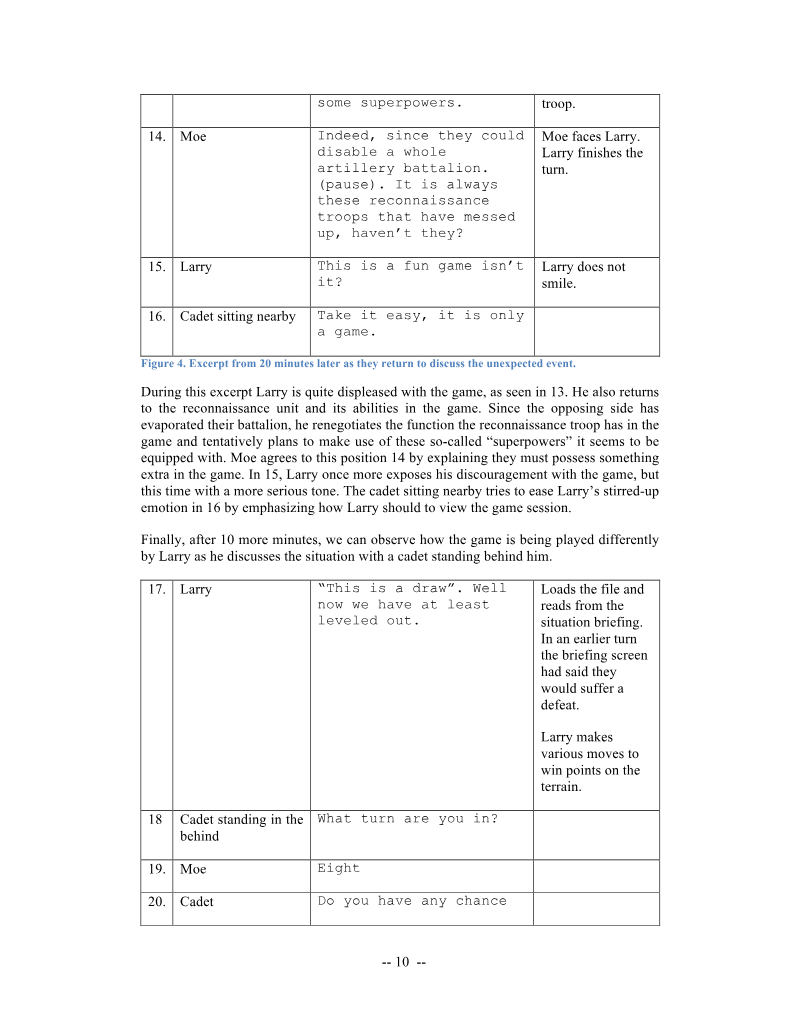
The findings indicate that laughter functions as a key resource for regulating transitions between seriousness and playfulness. Participants use it to frame competitive moves as clever or lighthearted, to acknowledge miscalculations without damaging collegial relations, and to manage delicate outcomes such as simulated mission failure or casualties that carry grave real-world implications. Instructors either join or resist this laughter to redirect activity toward professional learning objectives, showing how institutional priorities are maintained within playful interaction.
The paper positions these interactional findings against established serious-game evaluation frameworks, including the Game Engagement Questionnaire, the Game Experience Questionnaire, and EGameFlow. It argues that these models conceptualize engagement and enjoyment as measurable outcomes such as flow, immersion, and motivation, but do not account for the collective and sequential organization of pleasure in situated encounters. Drawing on Hirst's analysis of affective design in military wargaming, the authors also note that laughter can be a site where affective steering is enacted or resisted. The contribution is an interactional account of pleasure that complements existing player-experience research and extends it to the lived, collaborative shaping of professional wargaming as an enjoyable and learnable activity.

DiGRA · 2026

DiGRA · 2026



DiGRA · 2026



DiGRA · 2026



DiGRA · 2026



DiGRA · 2026



DiGRA · 2026



DiGRA · 2026

DiGRA · 2026



DiGRA · 2026



DiGRA · 2026

DiGRA · 2026
DiGRA · 2016