1 free read left. Create a free account for unlimited reading + AI research.
Create free accountWhitepaper Journal of Games, Game Art, and Gamification
1 free read left. Create a free account for unlimited reading + AI research.
Create free accountWhitepaperJournal of Games, Game Art, and Gamification
This research presents a structured gamification framework designed to enhance student engagement, motivation, and learning outcomes within higher education programming courses. The primary thesis posits that integrating specific game mechanics—such as quests, leaderboards, badges, and level-based progression—into the curriculum transforms the learning experience, fostering a more interactive and participatory environment than traditional instructional methods.
The framework development process incorporates baseline analysis, systematic alignment of learning materials with competency standards, and the deployment of gamification tools. The methodology involved a comparative study of two groups of first-year programming students, each consisting of 20 participants. One group received instruction via conventional methods, while the other utilized the proposed gamification framework. Effectiveness was measured through pre- and post-intervention assessments, focusing on student mastery of core programming concepts, including algorithms, data types, and control structures.
Key findings indicate that students exposed to the gamification framework achieved learning outcomes 15% to 25% higher on average than those in the control group. Beyond academic performance, the study concludes that the framework positively influences student satisfaction, enjoyment, and motivation. Furthermore, the implementation encourages pedagogical innovation, as lecturers are prompted to adopt more creative teaching strategies. By addressing common challenges such as low class participation, limited collaboration, and student boredom, the framework provides a scalable model for improving educational efficacy in technical disciplines.
Journal of Games, Game Art, and Gamification · 2026
Journal of Games, Game Art, and Gamification · 2026
Journal of Games, Game Art, and Gamification · 2025
Journal of Games, Game Art, and Gamification · 2025
Journal of Games, Game Art, and Gamification · 2025
Journal of Games, Game Art, and Gamification · 2025
Journal of Games, Game Art, and Gamification · 2025
Journal of Games, Game Art, and Gamification · 2025
Journal of Games, Game Art, and Gamification · 2025
Journal of Games, Game Art, and Gamification · 2025
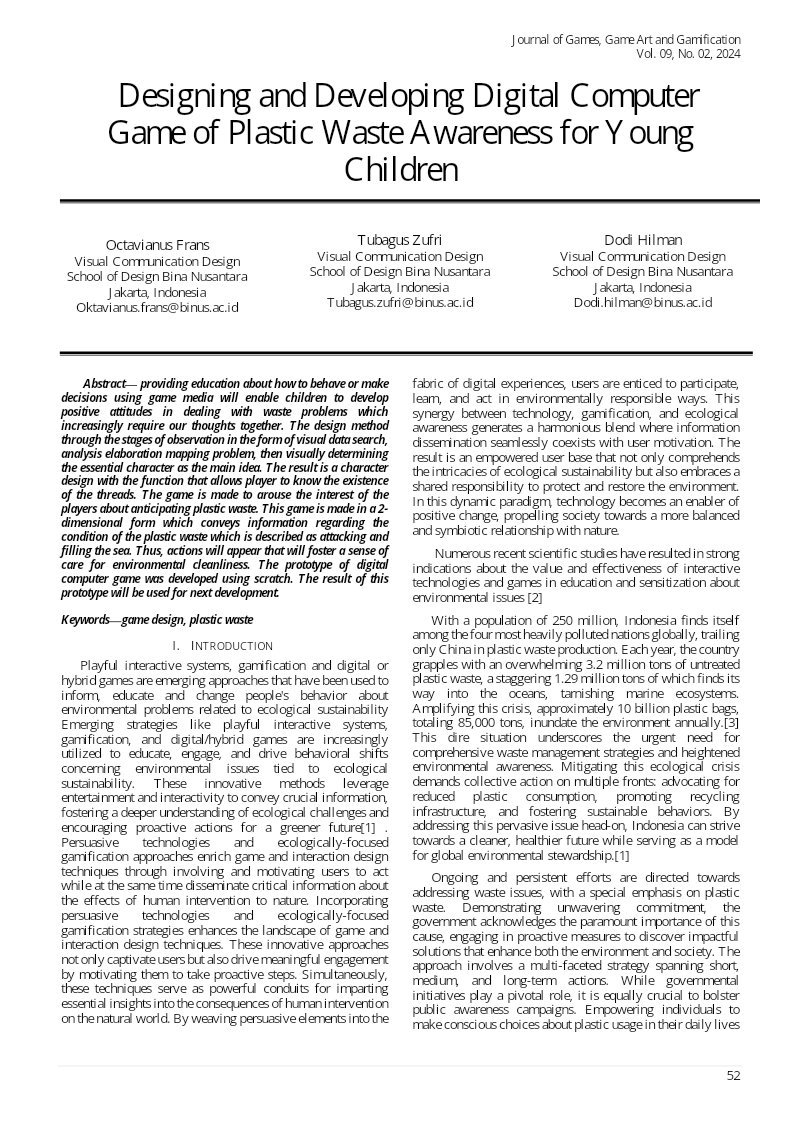
Journal of Games, Game Art, and Gamification · 2024
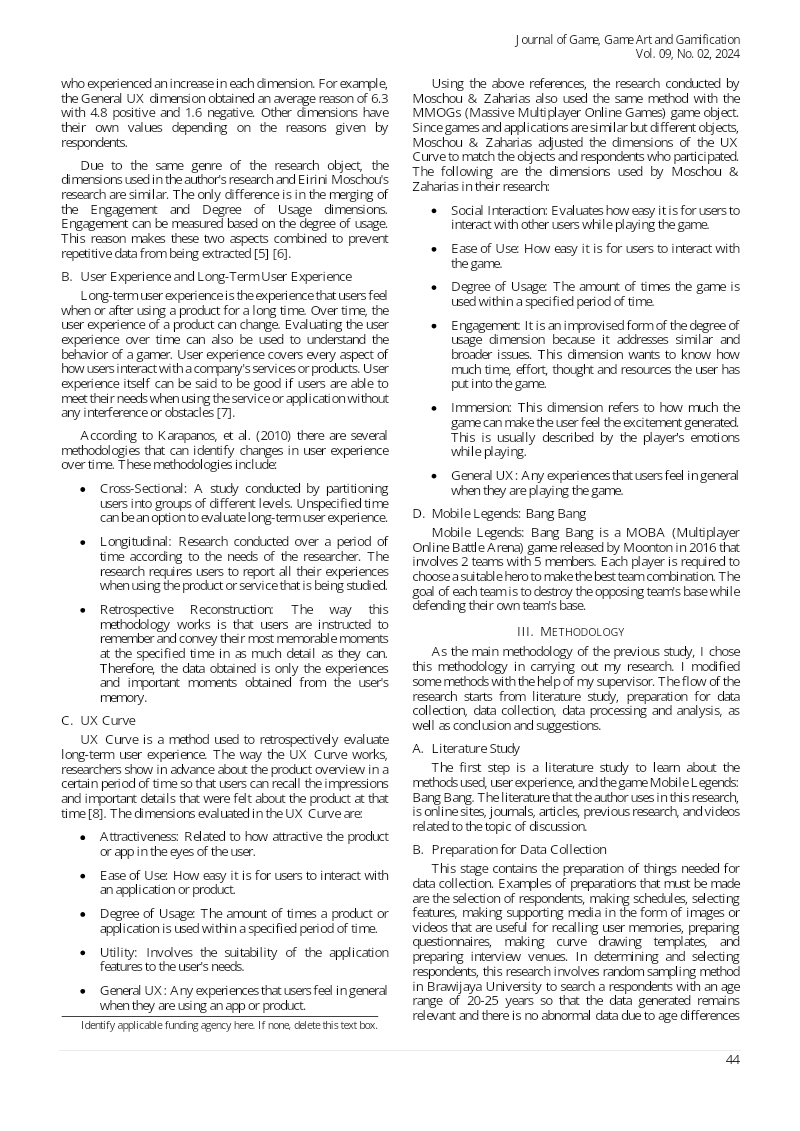
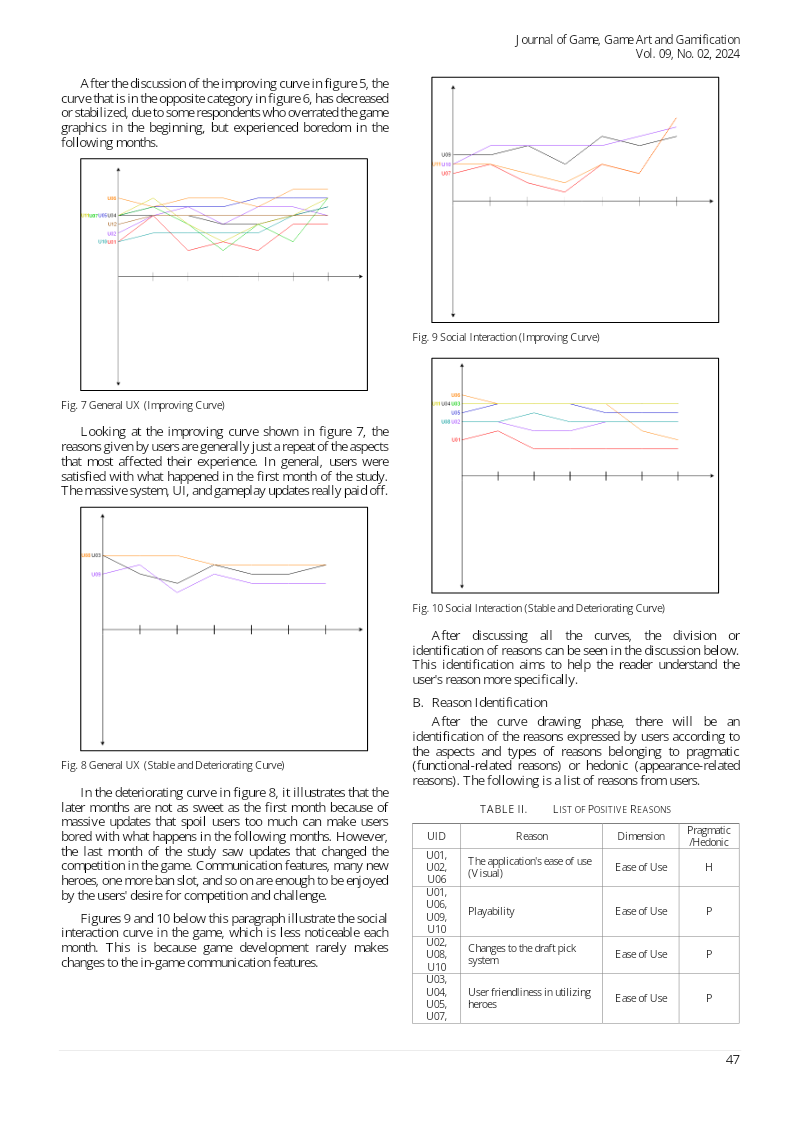
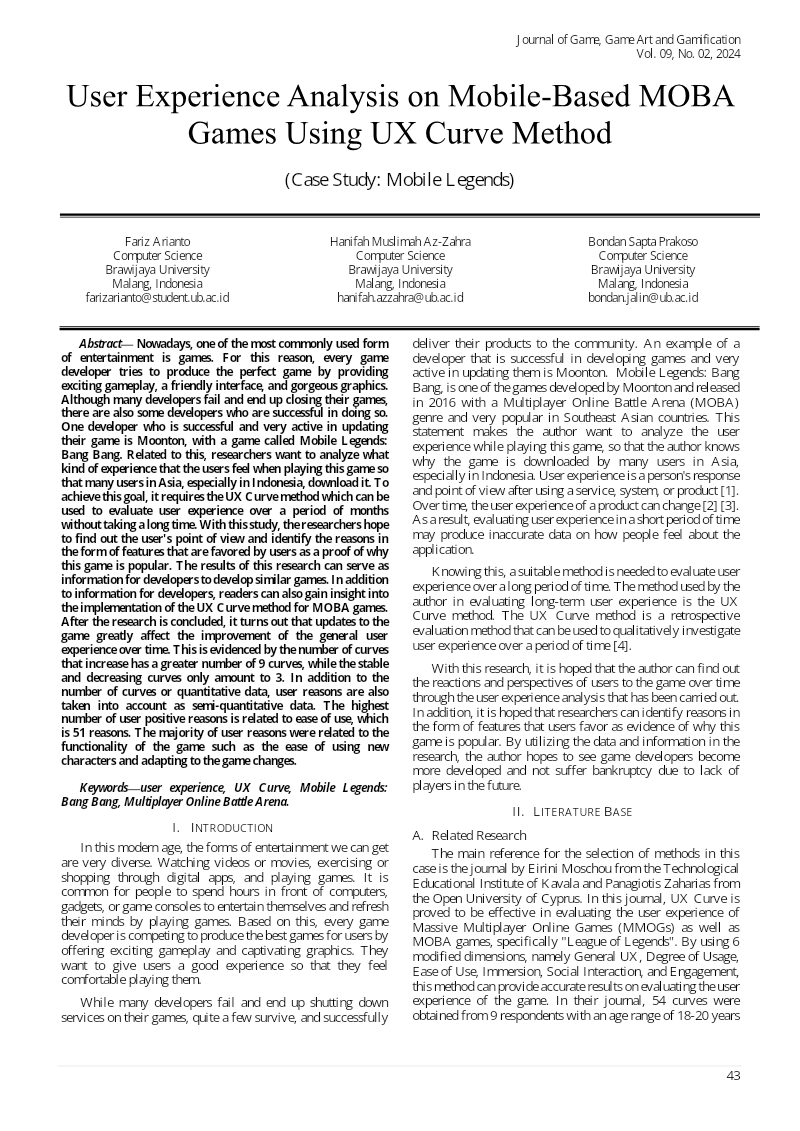
Journal of Games, Game Art, and Gamification · 2024
International Journal of Serious Games · 2025