1 free read left. Create a free account for unlimited reading + AI research.
Create free accountWhitepaper Ludic Language Pedagogy
1 free read left. Create a free account for unlimited reading + AI research.
Create free accountWhitepaperLudic Language Pedagogy
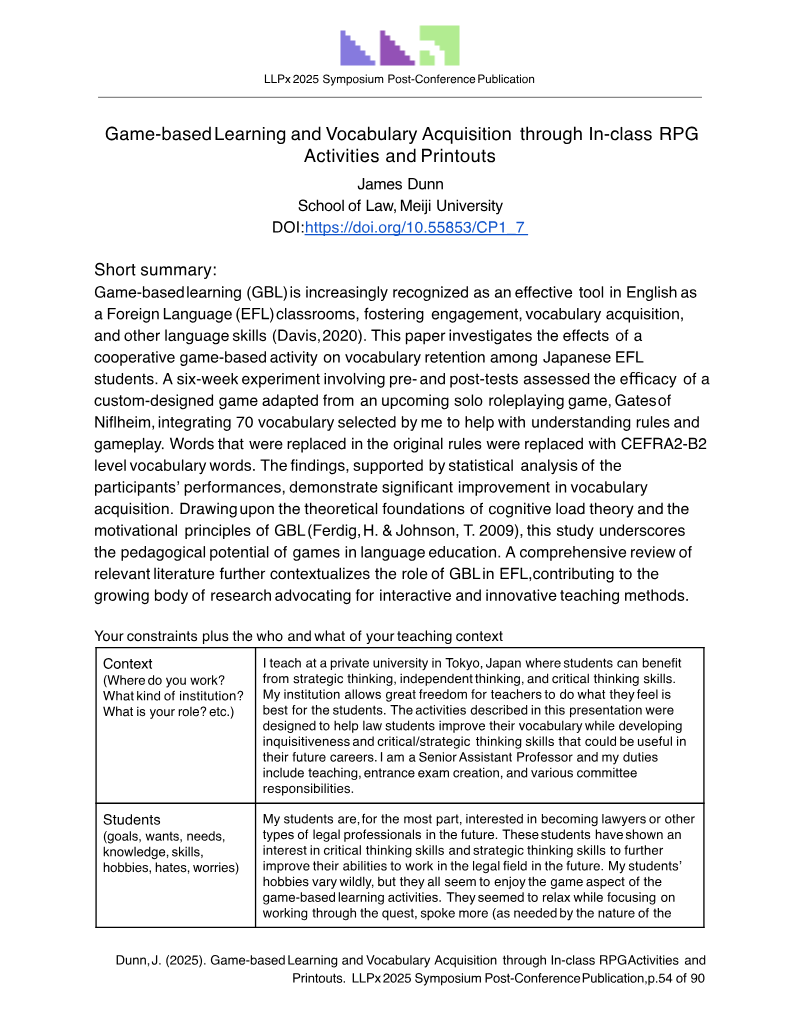
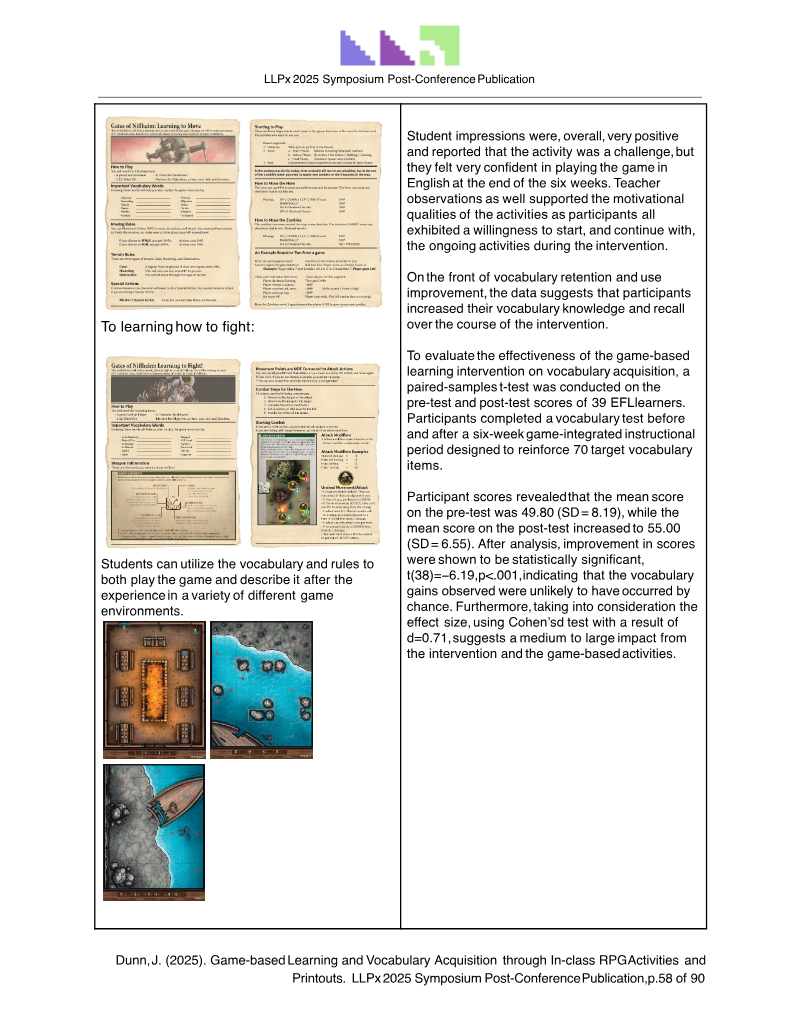
The study used a modified version of 'Gates of Niflheim' with custom printouts to introduce 70 target vocabulary words at the CEFR A2-B2 level.
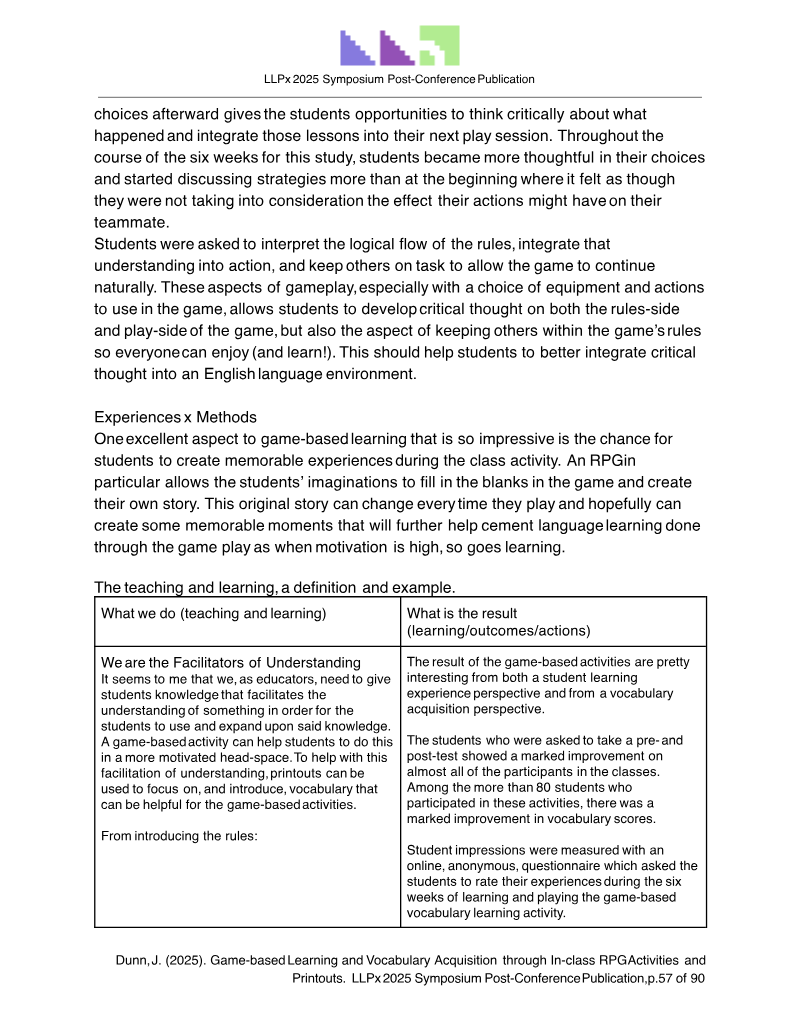
Like a choose-your-own-adventure book, the RPG format allowed students to make decisions that influenced their learning path.
Method Used. The study integrated cooperative RPG activities and custom printouts into EFL classrooms to teach vocabulary.
This study examines the efficacy of integrating cooperative roleplaying game (RPG) activities into English as a Foreign Language (EFL) classrooms to improve vocabulary retention and student engagement. Conducted at a private university in Tokyo, Japan, the research focuses on law students who require enhanced critical and strategic thinking skills. The pedagogical approach centers on the adaptation of a tabletop game, Gates of Niflheim, modified with custom printouts to introduce 70 target vocabulary words at the CEFR A2-B2 level.
The methodology involved a six-week intervention where 39 students participated in game-based sessions supported by teacher-facilitated materials. Researchers utilized a paired-samples t-test to compare pre-test and post-test vocabulary scores. The findings revealed a statistically significant improvement in performance, with mean scores rising from 49.80 to 55.00 (t(38)=-6.19, p<.001). A Cohen’s d effect size of 0.71 indicates a medium-to-large impact, suggesting that the game-based intervention provided meaningful educational value beyond chance occurrences.
Beyond quantitative gains, qualitative observations and anonymous questionnaires indicated that the RPG format fostered higher levels of student motivation, agency, and peer-supported scaffolding. The study concludes that well-designed games function as effective core curriculum components rather than mere supplements. By providing clear, level-appropriate instructions and encouraging strategic decision-making, educators can create immersive environments that promote deeper cognitive processing. The research advocates for the continued use of interactive, game-mediated learning to enhance language acquisition and suggests that future efforts should explore long-term retention and the application of diverse game mechanics across various learner profiles.
Ludic Language Pedagogy · 2026
Ludic Language Pedagogy · 2026
Ludic Language Pedagogy · 2026
Ludic Language Pedagogy · 2026
Ludic Language Pedagogy · 2026
Ludic Language Pedagogy · 2026
Ludic Language Pedagogy · 2026
Ludic Language Pedagogy · 2026
Ludic Language Pedagogy · 2026
Ludic Language Pedagogy · 2026
Ludic Language Pedagogy · 2026



Ludic Language Pedagogy · 2026
Japanese Association for Role-Playing Game Studies (JARPS) · 2024
Japanese Association for Role-Playing Game Studies (JARPS) · 2021