1 free read left. Create a free account for unlimited reading + AI research.
Create free accountWhitepaper Ludic Language Pedagogy
1 free read left. Create a free account for unlimited reading + AI research.
Create free accountWhitepaperLudic Language Pedagogy
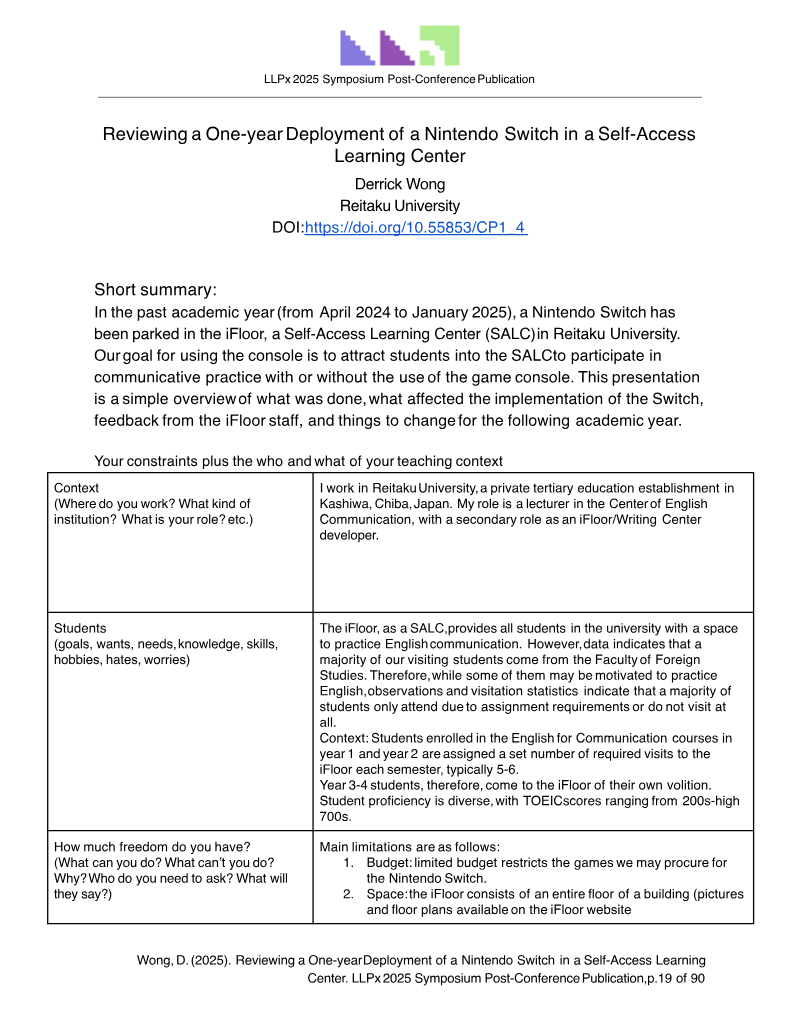
Deploying gaming hardware in a Self-Access Learning Center can increase student engagement and foster English language acquisition.
Key finding. Integrating a Nintendo Switch into a Self-Access Learning Center successfully lowered the barrier to entry for students who typically avoided traditional conversation groups.
Integrating gaming hardware into university Self-Access Learning Centers serves as a viable strategy for increasing student engagement and fostering English language acquisition. By deploying a Nintendo Switch at Reitaku University in Japan, educators successfully lowered the barrier to entry for students who typically avoided traditional conversation groups. The initiative demonstrates that when gaming is framed as a collaborative social activity rather than a solitary pursuit, it functions as an effective catalyst for peer-to-peer teaching and spontaneous communication within an academic environment.
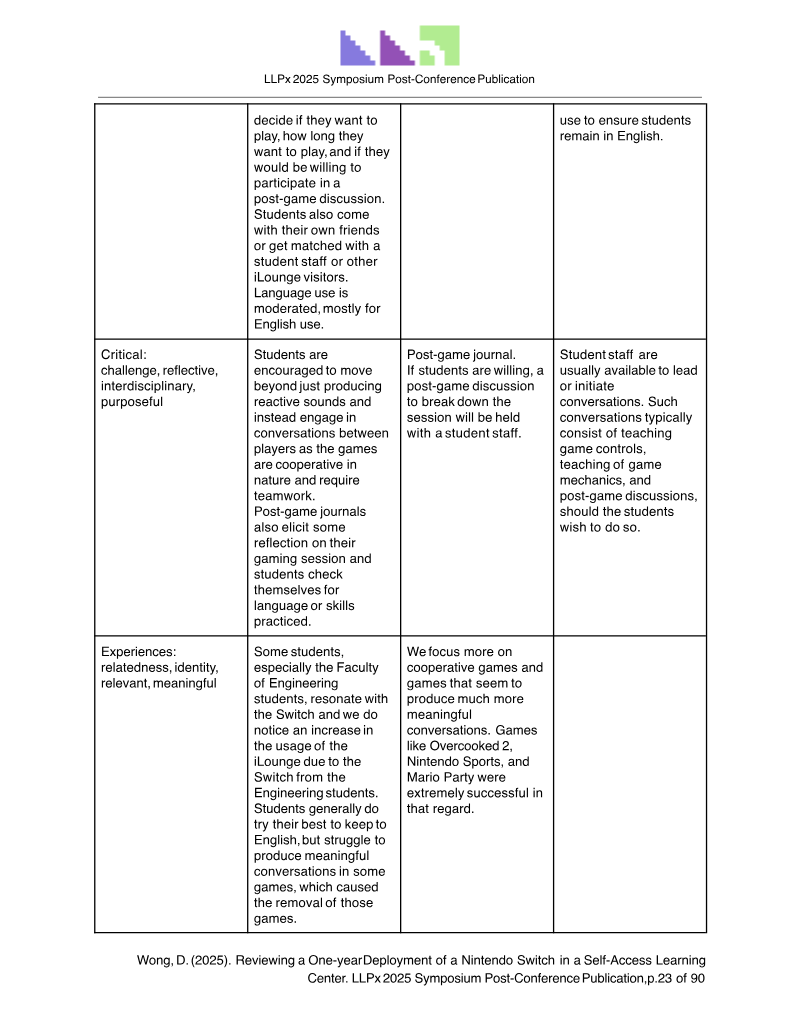
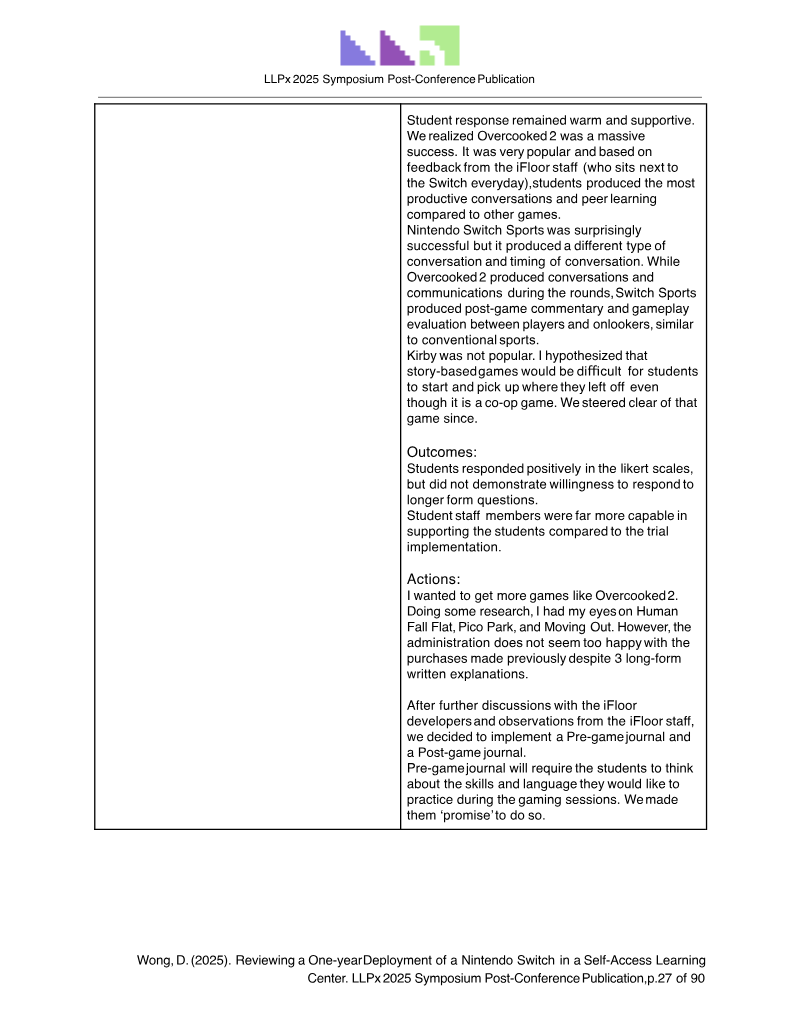
The success of this pedagogical approach relies heavily on the strategic selection of software and the active role of faculty. Competitive titles often fail to generate the desired linguistic output, whereas cooperative games like Overcooked 2 necessitate constant verbal negotiation and teamwork, thereby driving meaningful interaction. However, the implementation process is resource-intensive, requiring significant staff oversight to manage equipment, enforce usage policies, and mitigate security risks. The transition from casual play to structured educational engagement requires the implementation of formal feedback loops and organized mini-clubs to ensure that the gaming experience remains focused on learning objectives.
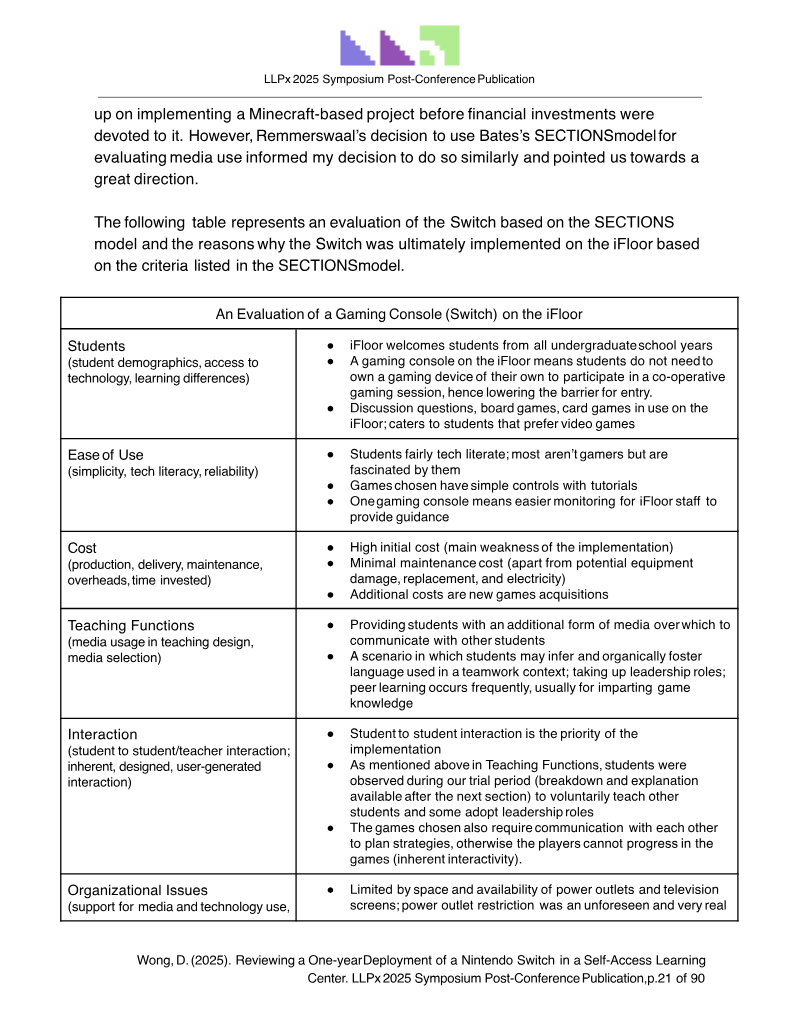
Ultimately, the utility of game consoles in higher education is defined by the quality of the surrounding pedagogical framework rather than the technology itself. While the deployment involves substantial budgetary and spatial considerations, it provides a unique opportunity to diversify student participation. The effectiveness of such initiatives hinges on the teacher’s ability to scaffold communication and guide students toward strategic discussion, proving that interactive media can be a powerful tool for social and linguistic development when integrated with intentional, structured oversight.
Each row is a game or company this document names, each column a document, oldest first. A mark means that document names it. Select a row to see those documents.
Ludic Language Pedagogy · 2026
Ludic Language Pedagogy · 2026
Ludic Language Pedagogy · 2026
Ludic Language Pedagogy · 2026
Ludic Language Pedagogy · 2026
Ludic Language Pedagogy · 2026
Ludic Language Pedagogy · 2026
Ludic Language Pedagogy · 2026
Ludic Language Pedagogy · 2026
Ludic Language Pedagogy · 2026
Ludic Language Pedagogy · 2026



Ludic Language Pedagogy · 2026
Ludic Language Pedagogy · 2020