Key insights
6 slides
The pivot
New releases accounted for half of all top-tier spending.
AAA publishers shifted toward launch-focused campaigns in 2023. This prioritized high-impact, multi-channel visibility to capture immediate market share.
Launch focus. New releases accounted for 50% of all top-tier advertising expenditure.
Page 2 of the report50%
Share of all top-tier advertising expenditure from new releases in 2023
Media mix
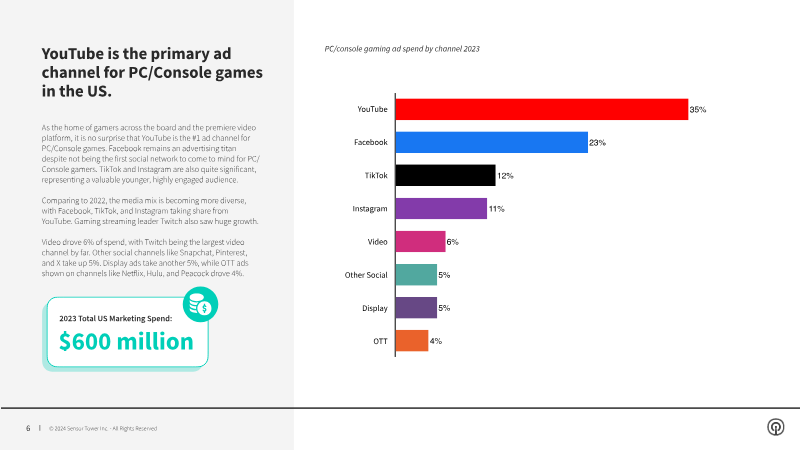
YouTube remains the primary medium for PC and console games.
Publishers increasingly diversified their media mix by integrating Facebook, TikTok, and Instagram.
Ecosystem ties
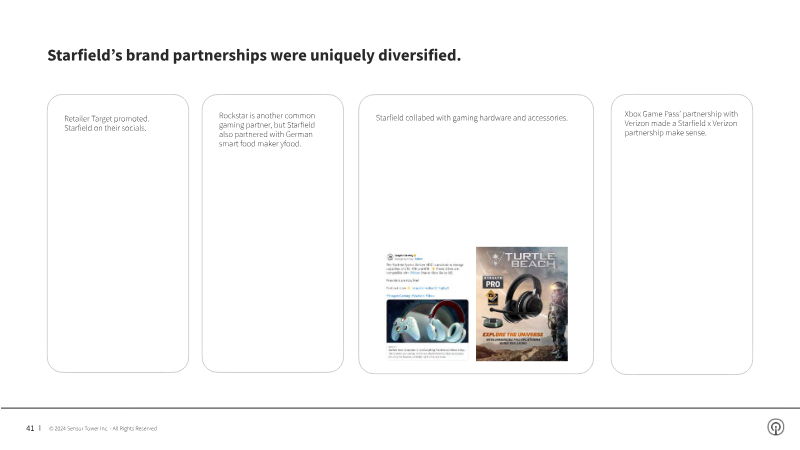
Platform-based partnerships anchor major titles within broader ecosystem strategies.
Strategic platform-based partnerships, such as deep Xbox branding and hardware collaborations, are now essential. They anchor major titles within broader ecosystem strategies.
Creative range
Creative execution varied significantly based on each title’s core value proposition.
Successful campaigns ranged from exploration-themed branding for Hogwarts Legacy to horror-inspired aesthetics for Diablo IV. The industry also utilized transmedia efforts and review-based accolades.
The risk
Fragmented marketing can severely damage consumer perception and market performance.
Call of Duty: Modern Warfare III suffered from a lack of a cohesive reveal campaign. Negative consumer perception regarding its status as a standalone sequel followed.
Alternative paths
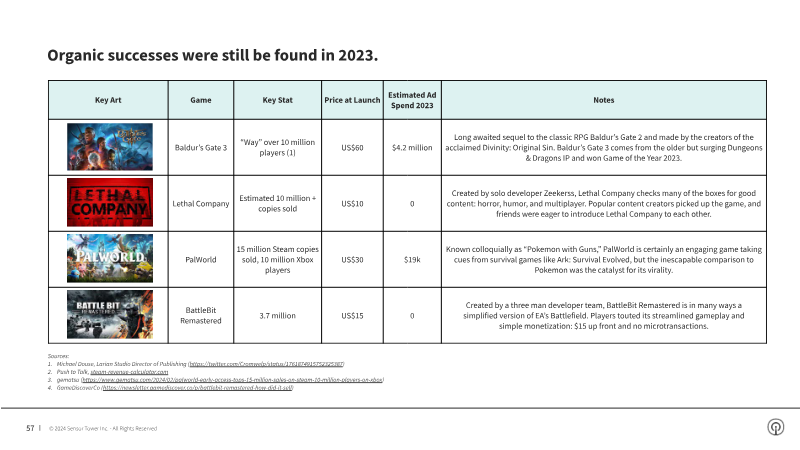
Organic viral growth and streamlined gameplay models provide viable paths to dominance.
Beyond massive budgets and established IP, these alternative paths emerged. The industry is defined by a tension between traditional high-spend campaigns and mobile-first strategies.
1 / 6
Ask AI about this report