ArticleBrutally Honest
Brutally Honest: Post IDFA User Acquisition Strategies
17 Jun 20261 pages~11 min full read
Key insights
7 slides
The core shift
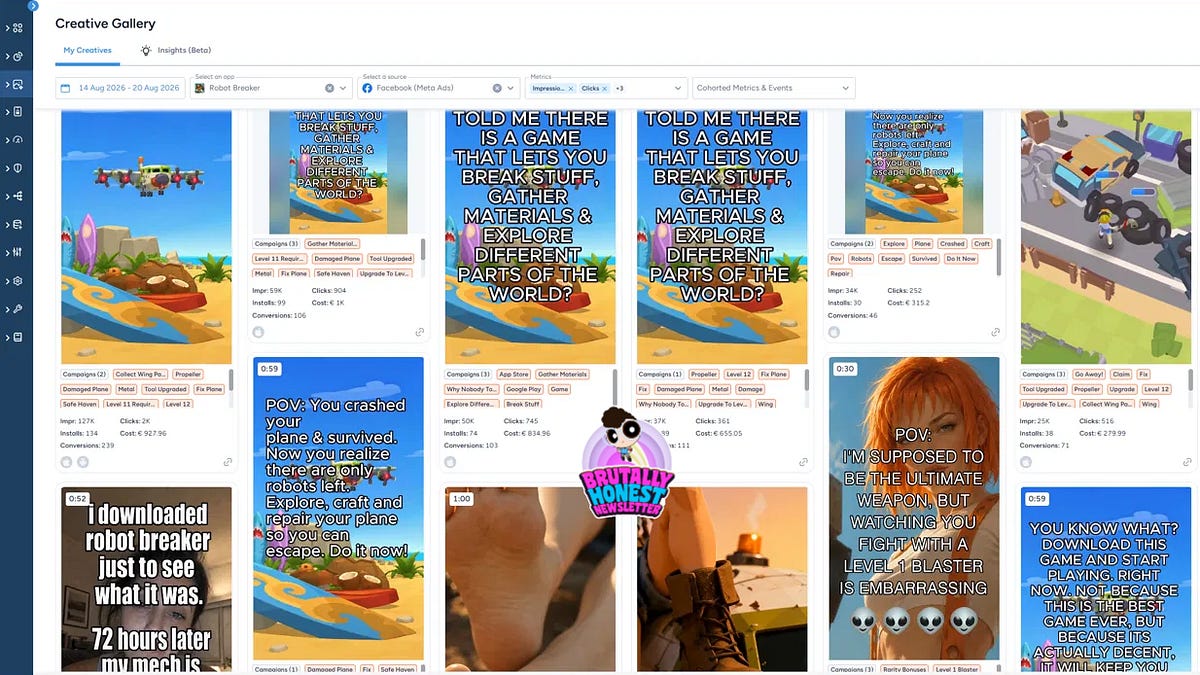
Fresh creatives must enter business-as-usual flows directly.
Traditional test campaigns misrepresent real-world performance because they run on distinct audiences and volumes. Fresh creatives should be injected directly into BAU flows.
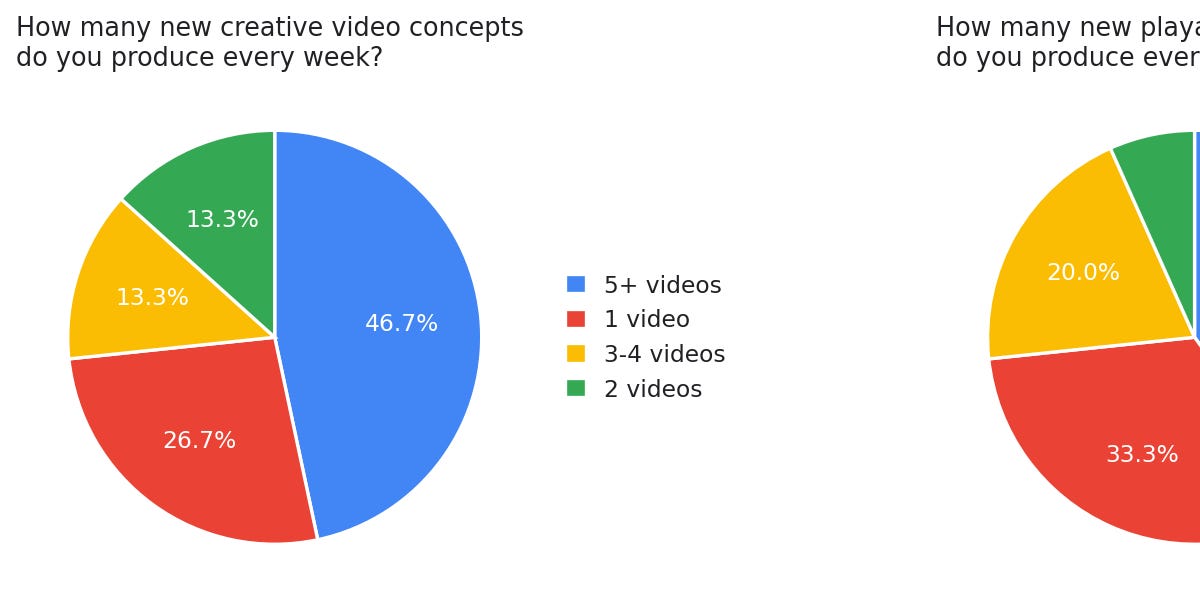
Creative volume. UA teams must inject 5 to 10 new creative assets weekly directly into business-as-usual flows.
5 to 10
New creative assets per week
Evaluation window
Creative performance should be evaluated within 48 hours.
Evaluating creatives within a 48-hour window allows platform algorithms to identify winning concepts.
D2C share
Social casino and mid-core titles lead with 44% D2C share.
Direct-to-Consumer revenue strategies currently yield a 44% share for social casino and mid-core titles. Casual game companies like Playtika achieve a 39% share.
Fee-free window
Direct-checkout links remain fee-free for U.S. players.
Direct-checkout links remain fee-free for U.S. players until the pending Epic vs. Google settlement. This presents a limited opportunity to maximize D2C revenue without additional costs.
U.S. players
Players who can use fee-free direct-checkout links
Hybrid approach
D2C growth requires combining direct checkout with web-store links.
Optimizing D2C growth requires a hybrid approach that combines direct-checkout functionality with web-store links. Studios should model this after successful implementations like Raid Shadow Legends.
- 01Implement direct-checkout linksCapitalize on the current fee-free window for U.S. players.
- 02Combine with web-store linksUse a hybrid approach modeled after Raid Shadow Legends.
Strategic focus
Agile creative testing and timely D2C exploitation are critical.
The post draws on industry data, anecdotal evidence from studio disclosures, and platform policy updates. It argues that agile creative testing and timely exploitation of the D2C window are critical for post-IDFA success.
Geographic scope
The post focuses on U.S. and Japanese markets.
Geographically, the focus is on U.S. and Japanese markets, with a brief mention of global applicability. The post draws on industry data and platform policy updates.
1 / 7
Ask AI about this report