1 free read left. Create a free account for unlimited reading + AI research.
Create free accountWhitepaper DiGRA
1 free read left. Create a free account for unlimited reading + AI research.
Create free accountWhitepaperDiGRA
The authors contend that the title, drawn from the art-historical term for visible traces of earlier painted layers, is intentional.
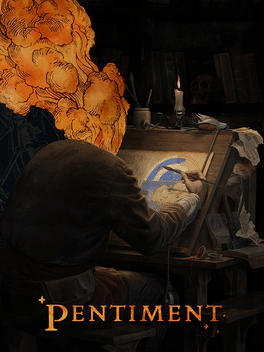
This paper, presented at DiGRA 2023 by Danielle Kleinerman and Chiara Haynes of University College London, examines Obsidian Entertainment's 2022 point-and-click adventure Pentiment through an interdisciplinary lens that joins games studies with art history. Its central argument is that the game's title, drawn from the art-historical term for a visible trace of earlier painted layers, is a deliberate framing device. The authors contend that the game's branching narrative, its replayability, and its engagement with authorship mirror the way an underpainting persists beneath later revisions, so that the act of play becomes an act of writing and rewriting history.
The analysis develops several connecting threads. It situates the game's sixteenth-century Bavarian setting within early modern shifts in book production, drawing on accounts of the printing press's displacement of monastic scriptoria and on the Reformation's challenge to Catholic authority. The authors argue that the game uses the manuscript as its operating medium, with player choices shaping a text that is continuously written and revised. They link this structure to replayability in the sense of randomization proposed by Griesbach et al., suggesting that the potential for unexplored narrative paths parallels a canvas that can be repainted while preserving earlier strata.
Intertextuality forms a further pillar of the argument. The authors compare Pentiment with Umberto Eco's The Name of the Rose, which shares its monastic murder-mystery structure and its questioning of ecclesiastical authority, and which the game references directly by having the player scrape away the novel's opening Latin text. The methodology pairs historiographic and visual-textual analysis with reflexive playthrough accounts from two scholars, adopting a player-as-analyst framework after Carr (2019) to balance granular ludic analysis with the lived experience of play.
The paper concludes that Pentiment demonstrates how games can sustain narratively complex, educational, and layered intertextual experiences, and that its formal and thematic choices give the game a particular capacity to dramatize the provisional nature of historical and artistic authorship.
Each row is a game or company this document names, each column a document, oldest first. A mark means that document names it. Select a row to see those documents.

DiGRA · 2026

DiGRA · 2026



DiGRA · 2026



DiGRA · 2026



DiGRA · 2026



DiGRA · 2026



DiGRA · 2026



DiGRA · 2026

DiGRA · 2026



DiGRA · 2026



DiGRA · 2026

DiGRA · 2026
DiGRA · 2025