1 free read left. Create a free account for unlimited reading + AI research.
Create free accountWhitepaper DiGRA
1 free read left. Create a free account for unlimited reading + AI research.
Create free accountWhitepaperDiGRA
The games emphasize community and collective agency rather than portraying migrants as faceless masses.
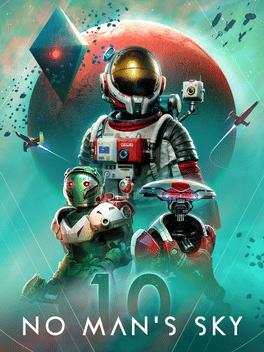
This study examines how three popular video games, No Man's Sky, Battlefield 2042, and Frostpunk, depict and simulate "climate refugees," and whether their ludic representations offer alternatives to the apocalyptic and often dehumanizing narratives that dominate mainstream media coverage of climate-induced migration. Its underlying hypothesis is that the multimodal design of games, combining procedural systems, visuals, and narrative, can challenge uncontextualized portrayals of displaced people and contribute to more nuanced climate imaginaries. Previous game studies scholarship has focused largely on small-studio educational games, whose reach is limited, so this analysis deliberately turns to commercially successful titles that have sold millions of copies. The study draws on mobility theory and multimodal game studies to ask how these games model the climate refugee, how their portrayals differ from other media, and what futures they imagine for displaced populations.
The findings suggest that all three games foreground community and collective agency rather than casting migrants as faceless masses. In Frostpunk, the player leads a group of refugees whose members comment on decisions and push back against the leader, making survival a shared responsibility rather than a purely administrative challenge. Battlefield 2042 presents a near-future world of stateless climate refugees, though its mechanics often treat environmental disaster as an opportunity for advantage. No Man's Sky offers the most unusual case: a software update altered the procedural planets without warning, prompting players to organize mass migrations, hold farewell gatherings, and coordinate relocation, providing an unplanned opportunity to observe virtual migration practices.
The study also identifies significant limitations. Battlefield 2042 frames environmental destruction as a resource for the opportunistic, while Frostpunk casts the arrival of refugees as a threat to fragile urban infrastructure. Neither game engages meaningfully with intersectional factors such as race, gender, sexuality, or disability that shape who is able to move. The author argues that these tensions reflect the ambiguity of current environmental discourse and may be read as instances of "bad environmentalism," which the analysis treats as a productive lens for understanding how games both extend and complicate conventional ecological sentiment.
Each row is a game or company this document names, each column a document, oldest first. A mark means that document names it. Select a row to see those documents.

DiGRA · 2026

DiGRA · 2026



DiGRA · 2026
DiGRA · 2025