
ArticleAppMagic
A Statistics-Based Approach to Picking a Game Setting That Best Matches Your Chosen Genre 2021
19 Jan 20228 pages~11 min full read
Key insights
5 slides
Core Principle
Strategic alignment of game genre and setting drives key performance metrics.
The choice of game setting directly impacts scalability, monetization potential, and cost per install.
Audience Focus
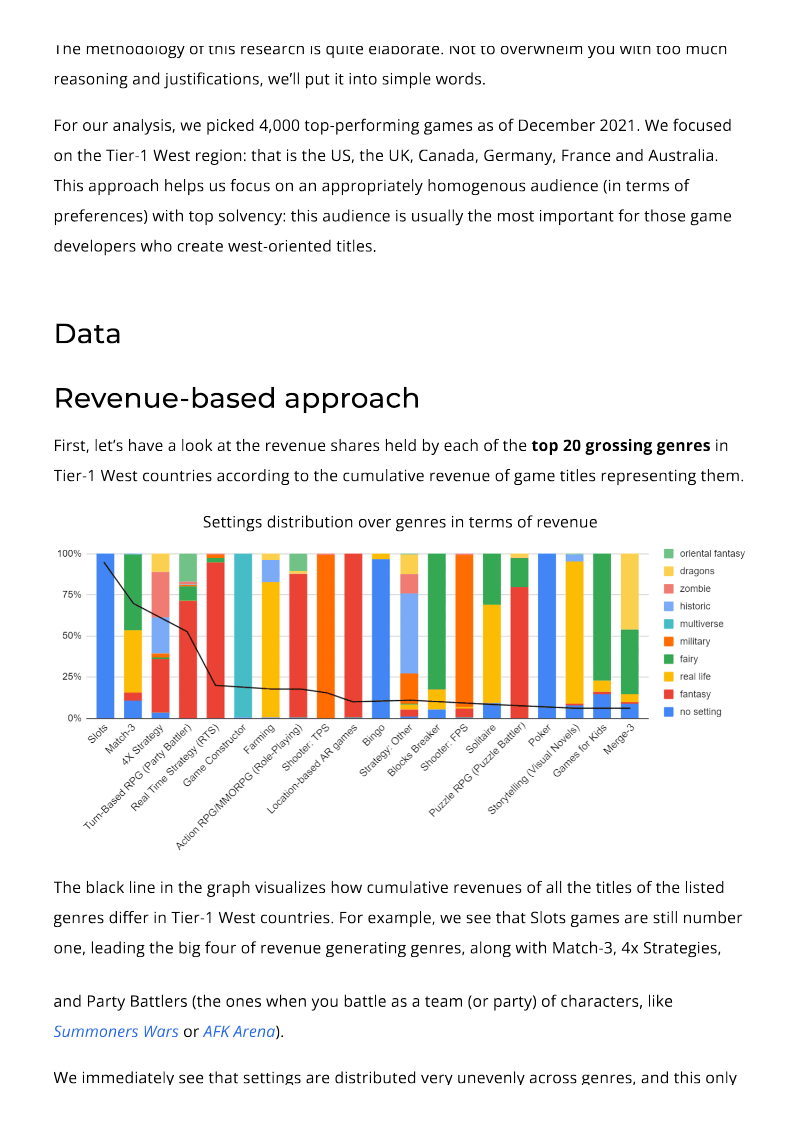
High-revenue genres target narrow, high-value audiences.
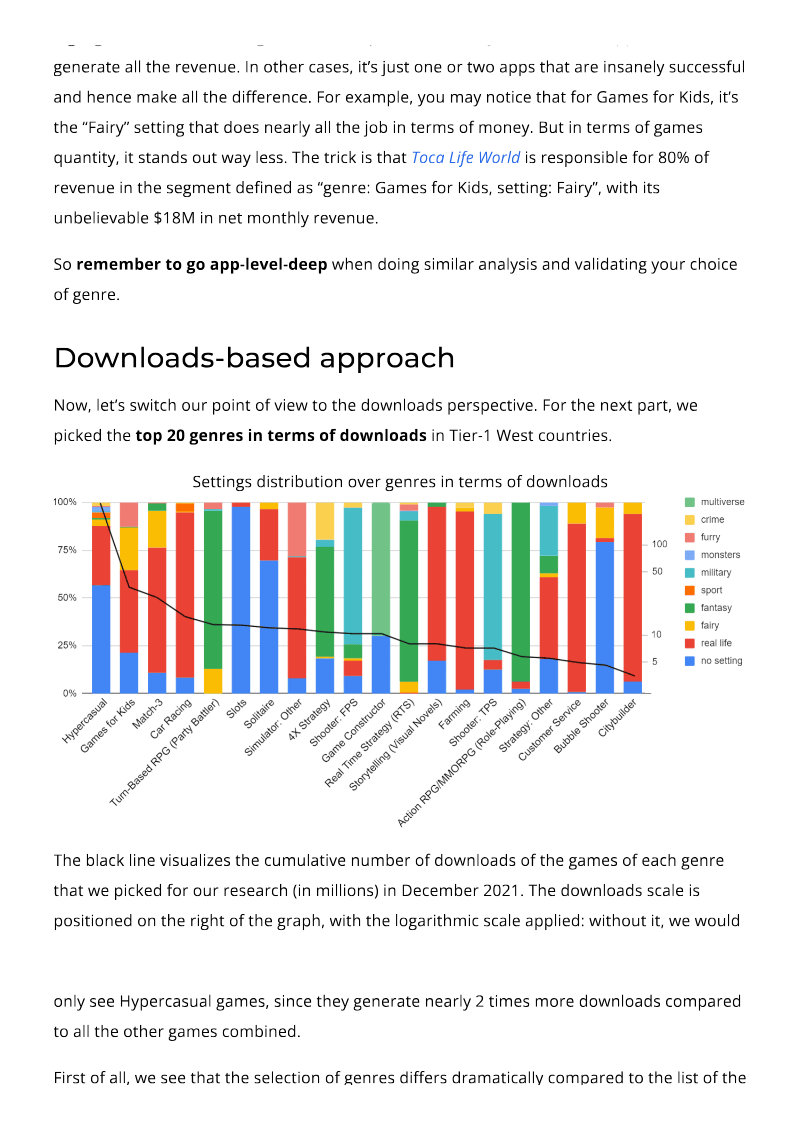
High-download genres, conversely, aim for broader appeal.
Audience Targeting. High-revenue genres typically target narrow, high-value audiences, whereas high-download genres rely on broader, more accessible themes.
Core Genre Strategy
Core genres like 4X Strategy and Action RPGs use 'Fantasy' settings.
These settings support complex monetization models and immersive world-building.

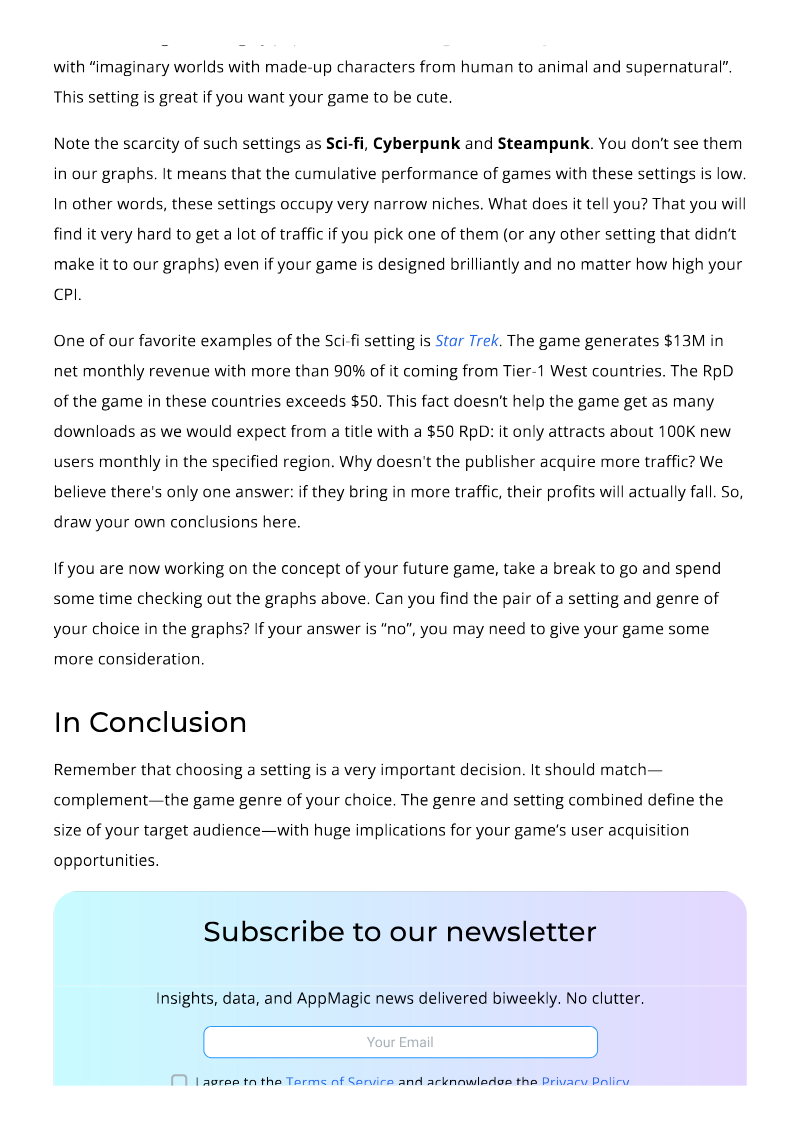
Niche Limitations
Niche settings face significant traffic acquisition challenges.
Settings such as Sci-fi, Cyberpunk, and Steampunk appeal to smaller, specialized segments.
It's like trying to sell a very specific collector's item; the audience is passionate but small.
Market Validation
Developers must validate genre-setting combinations against market data.
Mismatched pairings can severely constrain a game's growth potential.
Data-Driven Decisions. Developers must validate genre-setting combinations against market data from Tier-1 West regions to avoid mismatched pairings that constrain commercial growth.
1 / 5
Ask AI about this report