Machine Zone
Company
Documents about Machine Zone
iOS Gaming Leaders: January 2016
The January 2016 mobile gaming landscape experienced a notable divergence between download volume and total revenue.
- Global iOS game downloads reached 692 million in January 2016, a 12.61% increase over the 614 million installs recorded in December 2015.
- Worldwide iOS gaming revenue totaled $969 million in January 2016, representing a 2.91% decline from the $998 million generated in the previous month.
- Machine Zone's 'Mobile Strike' entered the U.S. revenue top 10 for the first time, placing eighth and marking the publisher's second title to reach that milestone alongside 'Game of War - Fire Age'.

Machine Zone, Supercell and King spent $200M on US TV ads in 2015
The mobile gaming industry experienced a significant shift in marketing strategy during 2015, characterized by a rapid expansion into traditional television advertising.
- US television advertising spend for video games reached $630 million in 2015, marking a 47% year-over-year increase driven primarily by mobile-only studios.
- Machine Zone, Supercell, and King collectively spent nearly $200 million on US TV ads in 2015, with individual spends of $93 million, $60 million, and $41 million respectively.
- Top-tier mobile developers are utilizing a 'brute force' marketing strategy, leveraging calculated player lifetime value data to justify massive investments in broad-reach traditional media.
iOS Gaming Leaders: November 2015
This analysis examines the performance of iOS gaming applications during November 2015, focusing on download volume, revenue generation, and growth trends across both the United States and global markets.
- Ketchapp’s game 'Twist' became the most downloaded iOS game globally and in the U.S. in November 2015, significantly outperforming new releases from major publishers like King and Machine Zone.
- Machine Zone’s 'Game of War' maintained the top position for global and U.S. revenue, while Supercell’s 'Clash of Clans' experienced negative month-over-month revenue growth for the second consecutive time.
- The top 10 revenue-generating games showed a stagnant trend, with half of the titles experiencing month-over-month revenue declines and no new entries appearing on the top 10 lists.

IAP Inspector: Mobile Strike
Mobile Strike, a strategy title from Machine Zone and Epic War, employs an aggressive monetization strategy centered on constant sales prompts, time-gating, and social pressure.
- Mobile Strike utilizes a social monetization model where in-app purchases trigger gifts for alliance members, creating peer pressure to spend to benefit the group.
- The game design prioritizes high-spending users over casual players by gating progress behind mandatory time delays that can only be bypassed through real-money purchases.
- The core progression loop is intentionally restrictive, providing insufficient starting currency to force a choice between immediate spending or exiting the game.

Monetizer: Mobile Strike
Mobile Strike, developed by Machine Zone, represents a highly aggressive and successful model of mobile game monetization.
- Machine Zone’s Mobile Strike prioritizes an aggressive, data-driven monetization model over high-fidelity graphics or skill-based gameplay to secure its position as a top-grossing title in the North American market.
- The game’s economic structure relies on time-limited retail offers, countdown-driven sales, and complex currency systems designed to incentivize monthly spending that can reach hundreds or thousands of dollars per player.
- Monetization is driven by an alliance-based social architecture where individual microtransactions provide collective benefits, effectively leveraging peer influence to increase player spending.

FTUE: Mobile Strike
Mobile Strike, a contemporary military-themed strategy game developed by Epic War (a subsidiary of Machine Zone), utilizes a highly structured, tutorial-heavy onboarding process designed to rapidly integrate players into its complex resource-management and alliance-based ecosystem.
- Mobile Strike, developed by Epic War (a subsidiary of Machine Zone), utilizes a highly structured, tutorial-heavy FTUE that prioritizes immediate engagement with core resource-management loops over narrative or visual spectacle.
- The onboarding process employs forced progression and visual cues to teach players the game's five soft currencies and complex menu-driven systems.
- The alliance system is introduced early in the FTUE to drive long-term player retention, social stickiness, and collaborative monetization.

N3TWORK's Neil Young on the first $10 billion mobile game
The mobile gaming industry in Western markets remains in its infancy, despite widespread smartphone adoption.
- The mobile gaming industry in Western markets is in its infancy and has the potential to expand to ten times its current size by evolving game design and monetization.
- The industry is expected to produce a single mobile game capable of generating $10 billion in annual revenue within a five-year horizon.
- Western developers are increasingly adopting sophisticated monetization systems pioneered by Asian companies like DeNA and Machine Zone to increase per-user revenue.

Implications of Supercell's $1.7 billion 2014 revenue
Supercell’s 2014 financial performance serves as a primary indicator of the current state of the mobile gaming industry, characterized by extreme market concentration and high barriers to entry.
- Supercell generated $1.7 billion in 2014 revenue with $580 million in profit, marking a threefold increase over their 2013 performance.
- The mobile gaming market is characterized by extreme concentration, where a small group of elite firms including Supercell, King, Machine Zone, and Gung-Ho dominate the top of the charts.
- Top-tier developers maintain their market position by reinvesting 20% to 30% of their revenue into aggressive user acquisition and high-profile marketing campaigns.

Were Super Bowl ads worth it, and Glu's Katy Perry lift
The mobile gaming industry is currently undergoing a strategic shift toward high-profile brand advertising, exemplified by the significant investments made during the 2015 Super Bowl.
- Mobile gaming companies, including Supercell and Machine Zone, spent approximately $15 million on 2015 Super Bowl television spots to shift from performance-based digital marketing toward high-visibility brand advertising.
- Glu Mobile’s stock price increased by 30 percent in a single day following the announcement of a five-year partnership with Katy Perry, building on the success of their celebrity-driven simulation model.
- The mobile gaming market is characterized by a 'winner-takes-all' dynamic where a single breakout hit, such as Kim Kardashian: Hollywood, can stabilize a company's finances after years of losses.

Mobile games industry news (w/e 9 August 2013)
The mobile games industry in mid-2013 is characterized by a transition from rapid, unchecked growth to a more competitive, plateauing environment.
- The mobile games industry is transitioning from unchecked growth to a competitive, plateauing environment, forcing companies to pivot toward international, free-to-play models.
- DeNA reported a 10% revenue increase to $526 million in Q2 2013, though operating profits declined due to heavy investment in international expansion and continued reliance on Japanese feature-phone platforms.
- Glu Mobile experienced a 17% revenue drop as it struggled to transition from legacy carrier-based business models to modern free-to-play structures.
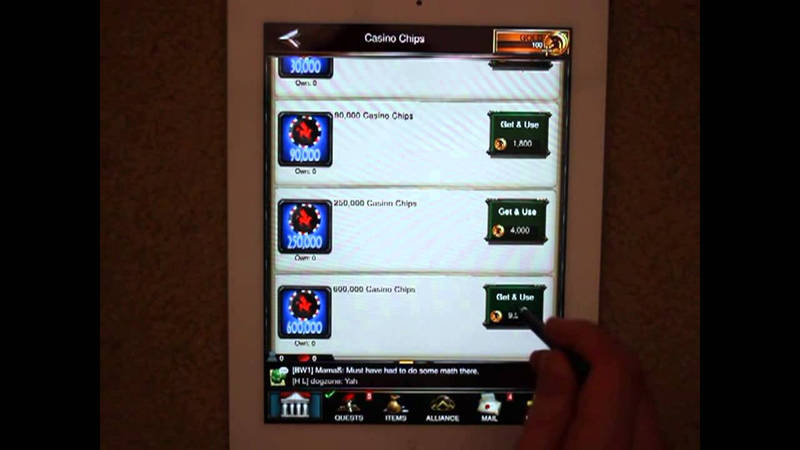
Monetizer: Machine Zone's Game of War: Fire Age
Game of War: Fire Age, developed by Machine Zone, is a complex, menu-driven massively multiplayer online game (MMOG) designed for mobile platforms.
- Machine Zone utilizes a social-first retention strategy in Game of War: Fire Age, leveraging alliance systems and global chat with automatic translation to foster deep player engagement.
- The game transitions players from a 'free-to-instant' early experience to a time-gated progression model that necessitates either significant time investment or microtransactions.
- Monetization is driven by a multi-layered economy featuring gold, resources, and casino-style chips, supported by time-limited bundles and 'high roller' status perks.