indie
CompanyUnited States
Documents about indie
Fake 3D Game Art Style in 1 Day: Robots!
The development process for implementing a fake 3D art style in a 2D strategy game centers on the use of normal maps to simulate depth and dynamic lighting.
- Developers can simulate 3D depth in 2D strategy games by using normal maps generated from 3D models to enable dynamic lighting on 2D sprites.
- By rendering 3D models with a custom shader that outputs surface orientation instead of color, sprites can react to light sources correctly regardless of their rotation.
- This workflow allows for the use of high-polygon 3D models for pre-rendered sprites without incurring real-time performance costs, as the engine only processes the normal map shading during gameplay.
Creating an Art Style for Your Game in Just 1 Day: Dragons!
Developing a cohesive 2D art style for an indie strategy game within a single day is a viable method for rapid prototyping and visual exploration.
- Rapidly prototyping a 2D art style in a single day allows developers to evaluate the technical feasibility and emotional alignment of visual assets against core gameplay goals.
- Character identity should be established through silhouettes before integrating assets into the game engine to test hitboxes and animation flow.
- Backgrounds must be designed and tested alongside character sprites, as the environment significantly dictates the tone and visual clarity of the game.
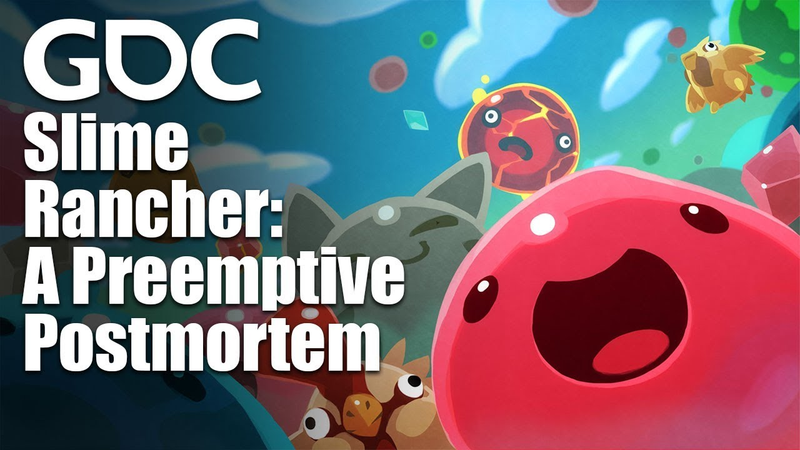
Slime Rancher: A Preemptive Postmortem
The success of Slime Rancher stems from a development philosophy that prioritizes a highly polished, satisfying core gameplay loop over speculative features or complex systems.
- Treat Early Access as a live service product rather than a development phase, focusing on major, feature-based content updates that generate hype rather than minor patch notes.
- Design games to be 'YouTube-friendly' by prioritizing emergent, unpredictable character behaviors and satisfying core gameplay loops that are visually engaging for spectators.
- Leverage organic growth on YouTube by distributing keys to smaller creators first, allowing the game to naturally climb the 'food chain' to larger influencers like Markiplier and Jacksepticeye without direct outreach.

Finding the Best Artstyle for Your Indie Game!
Selecting an effective art style for an indie game requires a structured, priority-based framework to ensure the final aesthetic aligns with both marketing goals and gameplay mechanics.
- Prioritize visual clarity and 'watchability' by using strong silhouettes and intuitive color coding to ensure the game remains legible for players and streaming audiences.
- Establish a hierarchy of needs where gameplay functionality and intuitive communication take precedence over aesthetic beauty, which should serve only to enhance the core experience.
- Develop a unique visual identity that accurately reflects the game’s difficulty and complexity to align player expectations and minimize the risk of negative reviews.
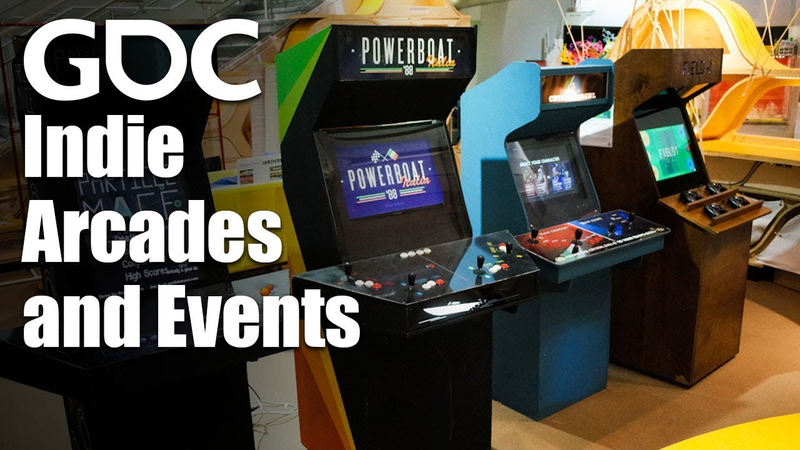
Pop-Up Arcade: Postmortems on Indie Arcades and Events
This session from GDC Europe 2013 explores the rise of pop-up indie game arcades and curated events as a means to foster community and reach audiences beyond the traditional gaming demographic.
- Physical, curated arcade installations transform digital games into performative, social experiences that attract audiences beyond traditional gaming demographics.
- Using unconventional hardware—such as repurposed furniture, baby strollers, or shipping pallets—creates a tangible gateway that invites participation from passersby who might feel alienated by standard gaming conventions.
- The success of pop-up arcades relies on the presence of a 'critical mass' of spectators, which turns local multiplayer gameplay into a shared event comparable to a concert or movie night.
Open Production With Sunless Sea: Kickstarter, Early Access and After
Open production serves as a transformative strategy for independent game developers, enabling studios to transition from financial instability to long-term sustainability.
- Open production models like Kickstarter and Early Access provide financial stability and a diagnostic feedback loop that allows developers to refine design and marketing before full release.
- Developers must maintain final authority over creative vision, as relying too heavily on veteran player feedback can skew development toward niche preferences and alienate broader audiences.
- Sustainable financial planning requires that crowdfunding stretch goals remain low-cost and high-engagement to ensure early capital builds a foundation for future projects rather than serving as a temporary fix.
Stories of indie mobile game success – What do they have in common?
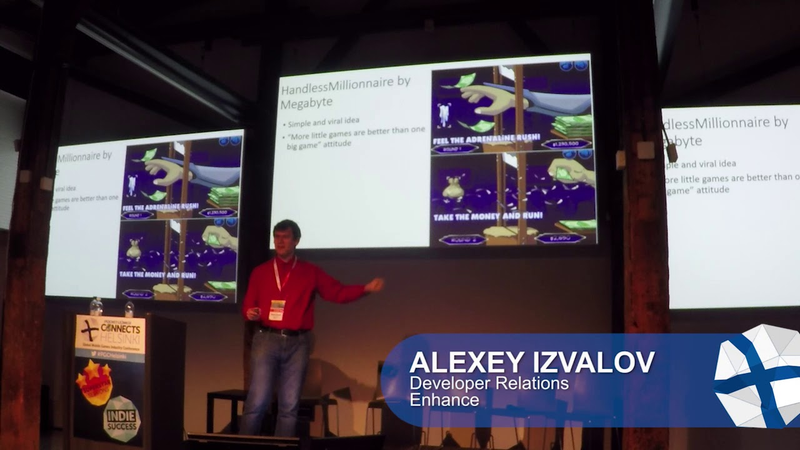
Independent mobile game development remains a viable path to success, provided developers adopt specific strategies to compensate for the lack of publisher resources.
- Independent mobile game success is driven by rigorous community building, iterative development, and efficient time management rather than luck.
- Successful developers prioritize early prototyping and frequent A/B testing to refine gameplay mechanics instead of committing to unproven concepts.
- Building a dedicated community before launch through social media and direct feedback loops fosters co-authorship, which is essential for driving organic interest.
Ongoing user acquisition for indie game developers
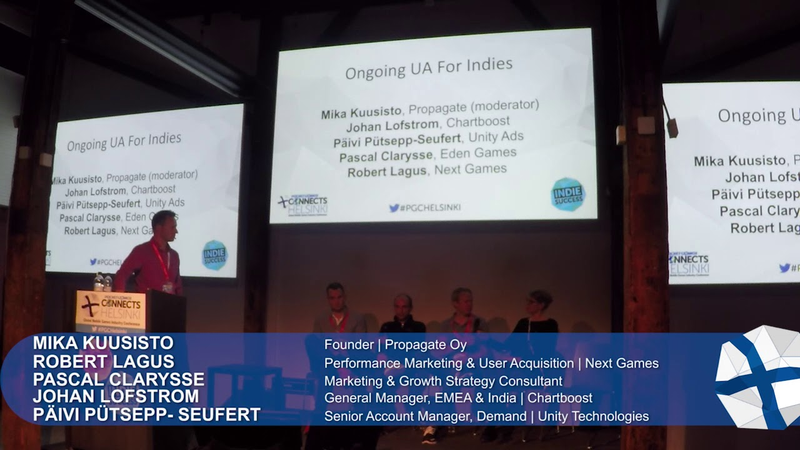
Successful user acquisition for independent game developers hinges on a disciplined, data-centric strategy that prioritizes long-term player value over immediate, low-cost volume.
- Prioritize long-term player value and robust core mechanics—specifically onboarding, retention, and monetization—before allocating significant marketing budgets.
- Conduct initial technical testing in lower-cost regions to gather performance data and refine product mechanics before scaling to broader, more expensive markets.
- Implement reliable attribution tools and integrate analytical expertise early to accurately track lifetime value and return on investment.
Trial by Fire: The Making of Little Inferno
Little Inferno, developed by Tomorrow Corporation, serves as a case study in indie game development, specifically highlighting the challenges of balancing creative ambition with production constraints.
- Tomorrow Corporation achieved commercial success with Little Inferno, selling over one million copies across six platforms including PC, mobile, and Wii U.
- The project served as a critical transition for the developers, allowing them to move from traditional industry roles into full-time independent game development.
- Development took two and a half years, significantly exceeding the team's original six-month projection due to the complexity of the project.
The 2017 Indie Soapbox
Independent game development thrives when creators prioritize authentic personal expression over market trends.
- Indie developers should prioritize authentic personal expression and creative integrity over chasing market trends to foster deeper audience connections.
- Sustainable production requires realistic task estimation and the rejection of crunch culture to treat game development as a long-term craft rather than a sprint.
- To prevent feature creep, developers should implement formal conceptualization and requirement-freezing while utilizing hybrid processes to optimize limited resources.
Three Years of Tilt Brush
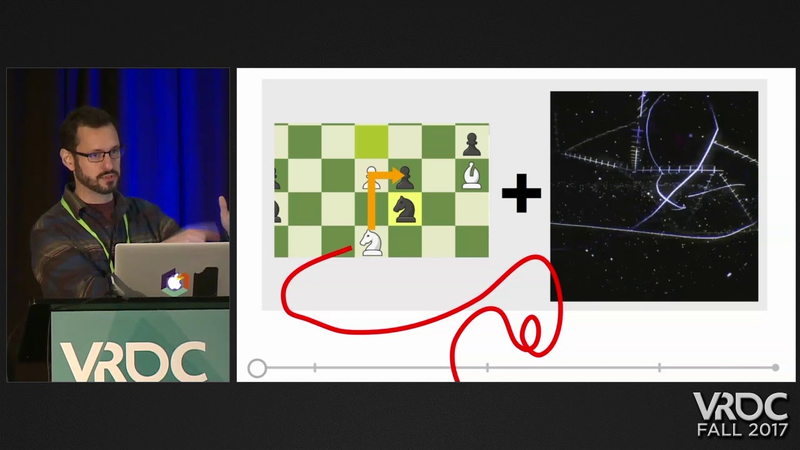
Tilt Brush originated as a serendipitous byproduct of a virtual reality chess experiment, where debug trails were repurposed into a functional 3D painting tool.
- Tilt Brush originated as a two-day prototype created from debug trails in a VR chess experiment, demonstrating the value of repurposing game development assets.
- The project successfully transitioned from an independent studio to a Google-backed product by applying agile gaming workflows like particle rendering and rapid iteration to non-gaming VR.
- To scale development after the 2015 Google acquisition, the team launched an Artist in Residence program involving 60 professional creators to stress-test features and inform product direction.
Animation Bootcamp: An Indie Approach to Procedural Animation
Procedural animation offers a highly efficient alternative to traditional keyframe-heavy workflows for indie developers working with limited resources.
- Procedural animation replaces labor-intensive keyframe workflows by using mathematical curves, spring-damper systems, and physics-based constraints to generate fluid character movement.
- Indie developers can achieve complex movement using as few as thirteen keyframes by utilizing cubic interpolation to maintain spatial and velocity continuity across transitions.
- Gameplay responsiveness is prioritized by mapping controller inputs directly to character acceleration, treating visual animations as a secondary, non-interfering layer.