indie
CompanyUnited States
Documents about indie
FRAMED: A Recipe for Critical Success
The primary objective of this analysis is to outline a strategic framework for positioning premium indie titles for success in the mobile market.
- Strategic participation in the global festival and awards circuit can secure long-term commercial viability for premium indie titles, even when initial launch performance is underwhelming.
- The game FRAMED achieved 400,000 paid unit sales despite an initial launch that failed to meet expectations relative to its $500,000 development budget.
- Developers should structure production around ten-week milestones that align with major industry events to ensure a constant, high-quality, submission-ready build.
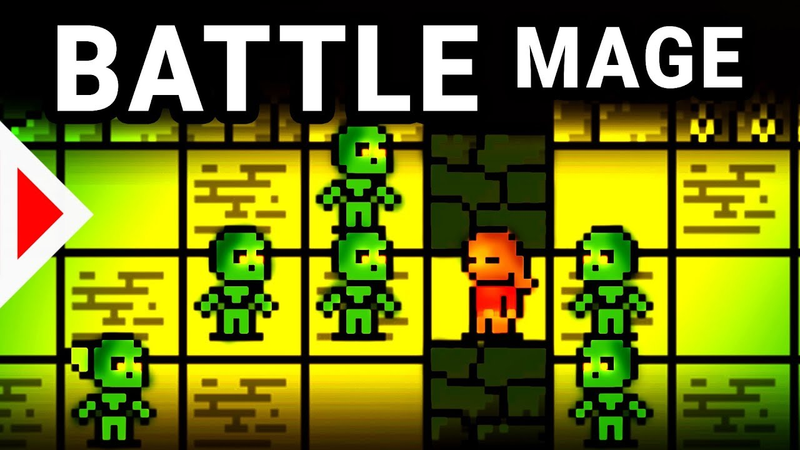
I Still Play Your Indie Games!... #009
The provided analysis examines the indie game Aldarix the Battlemage, focusing on game design principles, balancing, and player experience.
- Improve player onboarding by replacing the initial overwhelming spell selection with a gradual unlocking system to foster better progression and engagement.
- Enhance combat clarity by implementing more impactful damage animations and integrating mana costs directly into the user interface.
- Leverage a limited enemy pool to keep the game easy to learn, shifting the focus of complexity onto the player’s diverse spell kit rather than enemy behavior.
Practical IP Law for Indie Developers 301: Plain Scary Edition
Intellectual property management serves as the foundational pillar for indie game developers, necessitating a proactive approach to securing creative assets.
- Formalize ownership of all creative assets by using explicit work-for-hire and assignment agreements with every contributor, as automatic copyright is insufficient for legal security.
- Prioritize early trademark registration for game titles as word marks to establish a priority date, as trademark rights are jurisdiction-specific and depend on active commercial use.
- Avoid relying on fair use as a legal defense due to its unpredictable, case-by-case nature, and instead use formal registration to maximize legal leverage.
1 Day in the Life of an Indie Game Developer
Independent game development requires a disciplined approach to time management and task prioritization to maintain high levels of productivity.
- Maintain productivity by using structured time-blocking and taking breaks at least every two hours to avoid cognitive fatigue and diminishing returns.
- Prioritize iterative polishing of existing mechanics, such as AI and particle effects, over the constant addition of new content to create a more effective vertical slice.
- Enhance user experience through subtle technical refinements like code cleanup and post-processing effects rather than overwhelming the player with excessive features.
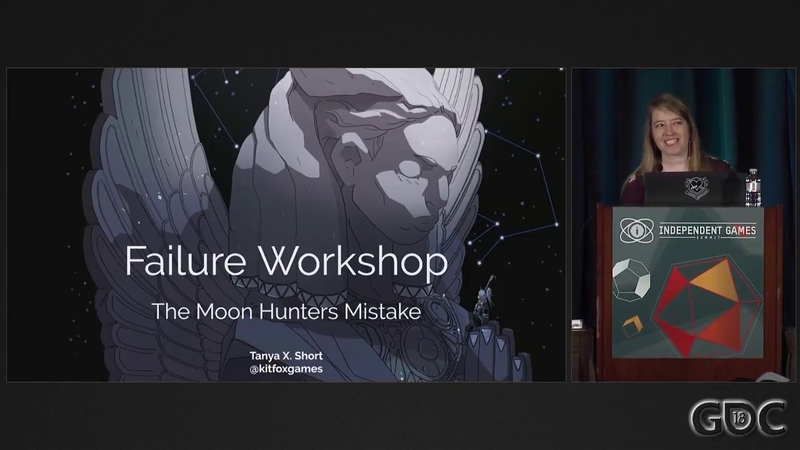
The 2018 Failure Workshop
The independent game development sector frequently suffers from a culture that prioritizes rigid production schedules over product quality, leading to avoidable commercial failures and significant psychological distress.
- Prioritizing rigid production schedules over product quality leads to avoidable commercial failures, negative community sentiment, and significant psychological distress for development teams.
- The case of Moon Hunters illustrates that rushing unfinished, buggy software to meet arbitrary deadlines results in immediate revenue loss and necessitates extensive, burnout-inducing post-launch support.
- Developers should shift focus toward long-term sustainability by prioritizing core gameplay quality over release efficiency, as flawed launches can be salvaged through consistent updates and transparent communication.

5 Ways To Make Money As An Indie Game Developer
Establishing a sustainable indie game studio requires a multifaceted approach to revenue generation and community building.
- Achieving 20,000 wishlists on Steam is the primary benchmark for ensuring a high-visibility game launch.
- Developers should negotiate publisher agreements based on gross revenue rather than net revenue to minimize recoupment deductions.
- Maintaining ownership of intellectual property is essential for long-term monetization through merchandise and cross-platform expansion.
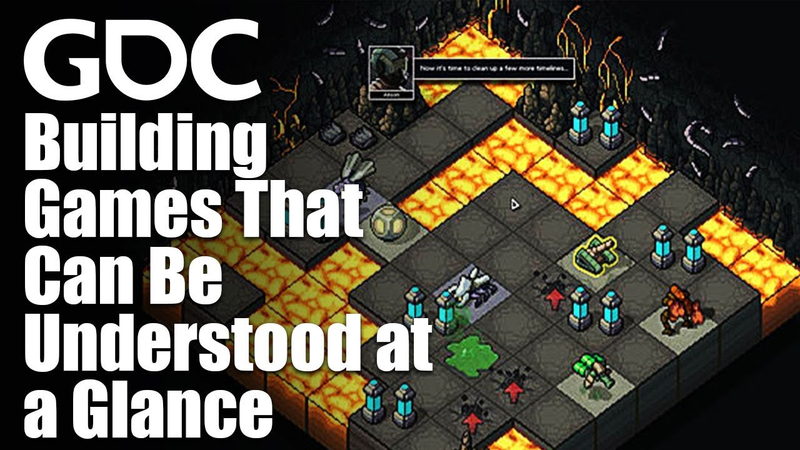
Building Games That Can Be Understood at a Glance
Designing games that are immediately comprehensible to an outside observer—a concept termed subway legibility—serves as a powerful tool for indie developers to improve tutorials, organic discovery, and marketing.
- Apply the 'three reads' principle to UI design: the first read establishes the genre or hook, the second communicates core mechanics, and the third provides secondary contextual information.
- Prioritize visual hierarchy by scaling and positioning UI elements based on their importance to ensure the game state is immediately understandable to both players and observers.
- Utilize 'subway legibility' to lower the cognitive load on new players, which simplifies tutorial design and allows marketing materials to convey value without needing extra context.
Becoming a Game Developer... (5 Days in 1 Video!)
The pursuit of a career in game development requires a rigorous, multifaceted daily routine that balances academic coursework, independent project iteration, and content creation.
- Professional game development requires a rigorous, multifaceted daily routine that balances academic coursework, independent project iteration, and content creation.
- Success in the industry relies on disciplined time management and the use of organizational tools to maintain productivity across multiple concurrent projects.
- The development lifecycle is defined by a constant cycle of experimentation, where broad ideas are narrowed through iterative testing to identify viable prototypes.
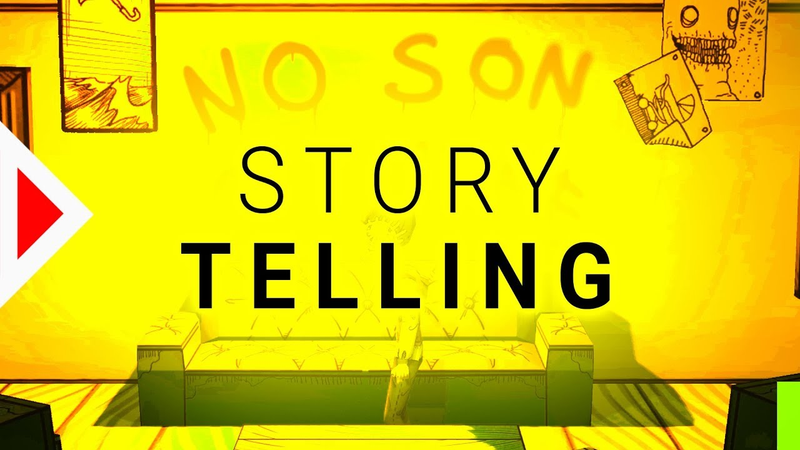
Let's Play UNSAFE - Is This How You Do Storytelling in Horror Games?
The indie horror game Unsafe (Chapter 2) serves as a case study in atmospheric environmental storytelling and puzzle-based narrative progression.
- Unsafe (Chapter 2), developed by Sylvester Hansen, utilizes a 2.5D perspective to explore complex themes of identity, religious intolerance, and conversion therapy within a psychological horror framework.
- The game employs environmental storytelling through scattered notes, locker interactions, and symbolic imagery to reconstruct a fragmented narrative centered on the protagonist’s trauma.
- Gameplay mechanics, specifically inventory management and code-based puzzles, are directly integrated into the narrative to reveal critical plot points regarding the protagonist's past.
Suddenly My Game Is Fun Again!
The development of the real-time strategy game Ovus Nova has undergone significant mechanical refinements to improve player agency and overall engagement.
- The developer transitioned from randomized unit movement to a swipe-based system, granting players direct control over egg-hatching directions and tactical navigation.
- The upgrade bar now fills automatically, with a mechanic that accelerates progression three times faster when no eggs are present on the screen to create a strategic trade-off.
- Core gameplay was simplified by removing slow-hatching red eggs and implementing a restriction against stacking eggs to reduce user frustration.
Another Brick In The Wall! - Pathfinding for OVUS NOVA - (Part 2)
The development of the PC strategy game Ovus Nova has reached a significant milestone with the successful implementation of wall mechanics and a highly optimized pathfinding algorithm.
- The Ovus Nova pathfinding system now supports stable performance of 140 to 200 FPS, even when managing large unit counts simultaneously.
- The implementation of wall mechanics and optimized collision detection has enabled complex level design, including support for destructible environments and varied terrain.
- Development in GameMaker was hindered by the lack of native, efficient tools for migrating scripts and assets between projects, necessitating manual workarounds.

Fireside chat: Brands and indies
This discussion explores the necessity for independent game developers to treat their projects, studios, and personal identities as brands.
- Branding is a strategic necessity for indie developers to build long-term trust and audience loyalty, rather than a purely visual exercise involving logos.
- Developers must integrate marketing and branding functions early in the development cycle to shift from transactional sales to cultivating a dedicated community.
- In a saturated market, consumers perceive every studio through a brand lens, making intentional perception management essential for securing repeat engagement.