indie
CompanyUnited States
Documents about indie

His Dream Game Crashed And Burned... But He Sold 1 MILLION Copies... (w/ Indie Game Joe) — Ep 72
The independent game development landscape requires a fundamental shift in perspective, where marketing is not a post-production task but an intrinsic element of game design.
- Indie Game Joe’s 'Don't Scream' franchise has achieved a combined total of 1 million copies sold, despite significant technical challenges and negative launch-day reviews for the sequel, 'Don't Scream Together'.
- The 'Don't Scream' sequel, 'Don't Scream Together', has reached 600,000 copies sold and continues to maintain daily sales volume despite initial community frustration over bugs and microphone calibration issues.
- Effective marketing hooks must function as a 'promise' of a specific player fantasy; when a hook is disconnected from the actual gameplay experience, it leads to poor reception and high refund rates.
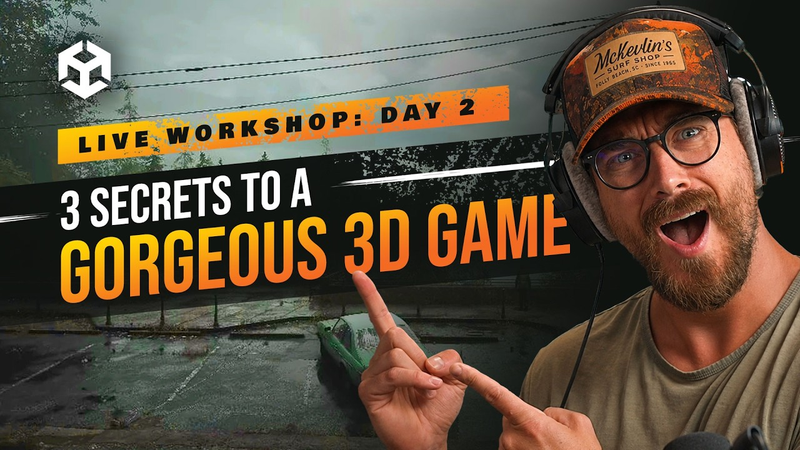
Live Workshop: 3 Secrets To A Gorgeous 3D Game (Easy, No Modeling, Bonus Q&A)
High-quality 3D indie game development relies on prioritizing intentional scene composition and environmental storytelling over the pursuit of high-fidelity assets.
- Indie game developers should prioritize level design by strictly limiting player movement to guide them through the experience, rather than creating large, open-world environments that lead to optimization issues and player confusion.
- Level scale must be determined through iterative playtesting to ensure the environment matches player movement and mechanics, preventing the common issue of players feeling bored or disoriented in overly large spaces.
- To make a scene feel alive and unique, developers should inject personal creative 'flair' rather than relying on generic, AI-generated tropes that result in uninspired, average-looking content.
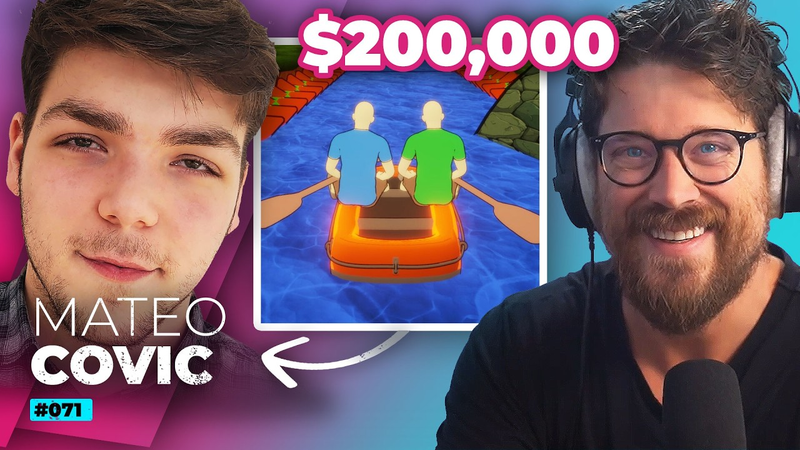
His Dream Game Flopped... And Then Made $200,000+ In 2 Months (w/ Mateo Covic) — Ep 71
The modern indie game landscape increasingly rewards a bifurcated development strategy that balances high-fidelity, ambitious projects with rapid, viral-focused titles.
- Mateo Covic's 'friend slop' game, Paddle Paddle Paddle, generated over $200,000 in revenue within two months, significantly outperforming his previous niche projects.
- Multiplayer 'friend slop' games currently trend well on Steam because they offer casual, accessible fun that appeals to streamers and their audiences, unlike more complex or niche titles.
- Effective marketing for Paddle Paddle Paddle relied on a publisher-led strategy that included professional cover art, targeted influencer outreach, and building a community around a demo prior to launch.
The best game at Steam Next Fest June 2026: Cat Mail Co
Cat Mail Co. emerged as a definitive success during the June 2026 Steam Next Fest, securing over 45,000 wishlists and achieving a prominent position on the platform’s Popular Upcoming list.
- Cat Mail Co. achieved significant commercial success following the June 2026 Steam Next Fest, securing over 45,000 wishlists and strong post-launch sales.
- Job simulation games provide a high-engagement, low-friction alternative to complex RPGs or platformers, allowing developers to scale content efficiently through repeatable, system-based gameplay loops.
- The game's design demonstrates that developers can achieve high replayability and player satisfaction without relying on extensive, resource-heavy narrative backstories or complex quest chains.

Let's Review Your Games — Ep. 056
Indie game development often hinges on the delicate balance between atmospheric immersion and mechanical clarity.
- A high-quality, responsive menu system significantly impacts player perception, with the reviewer noting a willingness to pay $15 for a game based solely on the quality of its menu and sound design.
- Inconsistent world scale, such as railings being neck-high or objects being disproportionately sized, negatively affects player immersion and should be addressed to maintain a cohesive environment.
- Player character controllers must feel solid and grounded; adding visual feedback like ripples or decals underfoot is essential to prevent movement from feeling 'floaty' in water-based or platforming segments.
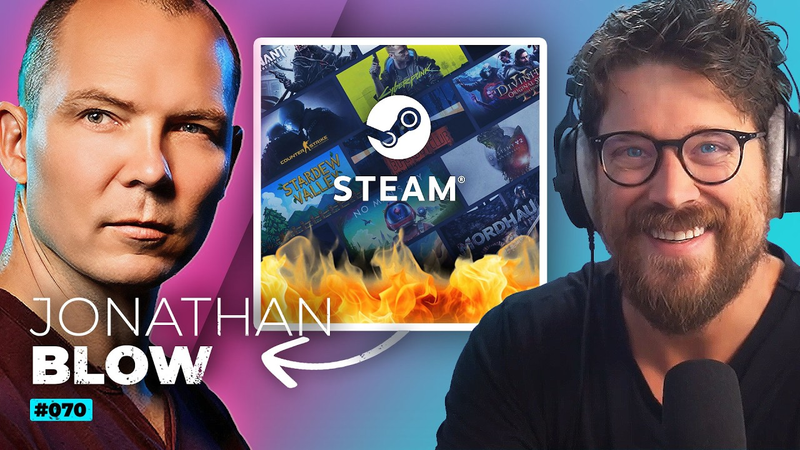
Is The Indie Game Industry Broken? (w/ Jonathan Blow) — Ep 70
The contemporary video game industry is experiencing a significant structural shift characterized by the decline of traditional AAA dominance and the rise of independent development.
- The cost of game development has increased by an estimated factor of 18 since 2005, driven by a combination of tripled salaries, tripled team sizes, and development cycles that take twice as long.
- AAA studios are increasingly struggling to maintain quality due to bureaucratic bloat, creating a market vacuum that has allowed independent developers to capture significant market share with high-quality single-player titles.
- Jonathan Blow’s 10-year development project, 'Order of the Sinking Star,' demonstrates that building custom engines and scripting languages—while inefficient from a traditional business perspective—can build a unique brand identity that differentiates a developer in a crowded market.

Let's Review Your Games — Ep. 052 (Part 2)
This analysis focuses on improving visual clarity and player navigation in 2D platformer games, specifically addressing the common issue of poor contrast between foreground gameplay elements and background environments.
- Visual clarity in platformers is critical; developers must ensure players can instantly distinguish between traversable ground and background elements to avoid gameplay frustration.
- Effective layer separation can be achieved by applying subtle fog, vignettes, or color overlays to the background and foreground to create depth and contrast.
- Using an overlay filter with sparse highlights on the ground layer can further improve player navigation and visual readability in 2D environments.

Why I Spent 5 Years On My Game (And Was It Worth It?)
The primary motivation for long-term game development is personal passion rather than purely commercial optimization.
- Prioritizing personal passion for a project is essential for long-term development, as creators are unlikely to finish games they do not love during multi-year production cycles.
- Game development cycles can be lengthy, with the speaker spending five years developing his BioShock-inspired title, Twisted Tower.
- Niche projects driven by deep personal interest can still find a viable audience, as there are likely 10,000 to 100,000 players globally who share specific, unconventional thematic tastes.
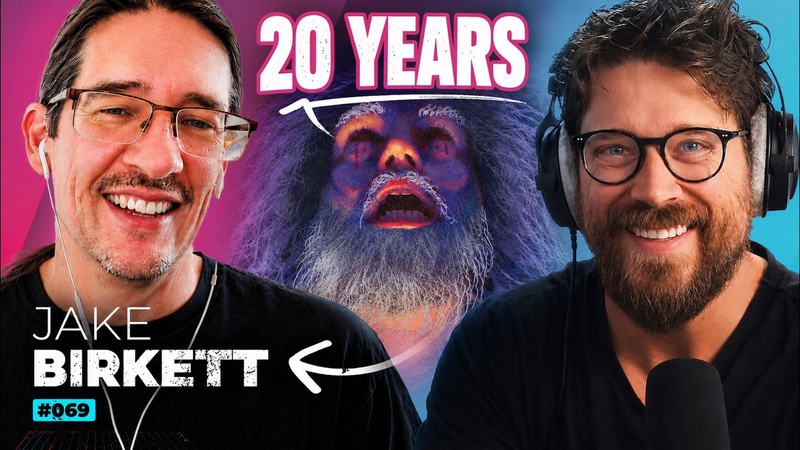
He Made Games For Twenty Years... And Finally Went Viral (w/ Jake Birkett) — Ep 69
Achieving breakout success in the independent game industry requires a transition from solitary development to a data-driven, collaborative strategy.
- To validate a game concept before full production, create a 'smoke and mirrors' trailer combining gameplay and real-life footage to test audience interest and prevent spending years on a 'dead duck'.
- Demos serve as critical marketing and testing tools; using AI to summarize player feedback from demos allows developers to identify sentiment and make necessary adjustments before the 1.0 launch.
- Managing player expectations is vital for high review scores; by clearly defining the game genre and avoiding misleading labels, developers can filter their audience to ensure the game reaches players who actually enjoy that specific type of experience.

Xbox plans 3,200 job cuts, and will drop five acclaimed studios
Xbox is undergoing a significant corporate restructuring, characterized by approximately 3,200 job cuts—representing roughly 15% of its workforce—and the divestment of five critically acclaimed studios.
- Xbox is cutting 3,200 jobs, representing approximately 15% of its total workforce, as part of a major corporate restructuring.
- The company is divesting five studios: Double Fine and Compulsion Games are moving to independent management, while Ninja Theory, Undead Labs, and Arkane Lyon are seeking new ownership.
- The restructuring shifts the company from a decentralized studio model to a centralized structure that prioritizes major franchises like Halo, Gears of War, and Fallout over smaller, independent-style projects.
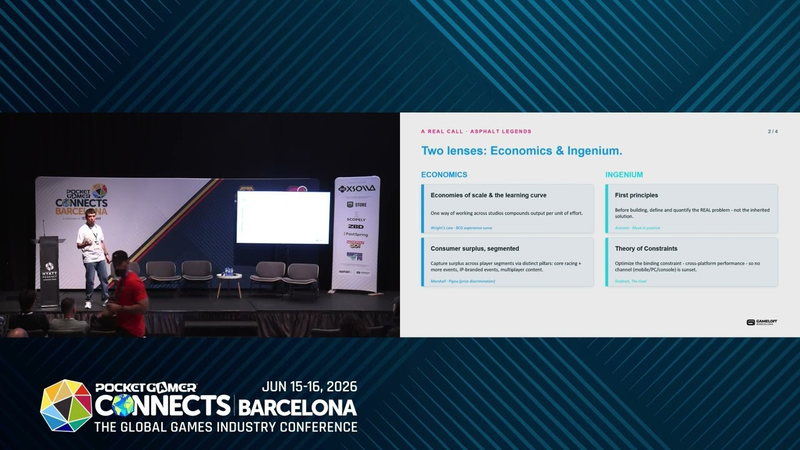
NEW ** Session: Time To Resolve - Raúl Orrego del Río, Gameloft Barcelona.
The presentation explores the intersection of decision-making, psychology, and game development, arguing that success in the industry is a hybrid of skill and luck.
- The video game industry operates closer to poker than chess, meaning success is heavily influenced by luck; therefore, leaders must focus on the quality of their decision-making process rather than just the outcome of individual projects.
- To improve project performance, shift from solution-oriented development to 'Gate Zero'—a process that prioritizes identifying the core problem from a quantitative perspective before defining features.
- Decision-making capacity is a finite resource; leaders should prioritize critical choices and delegate or defer minor ones to avoid exhausting the prefrontal cortex's limited 'mana' or logical energy budget.
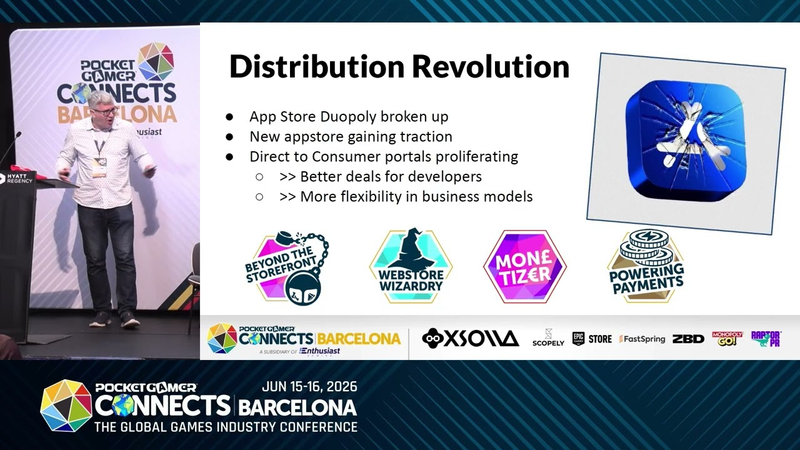
Welcome to Pocket Gamer Connects Barcelona 2026 - Chris James, Steel Media.
Pocket Gamer Connects Barcelona 2026 serves as a global industry gathering, bringing together representatives from 48 nations to facilitate business development, networking, and knowledge sharing.
- The games industry remains the world's largest entertainment sector, with total market value exceeding $200 billion, though this figure excludes significant revenue streams like console hardware sales and advertising.
- Direct-to-consumer (D2C) solutions are a critical growth area for mobile developers, currently generating an estimated $1.2 billion in annual run rate.
- User-Generated Content (UGC) platforms like Roblox are commanding massive engagement, with Roblox's attention time now competing directly with major streaming services like Netflix.