indie
CompanyUnited States
Documents about indie
20 Minutes Till Dawn’s Half-Million-Dollar Week
The success of the indie game 20 Minutes Till Dawn serves as a case study for rapid market entry and effective game promotion.
- The game 20 Minutes Till Dawn generated $538,035 in gross revenue within its first four days of Early Access by selling 220,523 units at a $2.99 price point.
- A free, standalone prologue version of the game was critical to success, driving initial visibility that resulted in 143,196 wishlists by the time the full game launched on June 8, 2022.
- The developer achieved a high conversion rate by targeting a popular genre (top-down hoard rogue-lite) and optimizing for international markets, specifically China and Japan.
What Happened to the 'Growth Stock Bubble' in Video Games?
The primary objective of this analysis is to evaluate the accuracy of previous predictions regarding a perceived growth stock bubble in the video game industry.
- Regional public game companies in the UK, Sweden, and Poland experienced a significant valuation correction, with firms pursuing aggressive roll-up strategies without clear synergies seeing share prices drop by up to 80% over a twelve-month period.
- Established indie-adjacent publishers in the UK faced stock declines of 35% to 45% despite maintaining stable operations, signaling a broader market correction for tech-adjacent assets.
- Large entities like Embracer Group have successfully maintained investor confidence through a 'shark-like' model of continuous, high-scale acquisitions, contrasting with the failure of smaller, less aggressive roll-up strategies.
10 Reasons You Should Stop Targeting Casual Gamers
The primary thesis of this analysis is that independent game developers should abandon the practice of targeting "casual" audiences, as this strategy is fundamentally flawed and often serves as a defensive mechanism against the perceived toxicity of "hardcore" gamers.
- Targeting a 'casual' audience is a strategic error for indie developers, as 42.8% of indie games use the casual tag compared to only 12.5% of AAA titles.
- Steam is a platform for hardcore players who actively seek deep, complex mechanics, making it an ineffective marketplace for games designed with simplified 'casual' gameplay.
- Casual gamers are prohibitively expensive to acquire because they are passive consumers who do not follow industry news or social media, requiring massive marketing budgets similar to Nintendo's to reach them.

Plus: Hot Pre-orders and How to Use Them
Strategic use of pre-orders serves as a powerful tool for high-profile video games to secure early revenue and enhance platform visibility.
- High-profile titles can secure early revenue and visibility by leveraging pre-orders and wishlist counts to climb top-grossing charts before launch, creating a discovery loop that persists regardless of critical reception.
- Niche simulation games remain a strong market segment, evidenced by Captain of Industry reaching over 4,000 concurrent users on Steam.
- Regional pricing controversies and high difficulty levels can negatively impact early user reviews and long-term momentum, as observed with the release of Souldiers.
A Little To The Left: How Tidying (and TikTok!) Made a Hit
The success of the cozy puzzle game A Little To The Left serves as a primary case study for how specific gameplay hooks and viral social media content drive modern game discovery.
- The puzzle game A Little To The Left sold over 300,000 copies by early 2023, with its most significant growth driven by organic social media coverage, including a single TikTok creator generating over 65 million views.
- Supercell reported €1.77bn in revenue and €632m in profit for 2022, but has not launched a new global title since 2018, reflecting the increasing difficulty of breaking into the market with new IP.
- Clash of Clans has reached $10 billion in lifetime revenue, anchoring Supercell's strategy of focusing on large live-service teams for legacy titles and expanding beyond mobile into PC and console markets.
In-depth: How Legend Of Keepers Hit it Big on PC
This analysis examines the commercial performance of the indie title Legend of Keepers to illustrate successful discovery and monetization strategies on Steam.
- Legend of Keepers generated over $3 million in gross revenue by selling 233,000 base units and 142,000 DLC units.
- A free 'Prologue' release proved critical for discovery, securing 115,000 wishlists by the 2020 Early Access launch through increased streamer interest.
- The game's DLC strategy provided significant long-tail revenue, with DLC sales occasionally outpacing base game revenue.
How One of Sokpop's Almost 100 Steam Games Became a Big Hit
The Dutch developer group Sokpop Collective demonstrates a high-volume production model that challenges traditional game industry timelines.
- Sokpop Collective’s high-volume model, producing roughly 12 games annually, led to the breakout success of Stacklands, which sold over 450,000 copies on Steam within months of its April 2022 launch.
- Stacklands achieved significant international reach, with China accounting for 32% of total sales and the United States accounting for 24%.
- The success of a single hit can drive portfolio-wide revenue, as evidenced by 1,200 units sold of a $200 bundle containing nearly 100 Sokpop titles.
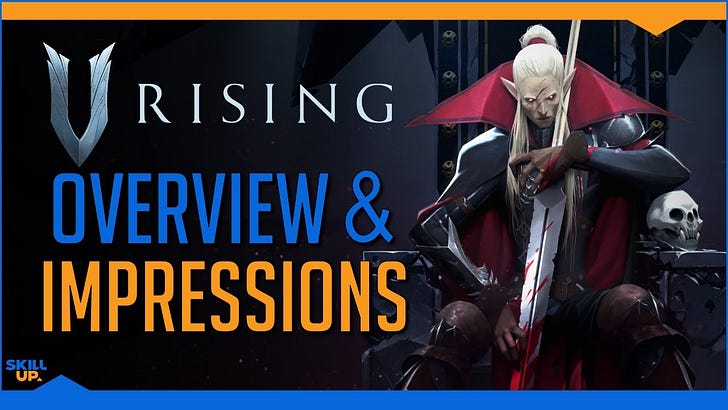
Plus: Look at V Rising Go, Fellow Vampires!
This analysis examines the commercial performance and market trends of the global video game industry for the third week of May 2022, focusing primarily on Steam, console platforms, and the Epic Games Store.
- V Rising became a breakout success in the survival-crafting genre, selling 500,000 units in its first three days and reaching a peak of 94,500 concurrent users on Steam.
- V Rising's launch performance significantly exceeded its pre-launch engagement metrics, which stood at approximately 35,600 Steam followers.
- Arma Reforger and Little Witch in the Woods recorded notable Steam debuts with peak concurrent user counts of 12,300 and 4,350, respectively.
Other Indie Developers Are Not Your Competition
The primary thesis of this analysis is that indie game developers should view creators of similar titles as potential collaborators rather than direct competitors.
- Indie developers should view similar games as collaborative opportunities rather than competition, as players who enjoy a specific genre hook often seek out multiple titles within that niche.
- Collaborating with developers of similar games—such as creating a bundle—can trigger a virtuous cycle of visibility, as seen when the developers of Peglin and Roundguard bundled their games, resulting in a significant spike in sales for Roundguard two years after its initial launch.
- Strategic timing of updates can leverage the marketing momentum of similar games; the developers of Roundguard used a 2.0 update and a Steam visibility round to capitalize on the launch traffic of Peglin.
How Ravenous Devils Made a Killing and Earned Hundreds of Thousands of Dollars
The success of the indie title Ravenous Devils serves as a case study for effective market positioning and Steam visibility strategies for small development teams.
- Ravenous Devils achieved a strong commercial launch with 18,685 sales from wishlists and an additional 42,430 direct purchases, resulting in a 18.4% wishlist conversion rate.
- The developers successfully leveraged a 'hook-driven' strategy by combining popular cooking management mechanics with a distinct horror theme, effectively targeting a specific sub-community rather than attempting broad genre mashups.
- Maintaining a public Steam demo for a year served as a critical 'fish hook' for influencer discovery, leading to significant organic coverage that drove visibility and sustained interest.
How Peglin Made $1,049,413 in 1 Week
The success of the indie game Peglin serves as a case study for effective self-publishing and marketing strategies on Steam.
- Peglin generated over $1 million in its first week by converting 28,419 wishlists into sales, achieving a 38% conversion rate alongside 51,205 non-wishlist purchases.
- The developer utilized a two-year marketing runway, launching a Steam page in 2020 and maintaining a public demo that consistently ranked in Steam's top 20 popular demos by concurrent users.
- Success was driven by high player engagement, evidenced by a median playtime three times longer than the average Steam game and organic community-led modding of the demo.
Plus: A Big Steam Week, With Warhammer 40k & Trek To Yomi Up Next
This analysis examines current and upcoming performance trends for premium PC and console games, utilizing proprietary tracking data to forecast market success.
- The Stanley Parable: Ultra Deluxe achieved immediate commercial success, selling over 100,000 units on Steam within 24 hours and reaching a peak of 21,000 concurrent users.
- Dune: Spice Wars demonstrated strong early market interest for strategy titles, securing 8,000 concurrent users during its Steam Early Access launch.
- Elden Ring and Lego Star Wars: The Skywalker Saga remain the dominant paid downloads across Xbox, PlayStation, and Switch platforms.