
DMA Design
CompanyUnited Kingdom · Founded 1987
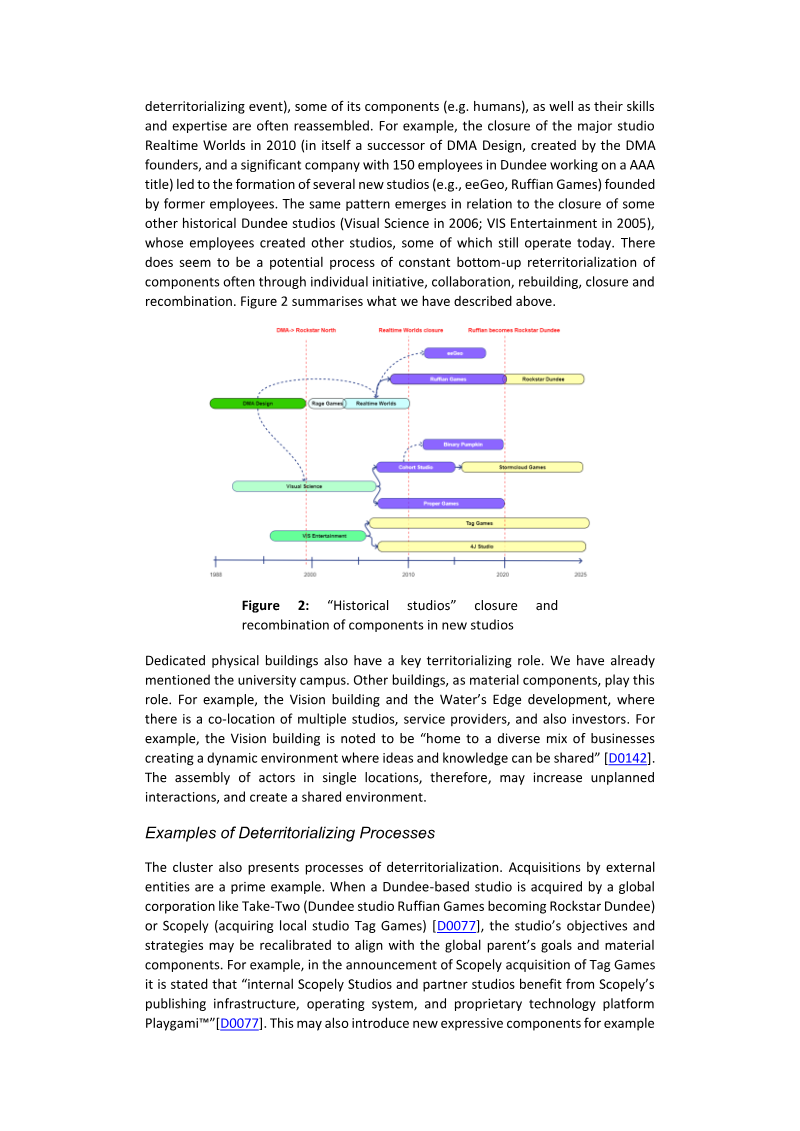
DMA Design was founded in Dundee, Scotland in 1987 by David Jones, soon hiring former classmates Mike Dailly, Russell Kay, and Steve Hammond. During its early years, DMA Design was backed by its publisher Psygnosis, primarily focusing on Amiga, Atari ST and Commodore 64 games.
Connections
Each row is a game or company named alongside DMA Design, each column a document, oldest first. A mark means that document names it. Select a row to see those documents.
About the company
- Founded
- 1987
- Country
- United Kingdom
Company data from IGDB.com
Documents about DMA Design
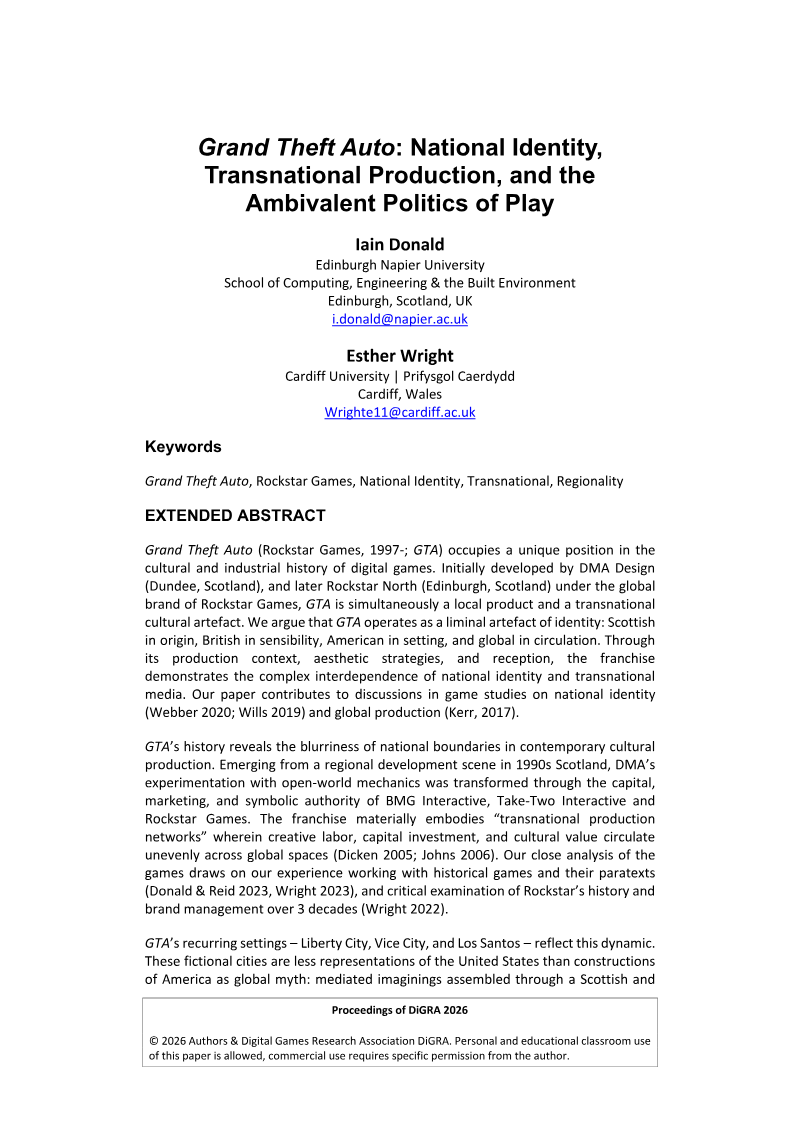
Grand Theft Auto: National Identity, Transnational Production, and the Ambivalent Politics of Play
The document analyzes the Grand Theft Auto (GTA) franchise as a liminal cultural artifact, exploring its complex relationship with national identity, transnational production, and the ambivalent politics of play.
- The Grand Theft Auto franchise is a transnational product, originally developed by DMA Design in Dundee and later by Rockstar North in Edinburgh, with creative labour, capital, and cultural value moving unevenly across borders.
- The authors argue that the series' fictional America is a constructed myth assembled through a Scottish and British lens and drawn largely from mass media imagery, rather than a faithful representation of the United States.
- The paper's central thesis is that the game's appeal lies in ambivalence: players can inhabit an outlaw fantasy of entrepreneurial freedom and transgression while the game simultaneously mocks that fantasy's moral emptiness.
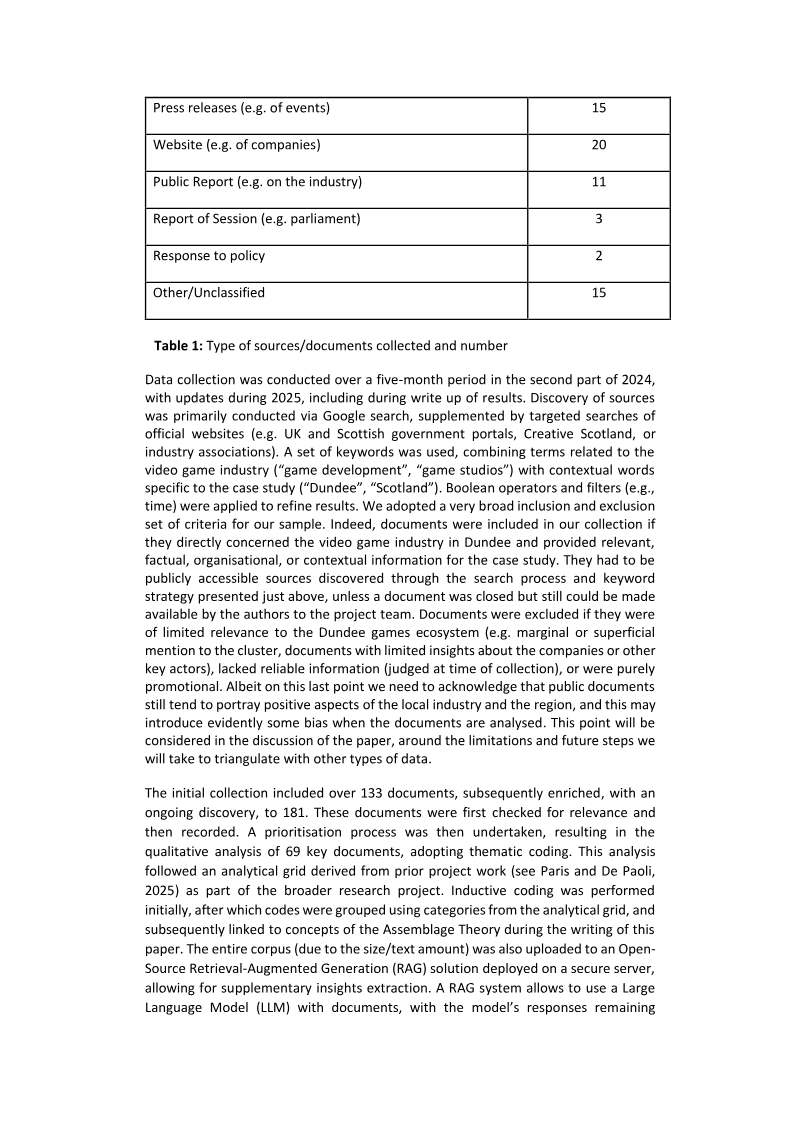
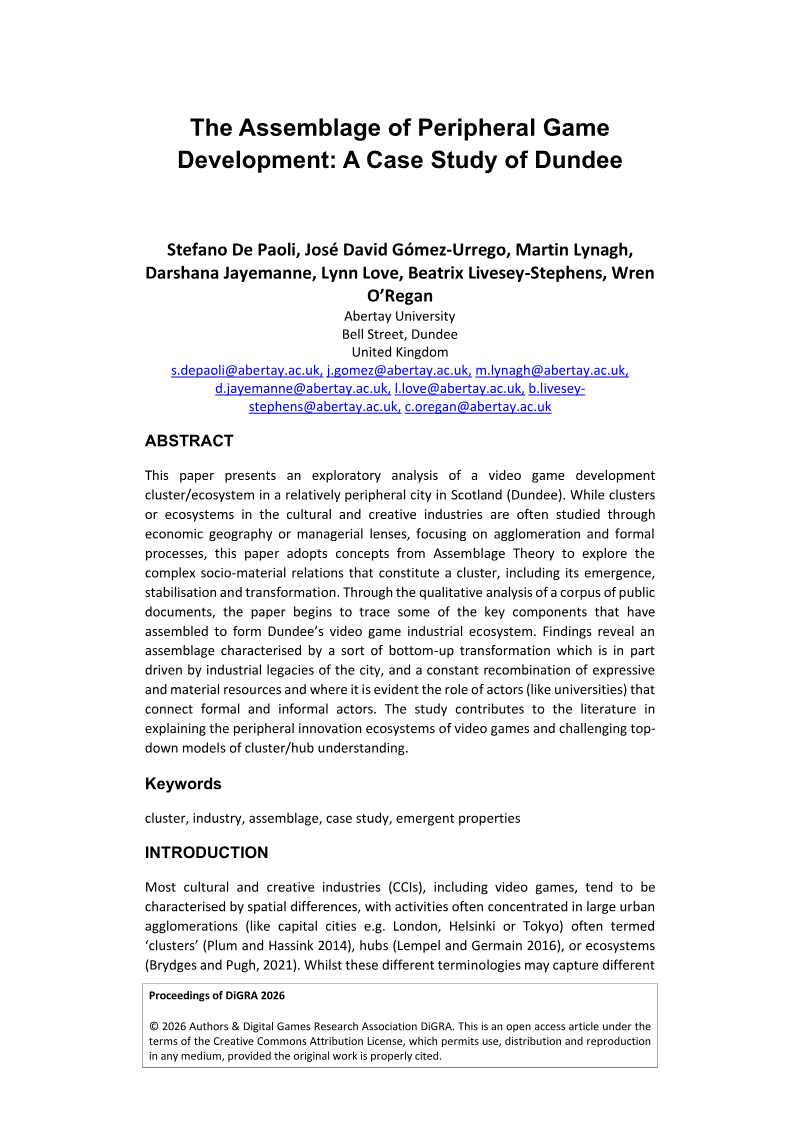
The Assemblage of Peripheral Game Development: A Case Study of Dundee
The Dundee video game development cluster, located in a peripheral Scottish city, represents a compelling case study of bottom-up innovation driven by the constant recombination of socio-material resources.
- Dundee's video game cluster, a post-industrial Scottish city with no major platform holder or dominant multinational publisher, is studied as a case of how peripheral creative industries form, using DeLanda's Assemblage Theory rather than top-down policy as the explanation.
- The cluster comprises around 43 local studios, mostly small and medium-sized enterprises, concentrated within roughly 500 meters of one another.
- Key territorializing forces include DMA Design's founding in 1988 and the launch of Abertay University's games degree in 1997, with Abertay providing a steady talent pipeline and informal coordination.
How Rockstar Fit an Entire City into PlayStation 2 Memory
Mark Brown of Game Maker's Toolkit explains how Rockstar North (then DMA Design) fit Grand Theft Auto III's roughly 130MB Liberty City, about 77MB of models and 45MB of textures, into the PlayStation 2's 32MB of memory.
- Rockstar North enabled a 130-megabyte city to run on the PlayStation 2’s 32-megabyte RAM by implementing a streaming system that loads and unloads assets based on the player's immediate proximity.
- To manage memory efficiency, the engine utilizes level-of-detail (LOD) models that swap low-poly imposters for high-detail assets as the player approaches.
- Dynamic entity memory is controlled by pooling assets, such as restricting the game to only eight resident vehicle types at any given time.

UK Tax Strategy: November 2025
Take-Two Interactive Software maintains a comprehensive tax strategy for its UK subsidiaries for the fiscal year ending March 31, 2026, emphasizing full compliance with the Finance Act 2016.
- Take-Two Interactive’s UK tax strategy for the fiscal year ending March 31, 2026, mandates full compliance with the Finance Act 2016 across all corporate income tax, PAYE, VAT, and customs duties.
- The strategy covers major UK-based development studios including Rockstar, Hangar 13, Gram Games, and NaturalMotion.
- Governance is centralized under the Chief Financial Officer, utilizing external professional advisors to manage risks associated with complex or uncertain tax laws.
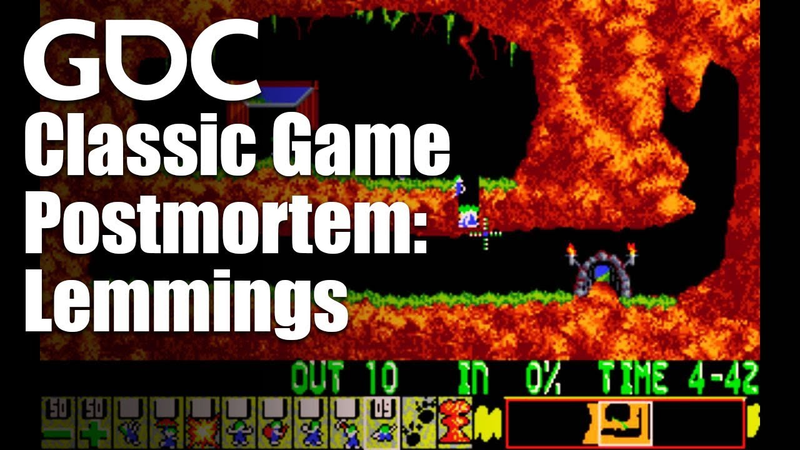
Classic Game Postmortem: Lemmings
The development of Lemmings represents a landmark achievement in early 1990s game design, originating from a desire to create humorous, sprite-based destruction within the severe technical constraints of 8MHz hardware.
- The core gameplay loop of Lemmings was built around the ability to manipulate terrain in real-time, allowing players to use brushes to edit bitmaps and create paths for characters to navigate.
- The game's broad appeal was driven by a carefully tuned difficulty curve, which allowed players of all ages—from five-year-olds to adults—to engage with the content at their own skill level.
- Technical constraints necessitated the 'nuke' feature, a point-cloud animation explosion, which served as a functional way to abort levels while providing a satisfying visual reward for the player.
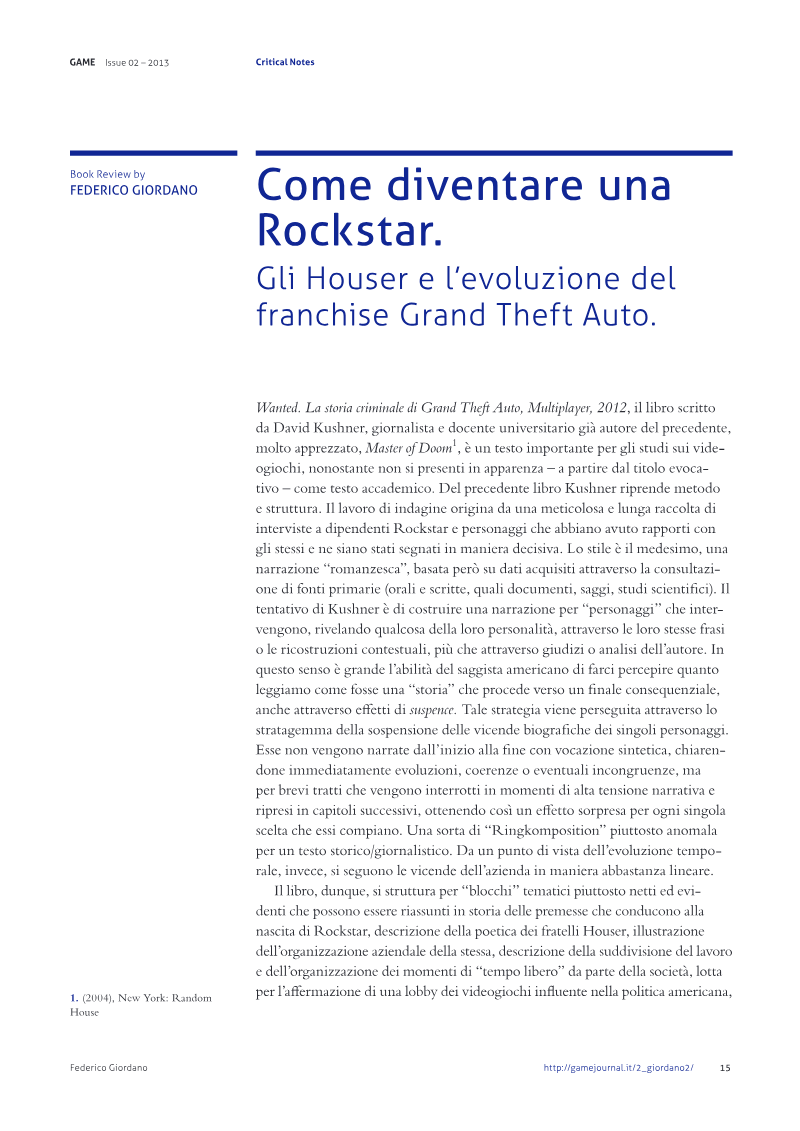
Come Diventare Rockstar: Gli Houser e l'Evoluzione del Franchise Grand Theft Auto
Federico Giordano's 2013 review of David Kushner's Wanted. La storia criminale di Grand Theft Auto (2012) argues that the book, though not framed as academic work, is a valuable contribution to video game studies.
- The review assesses David Kushner's 2012 book "Wanted: The Criminal History of Grand Theft Auto," which examines Rockstar Games, the Houser brothers Sam and Dan, and the development of the GTA franchise, and argues it is an important text for video game studies despite its non-academic framing.
- Kushner's method relies on extensive interviews with Rockstar employees and people affected by the company, combined with primary written sources, and uses a novelistic, character-driven narrative rather than explicit authorial judgment.
- The book identifies two sides to Rockstar's ethos: an idealistic push for artistic freedom, mature realism, a distinctive New York-inflected brand identity, and guerrilla marketing, alongside harsh management, schedules of up to sixteen hours a day, favoritism, and a lawsuit from Rockstar San Diego workers.