August
Company
Documents about August

Firebrand Games' Clive Lawrence explains the team's new puzzle IP Solar Flux
Solar Flux represents a strategic shift for Firebrand Games, moving from a history of developing licensed racing titles for consoles to creating an original intellectual property.
- Firebrand Games is pivoting from licensed racing titles to original IP with the launch of its physics-based space puzzle game, Solar Flux.
- Solar Flux launches on August 15th for iPad 2, 3, 4, and iPad Mini at a premium price point of $2.49 with no in-app purchases.
- The game features 82 missions across four galaxies and 18 themed playlists, utilizing thrust-based mechanics optimized for touch controls.

GungHo's Stock Price Rollercoaster and Hit-Driven Valuations
GungHo Online Entertainment’s financial performance in mid-2013 highlights the inherent volatility of mobile gaming companies heavily reliant on a single hit title.
- GungHo’s stock price dropped nearly 40% between July 29 and August 9, 2013, despite reporting massive year-over-year growth in net income and sales.
- Approximately 85% of GungHo’s total sales are generated by a single title, Puzzle & Dragons, highlighting a critical dependency on one hit product.
- The poor performance of GungHo’s new title, Freak Tower, which ranked #490 in downloads and #424 in grossing in Japan shortly after release, led investors to doubt the company's ability to replicate its success.

Mobile games industry news (w/e 9 August 2013)
The mobile games industry in mid-2013 is characterized by a transition from rapid, unchecked growth to a more competitive, plateauing environment.
- The mobile games industry is transitioning from unchecked growth to a competitive, plateauing environment, forcing companies to pivot toward international, free-to-play models.
- DeNA reported a 10% revenue increase to $526 million in Q2 2013, though operating profits declined due to heavy investment in international expansion and continued reliance on Japanese feature-phone platforms.
- Glu Mobile experienced a 17% revenue drop as it struggled to transition from legacy carrier-based business models to modern free-to-play structures.

Mobile games industry news (w/e 2 August 2013)
The mobile games industry as of early August 2013 is characterized by a strategic shift toward platform-led distribution and the maturation of monetization models.
- Facebook’s mobile game distribution initiative generated 25 million downloads in the second quarter of 2013, signaling a move toward high-volume distribution alongside major partners like Gameloft and Gamevil.
- WeChat is leveraging its 330 million user base to enter the mobile gaming market, launching with four titles including international franchises like Fruit Ninja and Plants vs. Zombies 2.
- Puzzle & Dragons reached one million users in the United States, driving global daily revenues to approximately $5 million.

Game Developers' Life and Consciousness Survey: CEDEC 2013
The Computer Entertainment Developers Conference (CEDEC) 2013 initiative aims to establish a comprehensive understanding of the professional landscape for individuals working within the computer entertainment industry.
- The CEDEC 2013 survey was launched to establish a recurring, data-driven baseline for the computer entertainment industry, covering professional development, skill acquisition, and workplace environments.
- The study methodology involved a structured 42-question questionnaire distributed throughout July 2013 to both CESA members and non-members.
- The survey data is categorized into six core areas: personal background, job roles, corporate affiliation, employment transitions, workplace culture, and long-term career aspirations.


FY2013 First Quarter Financial Results
GREE’s financial results for the first quarter of fiscal year 2013 reveal a period of strategic transition and global expansion.
- GREE reported Q1 FY2013 net sales of 37.9 billion yen, a 25% year-over-year increase despite a 5% sequential decline.
- Operating profit fell 17% sequentially to 15.7 billion yen, driven by higher labor costs and international expansion investments.
- The company is pivoting toward smartphone native applications and leveraging major IP through partnerships with Konami, Square Enix, and NCSoft for titles like Metal Gear Solid and Final Fantasy.
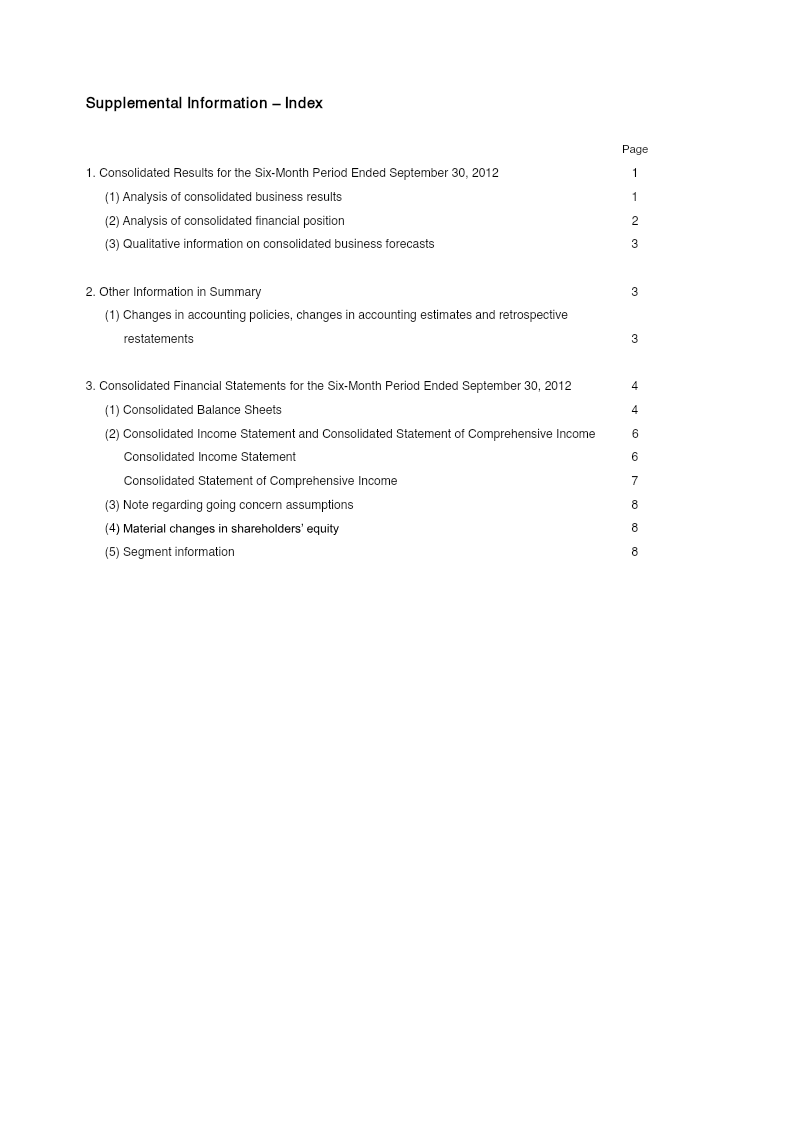
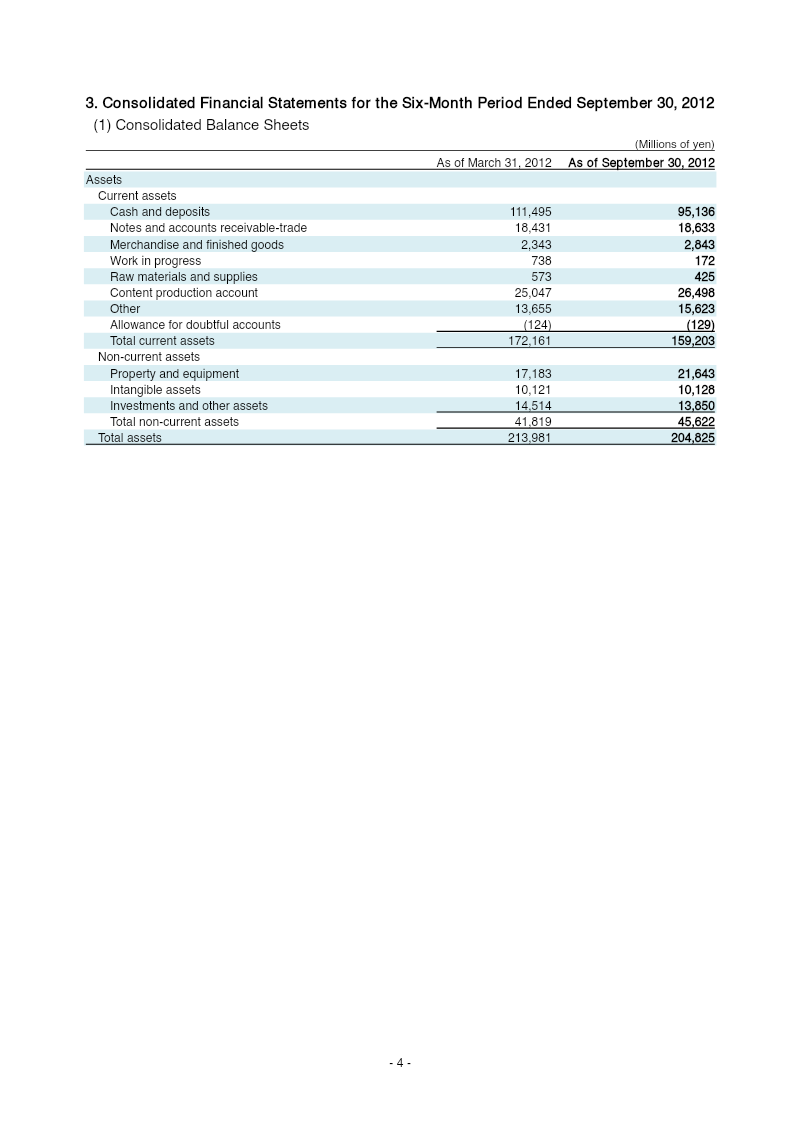
Square Enix Holdings Consolidated Financial Results: Six-Month Period Ended September 30, 2012
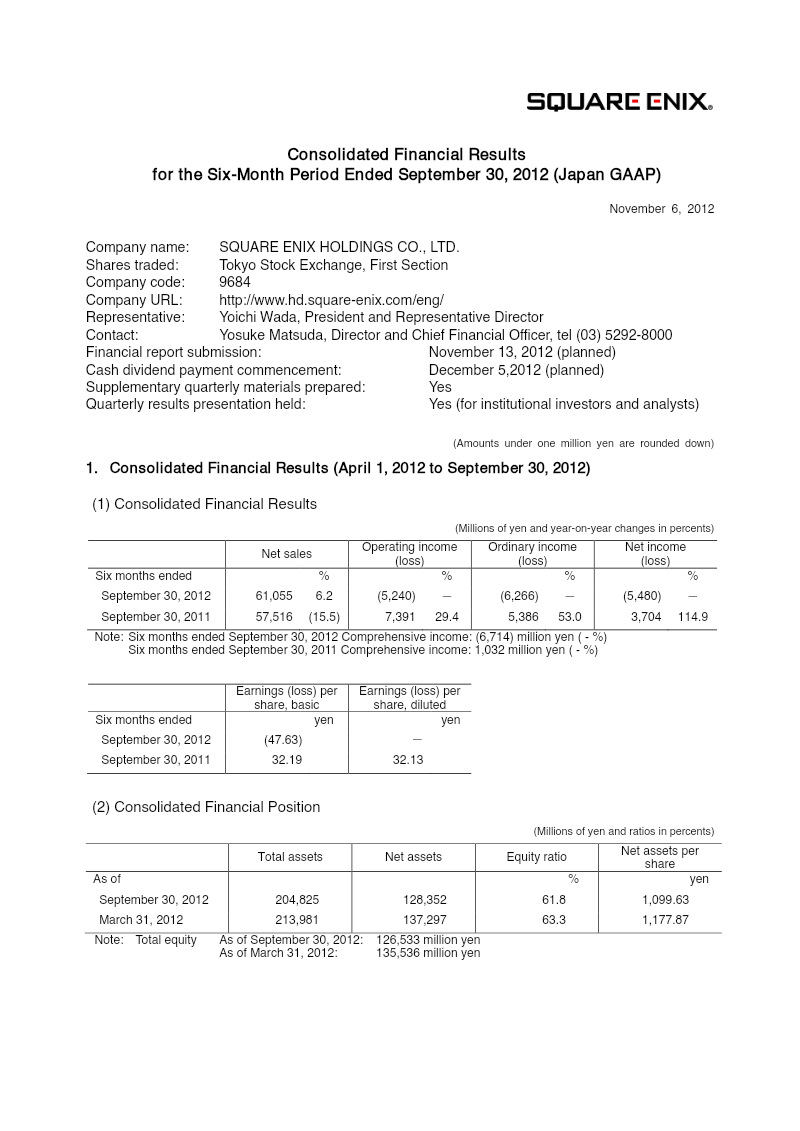
Square Enix Holdings reported a challenging financial performance for the six-month period ended September 30, 2012, characterized by a transition from profitability to a net loss.
- Square Enix reported a net loss of ¥5,480 million for the six-month period ended September 30, 2012, a significant decline from the ¥3,704 million net profit recorded in the same period of 2011.
- Consolidated operating income swung from a profit of ¥7,391 million in 2011 to an operating loss of ¥5,240 million in 2012, despite a 6.2% increase in net sales to ¥61,055 million.
- The Digital Entertainment segment, the company's primary business, recorded an operating loss of ¥2,088 million compared to an operating profit of ¥7,781 million in the prior year, driven by rising development costs for PC and smartphone content.
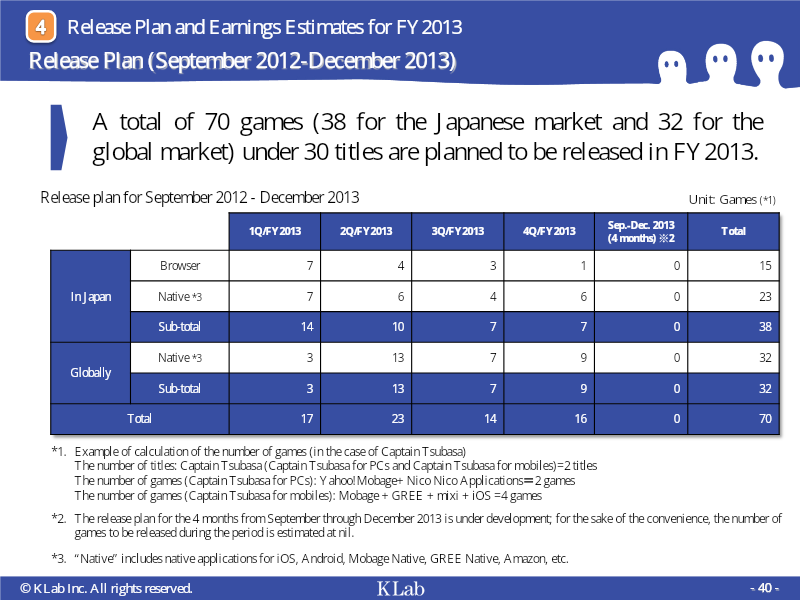

KLab Financial Results Briefing for the Fiscal Year Ending August 2012
KLab experienced substantial financial expansion during the fiscal year ending August 2012, characterized by a 168.5 percent increase in sales and a 192.4 percent rise in operating income.
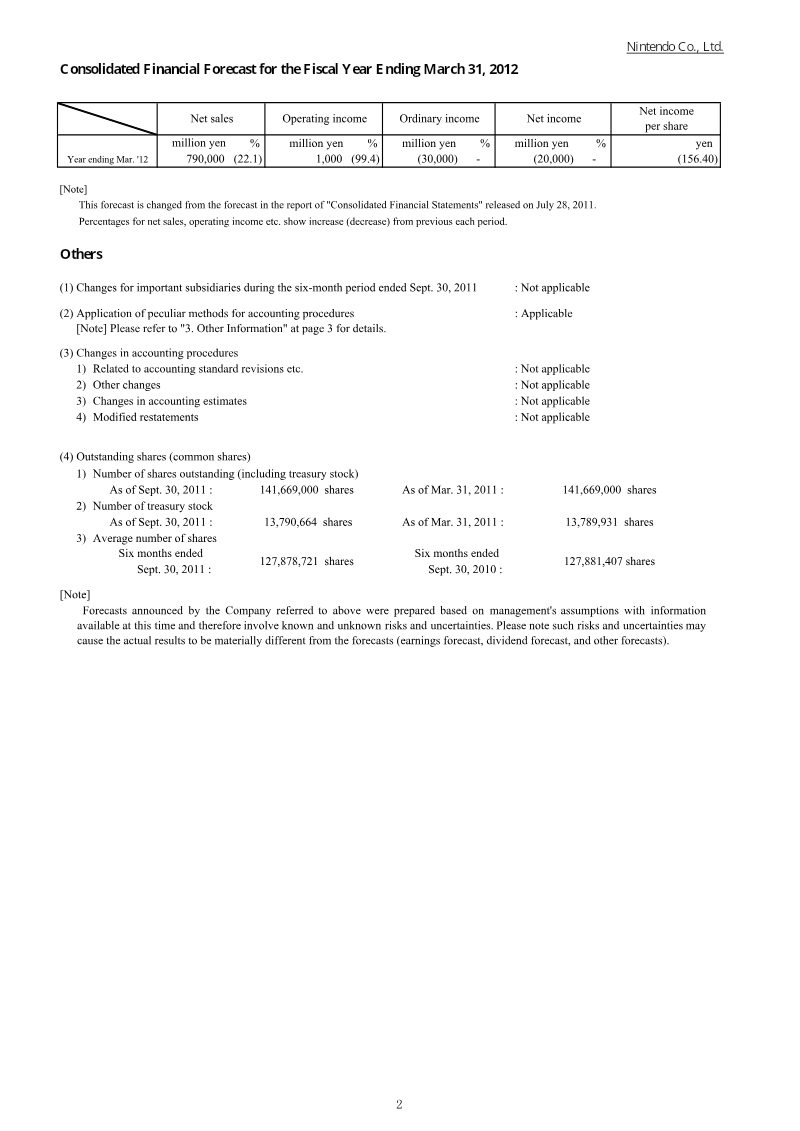
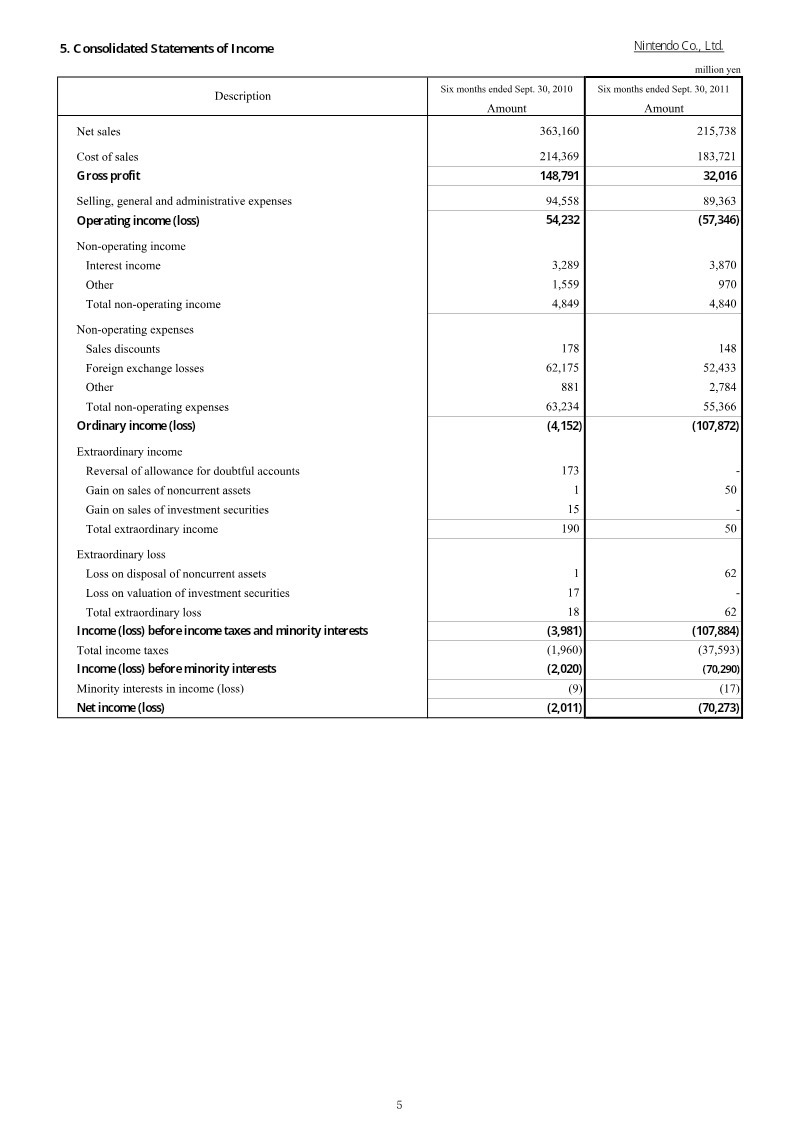
Consolidated Results for the Six Months Ended September 2011
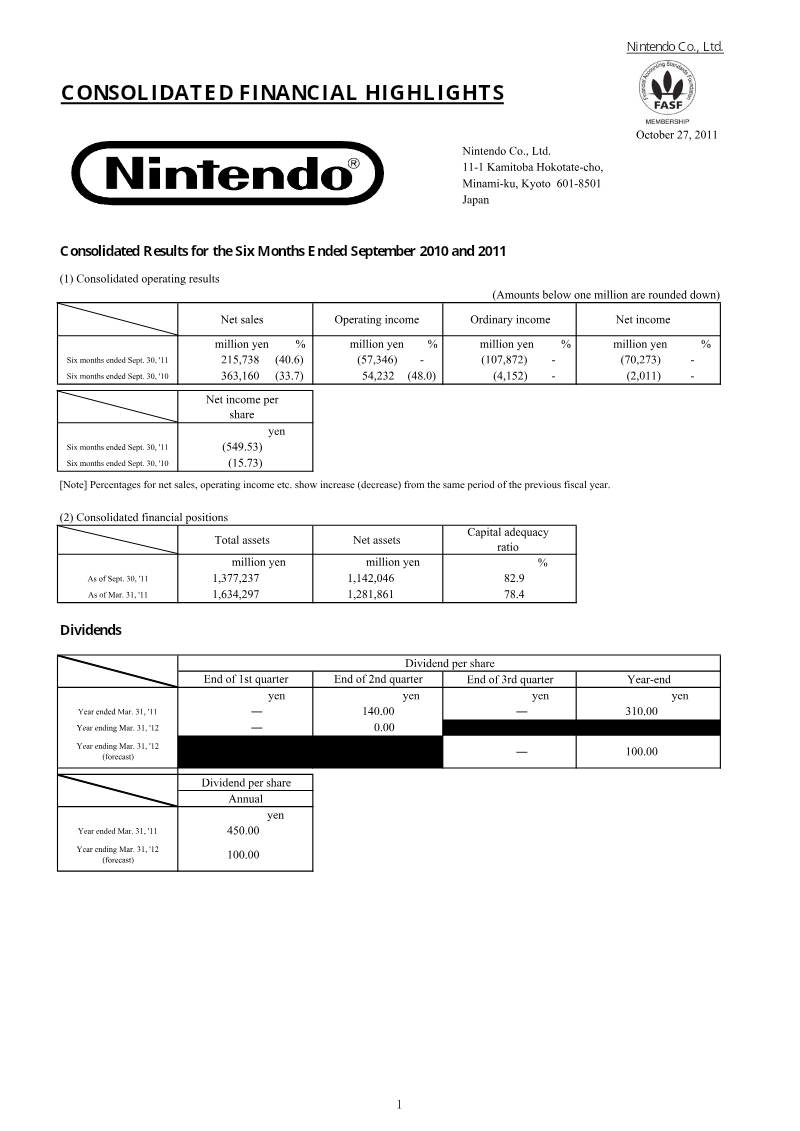
Nintendo’s consolidated financial results for the six-month period ending September 30, 2011, reflect a significant downturn in performance compared to the same period in 2010.
KLab Financial Results Briefing for the Fiscal Year Ended August 2011
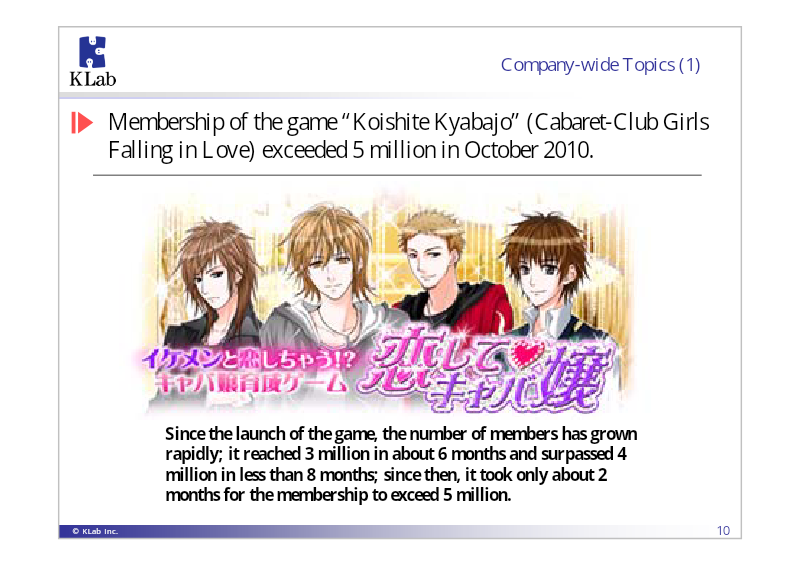
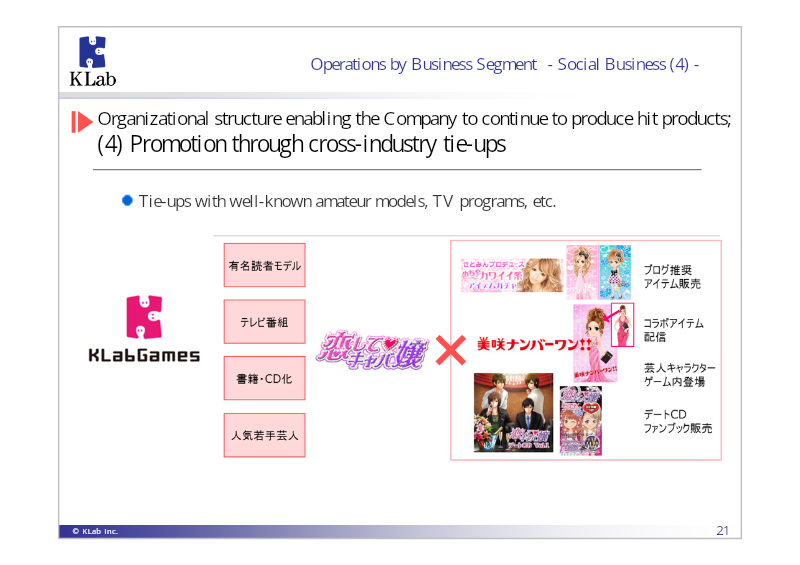
KLab’s financial results for the fiscal year ended August 2011 demonstrate a period of significant growth, characterized by a successful pivot toward the social gaming market.

KLab Unconsolidated Summary Report for Fiscal Year Ended August 2011
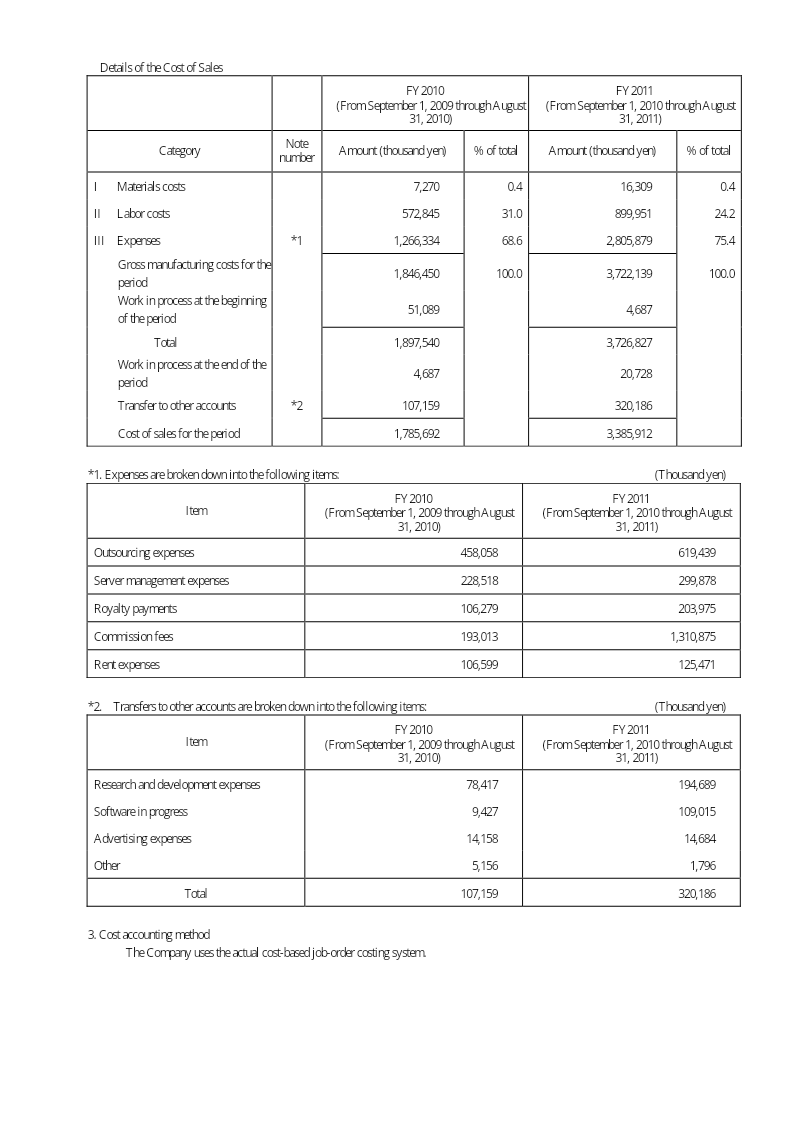
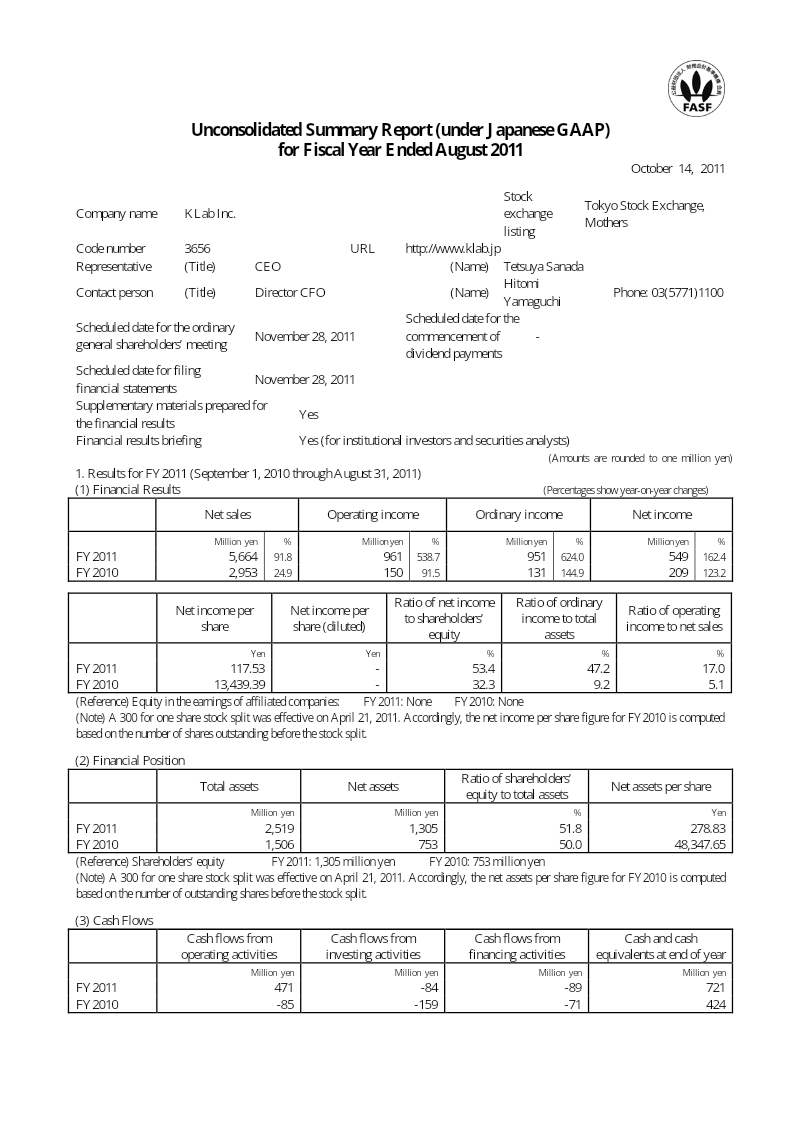
The KLab Inc. Unconsolidated Summary Report for the fiscal year ended August 31, 2011, provides a comprehensive overview of the company’s financial performance and operational standing.
Square Enix Holdings Q1 Fiscal Year Ending March 31, 2010 Results Briefing Session
The Square Enix Holdings results briefing for the first quarter of the fiscal year ending March 31, 2010, outlines the company’s financial performance and strategic integration efforts following the acquisition of Eidos.
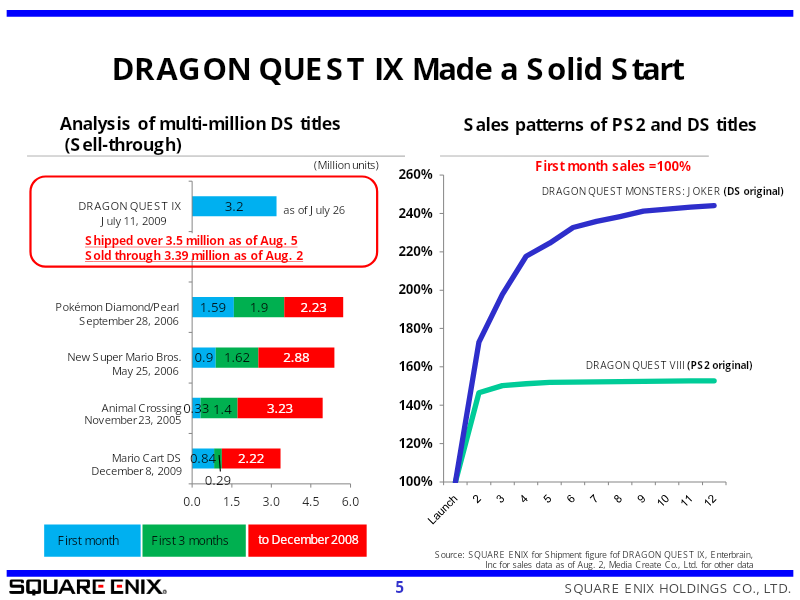
- Dragon Quest IX served as the primary growth driver for the Games segment, achieving over 3.5 million units shipped by early August 2009.
- Square Enix maintained a strong financial position with an equity ratio of 64.7 percent following the acquisition of Eidos, which concluded in April 2009.
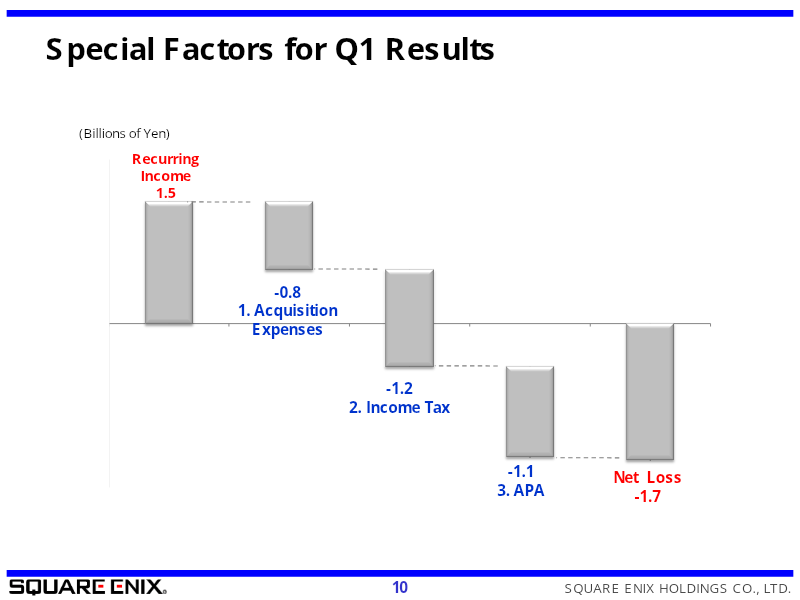
- The Eidos acquisition necessitated specific accounting adjustments, including negative goodwill and evaluation losses, though the company remains optimistic about full-year growth.