Armor Games
Company
8 documents in the library are about Armor Games, from writers such as Thomas Brush, How To Market A Game and PocketGamer.biz. Each has a summary and key insights with the page they come from.
Connections
The documents about Armor Games on the inner ring, the other games and companies they name on the outer one. Select a cover to see it up close and open it in a new tab; drag to move, pinch or Ctrl + scroll to zoom.
Documents about Armor Games

Let's Review Your Games — Ep. 057
Indie game development often hinges on the delicate balance between innovative mechanics and intuitive player guidance.
- Puzzle games must clearly establish gameplay rules and interaction mechanics early on to ensure players feel they have earned their progress rather than having solutions fall into their laps.
- Avoid 'pixel hunting' mechanics where players must randomly hover their mouse over the environment to identify interactive objects; instead, clearly communicate what can be picked up or manipulated.
- The core game loop should start with accessible, intuitive tasks that teach the player the mechanics before introducing more obtuse or complex puzzles in later stages.
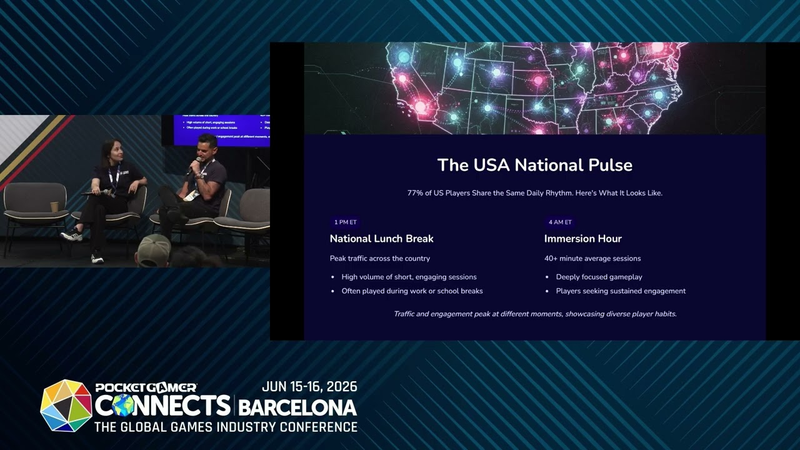
Session: How to Make a Successful Web Game in 2026: What Actually Works - R. Dincer & R. Morgan.
The web gaming industry is undergoing a significant evolution, characterized by increased accessibility and a shift toward higher-fidelity experiences.
- Web games are increasingly viable for developers, with platforms like Crazy Games managing over 5,000 partners and receiving approximately 2,500 game submissions per month.
- Browser-based gaming maintains a strong desktop presence, with desktop users accounting for 65% to 70% of the audience on platforms like Crazy Games.
- Game performance and accessibility are critical for retention, as large, unoptimized projects often lose half their potential audience before the game even starts.
Annual Inside Conference Report: 2026
The 2026 analysis of the indie title Void Miner serves as a case study for the viability of "middle games"—projects that prioritize rapid development cycles and clear genre tropes over viral potential.
- Void Miner, an 'Asteroids meets incremental roguelike' game, achieved 10,000 sales in its first 12 days and converted 22% of its 8,449 launch wishlists, demonstrating strong conversion for a 'middle game' that didn't go viral.
- The game's success is attributed to its 'consumable' genre (incremental/roguelike/spaceship), which players readily purchase and move on from, similar to idle or horror games, leading to high conversion rates.
- Void Miner was developed by a solo developer, RyanJakob, over 7 months, with 6 months dedicated to marketing, utilizing free pixel art assets and contracting only for music and capsule art.

Let's Review Your Games — Ep. 050 (Part 2)
The indie title Time to Wake Up demonstrates significant potential through its strong artistic direction and atmospheric world-building, yet it currently struggles with fundamental design flaws that hinder player engagement.
- The game's core engagement is severely hindered by a five-minute unskippable introductory sequence that delays the introduction of the central time-shifting mechanic.
- The current on-rails structure limits player agency and creates a disconnect between the player and the narrative, necessitating a more immediate emotional through-line.
- Technical issues with the character controller, specifically slippery physics and improper height scaling, must be addressed to improve immersion.

How To Actually FINISH & SELL Your Indie Games (Webinar & Q&A)
The successful completion and commercialization of indie games depend on a strategic synthesis of personal creative passion and objective market viability.
- To ensure a game is viable and marketable, developers should release a demo early to track key performance metrics like wishlists, streamer interest, and audience engagement.
- Developers should scale down project scope by focusing on a single core mechanic and aesthetic to increase the likelihood of actually finishing the product.
- Before fully fleshing out a game, conduct private beta testing with a small group of users to gather critical feedback and identify technical issues early in the development cycle.

Let's Review Your Games — Ep. 037 (Part 2)
Independent game development in 2024 requires a strategic balance between technical polish and high-concept marketability.
- To maximize streamability and viral potential, indie games should incorporate high-stakes mechanics such as permadeath, intense difficulty, or horror elements that encourage streamer engagement.
- Visual clarity in puzzle games is essential; UI elements with different behaviors must be visually distinct, and sprite assets require proper import settings to ensure a crisp, high-quality appearance.
- Game developers should utilize environmental storytelling and lighting to establish mood, as seen in the effective use of dark, atmospheric lighting in 'The Hambagu Shop'.
Developing In The Flash Era
The era of Flash gaming served as a foundational training ground for many contemporary independent game developers, providing a rapid, iterative environment that facilitated professional growth.
- The Flash era (late 2000s to early 2010s) acted as a critical incubator for modern indie development by providing a low-barrier environment for rapid prototyping and iterative design.
- Platforms like Newgrounds and FGL (Flash Game License) enabled developers to build professional portfolios and secure funding through direct sponsorship models.
- Publishers such as Armor Games and various portal sites monetized the ecosystem by paying developers to integrate branding into games, using the titles as traffic-driving advertisements.

How To Get Screwed By A Game Publisher
Navigating game publishing agreements requires extreme caution to avoid predatory practices that can strip developers of their intellectual property and revenue.
- Prioritize gross revenue deals over net revenue models to prevent publishers from eroding profits through vague overhead deductions and recoupment strategies.
- Retain full ownership of intellectual property and merchandise rights by granting publishers only a license to sell the game rather than selling the IP outright.
- Mandate that the only allowable deductions from gross revenue are the standard platform fees charged by storefronts such as Steam, PlayStation, or Xbox.