Mobile Games
The mobile market by genre, from hypercasual and puzzle to midcore and idle.
403 documents

Newzoo · 2017
ReportGlobal Mobile Market Report 2017
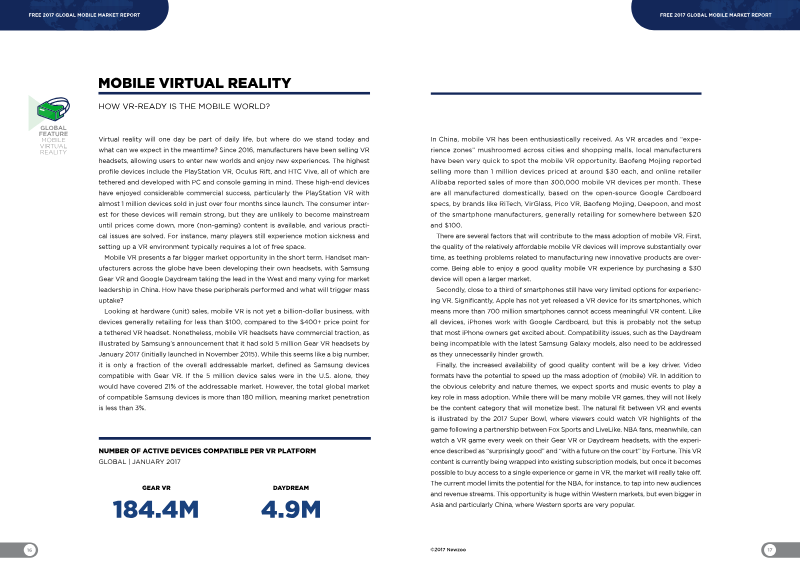
The global mobile market is undergoing a period of rapid expansion, with the total number of smartphone users projected to climb from 2.3 billion in 2016 to 3.6 billion by 2020. This growth is primarily fueled by the Asia-Pacific region, which serves as the central engine for device adoption. As the ecosystem matures, the competitive landscape for hardware is shifting; while Apple and Samsung maintain their status as industry leaders, Chinese manufacturers are aggressively increasing their market share and influence. Simultaneously, the app economy is experiencing significant financial growth, with total revenues expected to reach $85 billion by 2020. Although mobile games currently dominate the sector, accounting for 82% of the $56.4 billion in projected 2017 revenue, non-game applications are steadily capturing a larger portion of the market. The distribution of mobile content is also evolving as the traditional duopoly held by Apple’s App Store and Google Play faces mounting pressure. Alternative app stores, the rise of instant apps, and various geopolitical factors are forcing a diversification of distribution models. While mobile virtual reality remains a point of interest, its commercial viability is currently constrained by hardware fragmentation and a scarcity of high-quality, event-based content. These challenges underscore the necessity for developers to leverage sophisticated technical tools to maintain a competitive edge. To navigate this complex environment, publishers are increasingly relying on specialized service providers for app intelligence, player analytics, and SDK management. Platforms such as Priori Data, DeltaDNA, Pushwoosh, and SafeDK provide the essential infrastructure required to optimize engagement and monetization. By utilizing these data-driven insights and technical management solutions, stakeholders can better address the demands of a global user base and improve the performance of their mobile applications in an increasingly crowded marketplace.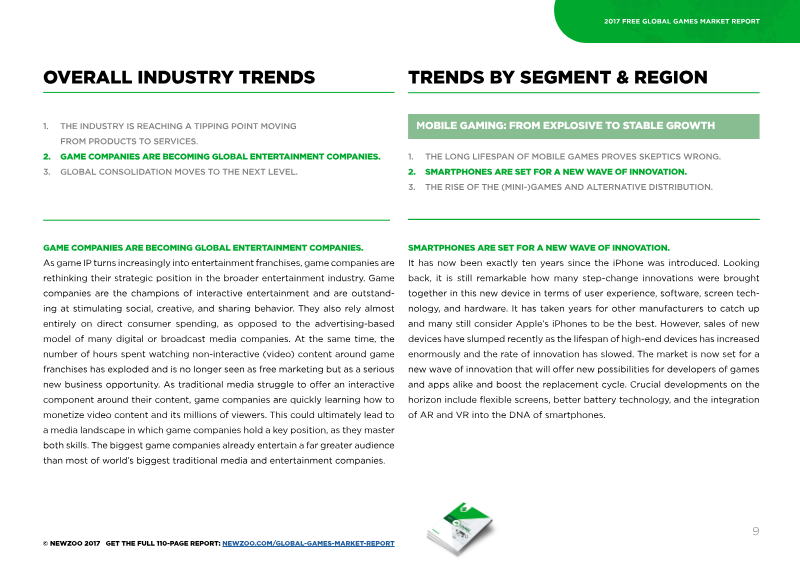

Newzoo · 2017
Report2017 Global Games Market Report
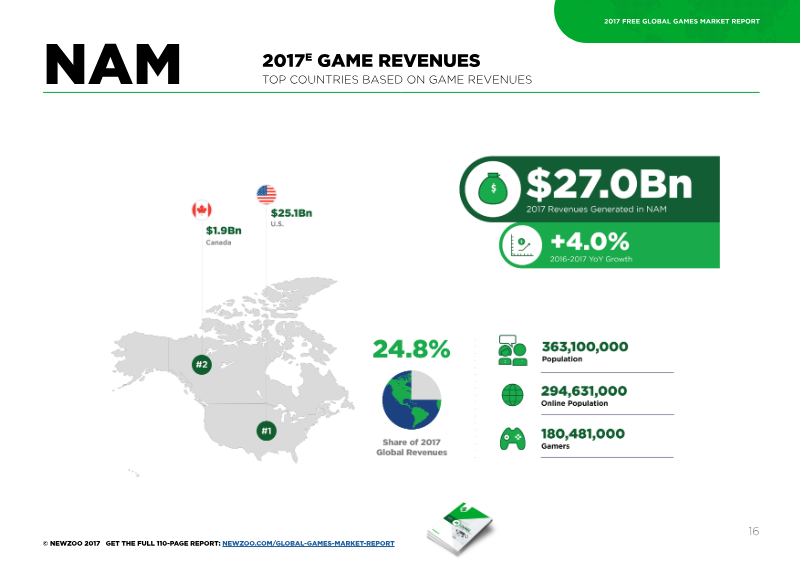
The 2017 Global Games Market Report analyzes the state of the interactive entertainment industry, identifying a pivotal shift toward a "games-as-a-service" model. The primary thesis posits that the traditional distinction between developers, publishers, and consumers is dissolving as gaming evolves into a comprehensive entertainment ecosystem. This transformation is characterized by the rise of "game enthusiasts"—a broader demographic that engages with content through playing, viewing, and creating, rather than solely through active gameplay. The industry reached a significant milestone in 2017, with global revenues surpassing $100 billion to reach $108.9 billion. Mobile gaming remains the dominant segment, accounting for 42% of total market revenue and 2.1 billion players, with projections indicating it will capture 50% of the market by 2020. Conversely, PC browser and boxed/downloaded PC games are experiencing a slight decline as consumers transition toward mobile platforms. Geographically, the Asia-Pacific region leads the market, generating $51.2 billion—nearly half of the global total—followed by North America at $27 billion. Methodologically, these findings are derived from a proprietary predictive analytics model that synthesizes data from over 100 public and private companies, continuous behavioral tracking of 10 million PC gamers, and device usage metrics from over one billion mobile devices. The research also incorporates primary consumer surveys across 28 countries involving 80,000 respondents. The report concludes that as game companies increasingly adopt service-based business models and integrate interactive elements into broader media landscapes, they are effectively positioning themselves as the primary architects of the world's most popular form of entertainment.

Newzoo · 2016
ReportChina Mobile Market Update: November 2016
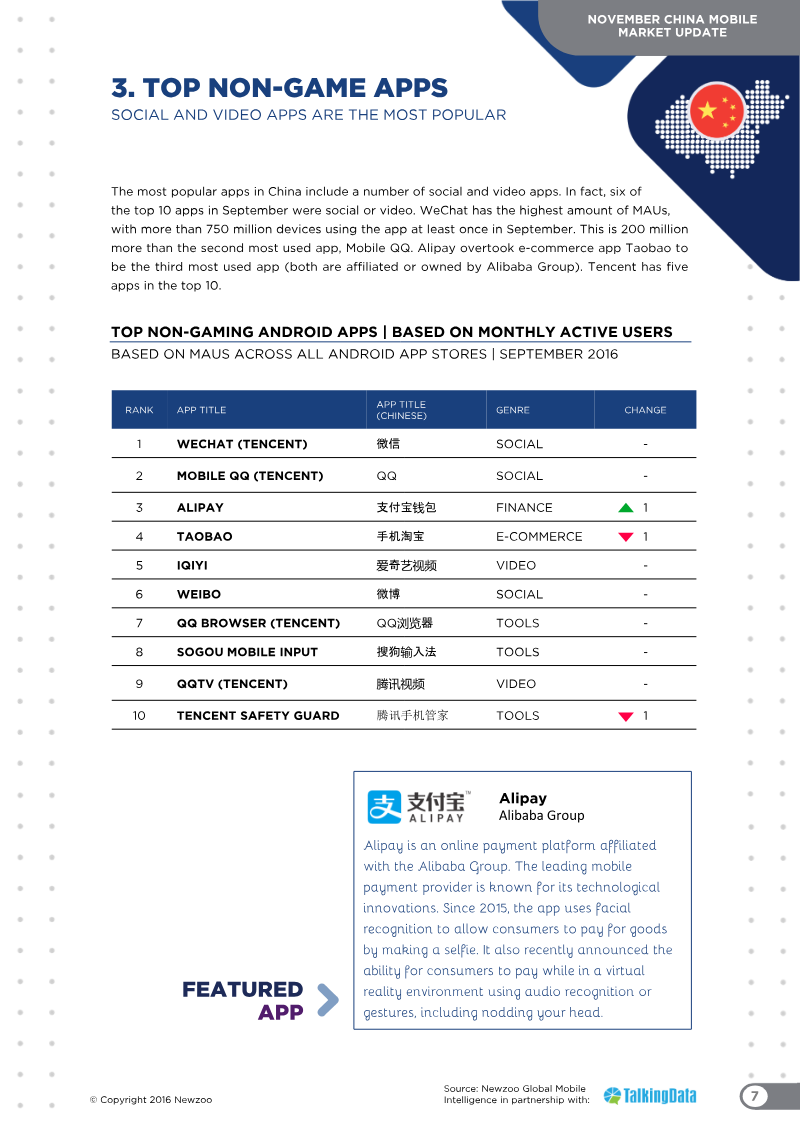
The November 2016 China Mobile Market Update provides a comprehensive analysis of the Chinese mobile ecosystem, focusing on device market share, app store performance, and top-grossing applications for September 2016. The report serves as a strategic intelligence resource for companies navigating the Chinese market, utilizing data derived from a monthly sample of 350 million iOS and Android devices in partnership with TalkingData. In the hardware sector, Apple maintained its position as the leading mobile brand with a 23.6% market share, despite a decline from the previous month. Huawei and Xiaomi followed as the top Android manufacturers, while OPPO secured the fourth position, displacing Samsung. Within the Android app store landscape, Tencent’s Myapp remained the market leader with 24% coverage. Notably, Wandoujia experienced significant growth in both coverage and monthly active users following its acquisition by Alibaba. The application market remains heavily influenced by social and video platforms, with WeChat leading the non-gaming category with over 750 million monthly active users. In the gaming sector, Tencent and NetEase dominated revenue rankings across both Android and iOS platforms. Tencent’s King of Glory maintained its status as the top-grossing Android title, while NetEase’s newly released Onmyoji achieved immediate commercial success, ranking among the top-grossing games on iOS within its first month of release. The report also highlights the consolidation of the ride-hailing market, specifically the acquisition of Uber China by Didi Chuxing. This merger reflects the broader trend of high-cost competition in the Chinese mobile space, where market dominance is increasingly driven by massive user acquisition and strategic investment. These findings underscore a highly competitive, rapidly evolving environment where local giants continue to command the majority of user engagement and revenue.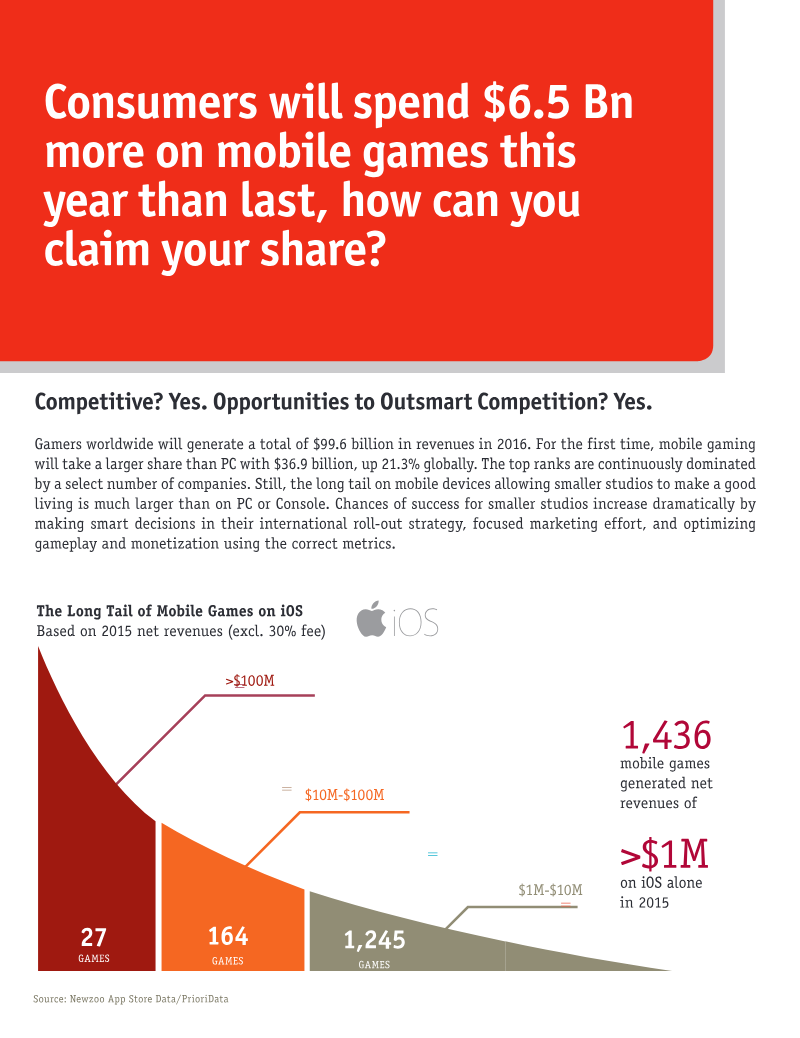

Newzoo · 2016
ReportCasual Games Sector Report 2016: How to Compete in the Crowded Marketplace
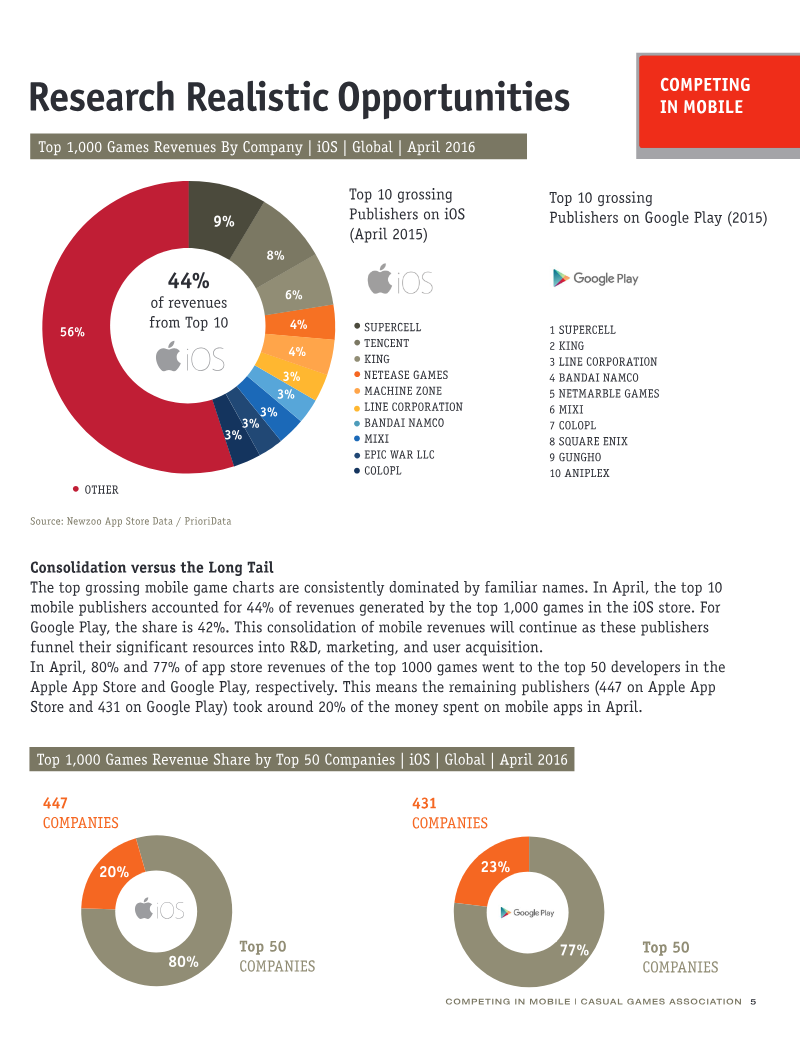
The 2016 Casual Games Sector Report provides a strategic analysis of the global mobile gaming landscape, focusing on how smaller studios can navigate a highly consolidated and competitive marketplace. The central thesis posits that while the mobile sector is dominated by a small group of top-tier publishers, developers can achieve success by utilizing precise market intelligence, optimizing international roll-out strategies, and applying rigorous, non-average performance metrics to their business models. The industry is experiencing significant growth, with global gaming revenues projected to reach $99.6 billion in 2016. Mobile gaming has surpassed PC as the leading segment, generating $36.9 billion—a 21.3% year-over-year increase. This growth is heavily concentrated in the Asia-Pacific region, with China alone contributing $2.9 billion in new revenue. Despite this expansion, market consolidation remains a defining feature; the top 10 mobile publishers account for approximately 44% of revenues on iOS and 42% on Google Play, while the top 50 developers capture roughly 80% of total app store revenue. Methodologically, the report synthesizes global market revenue projections with granular app store data, demographic profiling of high-spending users, and performance benchmarks. It emphasizes that relying on average industry metrics is insufficient for profitability, advocating instead for the use of 75th-percentile benchmarks to set realistic targets for retention and monetization. By analyzing specific regional data—such as conversion rates in Switzerland or device penetration in Australia—the report illustrates how developers can move beyond generic strategies to identify niche opportunities. Ultimately, the findings suggest that success in the crowded mobile sector requires a data-driven approach that integrates global market trends with localized, platform-specific optimization.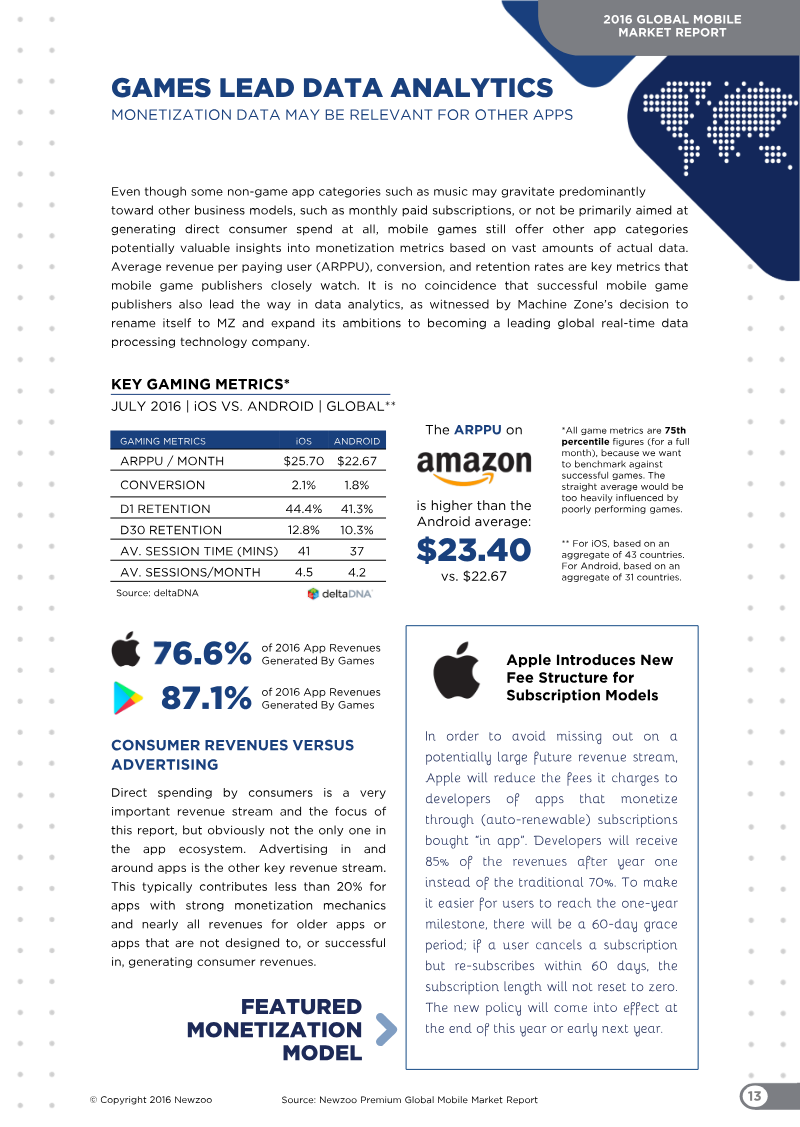
Newzoo · 2016
Report2016 Global Mobile Market Report: Q4 2016
The global mobile market is undergoing a period of rapid expansion, with consumer spending on applications projected to nearly double from $44.8 billion in 2016 to $80.6 billion by 2020. While mobile gaming currently serves as the primary revenue driver, the industry is shifting toward a more diversified ecosystem where non-gaming categories such as entertainment, music, and social networking are experiencing faster growth rates. This evolution is supported by a global base of 3 billion active smartphones and tablets, with the Asia-Pacific region accounting for nearly half of the world’s 2.3 billion smartphone users. Geographically, China has solidified its position as the world’s largest app market, surpassing the United States in total revenue and maintaining a unique ecosystem defined by a dominant Android presence and reliance on third-party app stores. Meanwhile, emerging regions like the Middle East and Africa are poised for significant expansion, with a projected compound annual growth rate of 42.6% through 2020. India is also emerging as a critical growth engine, expected to become the second-largest mobile market globally. Across these regions, the widespread adoption of mobile payment systems among millennials is fundamentally altering monetization strategies. Success in this competitive landscape requires granular, data-driven benchmarking. Metrics such as conversion, retention, and average revenue per daily active user vary significantly by region, genre, and platform, necessitating a nuanced approach to consumer insights. The 2016 market landscape was particularly influenced by the transformative success of titles like Pokémon GO, which demonstrated an unprecedented ability to capture both casual and hardcore audiences. As the market matures, the integration of proprietary analytics and strategic industry partnerships remains essential for navigating the complexities of global mobile device preferences and localized consumer behavior.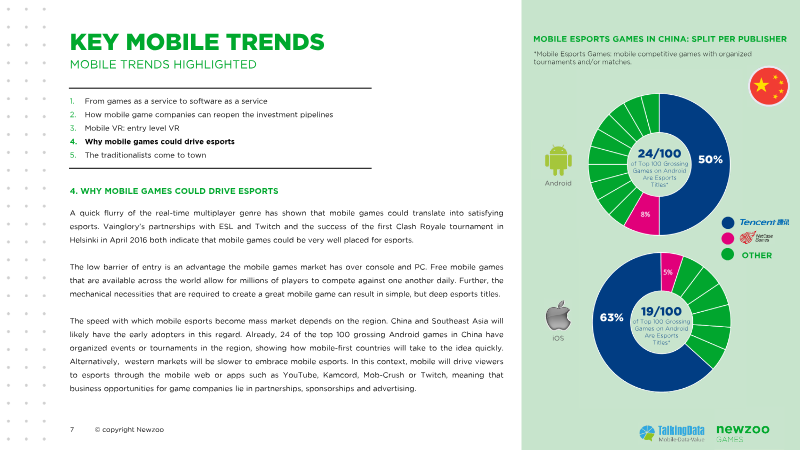

Newzoo · 2016
Report2016 Global Games Market Report: An Overview of Trends & Insights
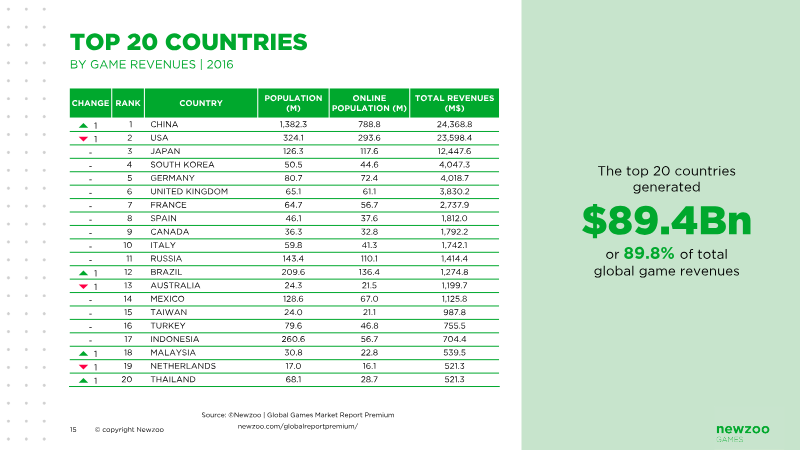
The 2016 Global Games Market Report provides a comprehensive analysis of the international gaming landscape, offering revenue projections and trend forecasts for the 2015–2019 period. The primary thesis posits that the industry is undergoing a fundamental shift toward community-centric engagement, where gaming has evolved into a primary form of entertainment that transcends traditional hardware boundaries. By synthesizing proprietary data with external research, the report evaluates market performance across various geographic regions, device segments, and screen types. Key findings indicate that the global games market reached $99.6 billion in 2016, representing an 8.5% year-on-year growth. The Asia-Pacific region remains the dominant market, accounting for 47% of global revenues and experiencing 10.7% growth. Mobile gaming emerged as a critical driver, generating $36.9 billion—or 37% of the total market—with a significant 21.3% year-on-year increase. While virtual reality is identified as a significant technological development, the analysis concludes that its near-term financial impact will be marginal, with revenues largely absorbed into existing PC, console, and mobile segments. The report highlights the rising influence of esports, noting that traditional media companies are increasingly investing in the sector to capture millennial audiences. Furthermore, the data reveals a trend toward "games as a service," where developers prioritize community management and live-streaming integration. The top 20 countries, led by China and the United States, account for nearly 90% of total global game revenues. The methodology relies on a multi-source data aggregation approach, providing a granular look at market segments, including smartphone, tablet, handheld, and PC/console gaming, to assist industry stakeholders in strategic decision-making.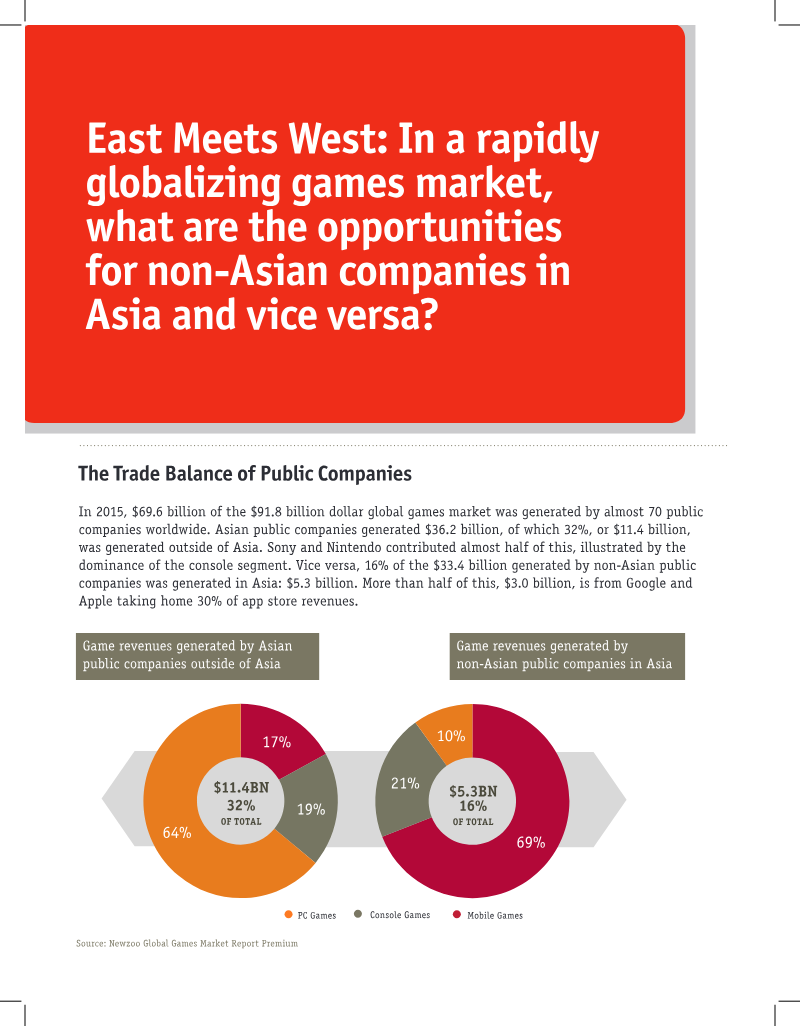

Newzoo · 2016
ReportThe Asian Games Market: Casual Games Sector Report 2016
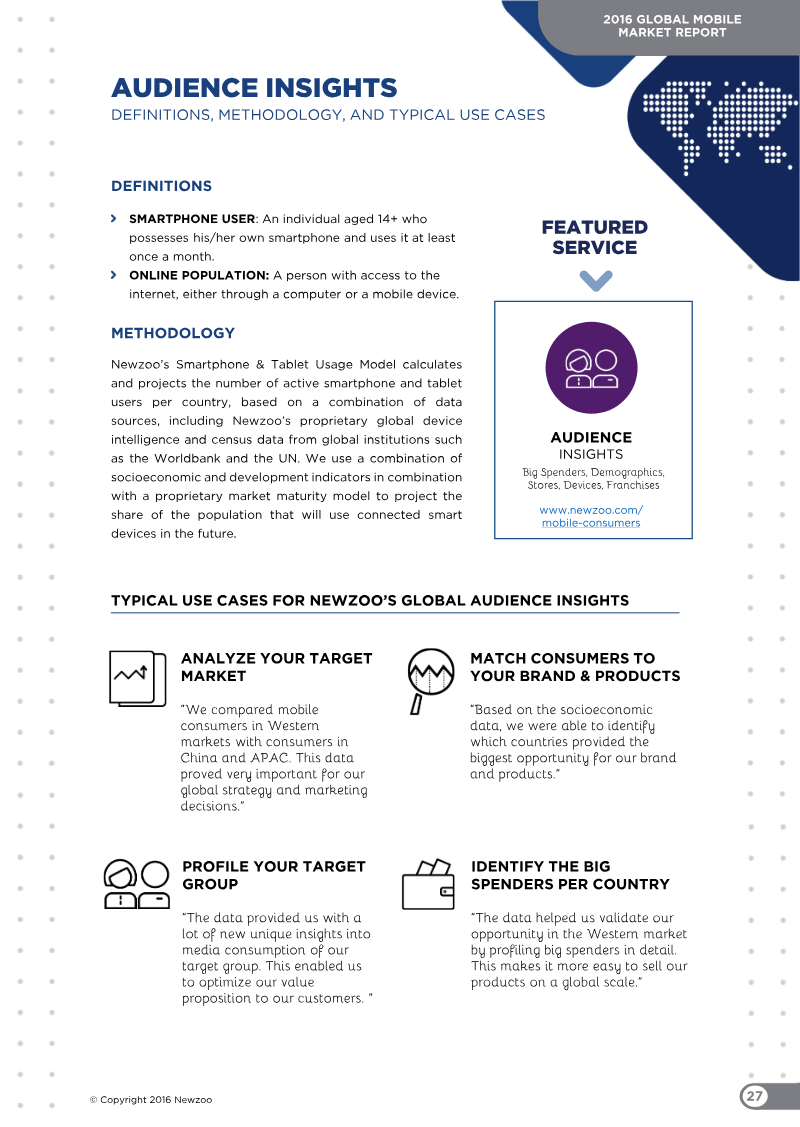
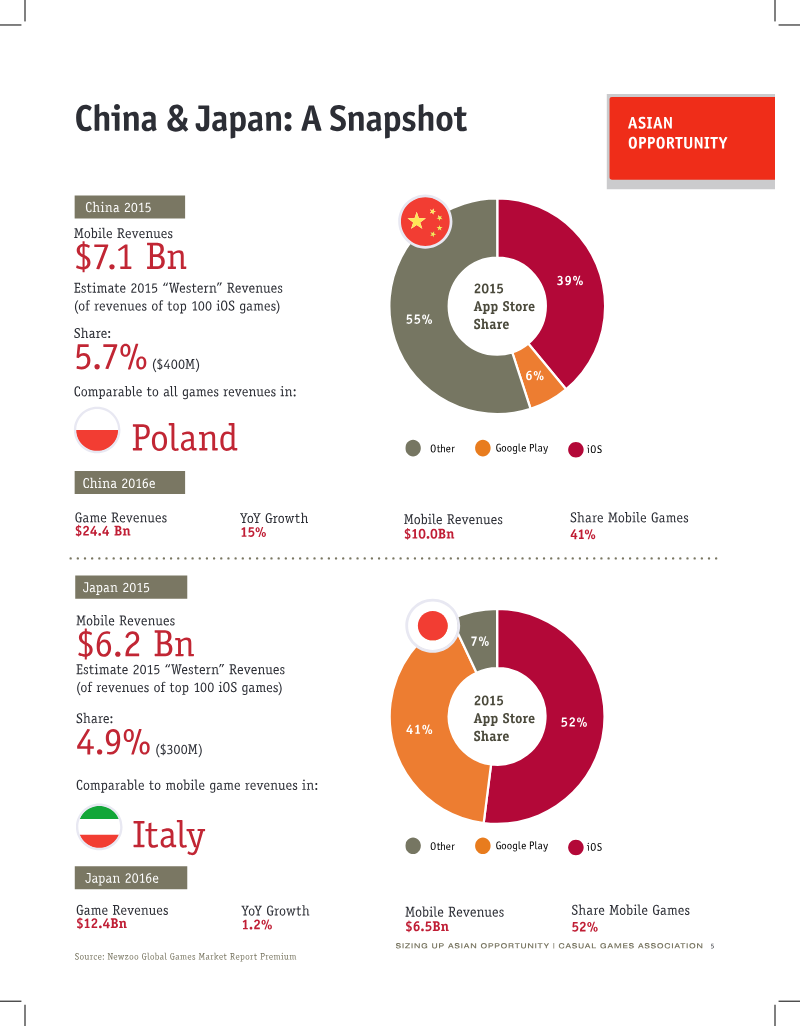
The 2016 Casual Games Sector Report provides a comprehensive analysis of the Asian gaming landscape, emphasizing its critical role in the global market. The primary thesis posits that Asia represents a dominant force in the industry, particularly within the mobile sector, while highlighting the significant, yet often challenging, trade balance between Asian and Western game companies. The report serves as a strategic guide for industry stakeholders to understand regional growth trends, revenue distribution, and the competitive positioning of major public companies. Key findings indicate that in 2016, key Asian markets—specifically China, Japan, South Korea, and Greater Southeast Asia—accounted for $45 billion in game revenues, representing 45% of the global total. Mobile gaming is identified as the primary growth engine, with these regions generating 55% of global mobile game revenues. While smartphone gaming leads in revenue share across these combined markets, regional preferences vary significantly; for instance, console gaming remains a dominant force in Japan, whereas mobile platforms command over half of the revenue in Southeast Asia. The analysis utilizes data from the Newzoo Global Games Market Report, focusing on public company financial performance and regional market metrics. The scope covers the 2015–2016 period, examining the interplay between Asian and non-Asian public entities. The report highlights that while Asian companies have successfully expanded their global footprint, Western companies face barriers to entry in Asia, with a relatively small percentage of their revenues derived from the region. The report concludes by profiling high-growth Asian firms like Tencent, NetEase, and Mixi, illustrating how mobile-first strategies and localized content are driving rapid expansion and shaping the future of the global gaming ecosystem.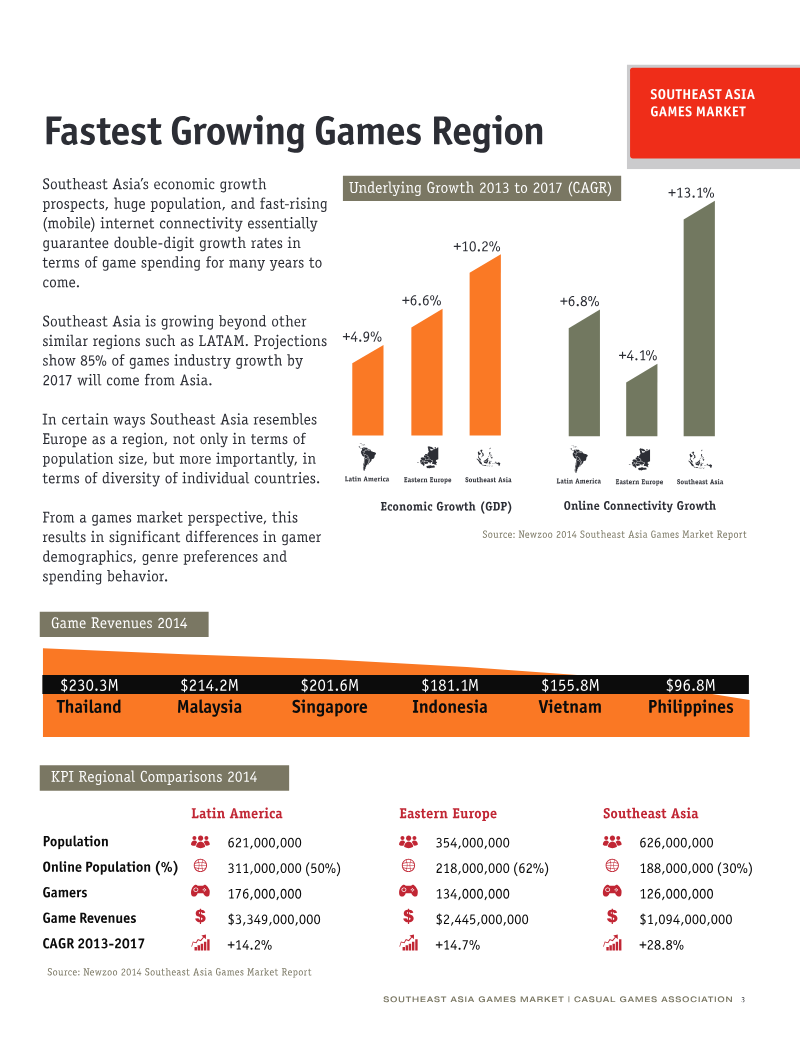
Newzoo · 2015
ReportCasual Games Sector Report: Southeast Asia 2015
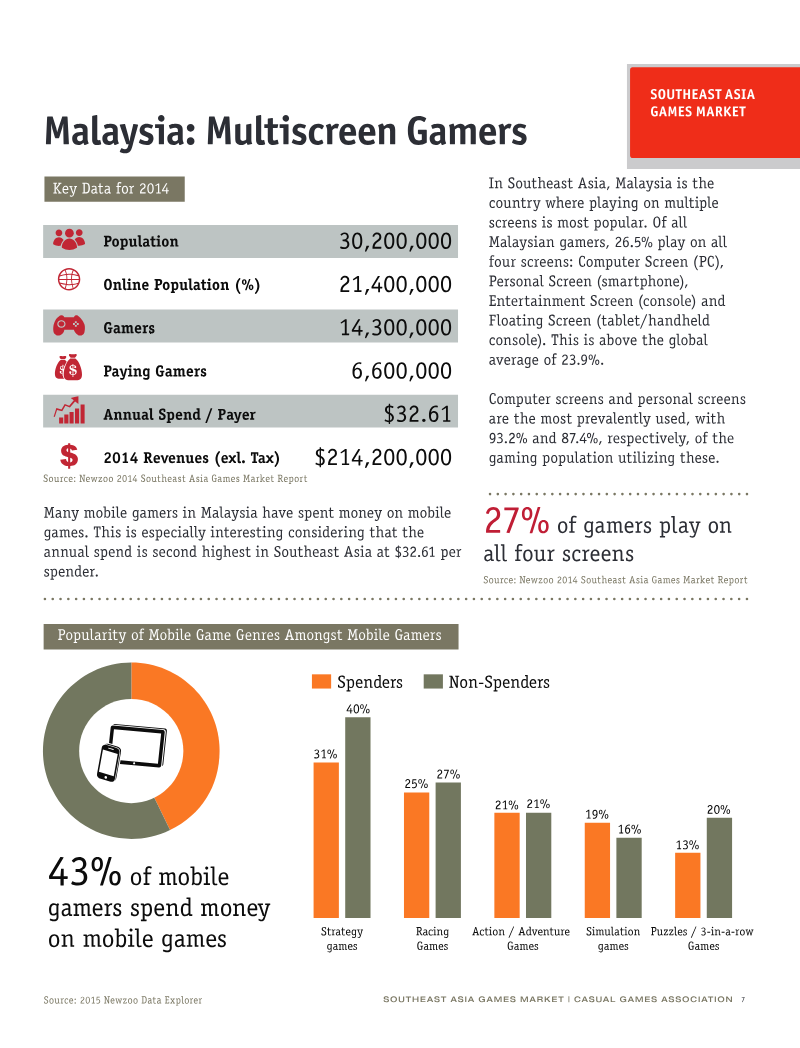
The Southeast Asia games market is positioned as a primary growth engine for the global industry, with total regional revenues projected to double to $2.2 billion by 2017. Driven by rapid economic development, increasing mobile internet connectivity, and a large, young population, the region is experiencing a compound annual growth rate of 28.8%—significantly outpacing comparable markets like Latin America and Eastern Europe. The sector is characterized by a high prevalence of mobile gaming, widespread English language proficiency, and a strong affinity for Western social media platforms, making it an accessible and strategic battleground for international developers and publishers. The market landscape is defined by the Big 6 countries: Thailand, Malaysia, Singapore, Indonesia, Vietnam, and the Philippines. Thailand currently leads the region in total game revenues, while Singapore boasts the highest average annual spend per payer at $189.30. Mobile gaming is the dominant segment across these nations, with Western titles—particularly those from publishers like King and Supercell—consistently ranking among the top grossing applications. While genre preferences vary by country, strategy and racing games frequently emerge as top performers among both paying and non-paying users. Data for this analysis is derived from 2014 and 2015 market research, including consumer surveys and financial modeling provided by Newzoo. The findings highlight that while the region shares certain demographic and connectivity trends, each country maintains distinct gamer behaviors and economic profiles. For instance, Malaysia exhibits a high rate of multi-screen gaming, whereas Vietnam is poised for the fastest mobile segment growth, with smartphone-based revenues expected to account for over 50% of its total market by 2017. These insights underscore the necessity for localized strategies to successfully navigate the diverse and rapidly evolving Southeast Asian gaming ecosystem.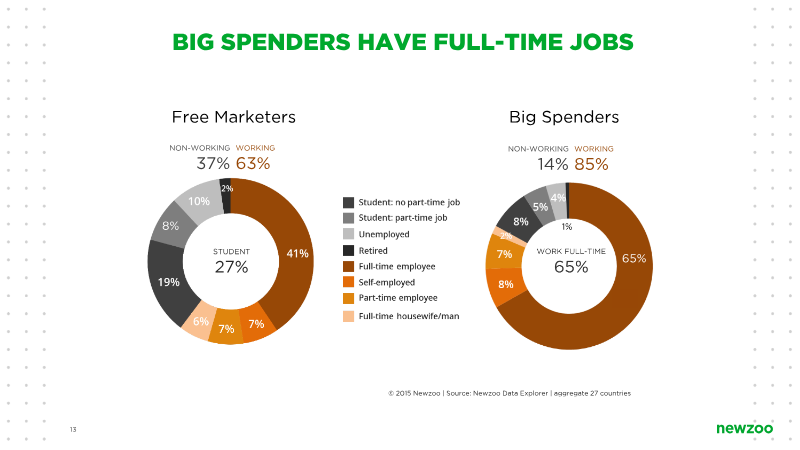
Newzoo · 2015
ReportThe Mobile Gaming Landscape 2015
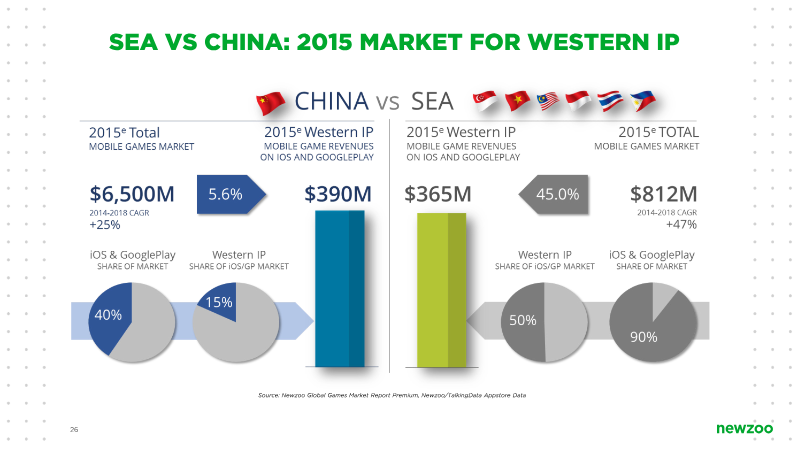
The global mobile gaming market underwent a transformative expansion in 2015, surpassing $30 billion in total revenue as the industry transitioned from isolated platform silos toward a unified, cross-platform consumption model. This shift is exemplified by high-profile consolidations, such as the acquisition of King by Activision Blizzard, which signaled a new era of integrated gaming ecosystems. While Western intellectual property continues to exert significant influence across Southeast Asia, the Chinese market remains a distinct, highly competitive landscape dominated by domestic giants like Tencent and NetEase. Navigating China requires managing a fragmented Android ecosystem and numerous local app stores, presenting a complex but essential opportunity for international developers. Player behavior is increasingly defined by two critical segments: Big Spenders and Free Marketers. Big Spenders, typically employed males between the ages of 21 and 50, demonstrate high media consumption and a preference for cross-platform spending and prepaid payment methods. Conversely, Free Marketers serve as the industry’s primary engine for organic growth; although they do not contribute direct revenue, their high engagement levels and social influence are vital for game discovery and community retention. These segments exhibit regional nuances, with Southeast Asian Big Spenders often prioritizing family-oriented gaming experiences, whereas their Chinese counterparts tend to be younger and more individualistic. Performance metrics from 2015 confirm that while iOS consistently outperforms Android in retention and conversion rates, regional variations remain a decisive factor in monetization success. The interplay between these demographic segments and regional market structures underscores the necessity for developers to adopt nuanced strategies that account for both local infrastructure and specific player motivations. Ultimately, the industry is moving toward a sophisticated maturity where success depends on balancing the high-value contributions of Big Spenders with the viral, community-building power of the Free Marketer demographic.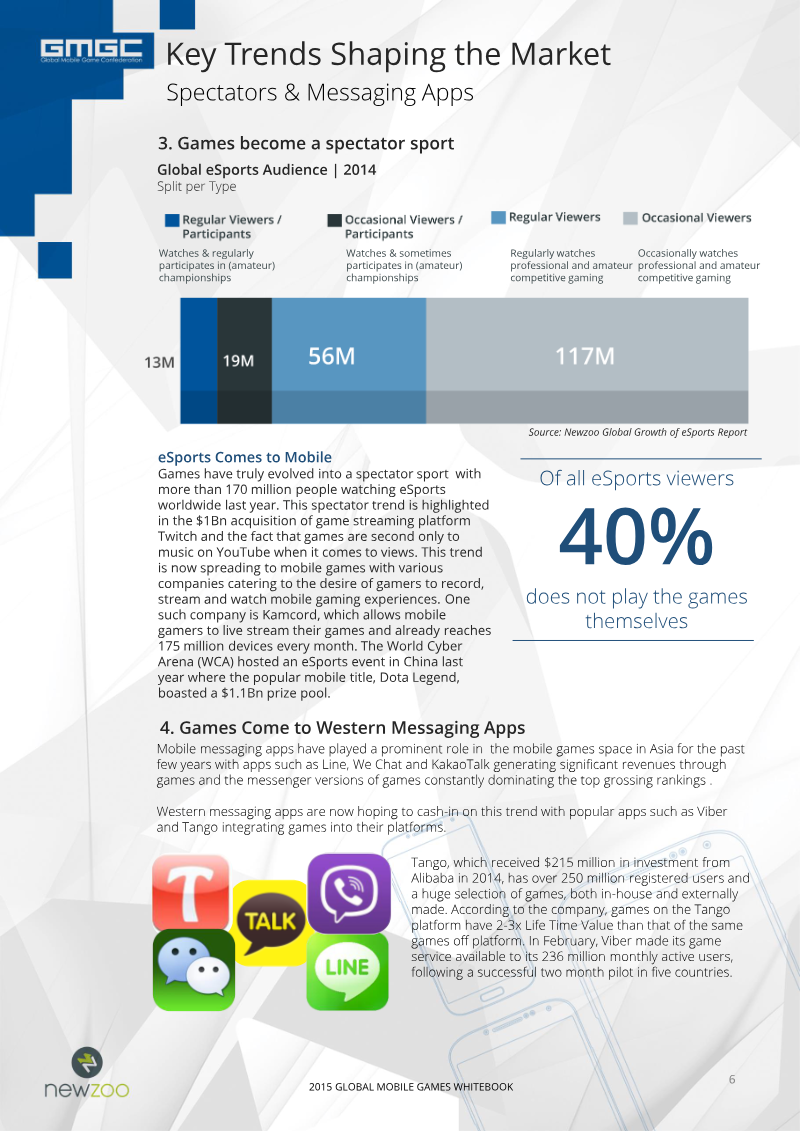
Global Mobile Game Confederation · 2015
ReportGlobal Mobile Game Industry White Book: 2015
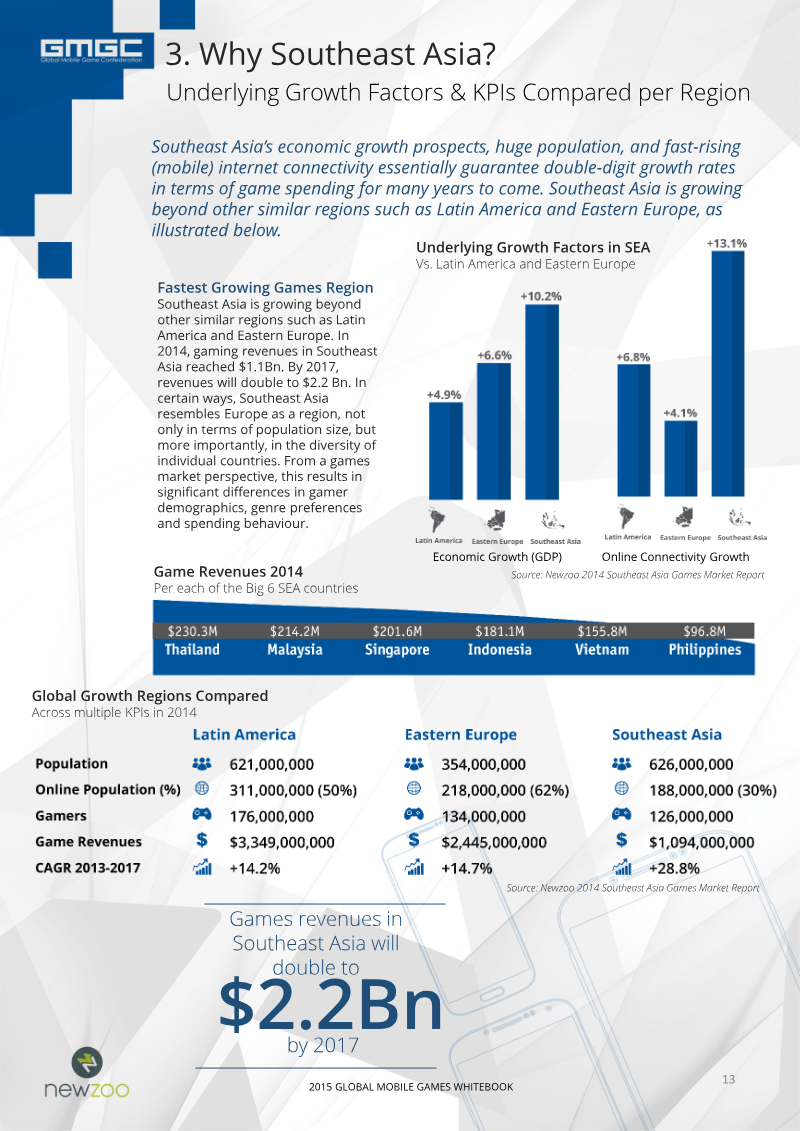
The global mobile gaming industry is undergoing a transformative shift, positioning itself as the dominant force within the broader interactive entertainment sector. With revenues projected to reach $30.1 billion in 2015, the market is fueled by rapid expansion across the Asia-Pacific region and a fundamental change in consumer behavior. Players are increasingly gravitating toward creative, competitive, and spectator-oriented experiences, a trend that is actively cannibalizing traditional gaming segments. Tablets and the integration of gaming within messaging platforms have emerged as critical catalysts for sustained engagement and future revenue growth. Regional dynamics reveal a bifurcated landscape of opportunity. China remains a high-engagement powerhouse, where users dedicate an average of 35 minutes daily to gaming, with a strong preference for card and role-playing titles. Conversely, Southeast Asia represents a rapidly maturing market, expected to double in revenue by 2017. This region offers a more accessible entry point for Western publishers, facilitated by widespread English proficiency and the standardized distribution infrastructure of the Google Play and iOS App Store ecosystems. Monetization strategies must account for distinct user archetypes, specifically the contrast between high-value spenders and casual free riders. Big spenders, typically employed men with family responsibilities, gravitate toward mid-core genres, whereas free riders are often students engaged in casual play. Because these groups exhibit significant variations in device usage and genre preferences across different geographies, developers must employ nuanced targeting strategies to effectively capture and monetize these diverse global audiences. Success in this evolving market depends on the ability to synthesize these demographic insights with regional technical and cultural trends.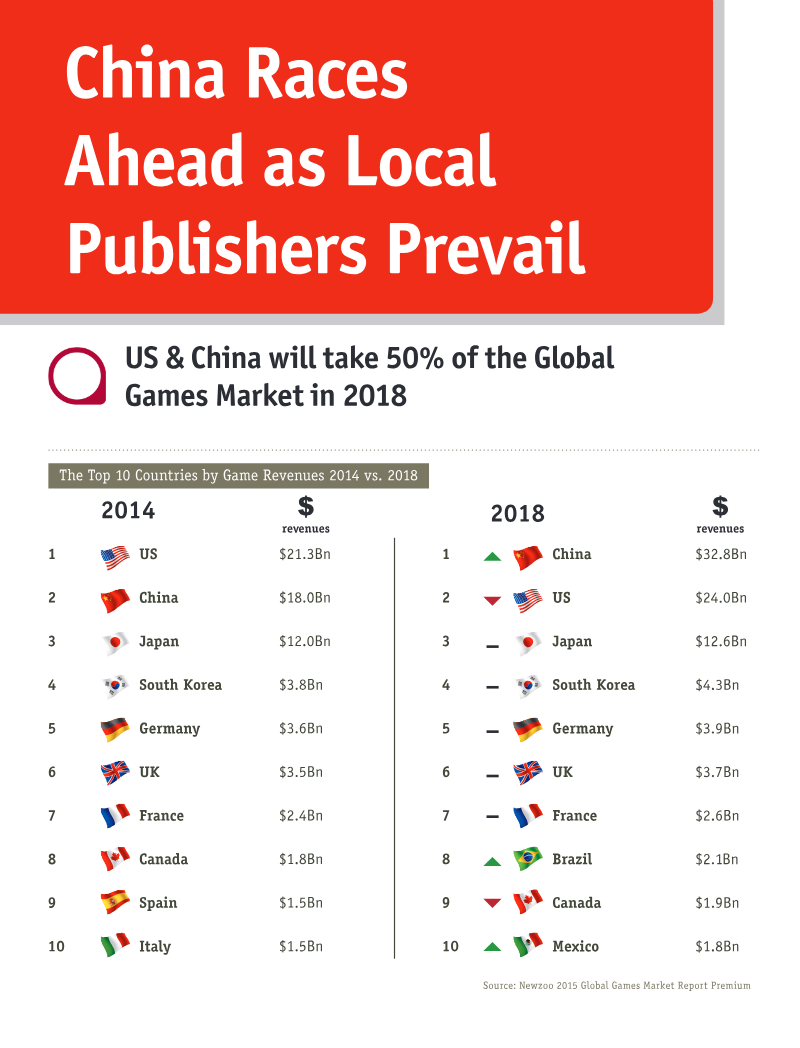
Newzoo · 2015
ReportCasual Games Sector Report 2015: World's Top Games Markets
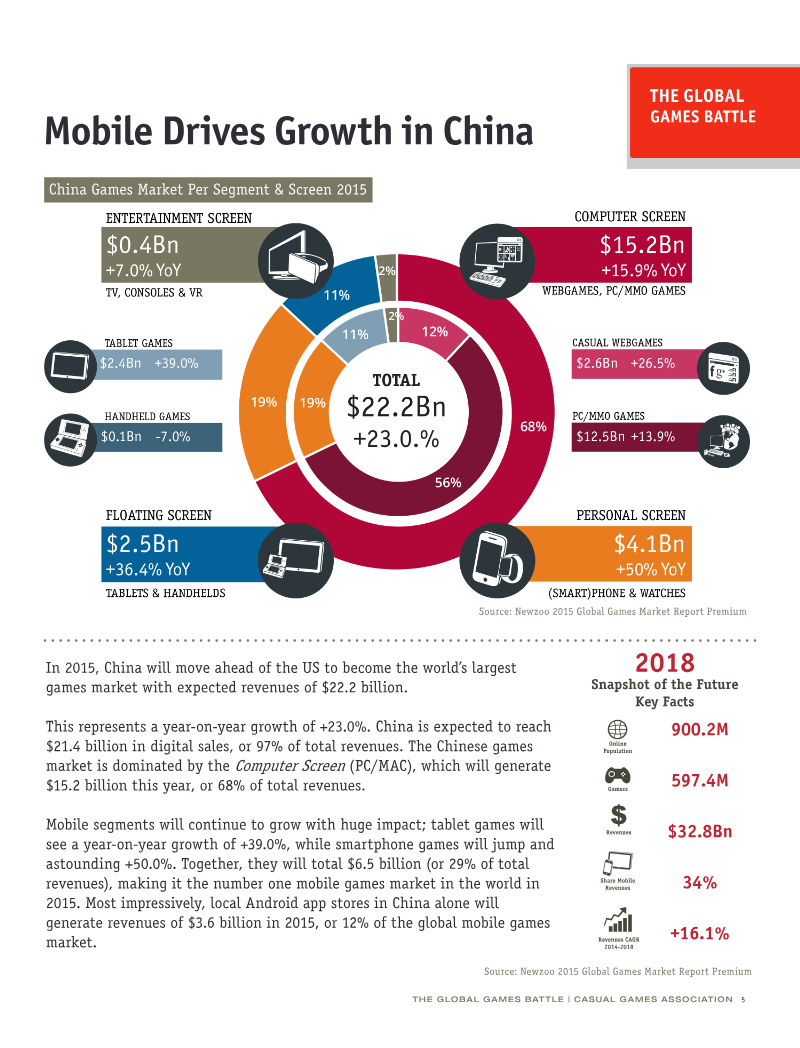
The 2015 Casual Games Sector Report provides a comprehensive analysis of the global games market, focusing on the shifting dominance between the United States and China. The primary thesis identifies China as the world’s largest games market as of 2015, projecting that the combined revenue of China and the US will account for 50% of the global market by 2018. While the US market remains significant, characterized by a strong console presence and a 3.1% compound annual growth rate, China’s rapid expansion is driven by massive mobile adoption and a dominant PC/MMO sector. Key findings indicate that China’s games market reached $22.2 billion in 2015, a 23% year-on-year increase, with mobile segments—specifically smartphone games—experiencing 50% growth. In contrast, the US market generated $22.0 billion in 2015, with 45% of revenue derived from TV, console, and VR platforms. Data highlights a distinct difference in consumer behavior: US mobile gamers show a higher propensity for "big spending" (4.8%) compared to Chinese counterparts (2.6%). Furthermore, genre preferences diverge significantly; social casino games represent 25.4% of top-grossing iOS revenues in the US, whereas such titles are largely restricted in China, where RPGs dominate the market. The analysis utilizes data from the 2015 Global Games Market Report, incorporating revenue projections, demographic breakdowns, and platform-specific performance metrics. The scope covers global industry trends with an emphasis on the US and China, spanning the period from 2012 to 2018. The findings conclude that while Western developers face challenges entering the Chinese ecosystem due to local publisher dominance, opportunities exist through strategic investments and cross-platform adaptations of successful titles.
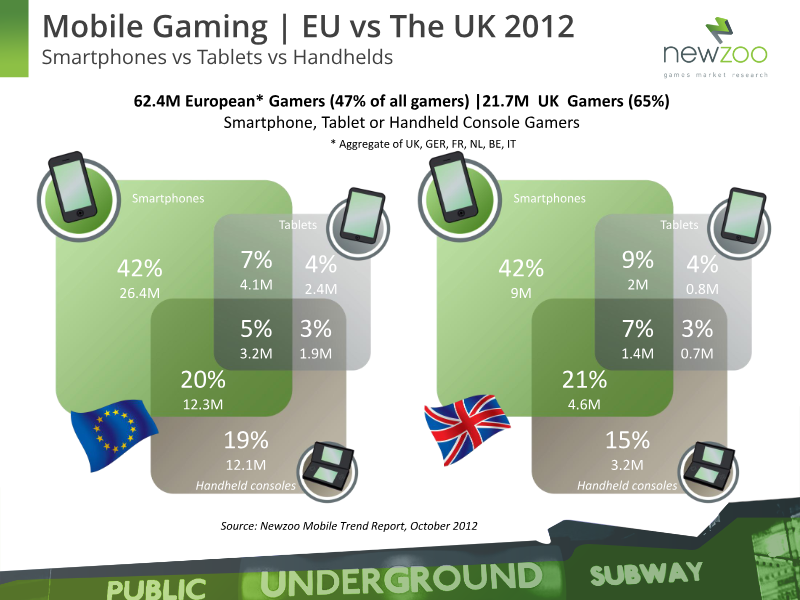

Newzoo · 2012
Report