Key insights
6 slides
Market Size
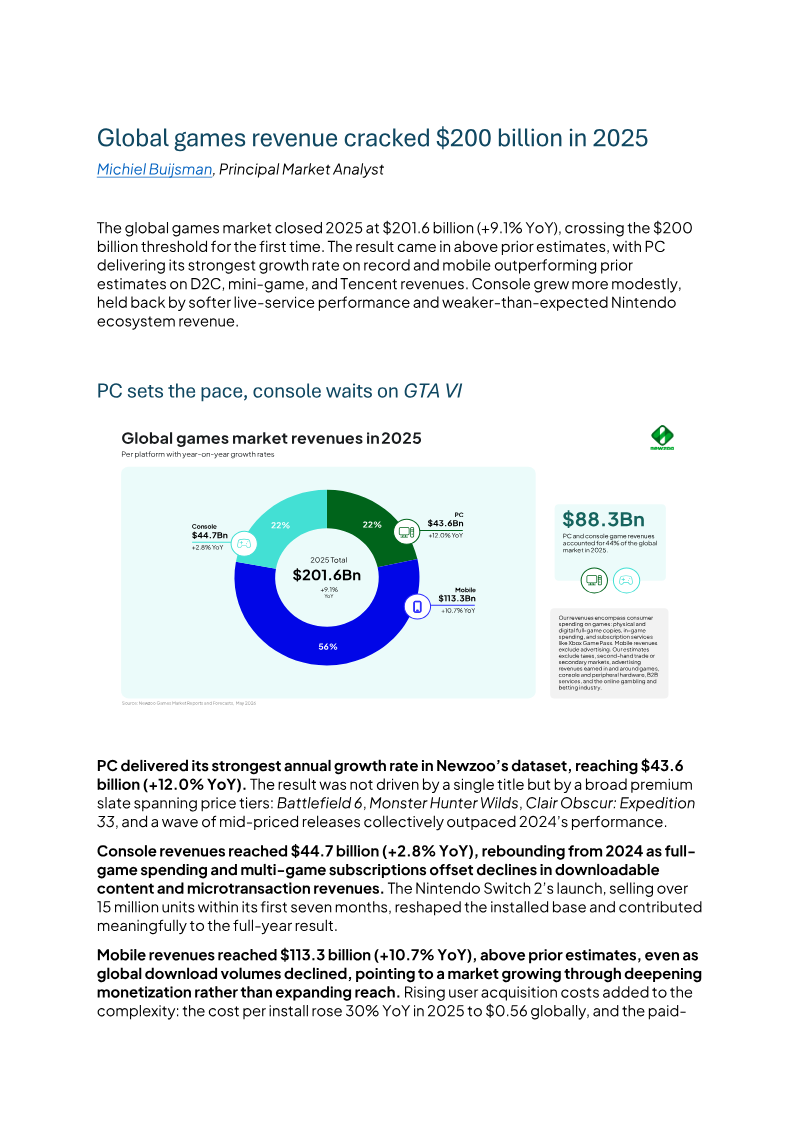
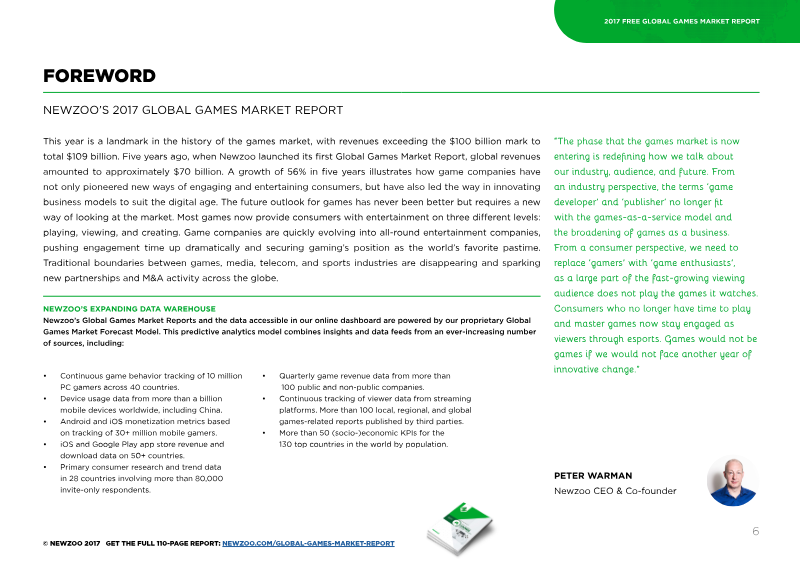
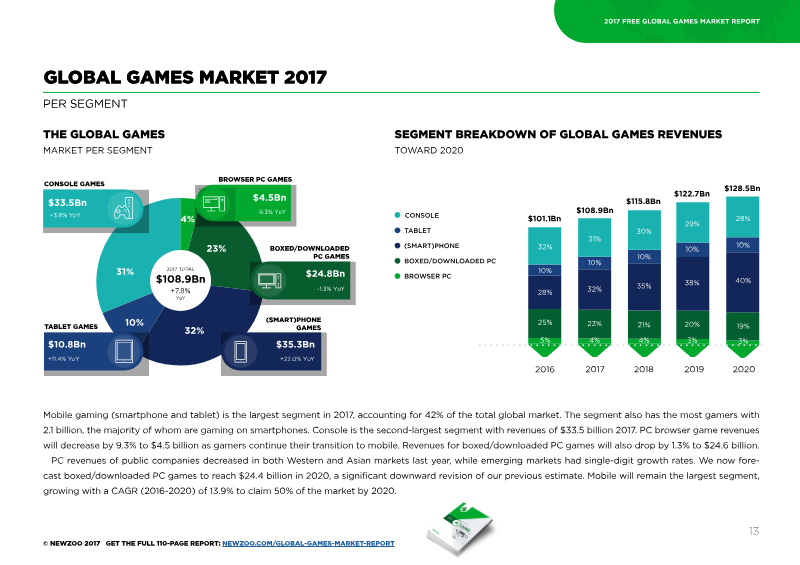
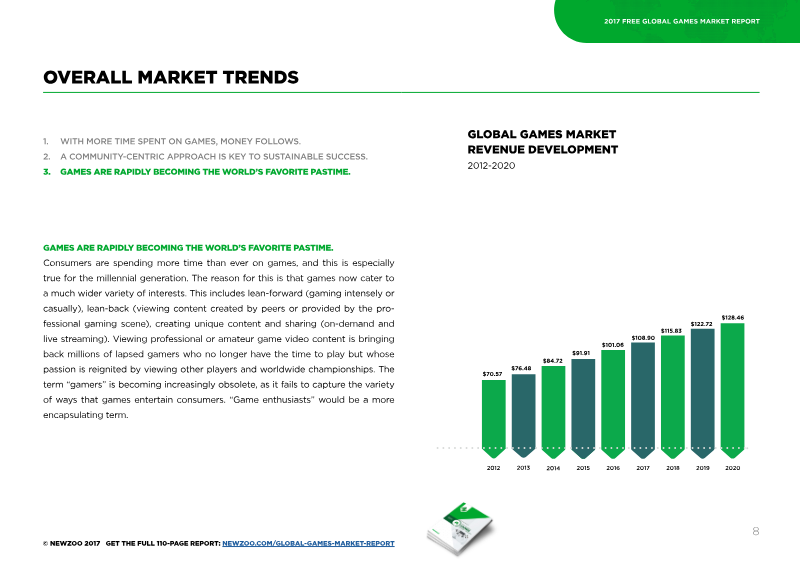
The global games market reached $108.9 billion in 2017.
This growth is driven by a fundamental industry shift toward a 'games-as-a-service' business model. The market has surpassed a significant milestone.
Regional Dominance
Asia-Pacific is the largest global market, accounting for $51.2 billion in revenue.
This region generates nearly half of the global total. North America follows as the second-largest market.
Page 9 of the report$51.2 billion
Asia-Pacific games market revenue.
- North America
- $27 billion
Mobile Dominance
Mobile gaming is the industry's dominant segment, generating 42% of total market revenue.
It has 2.1 billion players and is projected to capture 50% of the market by 2020.
PC Decline
Traditional PC browser and boxed/downloaded PC games are experiencing a decline.
Consumer engagement is shifting toward mobile platforms.
It's like people switching from landlines to smartphones for communication.
New Engagement
The industry is evolving into an entertainment ecosystem where 'game enthusiasts' engage through viewing and creating content.
The distinction between developers, publishers, and consumers is dissolving.
Methodology
Market insights are derived from a predictive model synthesizing data from over 100 companies.
This model also incorporates data from 10 million tracked PC gamers, one billion mobile devices, and 80,000 consumer survey respondents.
1 / 6
Ask AI about this report