Key insights
6 slides
User Growth
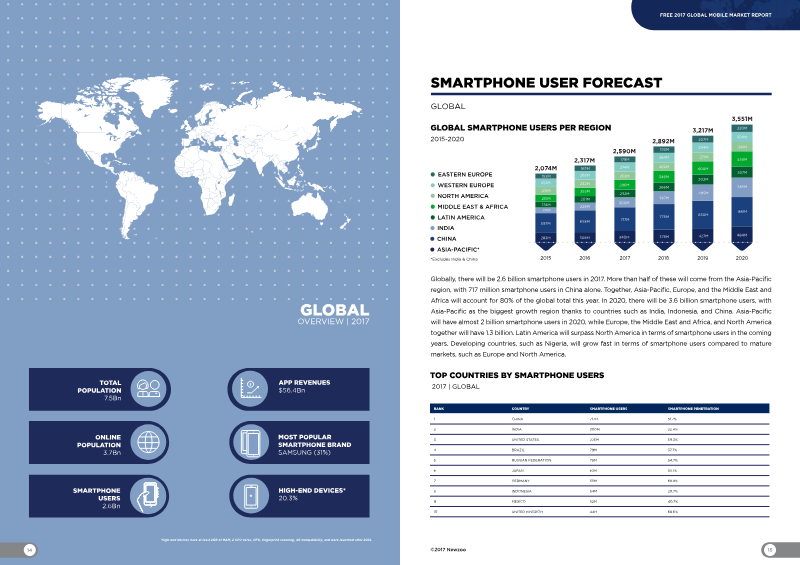
The global smartphone user base is projected to grow significantly.
The number of smartphone users is expected to increase from 2.3 billion in 2016 to 3.6 billion by 2020.
Hardware Landscape
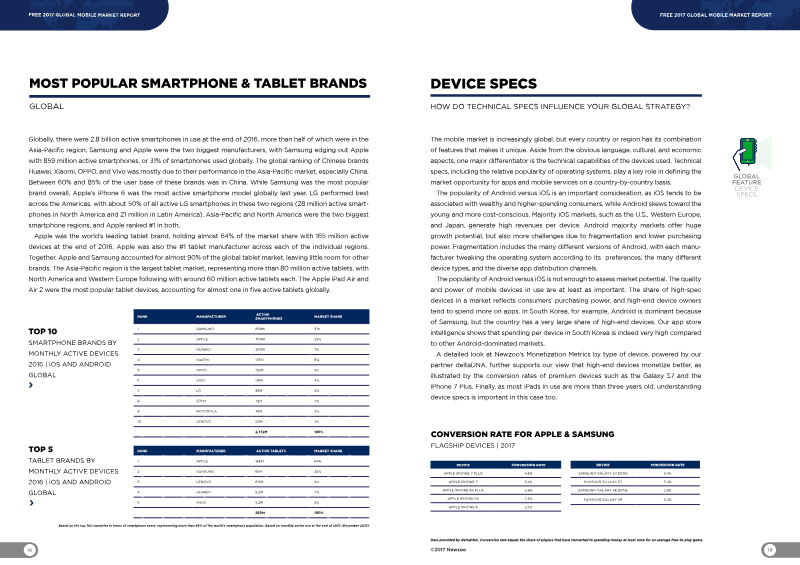
Chinese manufacturers are increasing their market share in the hardware sector.
While Apple and Samsung remain industry leaders, Chinese manufacturers are aggressively expanding their influence. The competitive landscape for hardware is shifting.
Revenue Growth
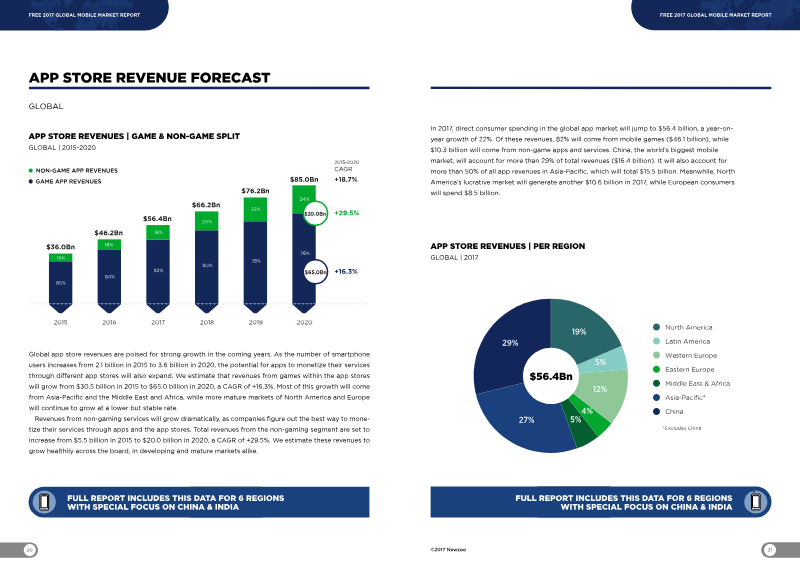
The total app economy revenue is expected to reach $85 billion by 2020.
Mobile games currently dominate the sector, accounting for 82% of the $56.4 billion in projected 2017 revenue. Non-game applications are steadily capturing a larger market share.
Distribution Challenges
The traditional app distribution duopoly is facing increasing pressure.
The Apple App Store and Google Play are challenged by alternative app stores, instant apps, and geopolitical factors. This is forcing a diversification of distribution models.
Like a two-lane highway suddenly facing new detours and alternative routes.
VR Limitations
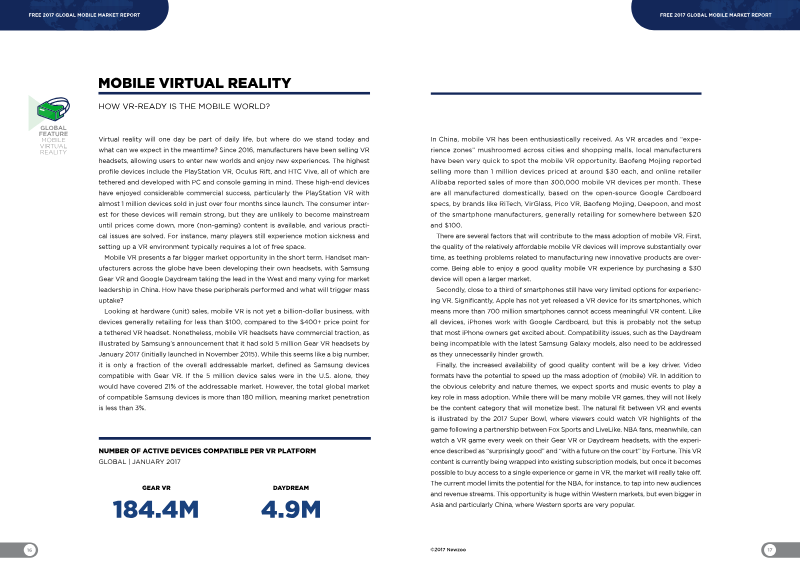
Mobile virtual reality is commercially limited by hardware and content issues.
Its commercial viability is currently constrained by hardware fragmentation and a scarcity of high-quality, event-based content. Developers need sophisticated technical tools.
Publisher Adoption
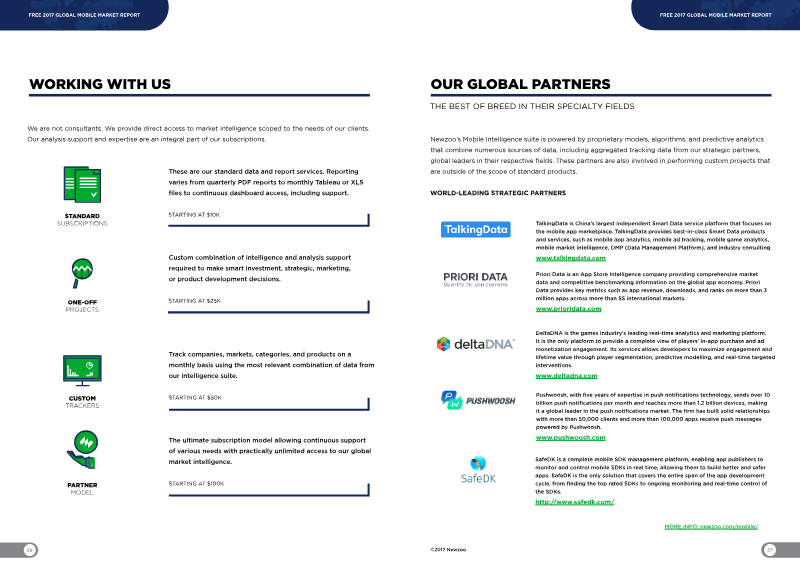
Publishers are increasingly adopting third-party infrastructure tools.
These tools help manage app intelligence, analytics, and SDKs. Providers include Priori Data, DeltaDNA, Pushwoosh, and SafeDK.
1 / 6
Ask AI about this report