Mobile Games
The mobile market by genre, from hypercasual and puzzle to midcore and idle.
403 documents

Dutch Games Association · 2012
ReportGamesmonitor '12: Gamesindustrie Onderzocht
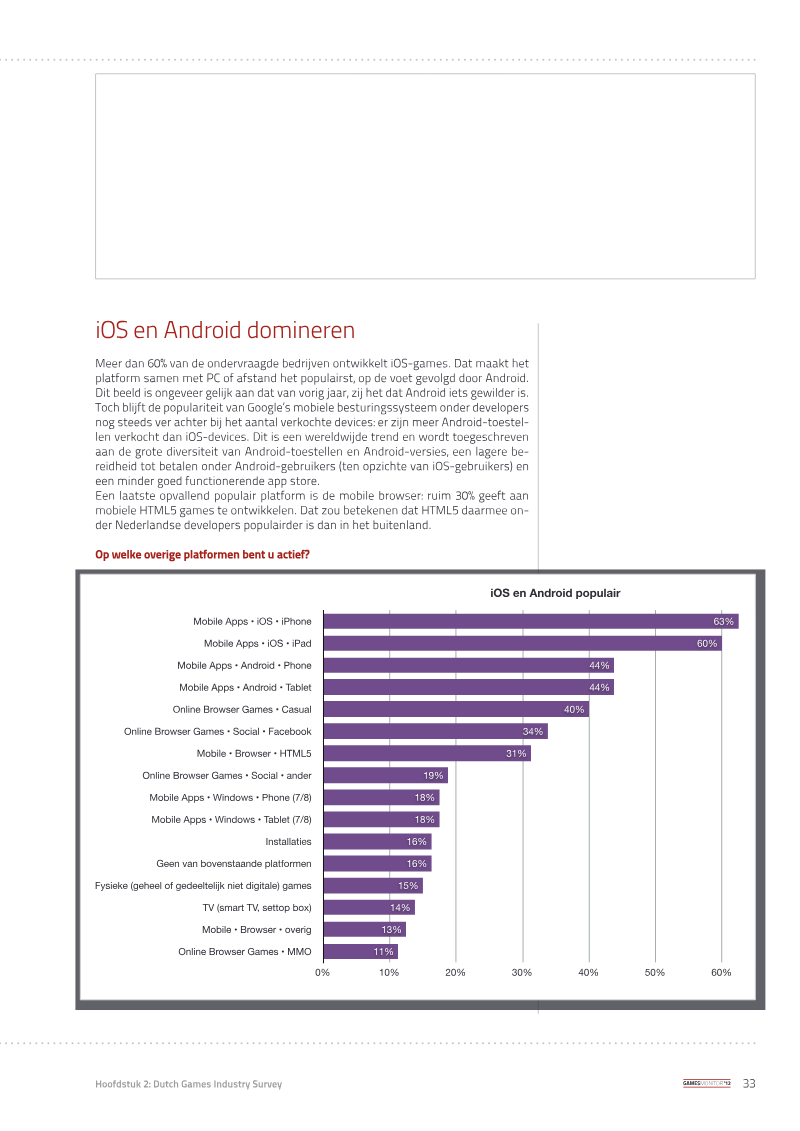
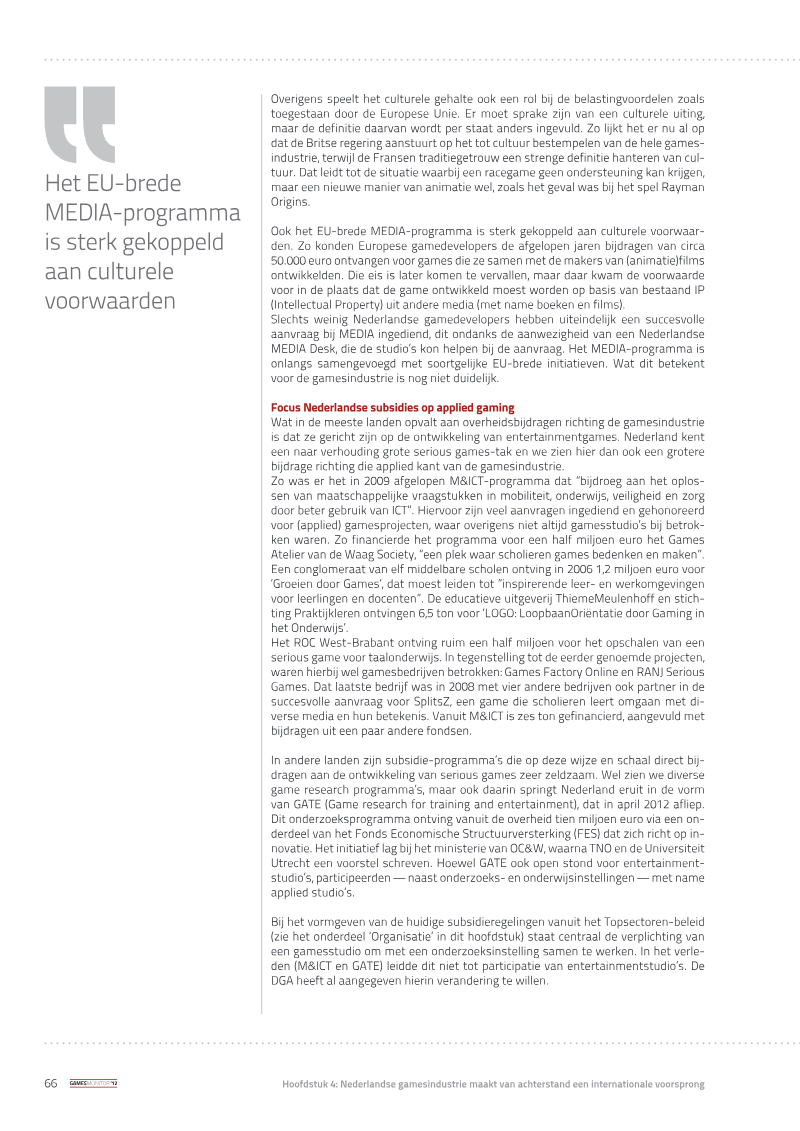
The Dutch games industry, as of 2011, functions as a dynamic yet maturing ecosystem comprising approximately 330 companies and 3,000 professionals. The sector is defined by a unique dual focus on entertainment gaming and applied, or "serious," gaming, the latter of which serves sectors such as healthcare, education, and government. Geographically, the industry is highly concentrated in urban hubs like Amsterdam and Utrecht, characterized by a dense network of small-to-medium enterprises rather than large-scale corporate entities. While the industry demonstrates significant creative and technical potential, it remains in an "ambitious adolescent" phase, struggling to transition from small-scale, project-based work to sustainable, internationally competitive business models. The industry’s economic landscape is marked by high volatility and a reliance on digital distribution, with boxed retail games becoming a niche activity. Despite a robust pipeline of talent from educational institutions, the sector faces structural challenges, including a lack of large-scale domestic publishers, difficulty securing external financing, and a persistent mismatch between the volume of graduates and available job openings. Furthermore, the workforce remains notably male-dominated, and many studios report modest financial performance, with nearly three-quarters of firms generating little to no profit. The absence of a coordinated national growth strategy—contrasted with the aggressive fiscal incentives offered by international competitors—further complicates the ability of Dutch studios to scale. To achieve long-term viability, the industry must prioritize professionalization, business management, and the integration of data-driven strategies. While the sector benefits from strong networking and a collaborative culture, it requires improved access to capital and more effective government support to move beyond its current reliance on bespoke, client-funded projects. Ultimately, the industry’s future success depends on its ability to bridge the gap between its artistic output and the rigorous business requirements necessary to compete in a global market, shifting from a product-centric focus to one that emphasizes organizational structure and sustainable revenue models.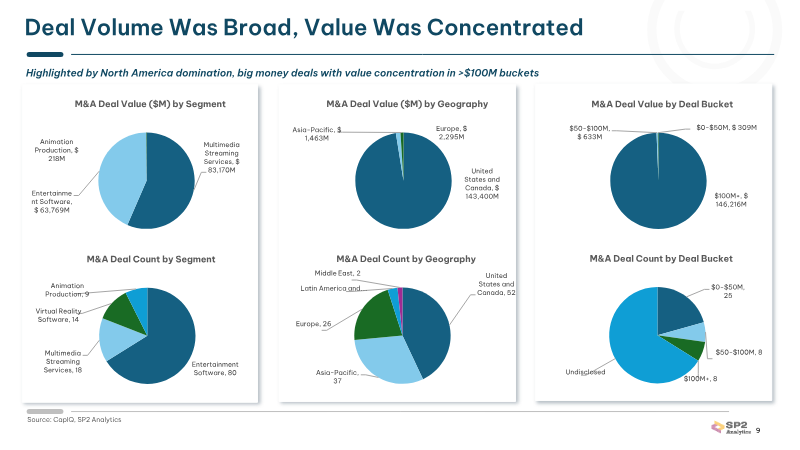

SP2 Analytics
ReportGlobal Gaming Report 2025
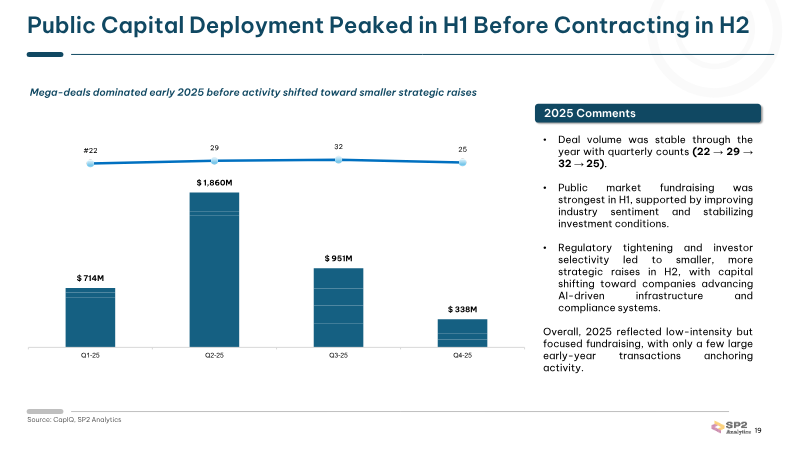
The 2025 Global Gaming Report characterizes the gaming industry as a capital-intensive, scale-driven sector where competitive advantage is increasingly defined by platform ownership, intellectual property (IP) aggregation, and long-term strategic positioning rather than individual title performance. The industry experienced a year of mega-deal consolidation, with approximately $147 billion in announced M&A value. This activity was heavily skewed toward the second half of the year, anchored by transformational transactions such as the $83 billion Netflix-Warner Bros. deal and the $55 billion take-private of Electronic Arts. Market data indicates a widening valuation dispersion, with strategically positioned players commanding premium EV/EBITDA multiples exceeding 25x. While overall deal volume moderated throughout 2025, capital deployment became more concentrated, reflecting high-conviction investments in defensible growth platforms. Private placement activity followed a similar trend, dominated by a limited number of large-scale, infrastructure-led rounds—notably in AI-driven simulation and development tools—which attracted over $100 million per transaction. Public market activity was strongest in the first half of the year, shifting toward smaller, more disciplined strategic raises as regulatory and market conditions evolved. Geographically, North America dominated both M&A and private placement deal values, while the Asia-Pacific region maintained a significant presence in public market capital raises. The report utilizes data sourced from CapIQ and internal research to analyze these trends across global gaming segments, including multimedia streaming, entertainment software, and virtual reality. Looking ahead to 2026, the industry anticipates a content-led growth phase driven by major IP sequels and hardware transitions, such as the rollout of the Nintendo Switch 2, as companies pivot toward service-led, recurring revenue models to ensure long-term stability.

TP
ReportGaming Trendz to Watch in 2025 and Beyond: Comprehensive Player Support Strategies
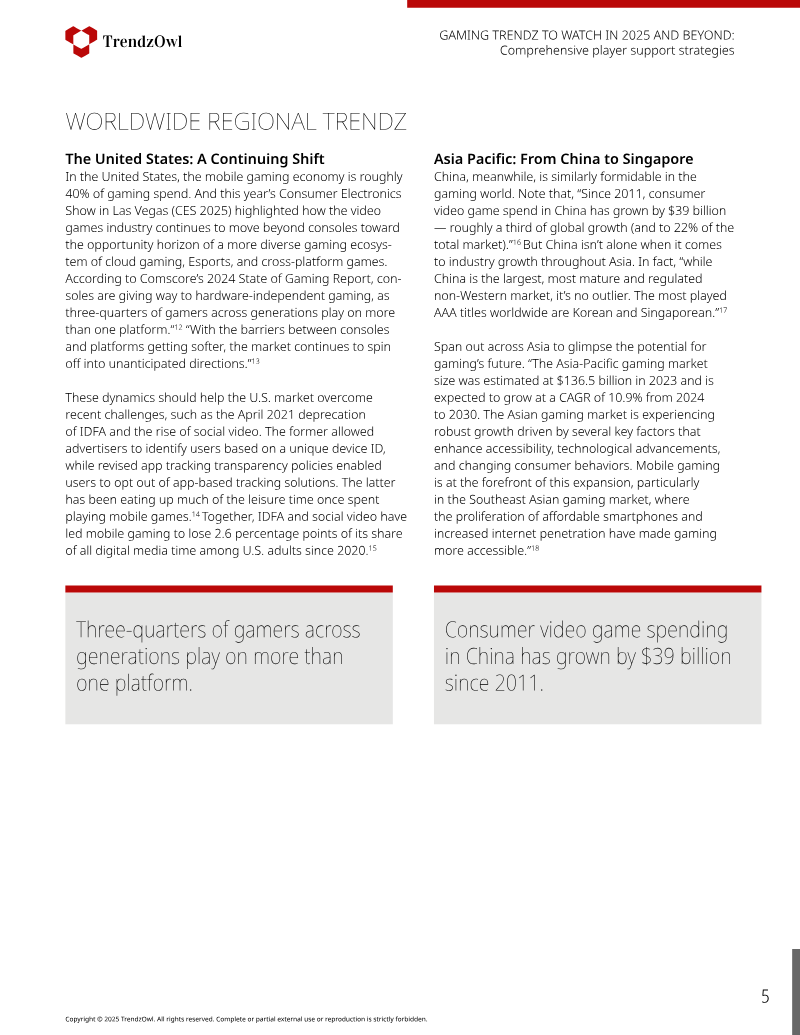
The video game industry is poised for a significant rebound in 2025 following a period of contraction characterized by layoffs and project cancellations. The sector is currently transitioning toward a mobile-first, cloud-enabled future where hardware-independent gaming is becoming the standard. This shift is supported by the rapid growth of mobile gaming, which now accounts for 55% of the total market, and the increasing ubiquity of cloud technology that allows for cross-platform accessibility. Regional analysis indicates robust expansion, with Africa’s market growing six times faster than the global average and the Asia-Pacific region maintaining a strong compound annual growth rate of 10.9% through 2030. To navigate this evolving landscape, the industry must prioritize sophisticated player support strategies that balance technological efficiency with human-centric engagement. Data suggests that providing a diverse range of contact options increases player loyalty by 41%. While AI-driven personalization is essential for managing complex, data-heavy environments, human advisors remain critical for resolving sensitive billing issues, enforcing community guidelines, and moderating player interactions to prevent toxicity. The analysis draws on a variety of industry data sources, including the 2024 Global Insights Survey, market forecasts from Newzoo and Grand View Research, and reports from regional gaming organizations. The findings emphasize that as gaming becomes a primary social venue—with 81% of players reporting that the medium facilitates connections they would not otherwise form—the responsibility of developers to foster safe, inclusive, and empathetic environments has become a core business imperative. Ultimately, the industry’s long-term success depends on integrating high-quality technical support with a commitment to community health and human-led judgment.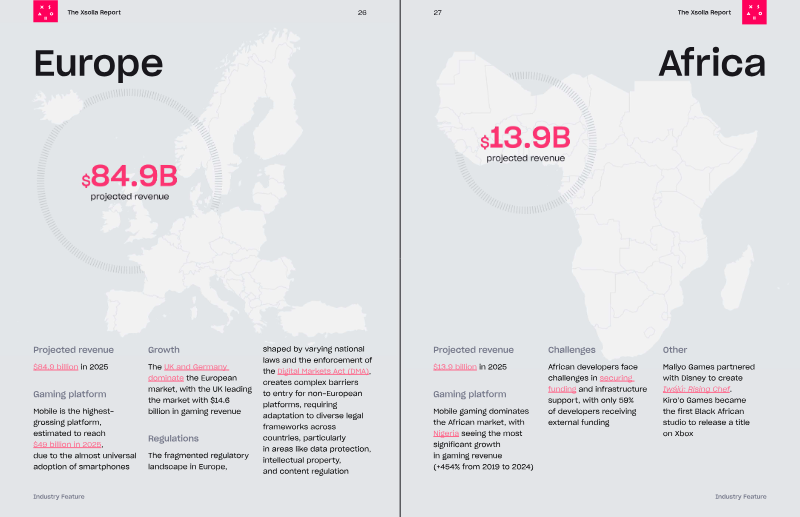

Xsolla
ReportThe Xsolla Report: State of Play – Q1 2025
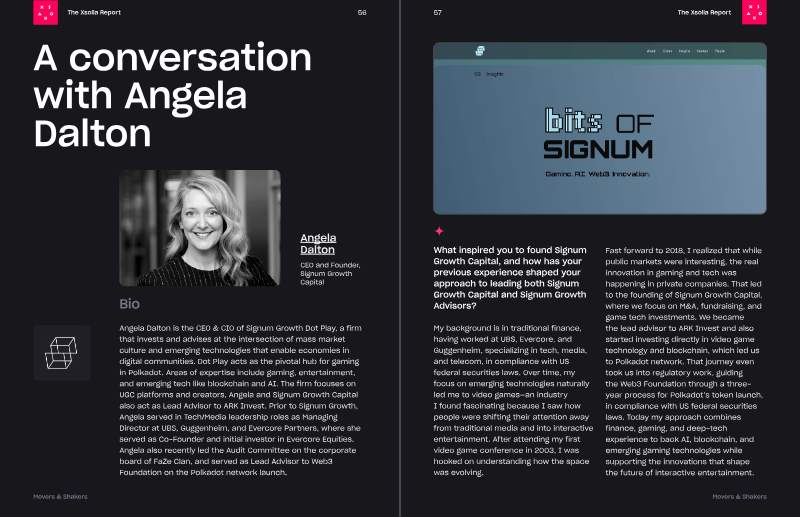
The global gaming industry is entering a period of sustained expansion, with total revenue projected to reach $522 billion by 2025 and a forecasted annual growth rate of 7.25% through 2029. This growth is underpinned by the maturation of the mobile sector and a robust rebound in PC and console software. As the market evolves, developers are increasingly prioritizing direct-to-consumer strategies and web-based storefronts to circumvent traditional platform fees, improve profit margins, and foster deeper, more personalized relationships with their player bases. A fundamental transformation is occurring in how content is produced and consumed, driven largely by Gen Z and Gen Alpha. These cohorts are shifting the industry paradigm from passive consumption to active participation through user-generated content and in-game development tools. This transition toward player-driven ecosystems is supported by the integration of advanced data analytics, artificial intelligence, and blockchain technology, which collectively enhance digital authenticity and operational transparency. Furthermore, regulatory shifts allowing for alternative app stores and hybrid billing models are providing studios with the flexibility to diversify revenue streams and optimize monetization through mobile-specific tools like SDKs and offerwalls. Long-term industry stability relies on the convergence of inclusive design, proactive community engagement, and technical innovation. By adopting hyper-personalized experiences and robust anti-fraud measures, developers are better positioned to navigate rising user acquisition costs and market saturation. Ultimately, the industry is moving toward a more symbiotic model where diverse leadership and player-centric distribution strategies serve as the primary catalysts for innovation, ensuring that developers can effectively capture the attention of digital-native generations while maximizing lifetime player value in an increasingly competitive global landscape.


Sensor Tower
ReportQ3 2015 Data Digest
The Q3 2015 Data Digest provides a comprehensive analysis of the iOS mobile application market, focusing on global and U.S. trends in downloads, revenue, and advertising strategies. The primary objective is to equip developers with actionable marketplace intelligence to optimize growth and monetization. The analysis utilizes proprietary Store Intelligence and Ad Intelligence data, benchmarking performance against top-tier apps to provide a clear comparative landscape of the mobile ecosystem during the third quarter of 2015. Key findings indicate that the gaming category remains the dominant force in the App Store, accounting for the highest volume of downloads and generating revenue more than 20 times greater than the next leading category. While Clash of Clans maintained its lead, Game of War demonstrated significant momentum, narrowing the revenue gap in the U.S. market. The data also highlights a strong correlation between aggressive advertising on the Facebook network and revenue performance, with gaming and lifestyle apps—specifically those from ContextLogic—leveraging high-production image and video advertisements to drive user acquisition. Geographically, the report identifies Japan as a high-value market, contributing a disproportionate number of top-grossing publishers relative to their download volume. Furthermore, the analysis reveals that while iPhone remains the primary driver for total downloads, the iPad serves as a critical platform for high-revenue entertainment and gaming consumption. The industry experienced a rebound in Q3 following a Q2 slump, with the travel category showing the most significant growth. Ultimately, the findings underscore a shift toward sophisticated monetization, particularly within music and gaming apps, which successfully increased revenue despite varying download trends.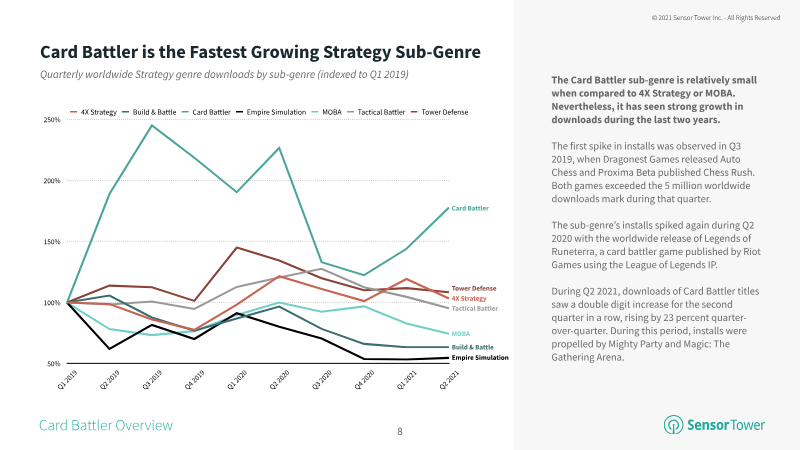

Sensor Tower
ReportThe State of Card Battler Mobile Games 2021: An Analysis of the Card Battler Sub-Genre
The mobile card battler sub-genre represents a growing, high-potential segment within the mid-core strategy market. While smaller in scale compared to dominant categories like 4X strategy or MOBA, the sub-genre has demonstrated consistent revenue growth and a notable rise in downloads during the first half of 2021. The market is characterized by a mix of established "forever franchises"—such as Yu-Gi-Oh! Duel Links and Hearthstone—and emerging titles like Magic: The Gathering Arena, which have successfully leveraged existing intellectual property to capture significant market share. Geographically, the sub-genre has historically been concentrated in Asian markets, particularly Japan and China. However, the United States has emerged as a critical growth region, increasing its share of global player spending to 27 percent in the first half of 2021. This shift is supported by high revenue-per-download (RPD) metrics in the U.S., where the sub-genre’s RPD is nearly double the worldwide average. Furthermore, card battlers in the U.S. are experiencing the fastest RPD growth among all strategy sub-genres, signaling a strong product-market fit and potential for further expansion. The analysis, which utilizes data from Sensor Tower’s intelligence platforms, highlights that successful market entry and scaling often rely on aggressive, diversified user acquisition strategies across major advertising networks. While legacy titles maintain consistent revenue through loyal player bases, the recent success of new entrants indicates a consumer appetite for fresh concepts and niche IP applications. Ultimately, the sub-genre remains a viable space for both established brands and new developers, provided they can effectively navigate the competitive landscape through strategic marketing and high-quality, IP-driven gameplay.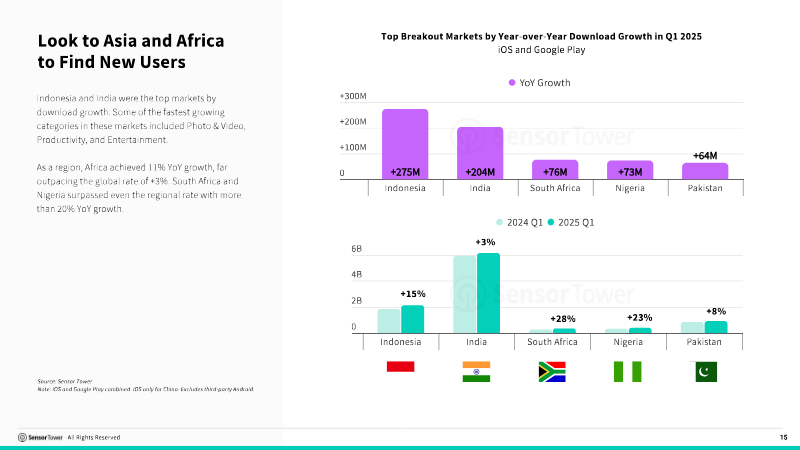
Sensor Tower
ReportDigital Market Index: Q1 2025
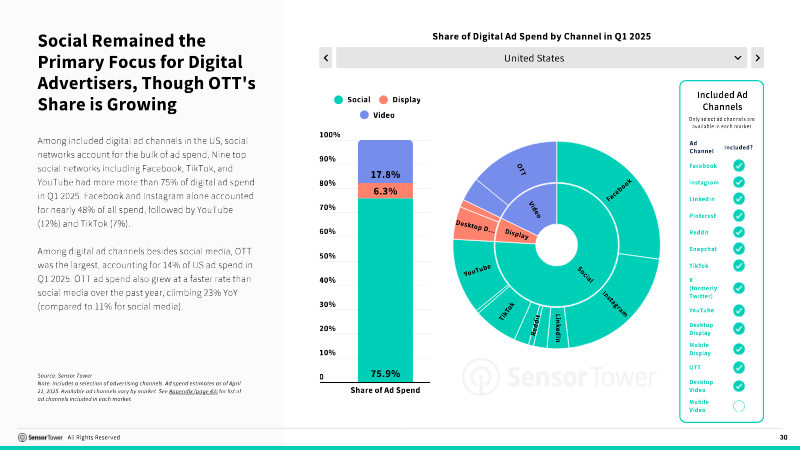
The global digital economy experienced a transformative first quarter in 2025, characterized by a shift in revenue dominance toward non-gaming applications and a strategic pivot in advertising priorities. Total in-app purchase revenue climbed to a record $40 billion, representing an 11% year-over-year increase. While mobile gaming remains a foundational pillar of the digital ecosystem, the sector is currently defined by stability rather than expansion, as established titles continue to outperform new releases. Strategy games have successfully overtaken RPGs as the leading revenue-generating genre, even as overall game downloads experienced a marginal contraction of 2.5%. The advertising landscape, particularly within the United States, reflects a broader realignment of capital toward high-growth sectors. Total digital ad spend reached $31 billion, with social media maintaining its status as the primary channel. However, the composition of this spend has shifted significantly; retail-focused advertising has cooled as major players prioritize international expansion, while financial services experienced a 43% surge driven by tax season activity and renewed interest in cryptocurrency. Simultaneously, the rise of generative AI continues to act as a primary catalyst for growth in productivity and creative application downloads. Retail media has solidified its role as a critical marketing infrastructure, with impressions rising 31% year-over-year. Platforms such as Walmart and Chewy have emerged as leaders in this space, with the food and beverage sector proving particularly effective at leveraging co-branded advertising. As the industry moves further into 2025, the data suggests a maturing market where growth is increasingly driven by specialized financial services, the integration of generative AI, and the strategic optimization of existing, high-performing digital assets rather than reliance on new user acquisition.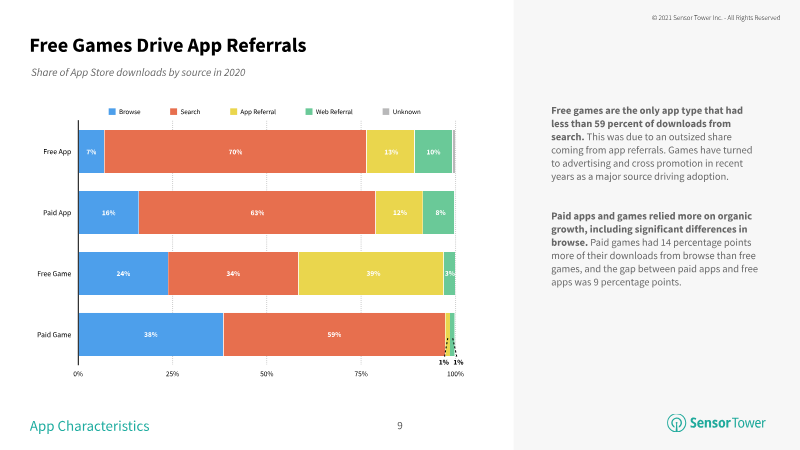

Sensor Tower
ReportAn Analysis of Download Sources on Apple's App Store 2021
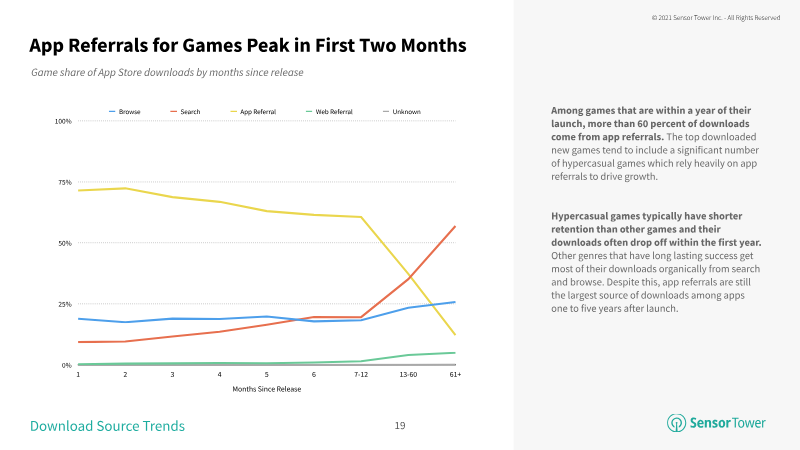
This analysis examines the primary drivers of first-time app downloads on the Apple App Store between 2018 and 2020. The study categorizes download sources into four main channels: search, browse, app referrals, and web referrals. By analyzing a sample of apps—comprising 54% games and 46% non-game applications—the research highlights how user acquisition strategies differ significantly based on app category, monetization model, and the time elapsed since an app’s initial launch. The findings indicate that search remains the dominant discovery mechanism, accounting for 59% of all App Store downloads in 2020. While non-game apps rely heavily on search—reaching 70% of their total downloads—the gaming sector shows a distinct trend toward app referrals. Specifically, the share of game downloads originating from app referrals grew from 26% in 2018 to 38% in 2020. This shift is largely attributed to the rise of the hypercasual game genre, which accounted for 63% of its own installs via app referrals in 2020, utilizing in-app advertising and cross-promotion as primary growth levers. The data further reveals that download sources evolve over an app's lifecycle. App referrals are most critical within the first six months of a launch, particularly for games. However, as apps mature beyond one year, search becomes the primary driver of new user acquisition. This suggests that while paid advertising and cross-promotion are essential for initial visibility and the hypercasual market, organic discovery through search is the most sustainable source of growth for long-term, established applications. The report concludes that while market conditions, such as the COVID-19 pandemic, can cause temporary fluctuations in these trends, the fundamental reliance on search for non-games and the increasing importance of referrals for games remain the defining characteristics of the current mobile ecosystem.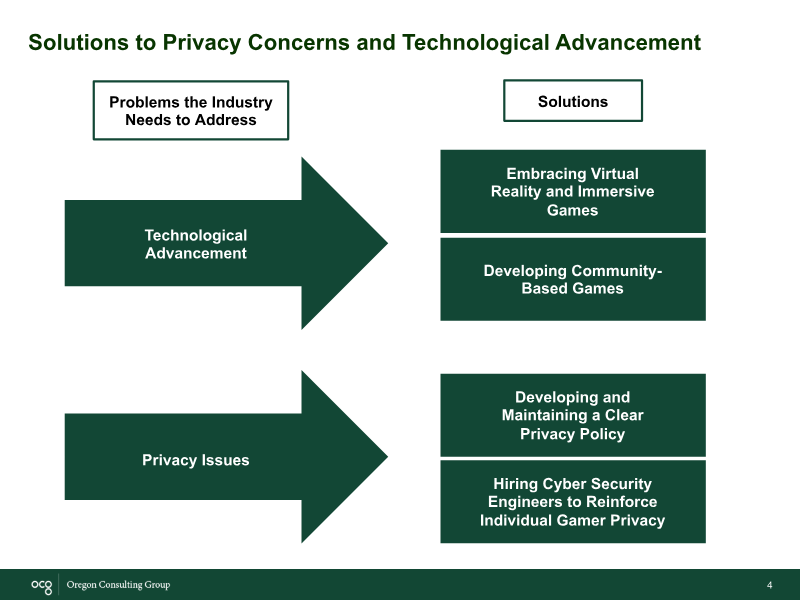

Lundquist College of Business
ReportU.S. Video Game Industry: Technological Advancements and Privacy Issues
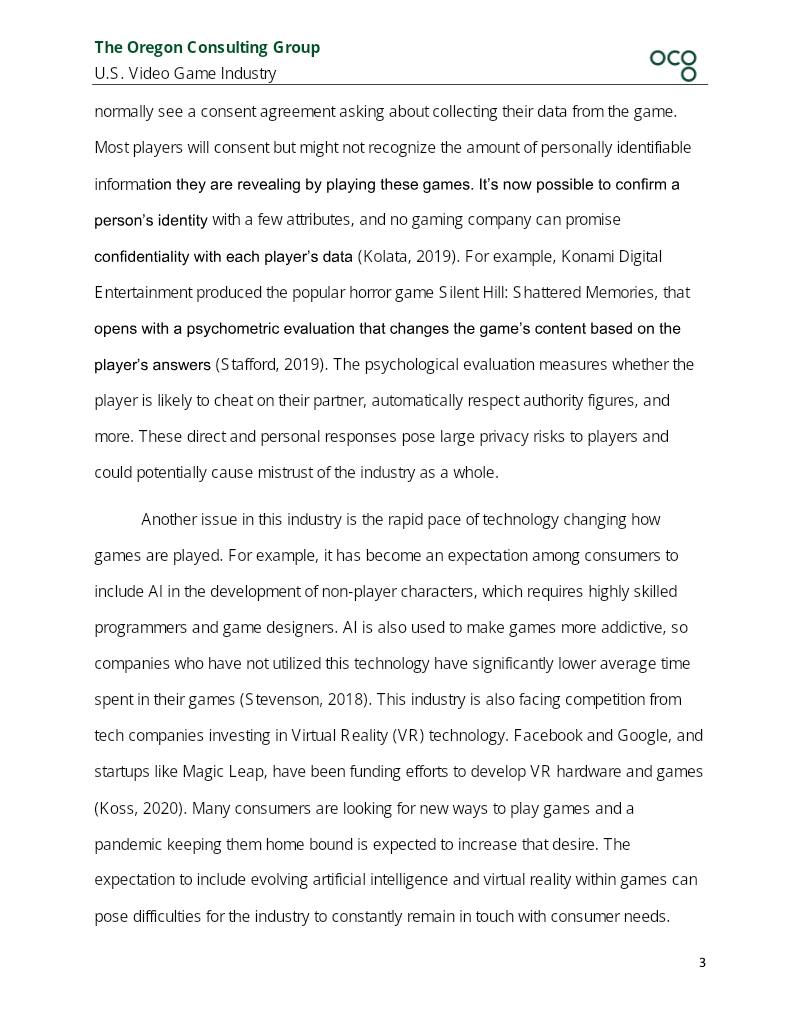
The U.S. video game industry, a significant global economic force, faces a critical juncture defined by rapid technological evolution and escalating privacy vulnerabilities. As of 2020, the sector generates $60.4 billion in annual revenue, supported by 240,000 employees across more than 42,000 businesses. While the industry has demonstrated resilience and growth during the COVID-19 pandemic—evidenced by surging engagement on platforms like Steam and Twitch—it must navigate complex challenges to maintain long-term stability and consumer trust. Privacy concerns represent a primary threat, driven by the widespread collection of player data and the persistent risk of cyberattacks. With over 12 billion cyberattacks recorded against gaming websites within a 17-month period, the industry faces significant pressure to secure user information. The re-identification of supposedly anonymized data and the use of psychometric evaluations in games have heightened these risks. To mitigate these threats, the industry is advised to adopt more transparent, user-friendly privacy policies and invest in specialized cybersecurity engineering to protect player credentials, a strategy already successfully employed by major players like Microsoft. Simultaneously, the industry must adapt to shifting consumer expectations regarding artificial intelligence and virtual reality. The demand for immersive, community-based gaming experiences has intensified, as seen in the success of titles like Pokémon Go. By integrating advanced technologies such as text-to-speech software and AI-driven character development, companies can optimize production lifecycles and enhance engagement. Ultimately, the industry’s ability to balance aggressive technological innovation with robust, transparent security measures will determine its capacity to sustain its current market dominance and satisfy an increasingly privacy-conscious consumer base.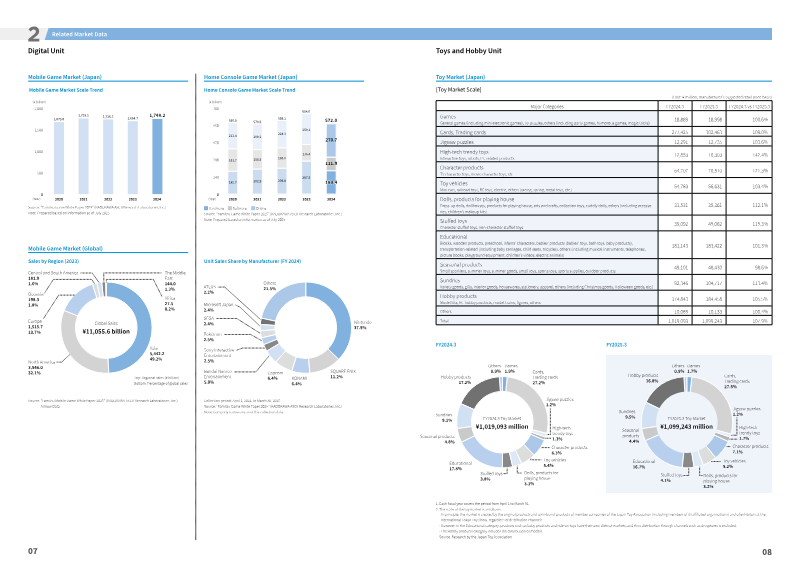

Bandai Namco
ReportBandai Namco Group Fact Book
Bandai Namco Group maintains a dominant position in the global entertainment industry by leveraging a robust portfolio of intellectual property to drive consistent financial growth. For the fiscal year ending March 2025, the organization achieved significant expansion, reporting consolidated net sales of ¥1,241,513 million. This performance is anchored by a diversified business model where the Toys and Hobby unit serves as the primary revenue driver at 45.2% of total sales, followed closely by the Digital unit at 34.5%. The group’s strategic trajectory is defined by a commitment to IP-led innovation, spanning model kits, card products, and digital gaming, which has allowed the company to sustain market leadership across international territories. The group’s evolution from the 2005 integration of Bandai and Namco to its current three-unit organizational structure reflects a long-term strategy of diversification and global scaling. Historical milestones, including the development of iconic franchises such as Gundam, PAC-MAN, and Tamagotchi, underscore a consistent focus on creative development and intellectual property protection. Recent years have seen further commercial success through high-profile titles like ELDEN RING and the expansion of amusement facilities, all operating under a unified vision to deepen engagement with global fan bases. Beyond financial and creative output, the organization integrates rigorous ESG standards into its core operations. Current initiatives prioritize carbon management, with significant investments in renewable energy and a reduction in Scope 1 and 2 emissions. Governance remains a priority, characterized by a clean record regarding anti-competitive behavior and corruption. Furthermore, the company demonstrates a commitment to human capital through extensive employee training programs and a measurable increase in female representation within management, which reached 23.7% by 2025. These efforts reflect a holistic approach to corporate sustainability, ensuring that long-term growth is balanced with social responsibility and ethical supply chain management.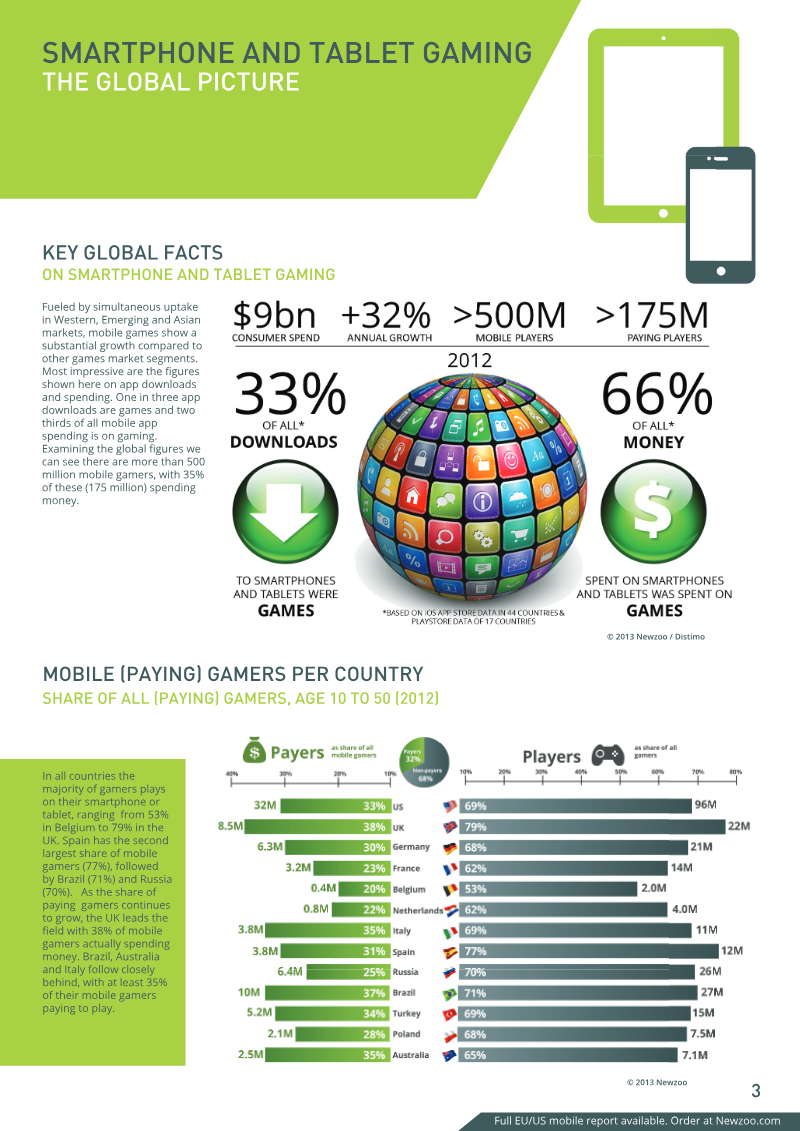

Newzoo
ReportMobile Games: Placing Smartphone and Tablet Gaming in Perspective of the Total Games Market 2012
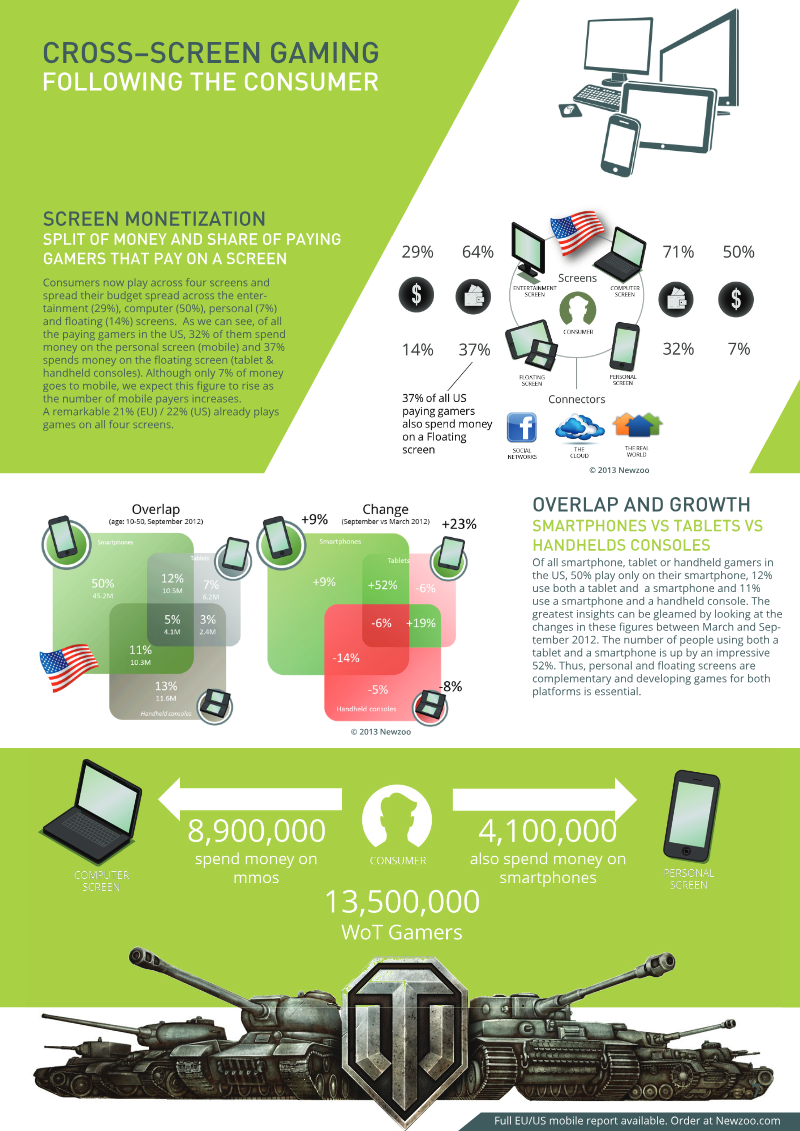
The 2012 mobile gaming landscape was defined by a rapid shift in consumer behavior, characterized by the adoption of multiple screens and the dominance of free-to-play (F2P) monetization models. The industry experienced a significant transition as gamers moved away from traditional PC and TV-centric play toward a multi-screen environment that includes smartphones and tablets. This shift necessitated a move away from single-screen metrics, which had previously led to investor confusion and a 50% decline in external investment volume during 2012. Key findings indicate that mobile gaming became a primary revenue driver, with two out of every three dollars spent on smartphones and tablets allocated to games. By the end of 2012, there were over 500 million mobile gamers globally, 175 million of whom were paying users. F2P models emerged as the most profitable strategy, accounting for 70% of iOS revenue in the US and Europe. While the iOS App Store maintained a dominant revenue share in Western markets, Google Play showed stronger performance in Japan. Demographic data revealed that iOS gamers generally possessed higher incomes and were more likely to be in full-time employment compared to their Google Play counterparts. The analysis, which covers 44 countries for iOS data and 17 for Google Play, emphasizes that the modern games market is a global, multi-screen ecosystem. The research highlights that mobile and tablet usage is complementary, with a 52% increase in users engaging with both devices between March and September 2012. Ultimately, the findings suggest that for game publishers to succeed, they must adopt a multi-screen strategy that balances consumer value with monetization, as the launch of a game now serves only as the starting point for a long-term service-based relationship with the player.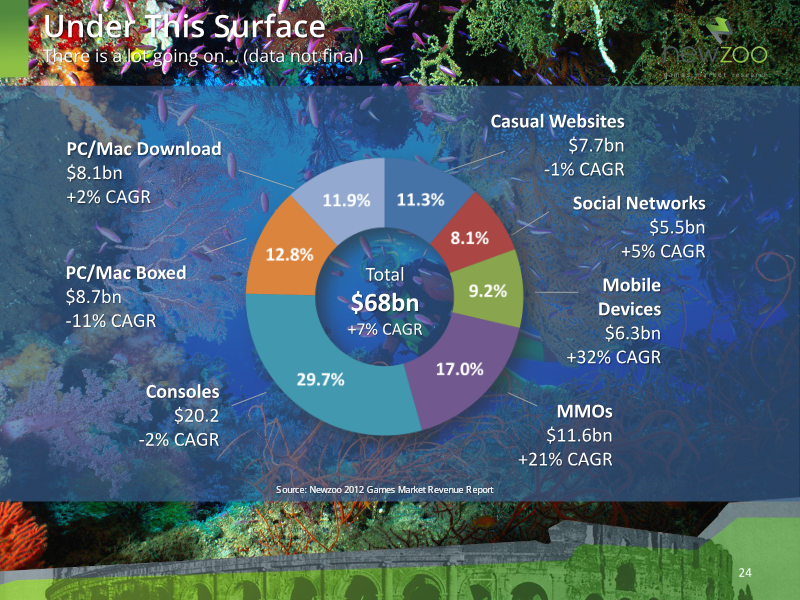


Newzoo
Report