
Press Start
Open-access student and early-career game studies journal hosted by the University of Glasgow.
Documents
Media Literacy: Using a Game to Prompt Self-Reflection on Political Truth Biases
The game Fibber serves as a functional media literacy tool designed to help individuals identify and analyze their internal cognitive heuristics regarding political truth biases.
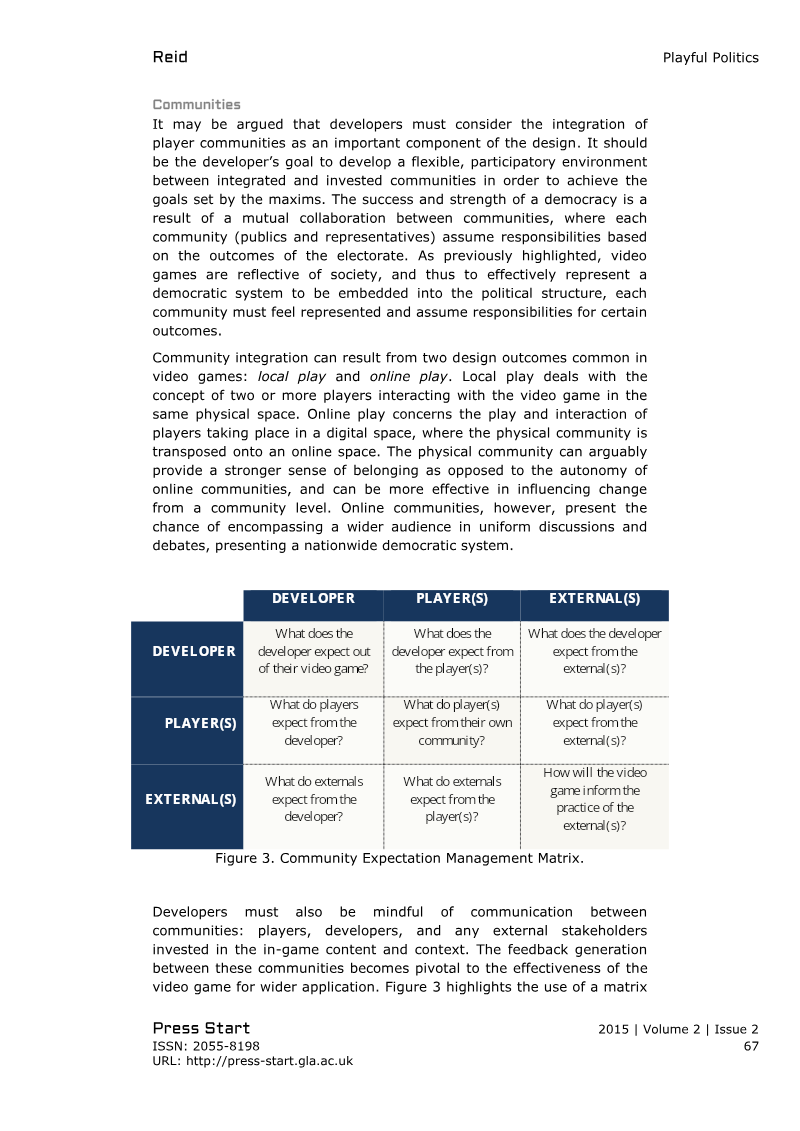
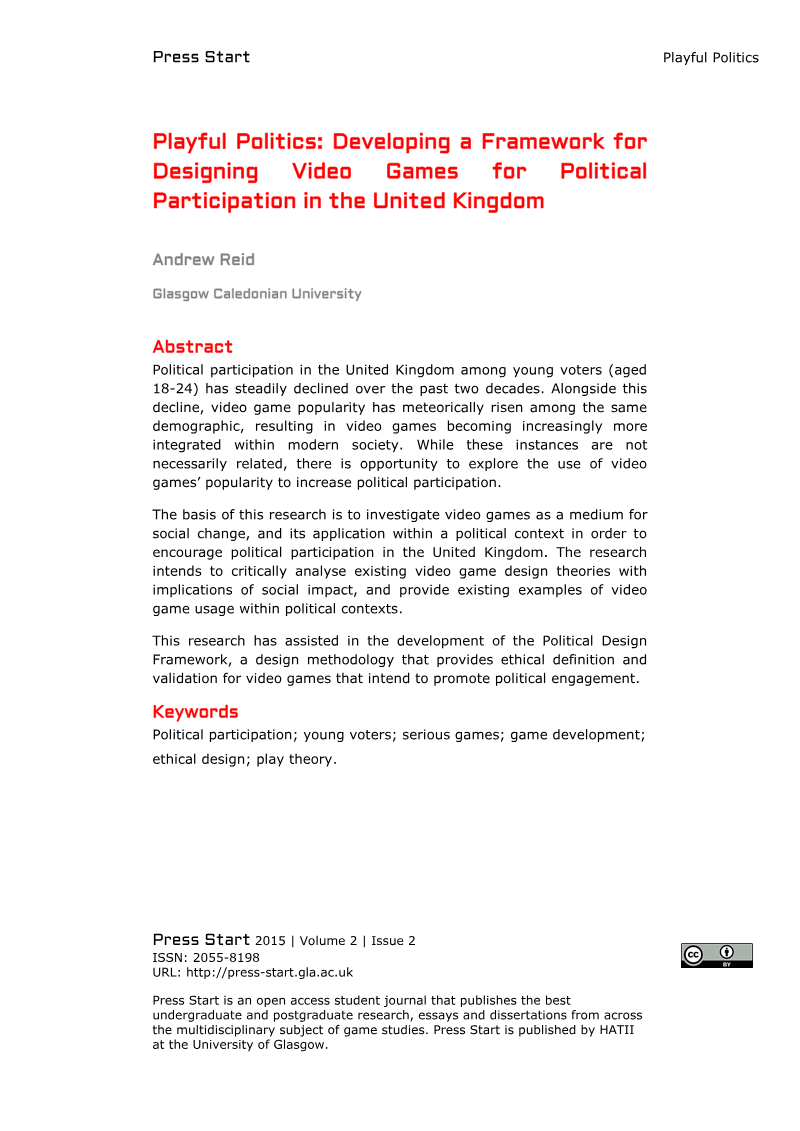
Playful Politics: Designing Video Games for Political Participation in the UK
Video games represent a potent, underutilized medium for reversing the decline in political participation among young adults in the United Kingdom.
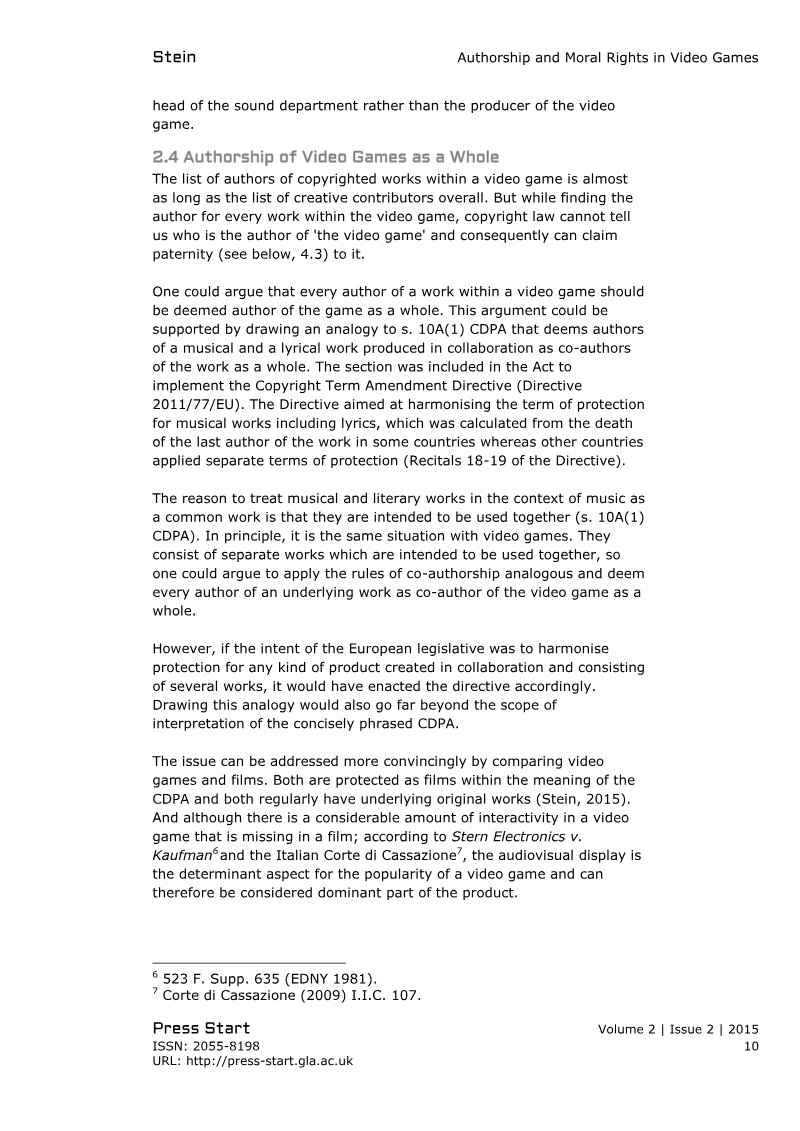
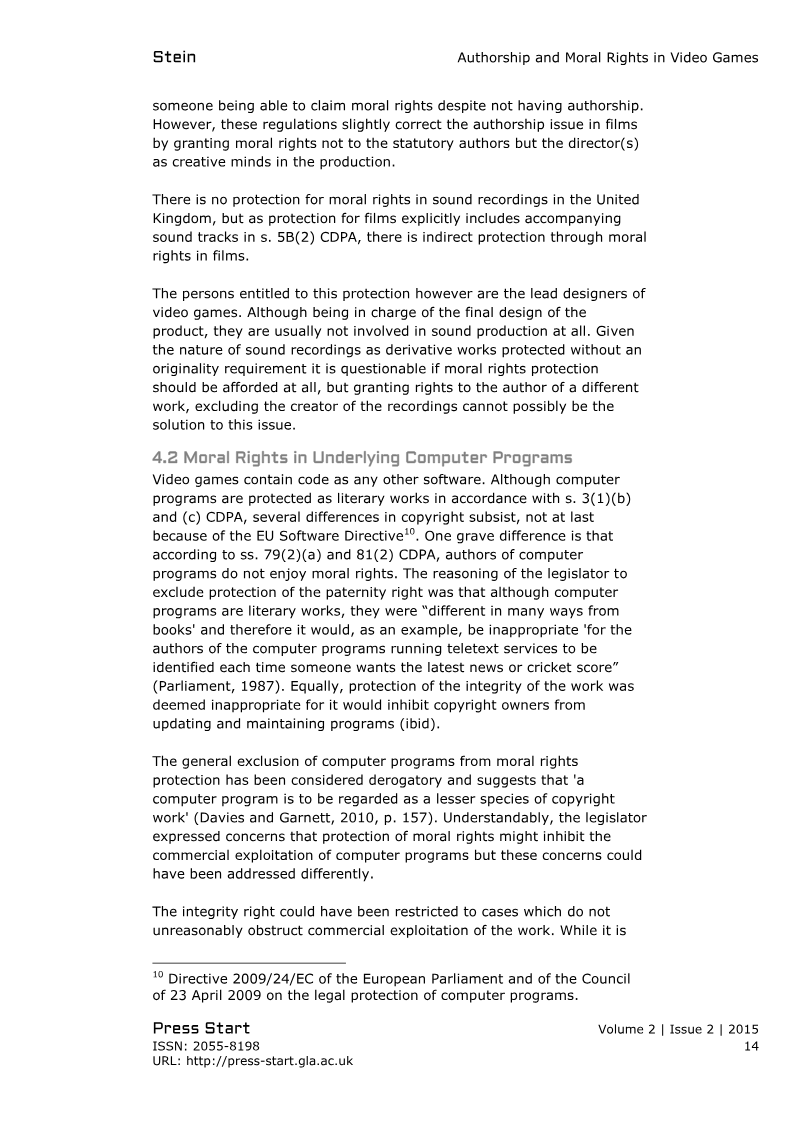
Authorship and Moral Rights in Video Games
Video games occupy a complex position within United Kingdom copyright law, where they are primarily classified as films rather than singular creative works.
- Under UK law, video games are treated as a collection of multiple copyrighted works, with the producer and principal director (often the lead designer) recognized as the statutory joint authors of the film elements.
- Copyright ownership for video game contributors is typically governed by Section 11(2) of the CDPA, which vests ownership in the employer when works are created by staff in the course of their employment.
- UK law explicitly excludes computer programs from moral rights protection, a decision criticized for potentially treating software as a 'lesser species' of copyright work and ignoring Berne Convention standards.
Would You Kindly Consider the Consequences?: A Model for the Use of Video Game Plots as Legal Learning Fact Patterns
Video game narratives offer a sophisticated pedagogical framework for legal education, serving as dynamic fact patterns that challenge students to apply complex legal theories to immersive, fictional environments.
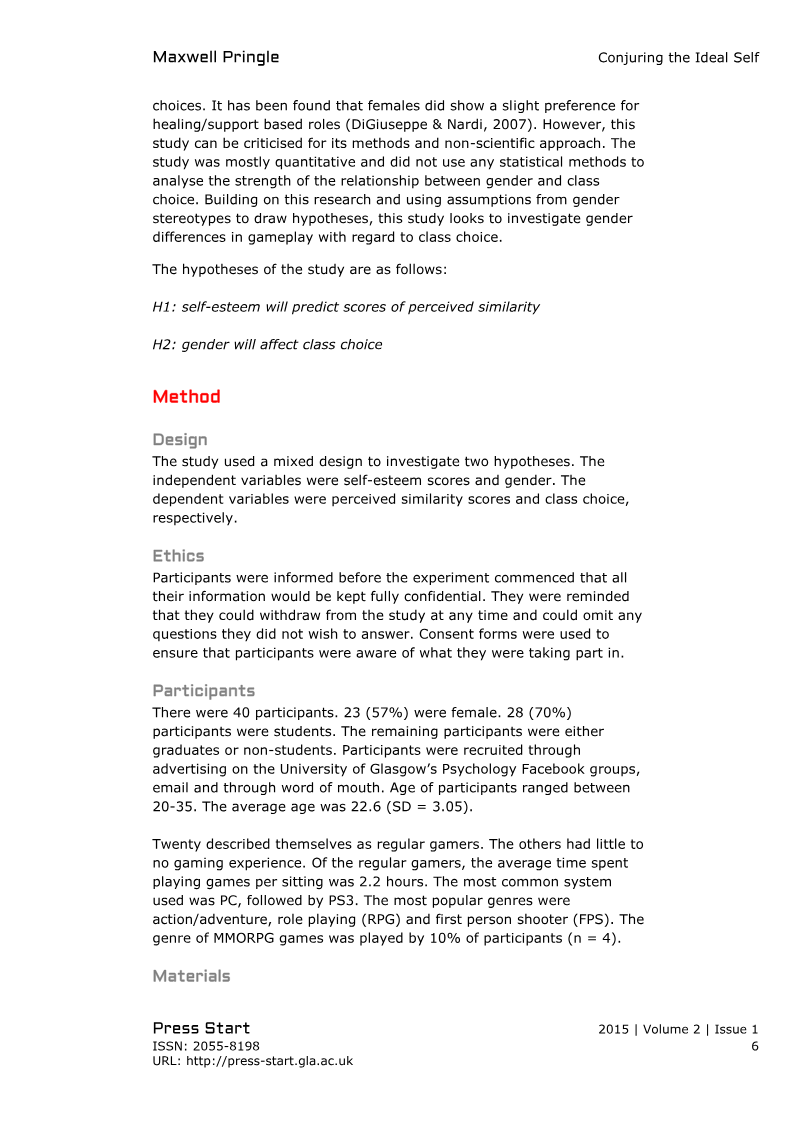
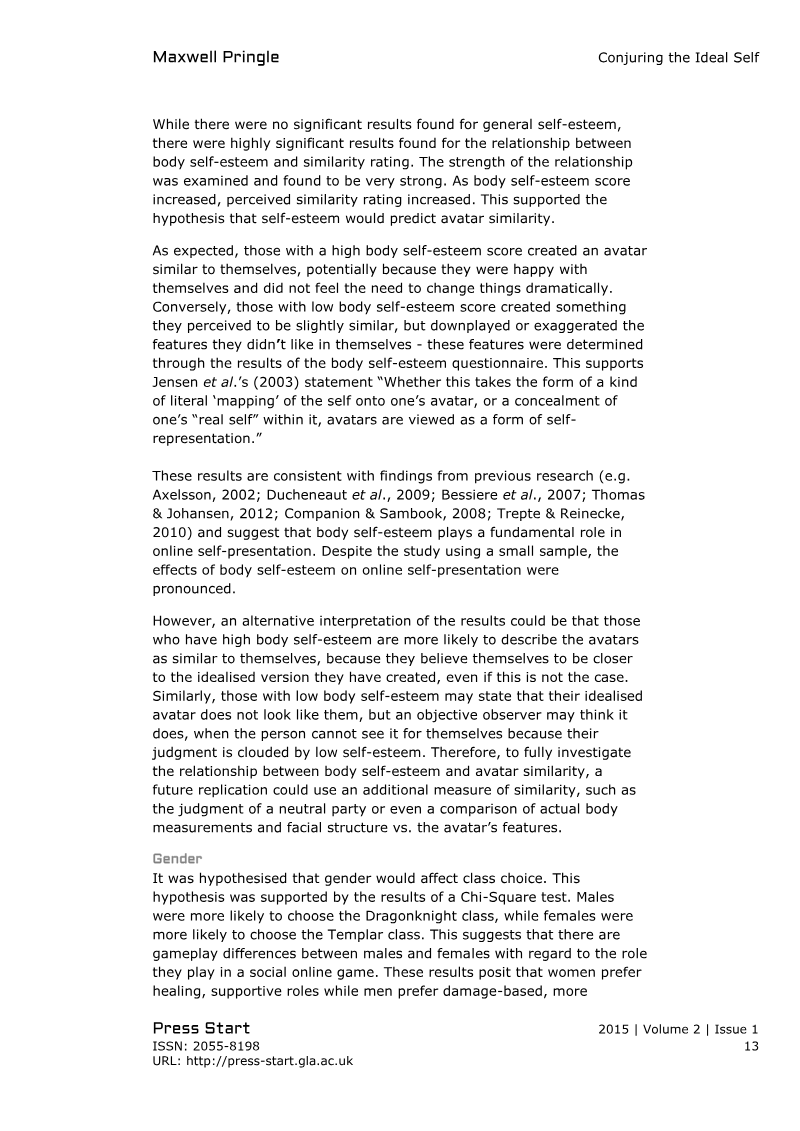
Conjuring the Ideal Self: An Investigation of Self-Presentation in Video Game Avatars
The investigation into avatar creation and gameplay behavior within The Elder Scrolls Online reveals that digital self-presentation is fundamentally driven by the psychological interplay between a player’s self-esteem and their real-world identity.
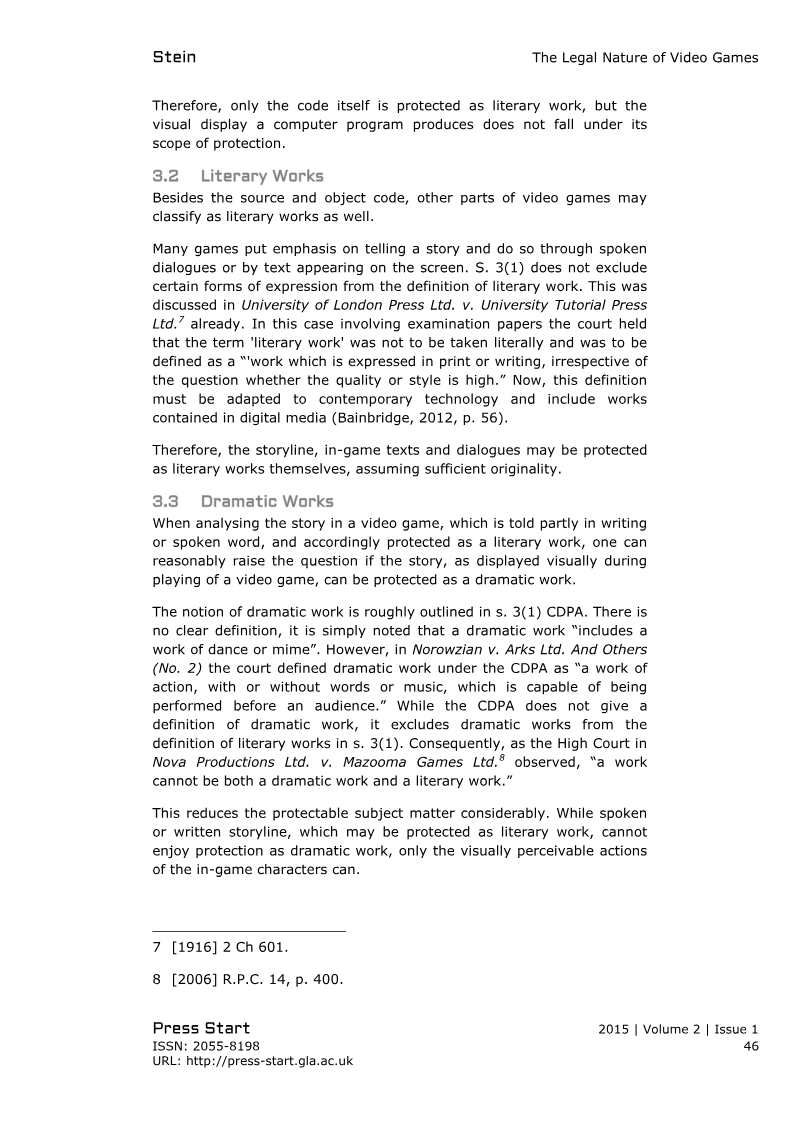
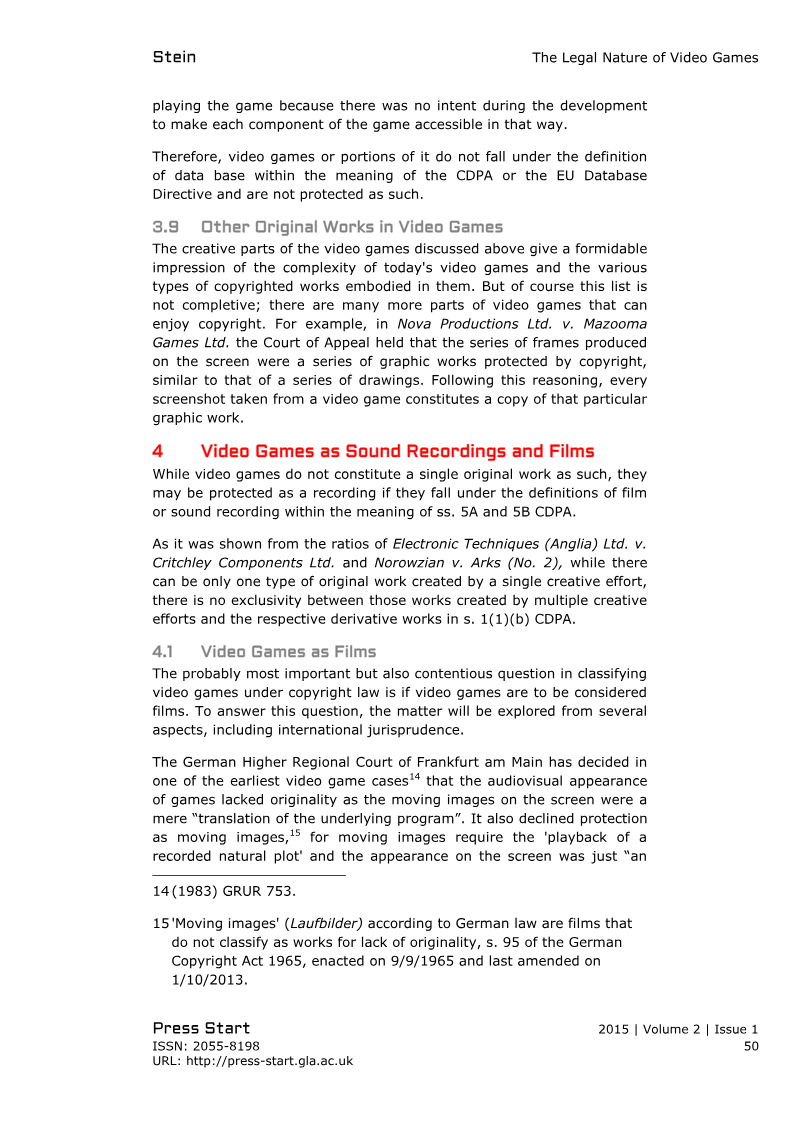
The Legal Nature of Video Games: Adapting Copyright Law to Multimedia
The legal classification of video games remains a complex challenge within copyright law due to their multifaceted, multimedia nature.
One Simulated Hand, Two Real Hands: Antisimulation and Phenomenological Correspondence in Videogame Control Schemes
This analysis establishes a framework for evaluating videogame control schemes through the lens of phenomenological correspondence, which measures the relationship between the complexity of a simulated action and the physical input required by the player.
Parasocial and Social Player-Avatar Relationships: Social Others in Thomas Was Alone
The relationship between players and their digital avatars has evolved beyond traditional parasocial models, shifting toward a framework where avatars function as social others.
- The Banks-Bowman social categorization system (2014) provides a framework for analyzing player-avatar relationships beyond traditional parasocial models, identifying four distinct dynamics: avatar-as-object, avatar-as-me, avatar-as-symbiote, and avatar-as-social-other.
- The 'avatar-as-social-other' relationship occurs when players perceive a playable character as having independent agency, often leading to increased emotional investment and a sense of responsibility for the character's well-being.
- In the game 'Thomas Was Alone' (2012), the developer uses narrative voiceovers and character-specific traits to successfully frame simple geometric shapes as sentient entities, effectively pushing players away from an 'avatar-as-object' perspective.
From Team Play to Squad Play: The Militarisation of Interactions in Multiplayer FPS Video Games
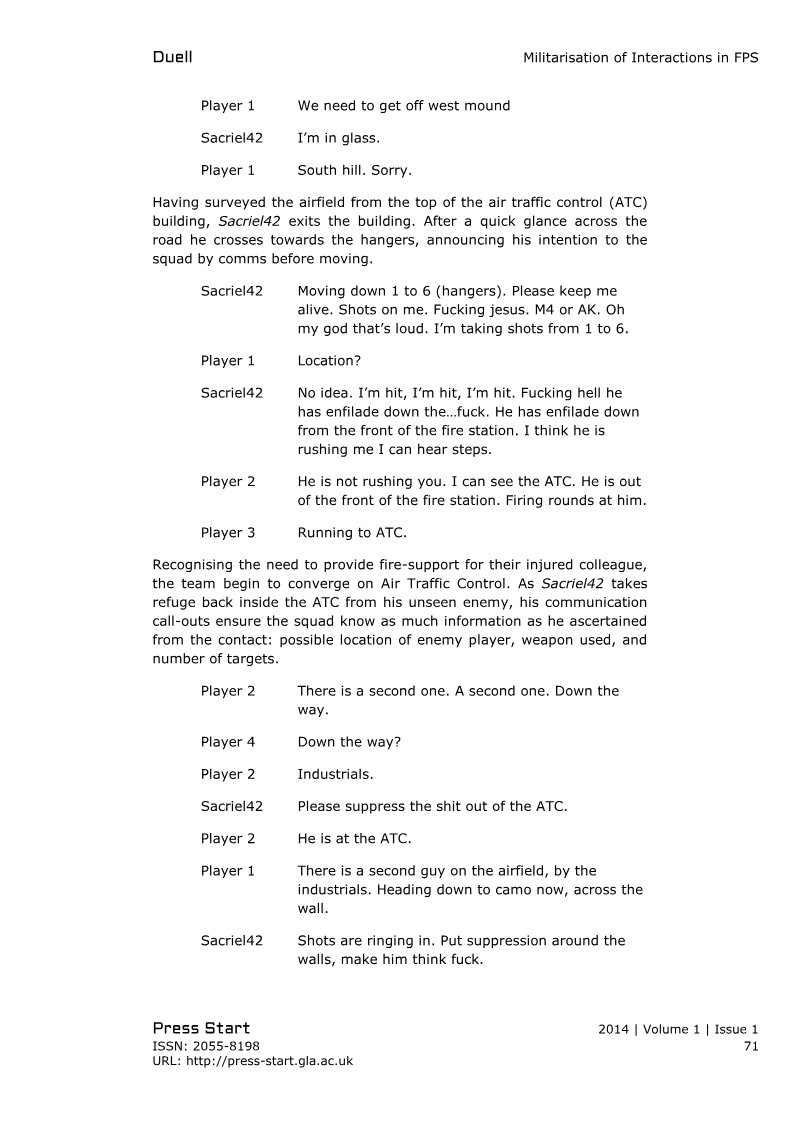
Multiplayer first-person shooter games increasingly rely on the adoption of real-world military communication doctrines to facilitate high-level coordination.
- Expert multiplayer FPS players evolve from 'team play' to 'squad play' by adopting real-world military communication protocols to improve tactical coordination.
- Squad play utilizes standardized military terminology—such as 'enfilade,' 'overwatch,' and 'defilade'—to eliminate ambiguity and ensure shared situational awareness among distributed players.
- Effective squad communication relies on precise, brevity-focused voice procedures that allow players to act as individual sensors, creating a collaborative, multi-perspective view of the battlefield.
Precarious Play: To Be or Not to Be Stanley
The tension between player agency and systemic control defines the contemporary digital gaming experience.
Brechtian Alienation in Video Games
Brechtian alienation serves as a sophisticated analytical framework for game design, challenging the industry-wide preoccupation with seamless immersion.
Compassionate Play in the Ludic Century
Games have ascended to become the primary cultural framework of the modern era, fundamentally restructuring human experience and systemic interaction.
Do you work at Press Start? Get a free report of how these documents are read and cited here.