
Press Start
Open-access student and early-career game studies journal hosted by the University of Glasgow.
Documents
Our Combative Past and Co-operative Future: Review of The Play Versus Story Divide
The collection of essays titled The Play Versus Story Divide, edited by Matthew Wilhelm Kapell, serves as a critical examination of the long-standing debate within game studies regarding whether digital games should be analyzed primarily as interactive systems of play or as narrative texts.
- The traditional academic debate pitting ludology (gameplay) against narratology (storytelling) is increasingly viewed as an artificial and counterproductive dichotomy.
- Modern game studies are shifting toward a cooperative dialectic that analyzes the interplay between mechanical systems and narrative development.
- Gameplay restrictions and player agency are now recognized as essential tools that function as core narrative devices within modern game design.
In War, Not Everyone's a Soldier: A Review of This War of Mine
This War of Mine represents a significant departure from traditional war-themed video games by shifting the focus from frontline combat to the civilian experience of survival.
- 11 bit studios developed 'This War of Mine' as a direct counter-narrative to mainstream war games by shifting the focus from frontline combat to the survival of civilians.
- The game’s core mechanics prioritize resource management and moral decision-making over combat proficiency to emphasize the human cost of conflict.
- The narrative is inspired by the four-year siege of Sarajevo, grounding the gameplay in historical civilian experiences during wartime.
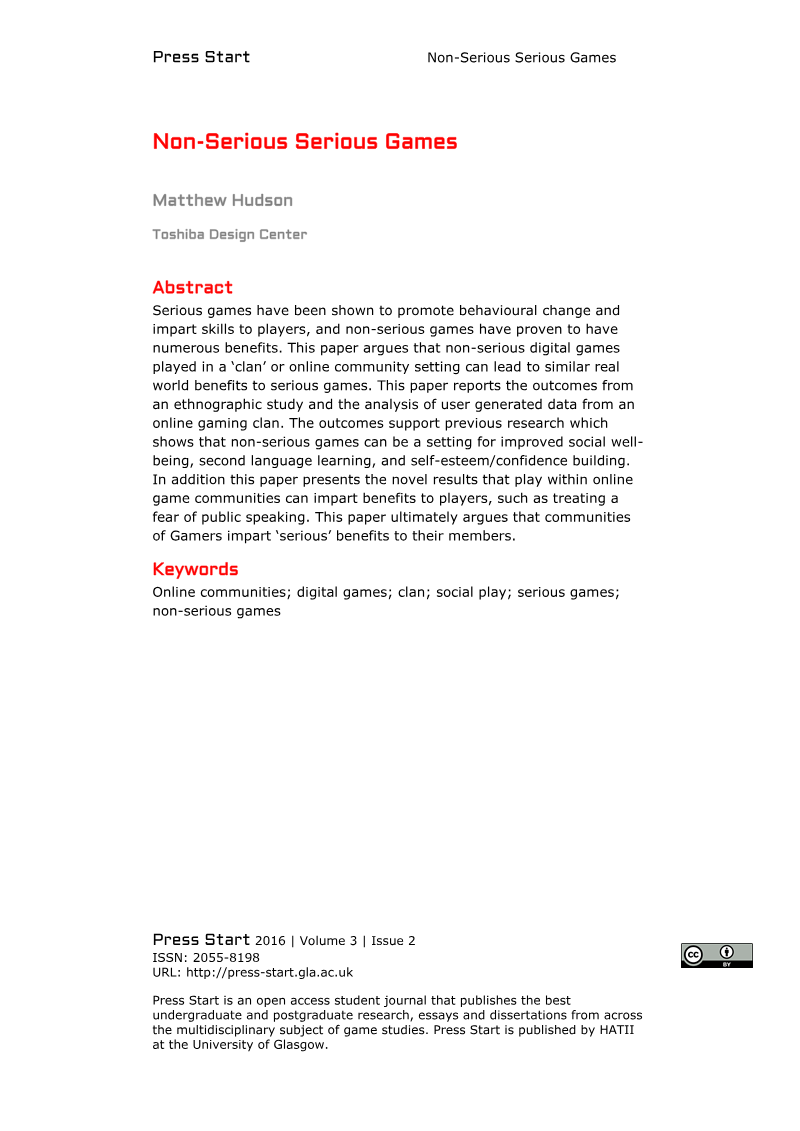
Non-Serious Serious Games
Commercial entertainment games, often categorized as non-serious, function as powerful vehicles for personal development and skill acquisition when played within highly structured online communities.
- Organized online gaming communities, or 'clans,' function as environments that provide significant real-world benefits, including improved social well-being, leadership development, and enhanced confidence.
- Participation in structured clan activities acts as a form of exposure therapy for public speaking, as members regularly perform briefings and debriefings for groups of 30 to 60 people in a low-stress, virtual environment.
- A survey of 82 members of the '29th' gaming clan revealed that non-native English speakers use the clan's task-oriented, immersive environment to practice and improve their language fluency.
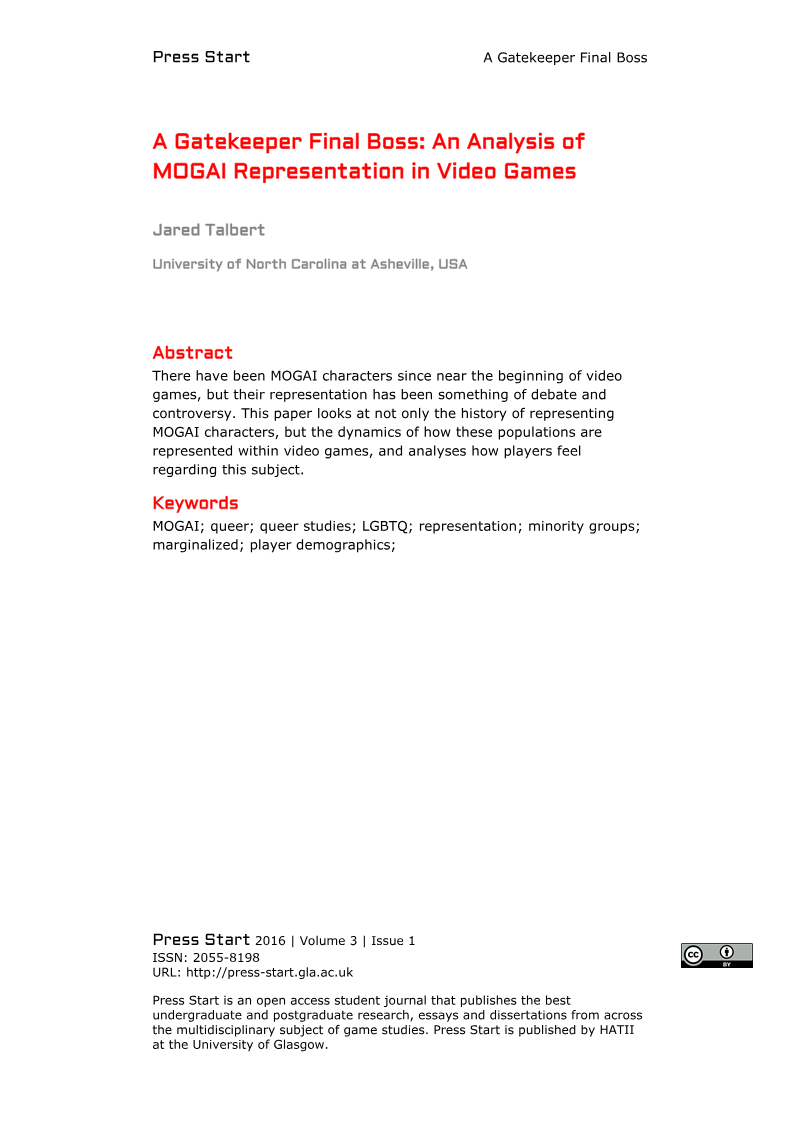
A Gatekeeper Final Boss: An Analysis of MOGAI Representation in Video Games
Video games have historically marginalized individuals with diverse orientations, gender alignments, and intersex identities, with these groups accounting for only one percent of commercial releases between 2010 and 2015.
- Between 2010 and 2015, individuals with diverse orientations, gender alignments, and intersex identities were represented in only one percent of commercial video game releases.
- The industry-wide justification that MOGAI representation lacks market demand or alignment with player demographics is empirically unfounded, as these groups are active participants in the gaming community.
- Localization practices frequently exacerbate systemic underrepresentation by actively censoring or erasing queer identities to conform to perceived market norms.
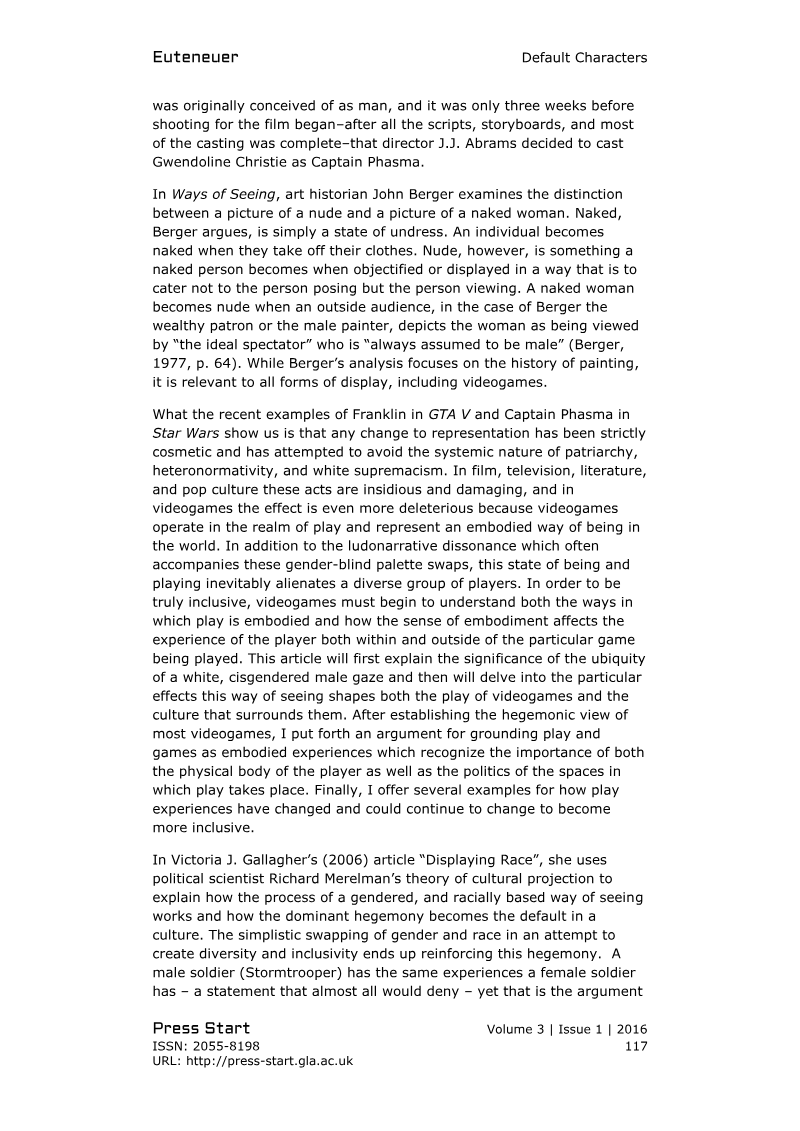
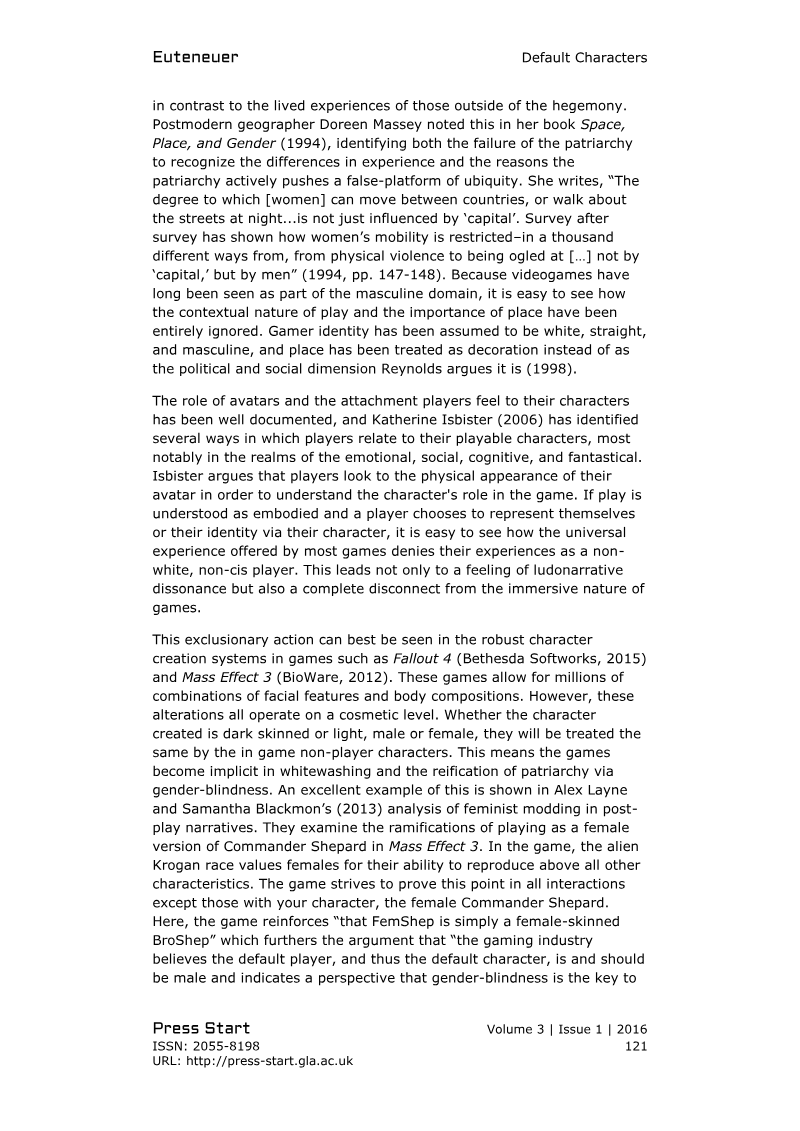
Default Characters and the Embodied Nature of Play: Race, Gender, and Gamer Identity
The gaming industry frequently relies on a default protagonist archetype—typically white, male, and heterosexual—which reinforces exclusionary power structures and limits the inclusivity of player identity.
- The gaming industry frequently relies on a 'default' character model that is white, cisgender, and male, which alienates diverse players by treating race and gender as mere cosmetic palette swaps rather than lived experiences.
- Games like Mass Effect 3 and Fallout 4 utilize robust character creation systems that remain functionally 'gender-blind,' failing to acknowledge how social or cultural contexts should realistically impact a character's interactions with the game world.
- The controversy surrounding Grand Theft Auto V (2013) highlighted how players perceived systemic bias in the game's AI, with many reporting that the African-American protagonist, Franklin, faced harsher police scrutiny than white counterparts, a claim Rockstar Games denied.
Female Fighters: Perceptions of Femininity in the Super Smash Bros. Community
The Super Smash Bros. community, as represented by discourse on the SmashBoards forum, maintains a unique cultural environment where technical gameplay proficiency often supersedes traditional gender-based social dynamics.
- Analysis of 284 SmashBoards forum posts reveals that technical gameplay utility often takes precedence over gendered perceptions, resulting in an ambiguous approach to femininity within the community.
- Hypermasculine performances, defined by the sexualization of female characters, occurred in approximately 13.73% of the analyzed posts.
- Aesthetic-focused commentary regarding female characters appeared in 30.04% of the analyzed posts, indicating that a significant portion of the community places importance on appearance as a component of a character's value.
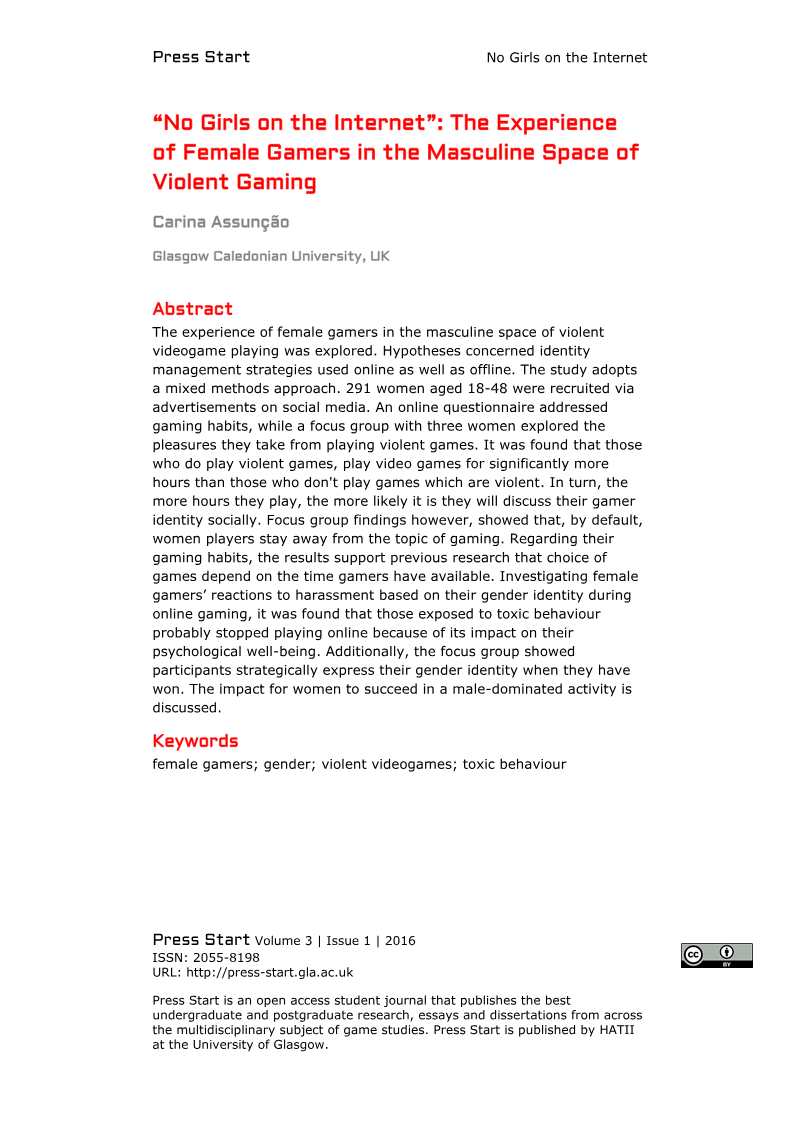
"No Girls on the Internet": The Experience of Female Gamers in the Masculine Space of Violent Gaming
Female gamers navigating masculine-coded, violent gaming environments frequently encounter systemic toxicity and harassment, which necessitates the strategic management of their gender identity.
- Female gamers who play more frequently are significantly more likely to publicly identify as gamers, with a positive correlation between weekly hours played and the willingness to disclose this identity to others.
- Toxic behavior is a pervasive issue in online gaming, with 62.2% of the 291 surveyed women reporting exposure to such conduct.
- Despite the prevalence of toxicity, there is no significant statistical difference in the level of female gender expression between those who have experienced harassment and those who have not.
Discussing Identities through Game-Making: A Case Study
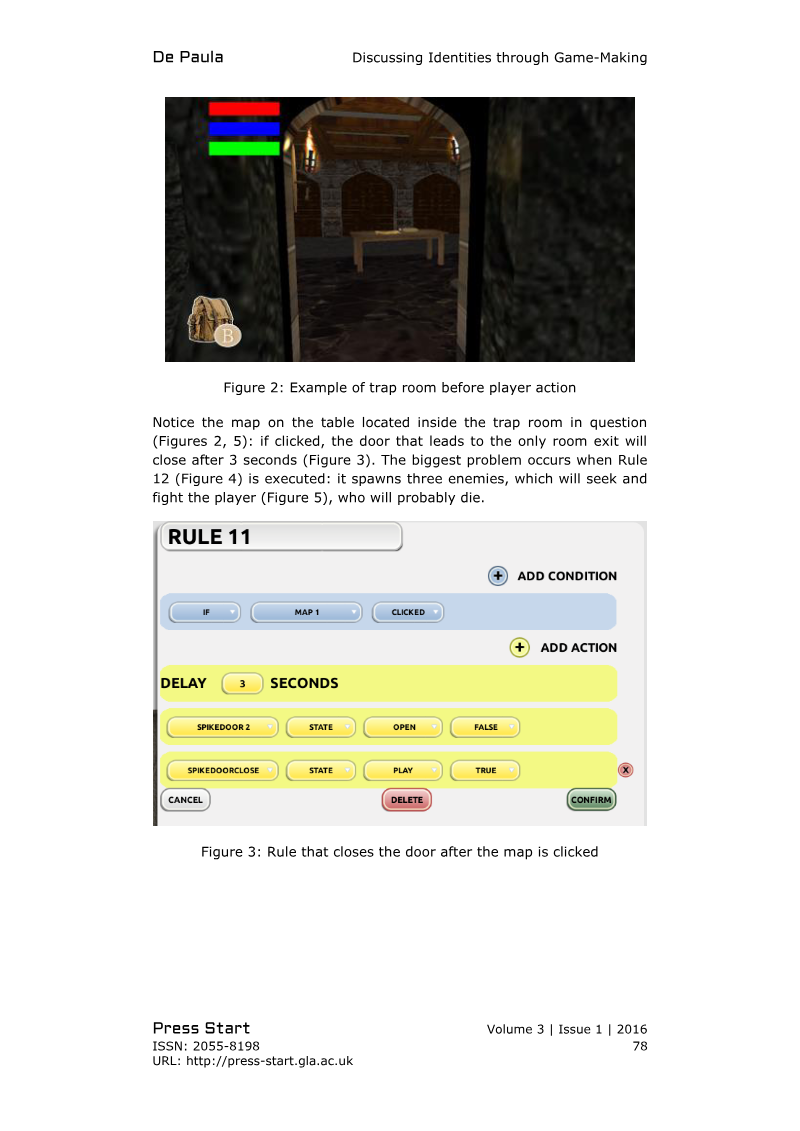
Game-making in educational environments functions as a critical platform for students to negotiate and perform complex identities, moving beyond traditional academic boundaries.
- Gamer identity is not a static, defining trait but a fluid, temporary performance that individuals use to navigate social and cultural positions.
- Game-making serves as a form of literacy that allows individuals to express themselves and negotiate identities, rather than being limited to teaching specific curricular content like math or programming.
- Participants in the 'Playing Beowulf' project used game-making to perform 'proto-professional' and 'gamer' identities, utilizing their gaming capital—such as references to 'Fallout' and the 'Wilhelm Scream'—to establish their status as industry insiders.
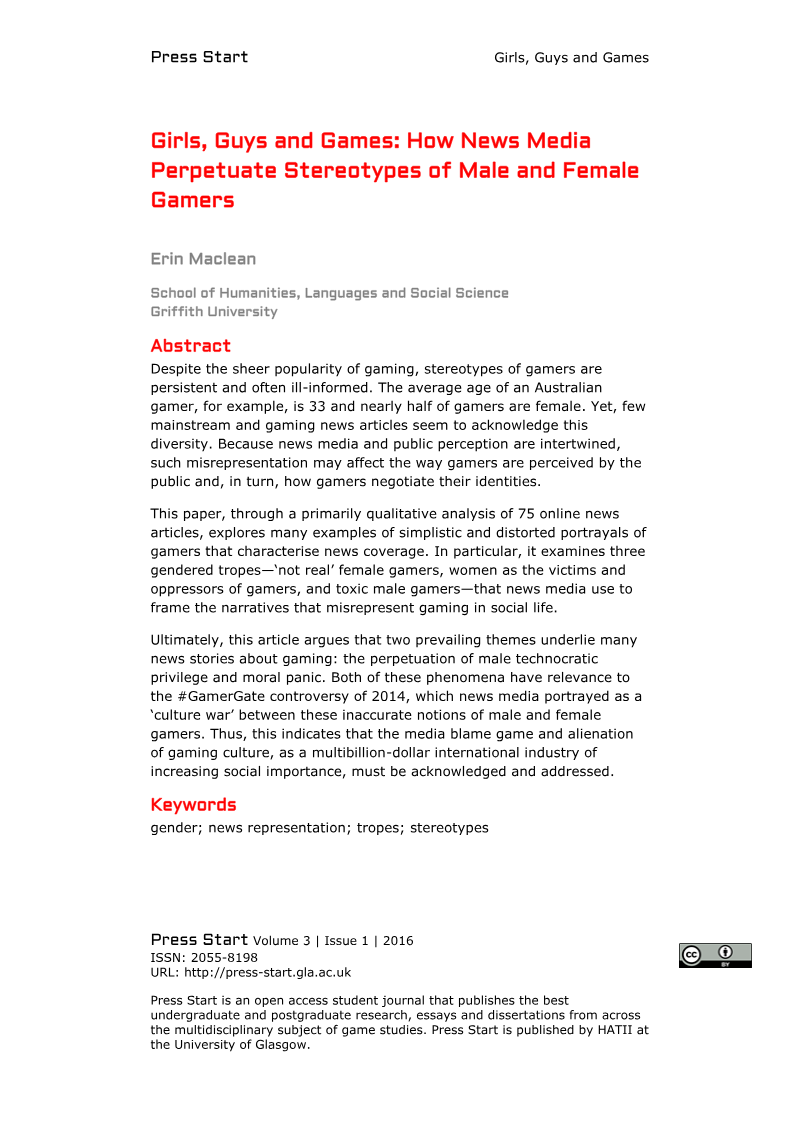
Girls, Guys and Games: How News Media Perpetuate Stereotypes of Male and Female Gamers
Mainstream news media coverage between 2009 and 2015 consistently perpetuated outdated gender stereotypes, framing video games as an inherently male-dominated space despite the industry’s increasingly diverse demographic reality.
- News media coverage of gaming remains heavily skewed toward male perspectives, with male gamers interviewed or discussed 15.4 times more frequently than female gamers regarding topics unrelated to sexism.
- Journalistic framing of gaming frequently relies on three gendered tropes: the 'not real' female gamer, women as both victims and oppressors, and the toxic male gamer.
- Coverage of female gamers outside of sexism-focused stories consistently frames them as 'casual' players, often associating them with simplified, 'silly' titles like Candy Crush or Peggle.
A Gendered Identity Debate in Digital Game Culture
The traditional alignment of gamer identity with masculinity faces significant disruption as the industry experiences a surge in player diversity.
- The gaming industry has historically constructed a 'hegemony of play' that equates gamer identity with masculinity, creating a social barrier that discourages many women from identifying as gamers despite their significant presence in the population.
- Industry data from 2015 shows the gender gap in gaming has largely closed, with 56% of players being male and 44% female, a demographic shift that has triggered a 'gamer status threat' among traditional male players.
- To protect the masculine gamer identity, some players employ a 'strategy of splitting' by framing casual gaming as feminine and inferior, while labeling core, hardcore gaming as masculine and superior.
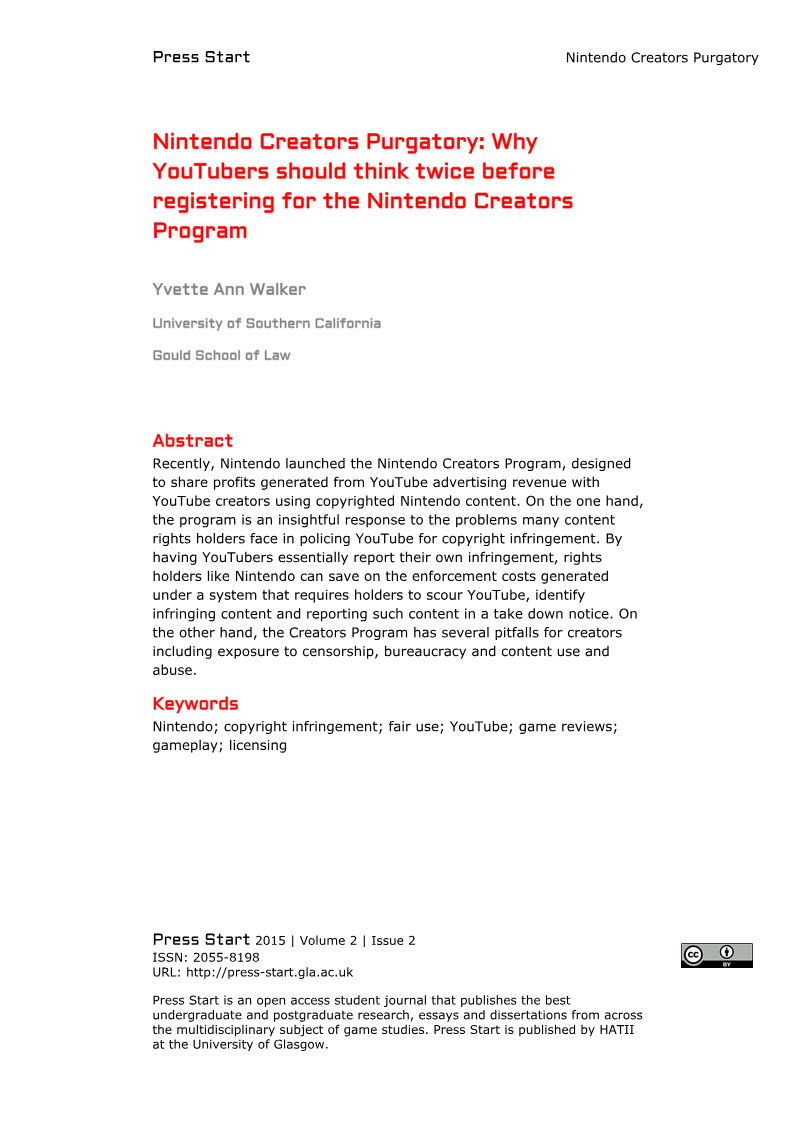
Nintendo Creators Purgatory: Why YouTubers Should Think Twice
The Nintendo Creators Program (NCP) serves as a mechanism for Nintendo to monetize YouTube content featuring its intellectual property while shifting the burden of copyright enforcement from the company to individual creators.
- The Nintendo Creators Program (NCP) functions as a licensing model where creators pay a 30% to 40% fee on advertising revenue in exchange for the legal right to use Nintendo’s intellectual property.
- Participants must grant Nintendo a perpetual, worldwide, royalty-free license to use their registered content for the company's own marketing and promotional purposes.
- The program requires creators to submit videos for pre-approval, creating a mechanism that potentially allows Nintendo to censor critical, defamatory, or obscene content.

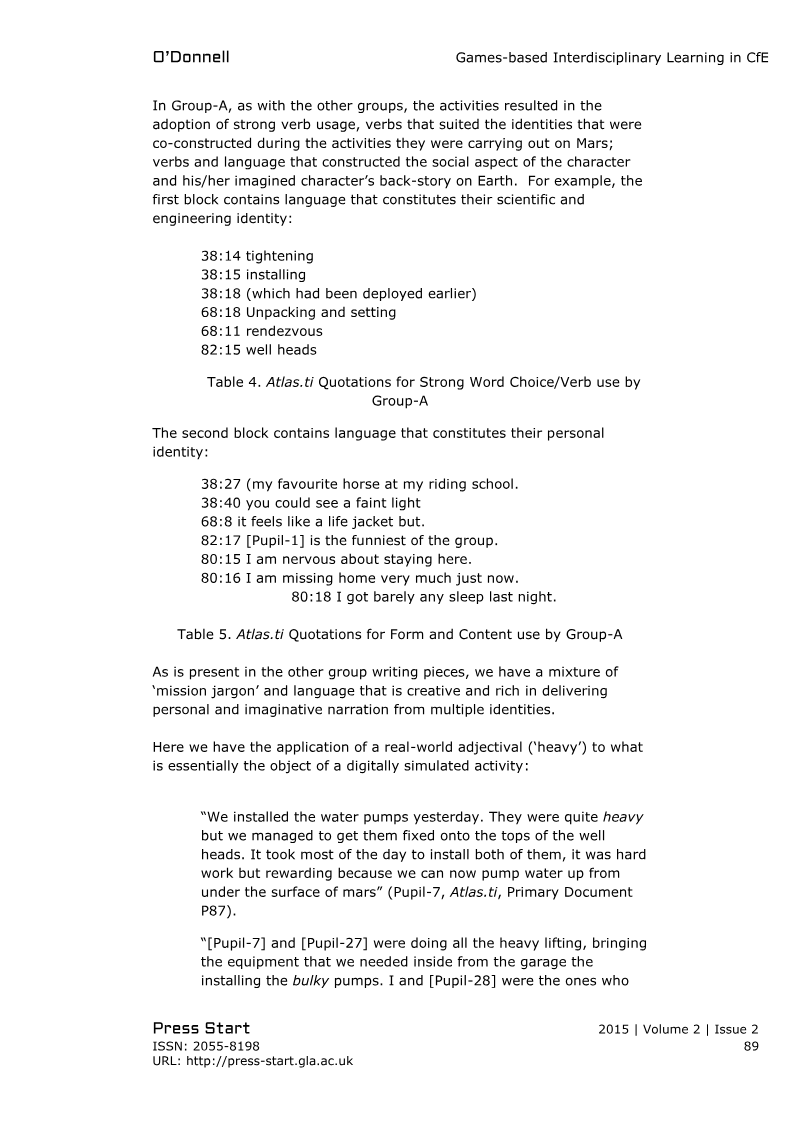
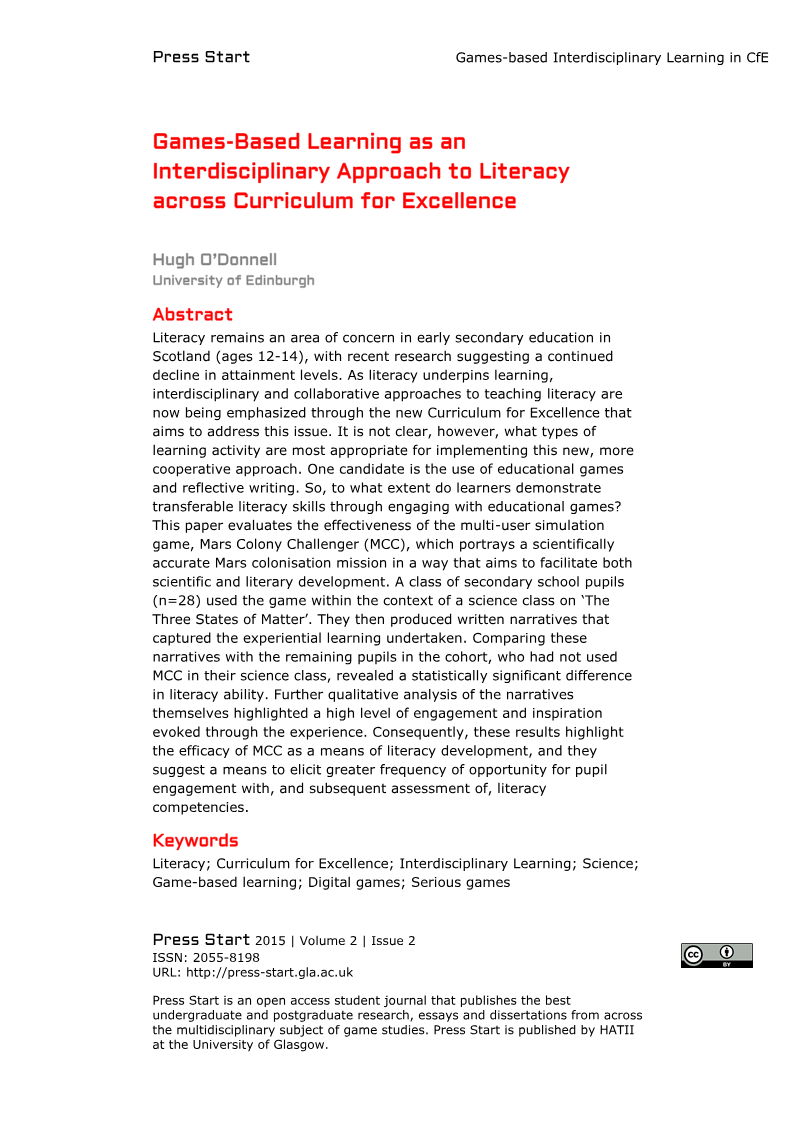
Games-Based Learning as an Interdisciplinary Approach to Literacy across Curriculum for Excellence
The integration of the simulation game Mars Colony Challenger into secondary science curricula significantly enhances literacy attainment among students aged 12 to 14.
- Integrating the simulation game Mars Colony Challenger into secondary science curricula for students aged 12 to 14 leads to statistically superior literacy attainment compared to conventional instructional methods.
- Quantitative analysis using Mann-Whitney U testing confirms that students using the simulation show measurable improvements in writing proficiency.
- The game environment effectively fosters advanced literacy skills, specifically the development of sophisticated narrative structures, complex characterization, and the integration of specialized technical vocabulary.
Do you work at Press Start? Get a free report of how these documents are read and cited here.