1 free read left. Create a free account for unlimited reading + AI research.
Create free accountArticle Press Start
1 free read left. Create a free account for unlimited reading + AI research.
Create free accountArticlePress Start
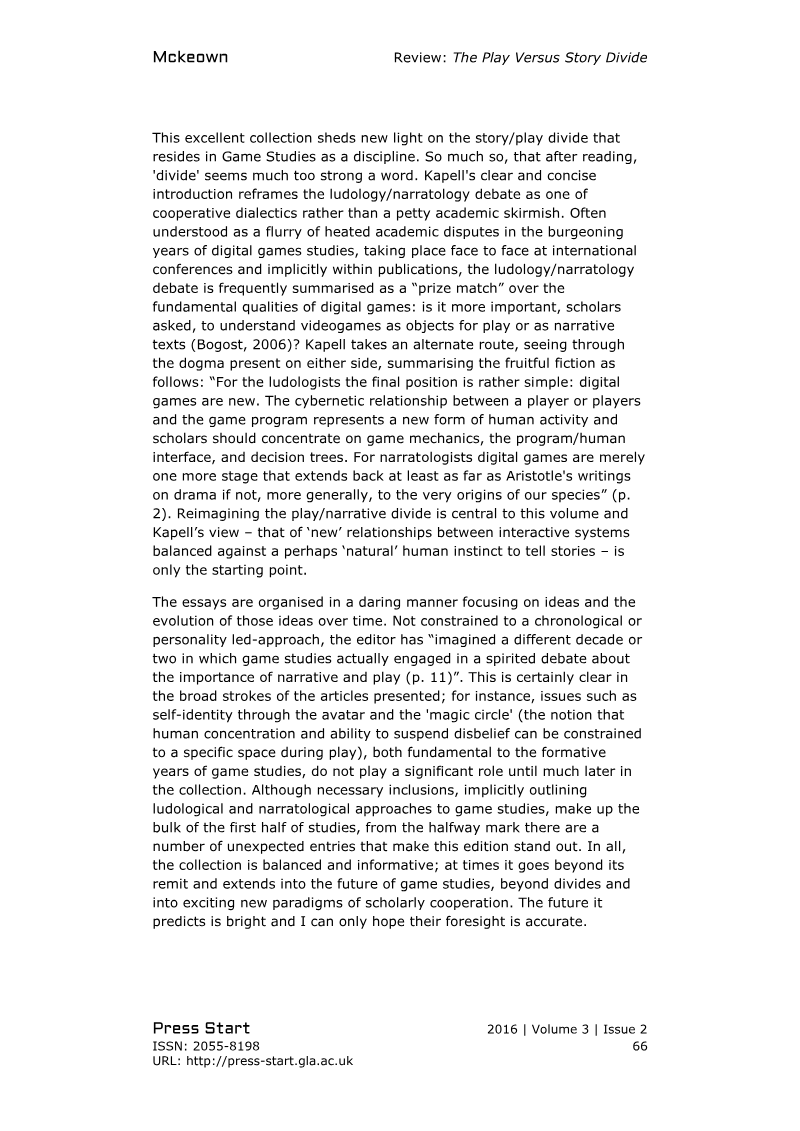
For a long time, game studies focused on whether games should be analyzed as systems of play (ludology) or as narrative texts (narratology).
It's like arguing whether a car is primarily an engine or a chassis; both are essential for it to function.
Key insight. The traditional academic debate pitting ludology against narratology is increasingly viewed as an artificial and counterproductive dichotomy.
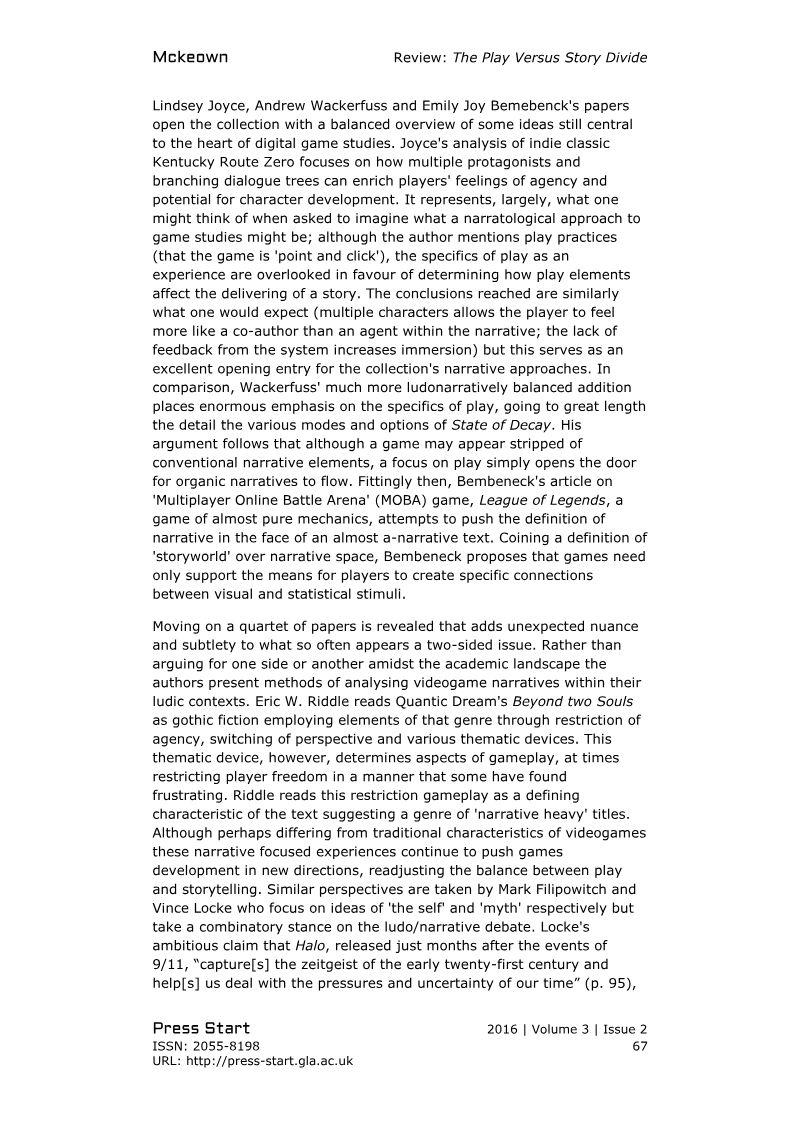
The collection of essays titled The Play Versus Story Divide, edited by Matthew Wilhelm Kapell, serves as a critical examination of the long-standing debate within game studies regarding whether digital games should be analyzed primarily as interactive systems of play or as narrative texts. The central thesis posits that this dichotomy is largely artificial and counterproductive. Instead of viewing ludology and narratology as opposing forces, the volume advocates for a cooperative dialectic, suggesting that the most fruitful scholarly insights arise from analyzing the interplay between mechanics and storytelling.
The collection features a diverse range of case studies, including analyses of titles such as Kentucky Route Zero, State of Decay, League of Legends, Beyond: Two Souls, Halo, Deus Ex: Human Revolution, the Bioshock series, and Street Fighter. These entries demonstrate that modern game studies is moving toward a more nuanced, combinatory approach. Contributors explore how gameplay restrictions can function as narrative devices, how player agency shapes organic storytelling, and how the material conditions of game production influence the player experience. By moving beyond the traditional binary, the authors successfully illustrate that games are complex products of diverse design teams that require multifaceted analytical frameworks.
While the collection is praised for its balanced and forward-looking contributions, it is noted that the editor’s introduction and conclusion occasionally exhibit a bias toward narrative-focused analysis, which may alienate scholars who prioritize ludological perspectives. Furthermore, the text occasionally relies on esoteric references to historical academic disputes, which could pose a barrier to entry for less experienced readers. Despite these minor shortcomings, the volume is characterized as an essential, informative, and daring contribution to the field that effectively reframes the future of game studies as a collaborative endeavor.
 League of LegendsGame · Riot Games · 2009 · 822 documents
 Street FighterGame · Capcom · 1987 · 208 documents
 Deus ExGame · Ion Storm · 2000 · 41 documents
 State of DecayGame · Undead Labs · 2013 · 16 documents
 Deus Ex: Human RevolutionGame · Eidos Montréal · 2011 · 13 documents
 Kentucky Route ZeroGame · Cardboard Computer · 2013 · 8 documents
Each row is a game or company this document names, each column a document, oldest first. A mark means that document names it. Select a row to see those documents.
Press Start · 2026



DiGRA · 2026



Replay. The Polish Journal of Game Studies · 2026



gamevironments · 2026



International Journal of Role-Playing · 2026



Kinephanos · 2026



DiGRA · 2026
DiGRA · 2026



Queensland University of Technology · 2026



DiGRA · 2026



DiGRA · 2026



Zurich University of Applied Sciences · 2026



DiGRA · 2026