
International Journal of Serious Games
Open-access peer-reviewed journal of the Serious Games Society on the design, use and assessment of serious games.
Documents


Multimodality with Eye Tracking and Haptics: A New Horizon for Serious Games?
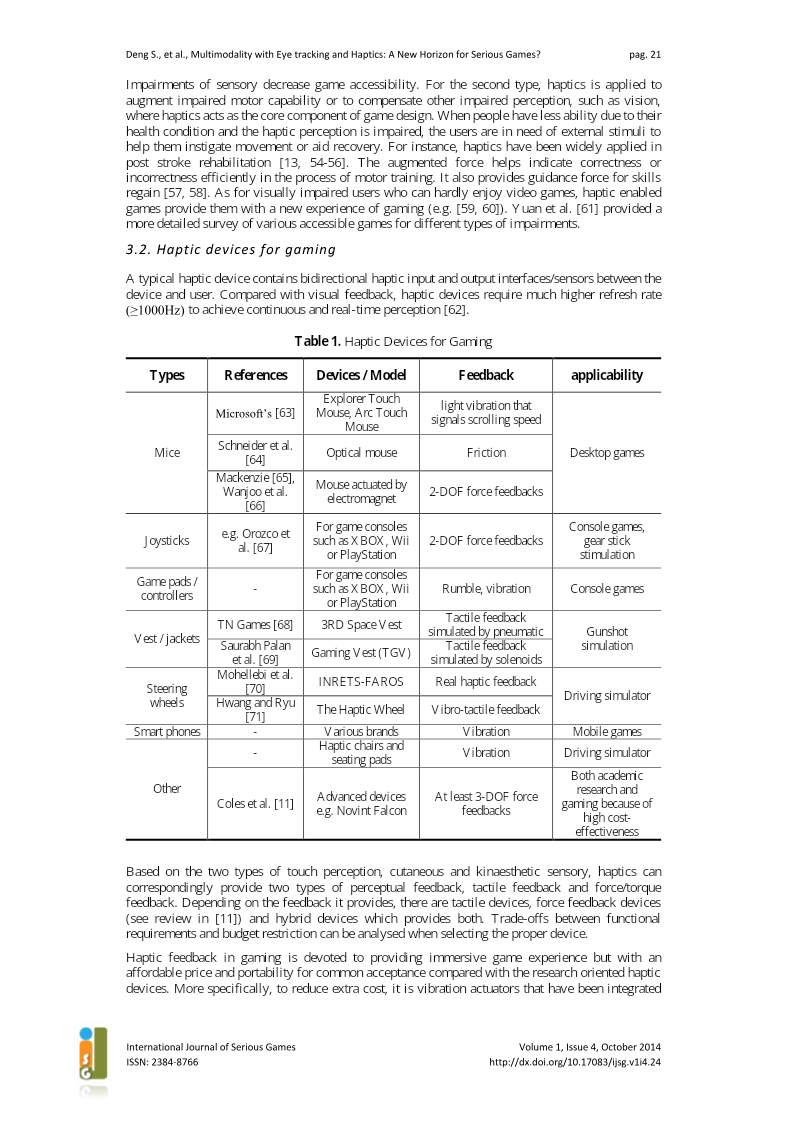
The integration of eye tracking and haptic feedback represents a transformative shift in the development of serious games, moving beyond traditional unimodal interfaces to create highly immersive and effective virtual environments.
- Synchronizing eye tracking with haptic feedback significantly improves cognitive processing, motor dexterity, and user engagement in high-stakes training environments like surgery and rehabilitation.
- Gaze-contingent rendering and high-refresh-rate haptic systems enable more intuitive control schemes while providing objective diagnostic data on user performance and cognitive load.
- The adoption of standardized modeling libraries and cross-modal frameworks is actively lowering development barriers for implementing multimodal interfaces in professional training.

Serious Games to Support Reflection in the Healthcare Sector
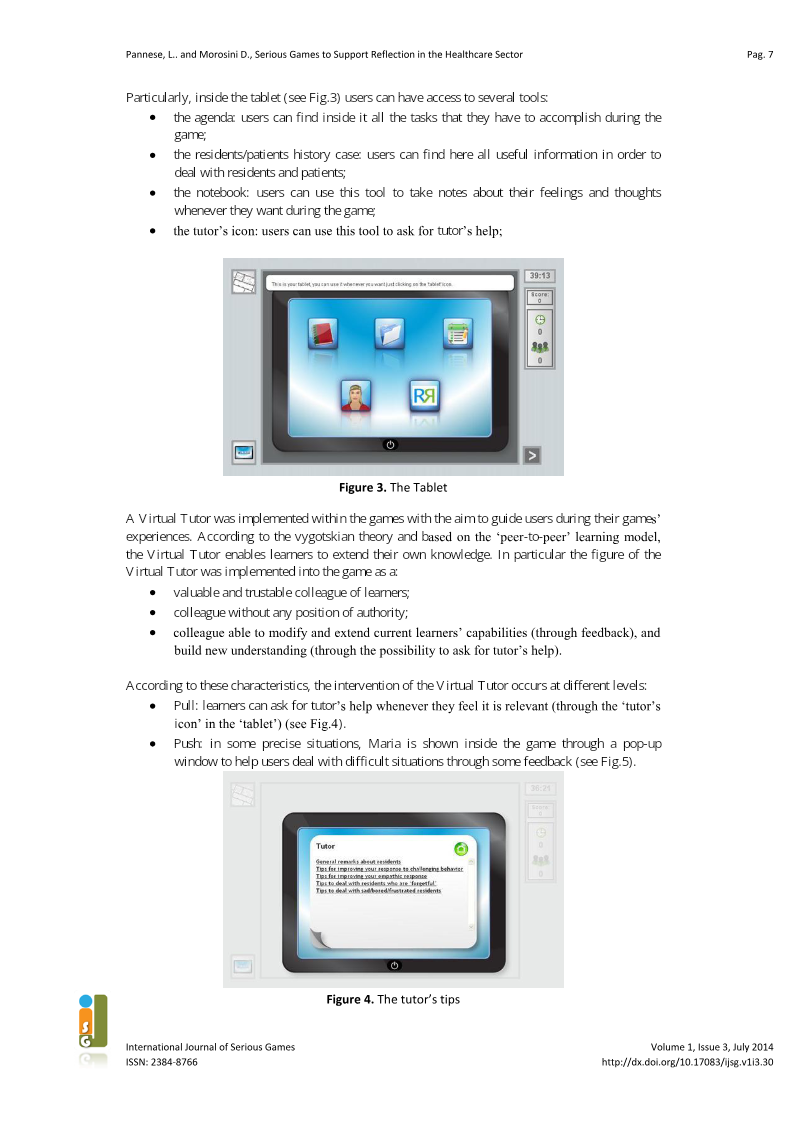
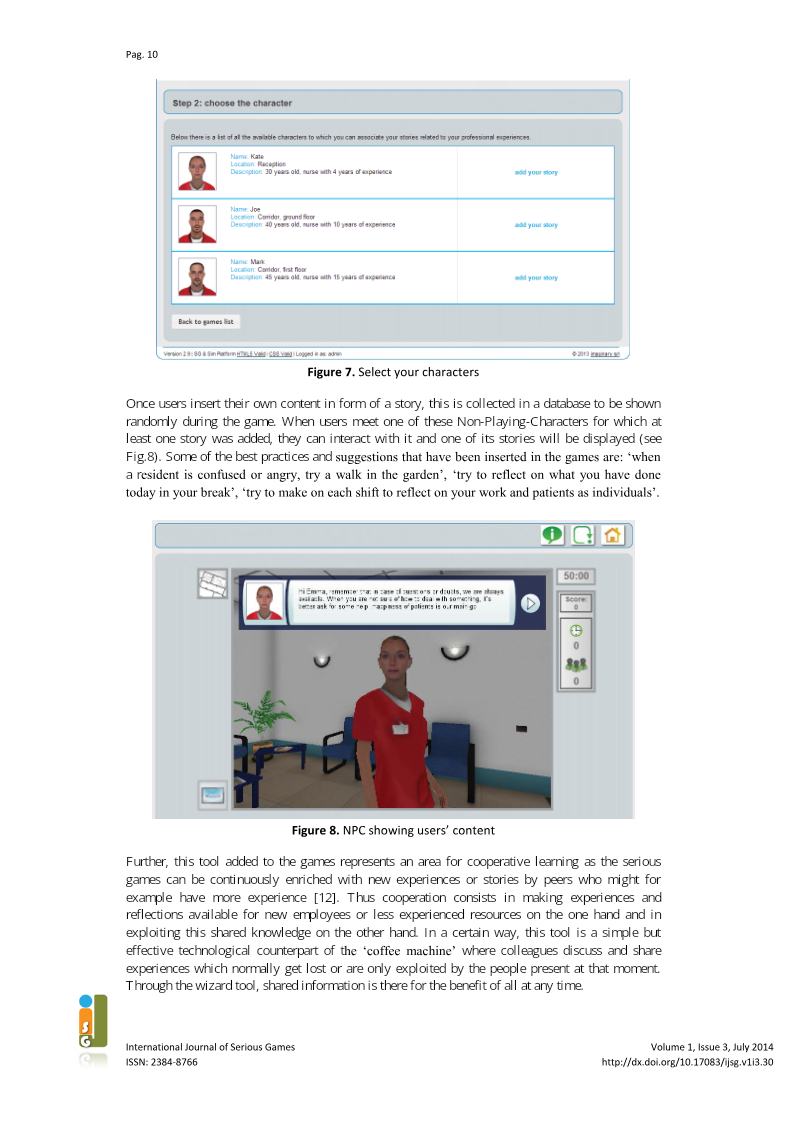
The development and implementation of serious games in the healthcare sector serve as a mechanism to foster reflective learning among nurses and carers.
- Serious games significantly improve professional confidence and reflective practice, with nursing students rating training utility at 4.31 and care staff rating reflective utility at 4.16 on a five-point scale.
- The four-year study involving over 200 users across a German stroke unit and UK dementia care homes confirms that 3D simulations provide a low-risk environment for practicing complex clinical decision-making and self-regulation.
- Integrated 'wizard tools' allow staff to input personal best practices, effectively transforming the game platform into a collaborative digital repository for institutional knowledge.

Measuring Effectiveness in Digital Game-Based Learning: A Methodological Review
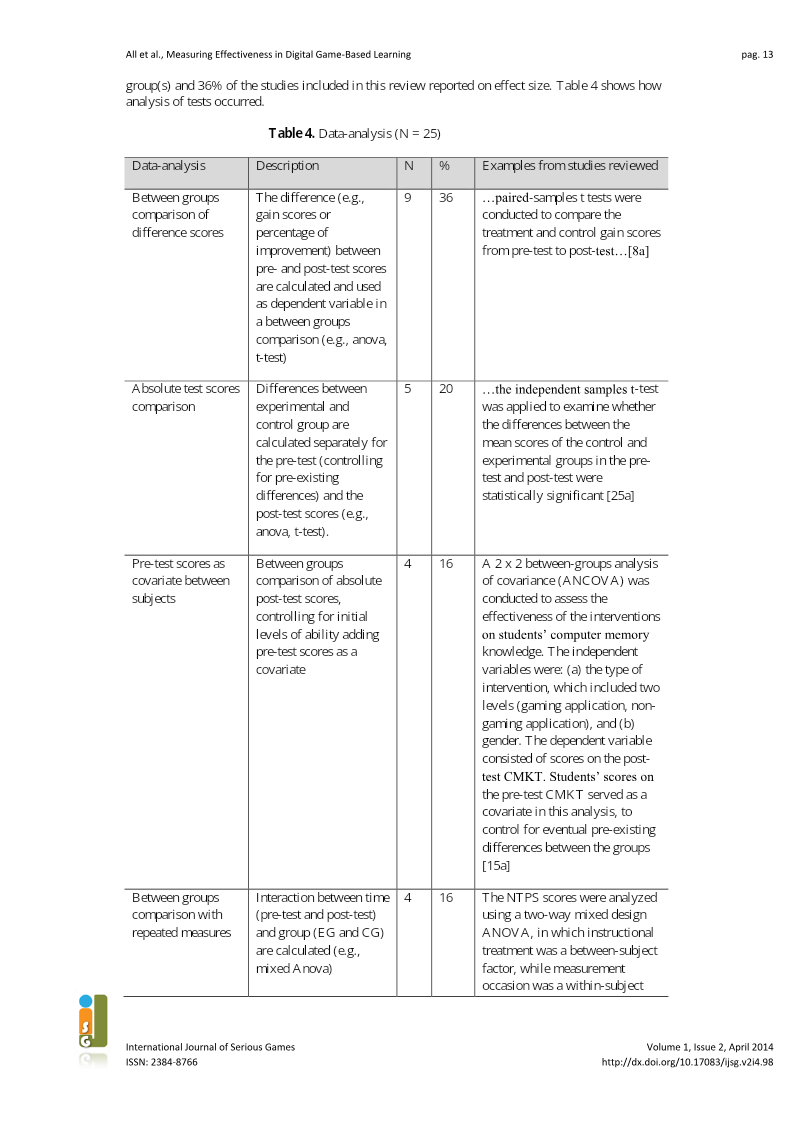
Digital Game-Based Learning (DGBL) currently faces a significant crisis of empirical validation, characterized by a pervasive lack of methodological rigor that undermines its perceived educational value.
- Digital Game-Based Learning (DGBL) currently lacks empirical validation due to widespread methodological rigor issues, preventing the industry from justifying pedagogical and financial investments.
- A systematic review of 25 representative studies identified that small sample sizes and confounding variables, such as instructor influence, frequently obscure the actual impact of game-based interventions.
- The field suffers from a lack of standardized evaluation frameworks, leading to inconsistent study designs and the frequent omission of critical variables like participant assignment methods.
Eye Tracking in Game-based Learning Research and Game Design
Eye tracking serves as a critical methodology for optimizing the intersection of game design and educational efficacy.
- Eye tracking reveals that excessive decorative or animated elements cause cognitive overload, which distracts struggling learners and impedes knowledge acquisition.
- Designers should utilize visual signaling techniques to highlight essential feedback mechanisms, as players frequently overlook subtle cues in favor of prominent characters.
- High and low performers exhibit significant disparities in visual processing, necessitating the removal of non-essential visual noise to keep instructional goals as the primary focus.


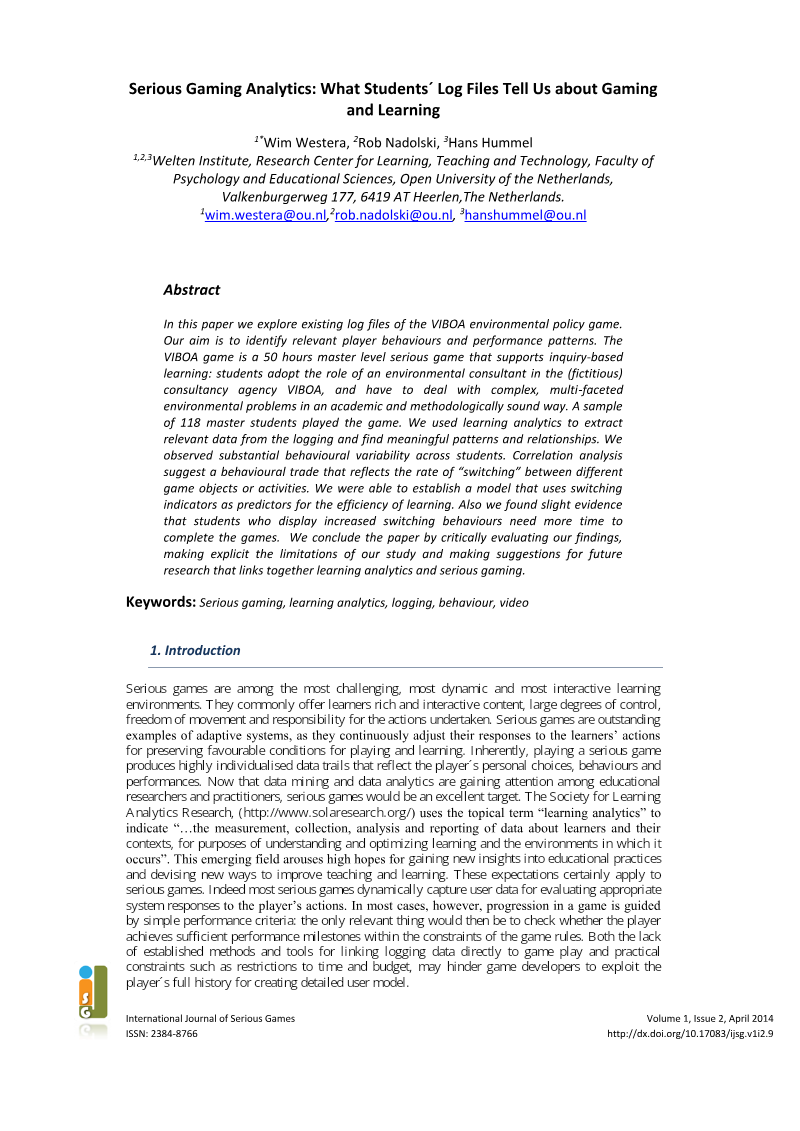
Serious Gaming Analytics: What Students' Log Files Tell Us about Gaming and Learning
Serious games serve as a critical frontier for educational research, offering a unique environment where student engagement can be quantified through granular log file analysis.
- Switching behavior—the frequency with which students transition between game assets like videos and resources—accounts for 62 percent of the variability in learning efficiency.
- In-game behavioral patterns, including time-on-task and engagement levels, do not reliably predict final assessment scores for students.
- A student’s prior knowledge level does not appear to influence their navigation strategies or behavioral patterns within the VIBOA environmental policy game.

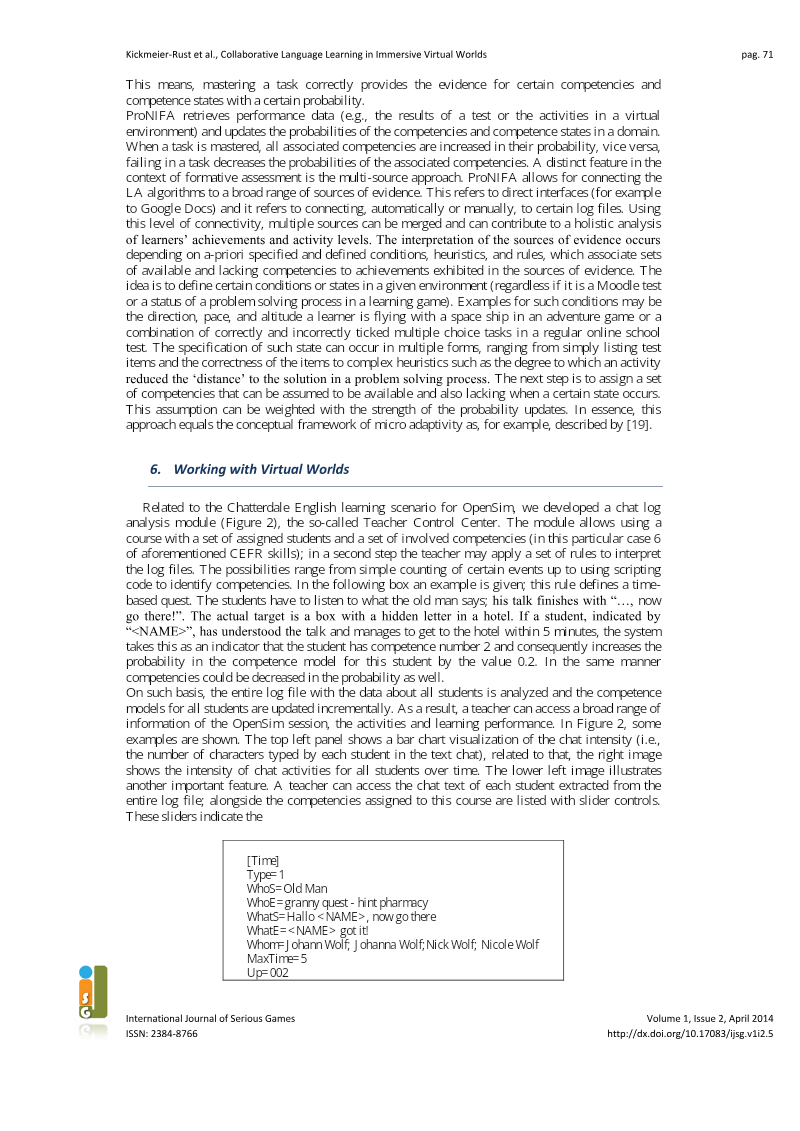
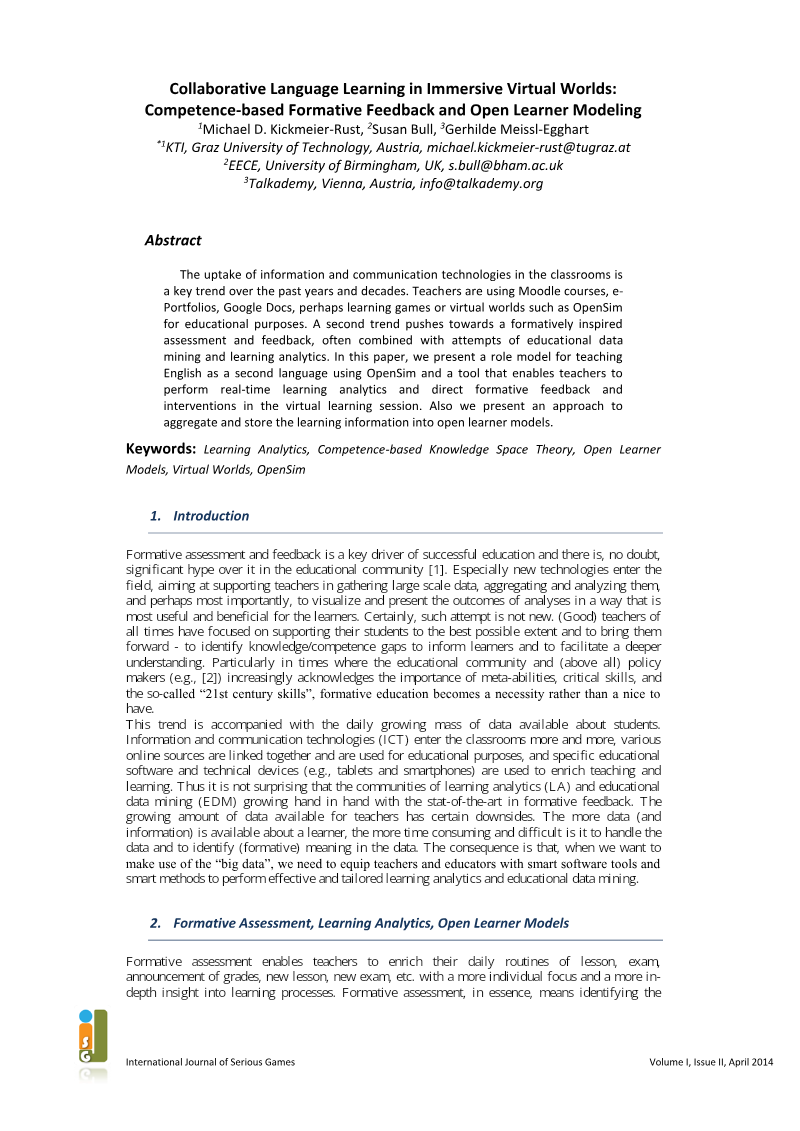
Collaborative Language Learning in Immersive Virtual Worlds: Competence-based Formative Feedback and Open Learner Modeling
The integration of immersive virtual worlds into educational settings presents a significant challenge for instructors attempting to monitor student progress and provide effective formative feedback.
- ProNIFA is a specialized learning analytics tool developed to bridge the gap between raw, unstructured activity data in virtual worlds and actionable pedagogical insights for instructors.
- The tool utilizes Competence-based Knowledge Space Theory to map observable behaviors—such as movement, communication, and task completion—to latent student competencies.
- By employing a rule-based engine, ProNIFA processes log files to incrementally update individual student competence models, enabling real-time progress visualization and intervention notifications.
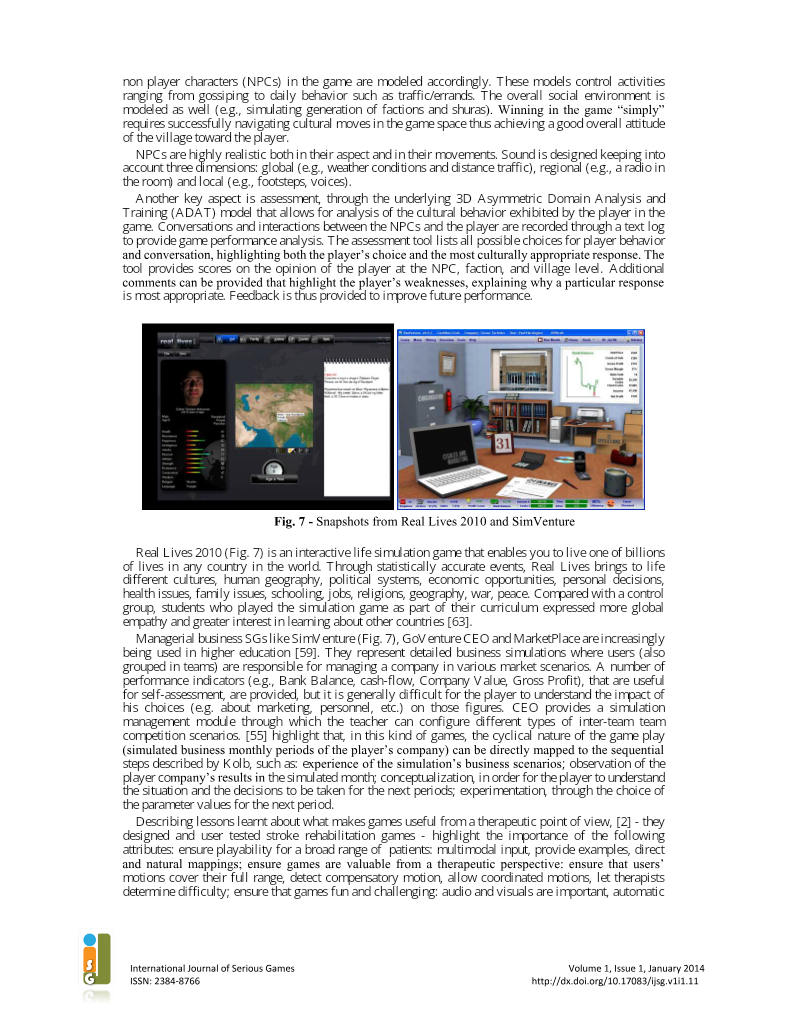
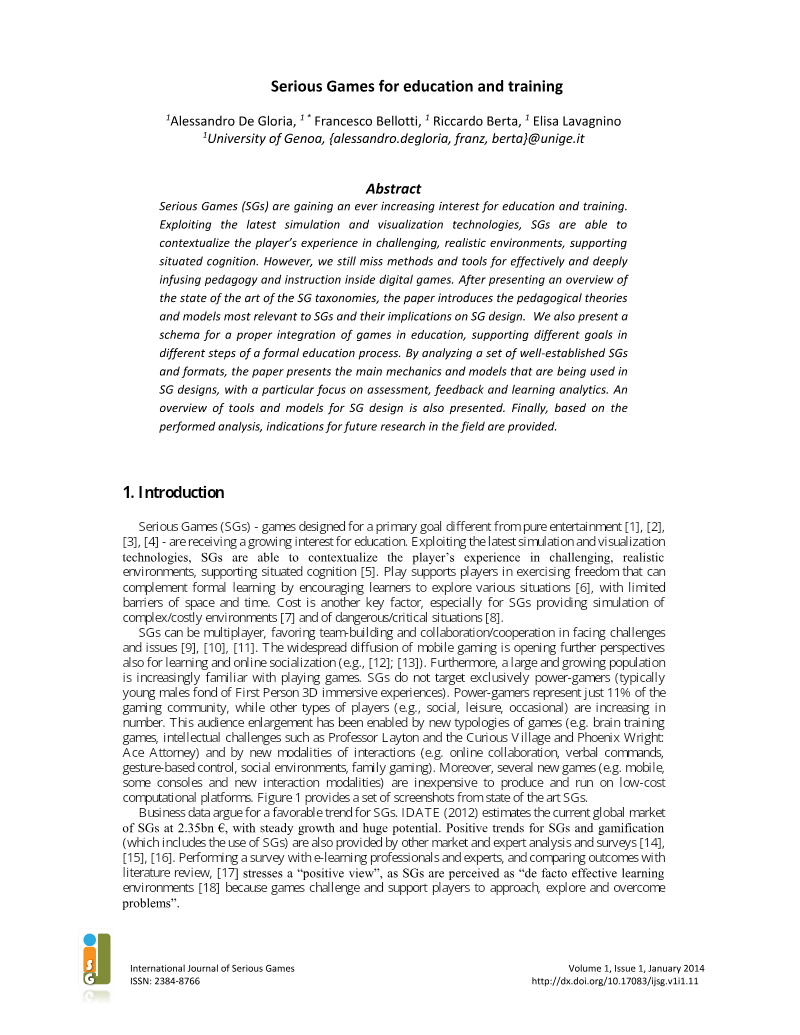
Serious Games for Education and Training
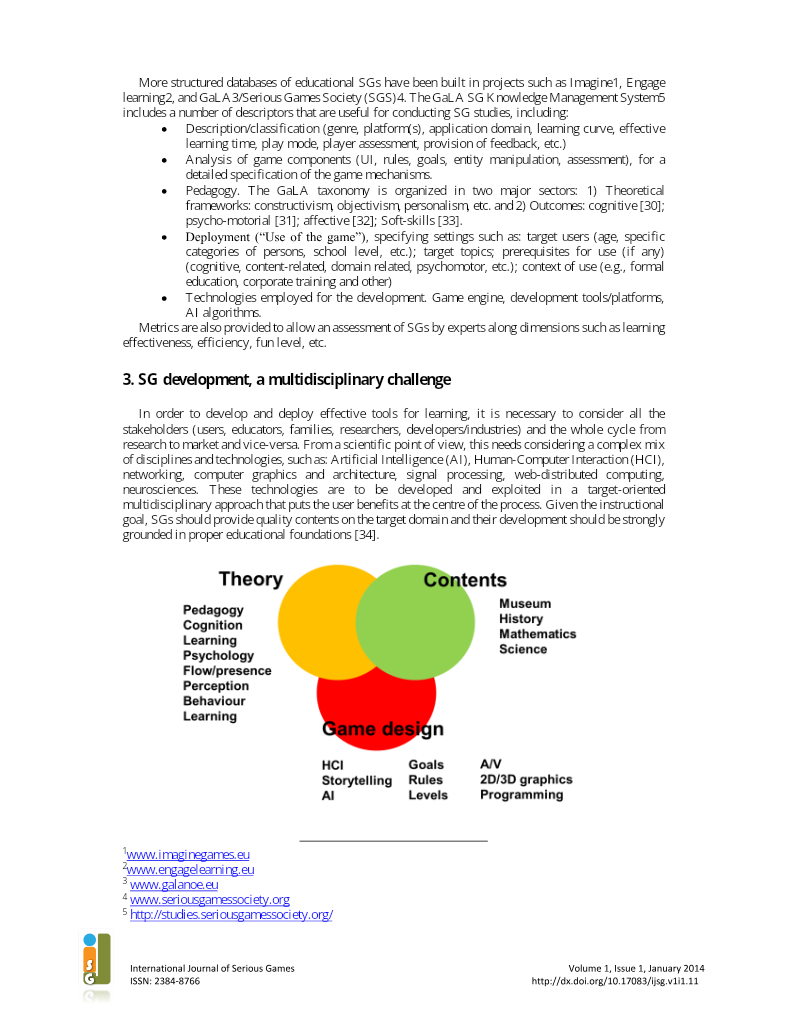
Serious games function as powerful educational instruments that utilize simulation and visualization to promote situated cognition across global education and professional training sectors.
- The serious games market is currently valued at €2.35 billion, reflecting its established role in bridging the gap between theoretical knowledge and practical application.
- Effective serious game design requires integrating established pedagogical theories, such as constructivism, the Revised Bloom Taxonomy, and Kolb’s Experiential Learning model, directly into software architecture.
- Developers are shifting toward adaptive mechanics that respond to individual learner profiles in real time to maintain the 'flow' state necessary for sustained engagement.
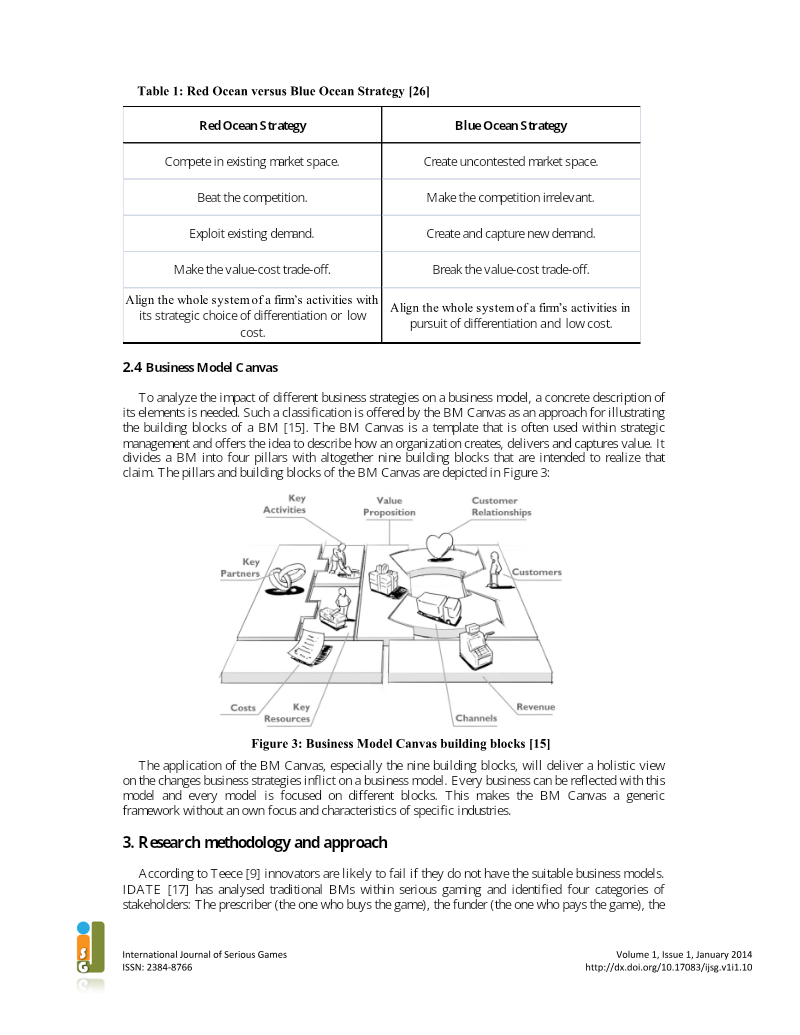

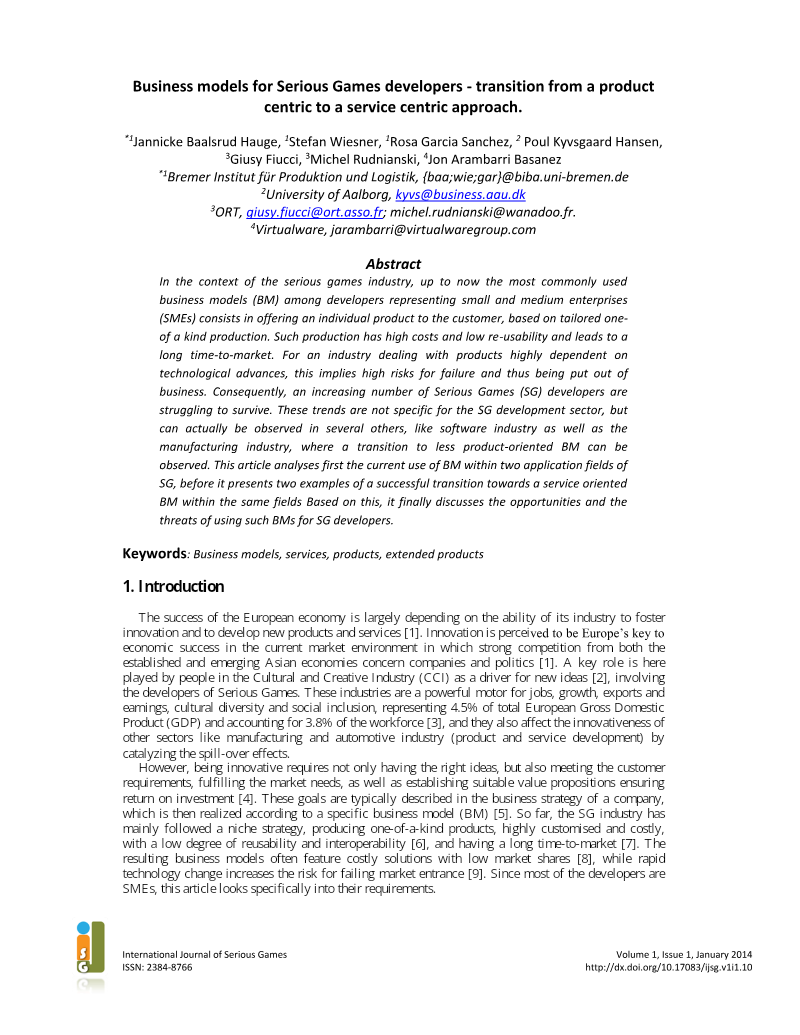
Business Models for Serious Games Developers: Transition from a Product Centric to a Service Centric Approach
Serious games developers, primarily small and medium-sized enterprises, face significant sustainability challenges stemming from a reliance on high-cost, one-of-a-kind product models.
- Serious games developers must transition from one-off, product-centric models to service-centric, extended product models to overcome the sustainability challenges of high development costs and limited reusability.
- Integrating data analytics into game offerings is essential for providing empirical evidence of efficacy and ROI, which is a prerequisite for securing continued funding in the health and corporate sectors.
- Developers should treat games as dynamic, interoperable platforms rather than static assets to improve scalability and reach beyond niche market constraints.


Best Practices for an Effective Design and Evaluation of Serious Games
Serious games serve as a critical tool for professional development and education, yet the industry suffers from a lack of standardized methodologies for their design and evaluation.
- Serious games must integrate pedagogical frameworks like constructivism, experiential learning, and Bloom’s taxonomy to ensure game mechanics actively support specific educational goals rather than serving as aesthetic overlays.
- Effective design requires a structured three-phase facilitation process consisting of briefing, gaming, and debriefing to reinforce complex concepts.
- To improve usability and learning outcomes, developers should prioritize meaningful context and reduce cognitive load through intuitive user interface design.

Gamification and Smart, Competence-Centered Feedback: Promising Experiences in the Classroom
The integration of gamification and adaptive feedback systems significantly enhances mathematical proficiency among primary school students.
- Individualized, competence-centered feedback is the primary driver of measurable learning progress, significantly outperforming basic visual cues or standard scoring systems.
- Gamification elements like scoring and leveling are effective for initial student engagement, but they must be paired with adaptive instruction to achieve academic mastery.
- A study of 58 primary school students demonstrated that the synergy between game-based motivation and personalized feedback creates a more robust learning environment than either approach in isolation.
Individual and Collaborative Performance and Level of Certainty in MetaVals
The MetaVals serious game serves as a platform for evaluating the intersection of metacognitive processes and academic performance within higher education.
- A three-year study of 250 students across 16 higher education contexts found no statistically significant performance differences between individual and collaborative tasks or between groups using a Level of Certainty (LC) tool and those that did not.
- While LC elicitation showed a consistent trend toward higher overall achievement, the observed improvements failed to reach the threshold of statistical significance.
- The lack of definitive performance gains is largely attributed to the perceived low difficulty of the game items and the inherent complexities of asynchronous, online learning environments.